 The Audubon Aquarium: Field Notes on Photographing Through Glass
May 31, 2026
The Presbytère: A Photographer Answers Your Questions
The Cabildo’s twin on the other side of the cathedral. The same arcade, the same square, the same state museum rules — and the same excellent light.
The Presbytère was begun in 1791 on Jackson Square as the architectural twin of the Cabildo, flanking St Louis Cathedral on the opposite side, and was completed in the 1810s. It now forms part of the Louisiana State Museum, with arcaded galleries facing the square.
Photographically it belongs to the same category as its twin and shares its strengths. The arcade is the practical asset — a covered gallery open on one side, which in New Orleans’s punishing sun is the most useful piece of architecture a photographer can be given. Jackson Square in front of it is one of the most recognisable settings in America. And as a state museum, the rules are firm and specific.
These are the questions couples ask. We have not photographed a wedding at the Presbytère; arcaded galleries, colonial interiors and Jackson Square’s conditions behave predictably. Which spaces are available, access windows and photography policy are for the Louisiana State Museum.
The Presbytère at a glance
| Where | Jackson Square, French Quarter, New Orleans, Louisiana |
| Built | Begun 1791 as the Cabildo’s twin; completed in the 1810s |
| Now | Part of the Louisiana State Museum |
| Light | Arcaded galleries give excellent covered light; interiors dark |
| Assume | State museum rules on access, flash and numbers; arrange well in advance |
What makes the arcade so useful?
The geometry. A covered gallery open on one side gives you a roof that blocks the overhead light which shadows eye sockets, and an open side that supplies broad light at head height. That is the arrangement a studio photographer constructs deliberately with a scrim and a gobo, and here the eighteenth-century architecture provides it for free.
In New Orleans that matters more than almost anywhere. The sun is strong, the humidity compounds it, and open ground in the middle of the day is genuinely unusable for faces — hard shadows, squinting, blown highlights on a white dress and uncomfortable guests. The arcade solves all of it while keeping daylight.
Stucco and stone also bounce a little warmth into the shade, which is flattering on skin. Place people a metre inside the arcade’s edge facing outward toward the square, and the light does the work with no equipment at all. It is the best frame at this venue and it is available through the middle of the day.
Is it different from the Cabildo?
Architecturally they are twins by intention, so the arcade, the massing and the relationship to the square are closely comparable. The practical differences are which interiors each holds, which exhibitions occupy them, and what each is willing to make available — so the question to ask is about spaces rather than about architecture.
The one photographic difference worth noting is position. The Presbytère sits on the opposite side of the cathedral, which means its arcade faces a different direction. That changes when the open side is receiving bright sky and when it is receiving direct sun, and therefore which hours are best.
It also means a frame shot along the Presbytère’s arcade looks out at a different part of the square than the Cabildo’s does. If you are choosing between them, that orientation question is more useful than any comparison of the buildings themselves.
What will the museum allow?
Expect a state institution’s answers: defined access windows tied to public hours, specified locations rather than free run, restrictions on flash near collection items, limits on numbers per room, and a requirement to arrange everything in advance with real lead time.
The productive approach is to arrive with a short specific list. Fifteen minutes in a named space with hand-held cameras is straightforward; photographing throughout with lighting stands is not. And the answer to a restriction is to accept it rather than to ask twice.
Crucially, plan a day whose photographs do not depend on interior access. The arcade and Jackson Square are reliable; the galleries are a bonus you may or may not receive. Couples who build the plan the other way round are the ones who end up disappointed.
How bad are the crowds, and the climate?
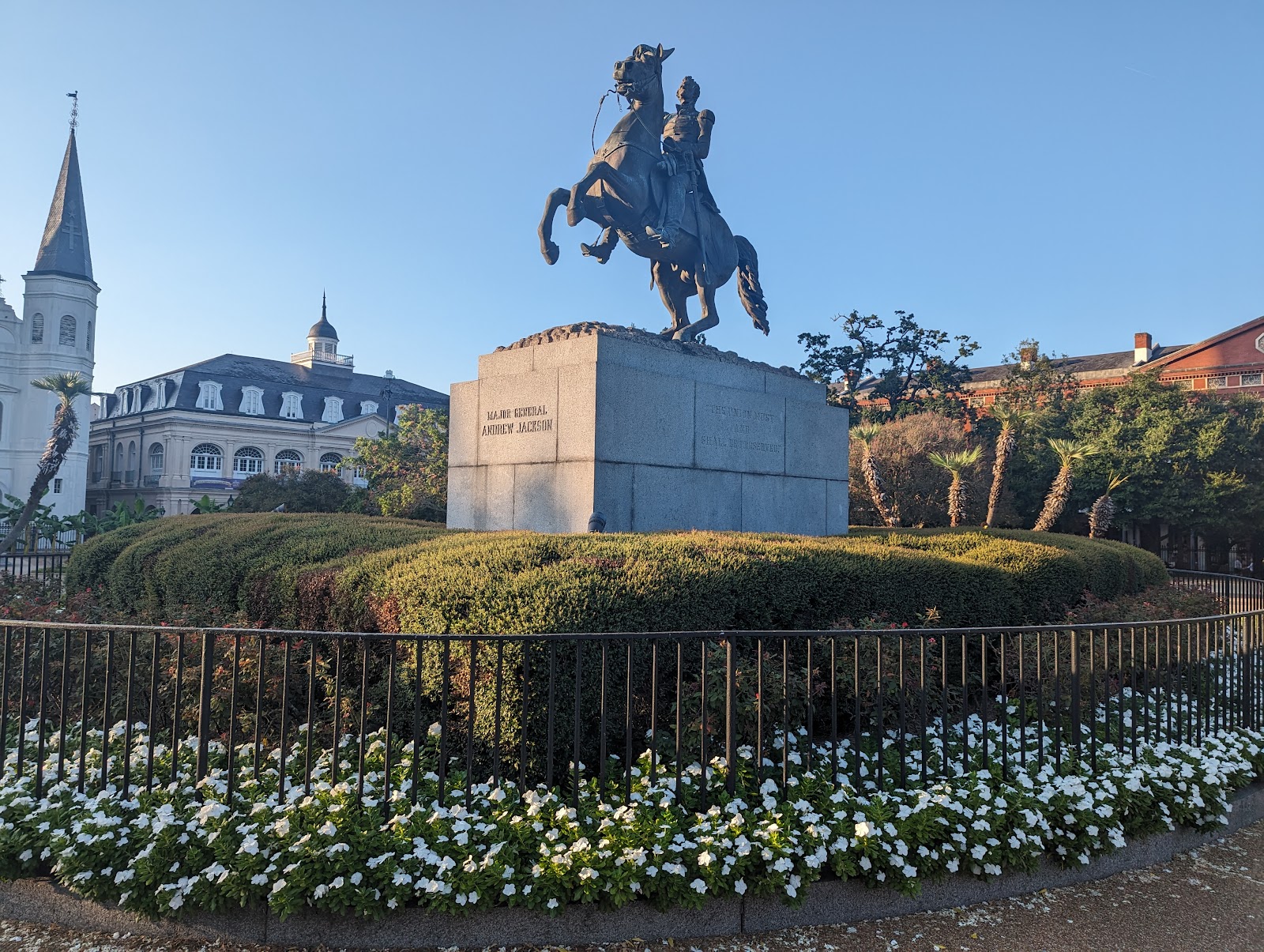
Jackson Square is among the most photographed public spaces in America and it is busy accordingly — artists, performers, tourists, carriages. Wide frames will contain strangers and no arrangement changes that. Early morning is the only genuinely quiet time, and it also has the best light on the facades.
Longer lenses at wide apertures handle much of it, and the arcade is a partial escape because a covered gallery is less trafficked than the open square. Working along the arcade rather than out in the middle of the square is both better light and fewer people.
New Orleans humidity is the practical hazard: a lens carried from an air-conditioned interior into that air fogs completely and takes fifteen to twenty minutes to clear, so acclimatise before you need it. And afternoon thunderstorms are routine in summer — heavy, often brief, and a covered arcade turns them into something photographable rather than something to wait out.
For the order of the day: arcade frames at any hour including midday; the facade and square at dawn or in the last hour; the interior in whatever window is granted; and the Quarter streets in the twenty minutes after sunset.
One last thing about working a square this famous: the crowd is also the character. A wedding photographed on Jackson Square with street artists at their easels and a brass band on the corner is a photograph about New Orleans in a way that an emptied-out version would not be. Couples often ask for the strangers to be removed and then, looking at the set afterwards, prefer the frames that kept them. It is worth shooting both — a clean version with a long lens, and an honest one that includes the square as it actually is.
What works in your favour
- An arcaded gallery giving excellent covered light usable even at midday
- Stucco and stone bounce a little warmth into the shade
- Jackson Square and St Louis Cathedral — among the most recognisable settings in America
- The arcade is less trafficked than the open square, so fewer strangers in frame
- A covered gallery makes a Louisiana downpour photographable rather than a delay
What to plan around
- State museum rules on access, flash and numbers; plan without depending on interiors
- Jackson Square is extremely busy; wide frames will contain strangers
- Interiors are dark, with natural light only
- Severe humidity fogs lenses for fifteen to twenty minutes
- Access windows tied to public hours rather than to your timeline
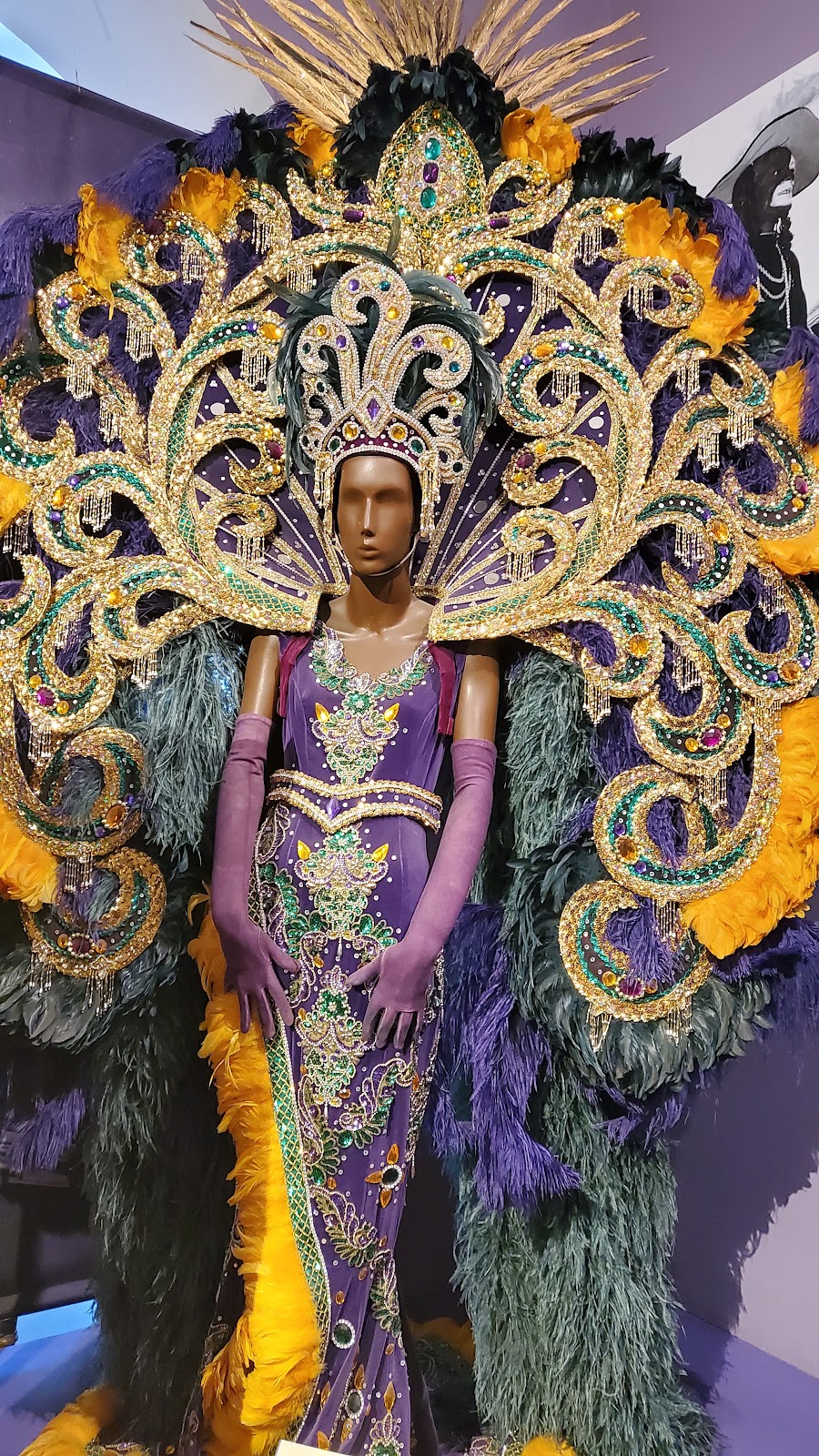
More frames from The Presbytère
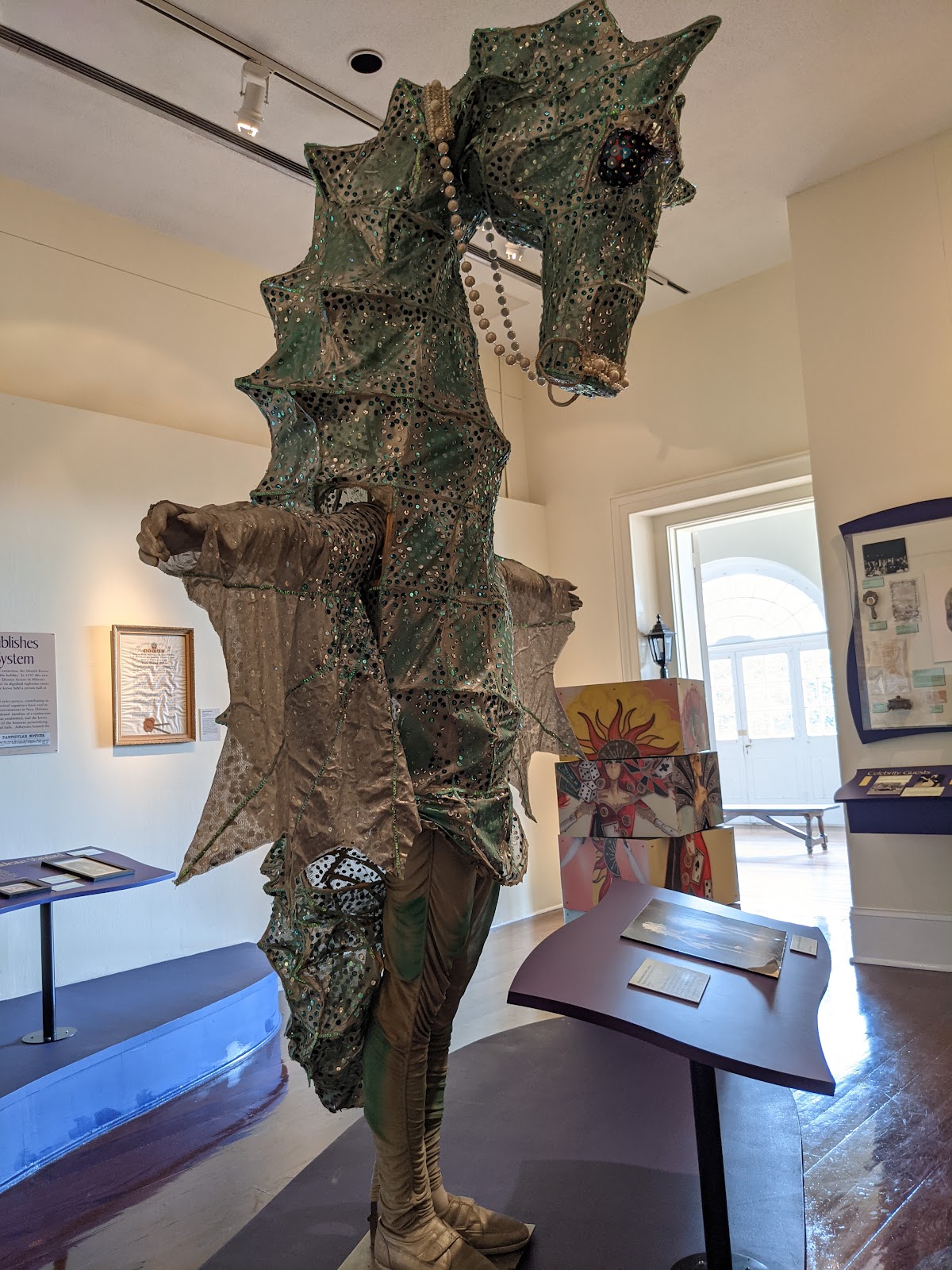
The Presbytère wedding photography: common questions
What is the best light here?
Under the arcade, a metre inside its edge facing out toward the square. A covered gallery open on one side gives a roof that blocks the overhead light shadowing eyes and an open side supplying it at head height — the arrangement a studio photographer builds with a scrim and gobo. It works even at midday.
How does it compare with the Cabildo?
They are architectural twins, so the arcade and massing are closely comparable. The useful difference is orientation: the Presbytère sits on the other side of the cathedral, so its arcade faces a different direction and therefore has different best hours, and looks out at a different part of the square.
What will the state museum permit?
Defined access windows tied to public hours, specified locations rather than free run, flash restrictions near collection items, and limits on numbers per room, all arranged well in advance. Arrive with a short specific list, and plan a day whose photographs do not depend on getting inside.
How crowded is Jackson Square?
Among the busiest public spaces in America, with artists, performers, tourists and carriages. Wide frames will contain strangers regardless. Early morning is the only genuinely quiet time, and it also has the best light on the facades — and the arcade is less trafficked than the open square.
Is it usable in a thunderstorm?
Yes, and that is a real advantage in a city of routine summer downpours. A covered gallery open to the square lets you photograph the rain from cover rather than waiting it out, which turns a delay into a distinctive frame.
More New Orleans venue guides
We are writing a photographer’s guide to every venue we would happily shoot in New Orleans. Here are three more, plus the full index:
- The Windsor Court: Lighting a Hotel Full of Art and Antiques
- The Audubon Aquarium: Field Notes on Photographing Through Glass
- The Audubon Zoo: A Season-by-Season Photography Guide
All New Orleans Wedding Venues →
Planning a wedding at The Presbytère?
The arcade is the frame that works whatever the museum says and whatever the weather does. Tell us your date and we will plan around it, then ask for the interiors as a bonus.