 The Galt House: Working with a River-Facing Tower Hotel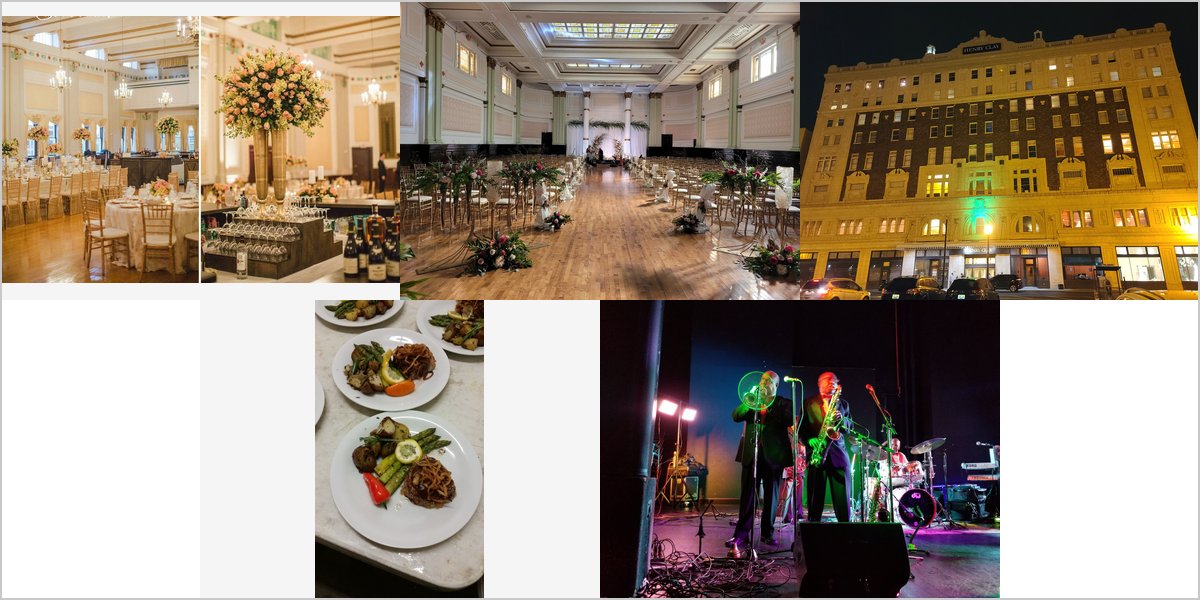
July 10, 2026
The Henry Clay: Lighting a 1920s Lodge Building
Lodge buildings were built to impress their own members, which means ornate ceilings, deep plaster relief and no windows where it matters. All three shape the lighting.
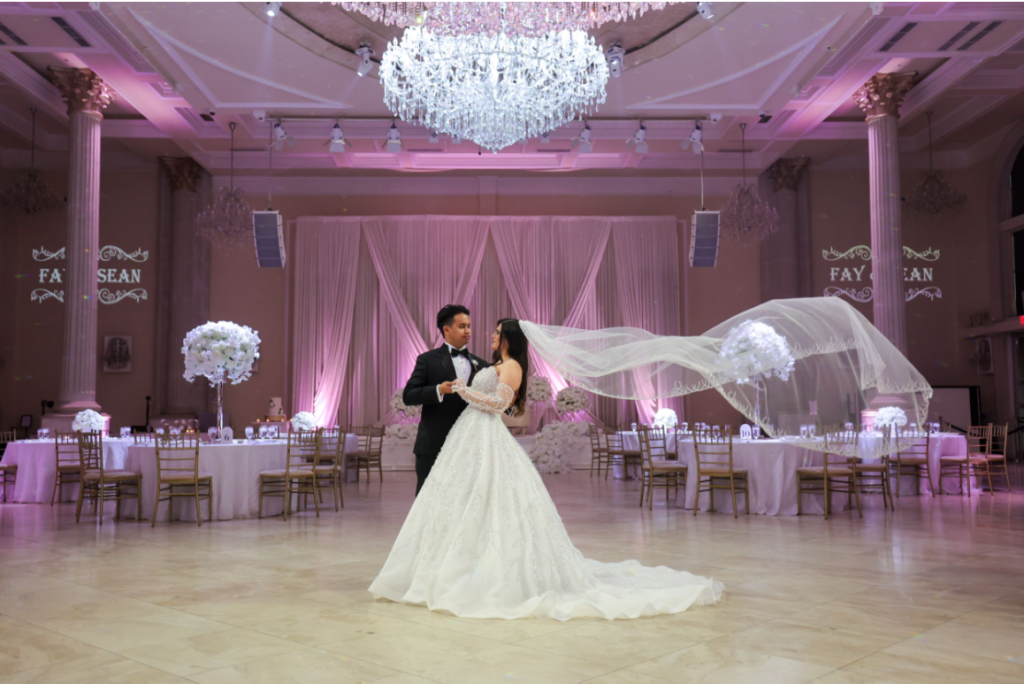
The Henry Clay was built in 1924 in downtown Louisville as an Elks lodge, and was later restored for event use. Buildings of this type share a recognisable character: they were constructed by fraternal organisations to impress their own membership, so the money went into ceilings, plasterwork, staircases and a ballroom rather than into daylight or flexibility.
For a photographer that produces a specific and consistent set of conditions. Ornate plaster relief throughout, which is beautiful and which depends entirely on light direction to be visible. A grand ballroom with high decorated ceilings, which defeats bounce flash. Warm tungsten fixtures throughout. And little or no usable daylight in the event spaces.
This guide addresses each in turn. We have not photographed a wedding at the Henry Clay; plaster relief, tungsten and high ceilings behave identically everywhere, which is what makes the approach predictable. Which rooms your booking includes and what the venue permits are for their team.
The Henry Clay at a glance
| Where | South Third Street, downtown Louisville, Kentucky |
| Built | 1924 as an Elks lodge; later restored for events |
| Character | Grand ballroom, ornate plasterwork, period staircases |
| Light | Warm tungsten throughout; little or no daylight in the event spaces |
| Technical headline | Plaster relief lives or dies on light direction — side light, never frontal |
Plaster relief and why frontal flash destroys it
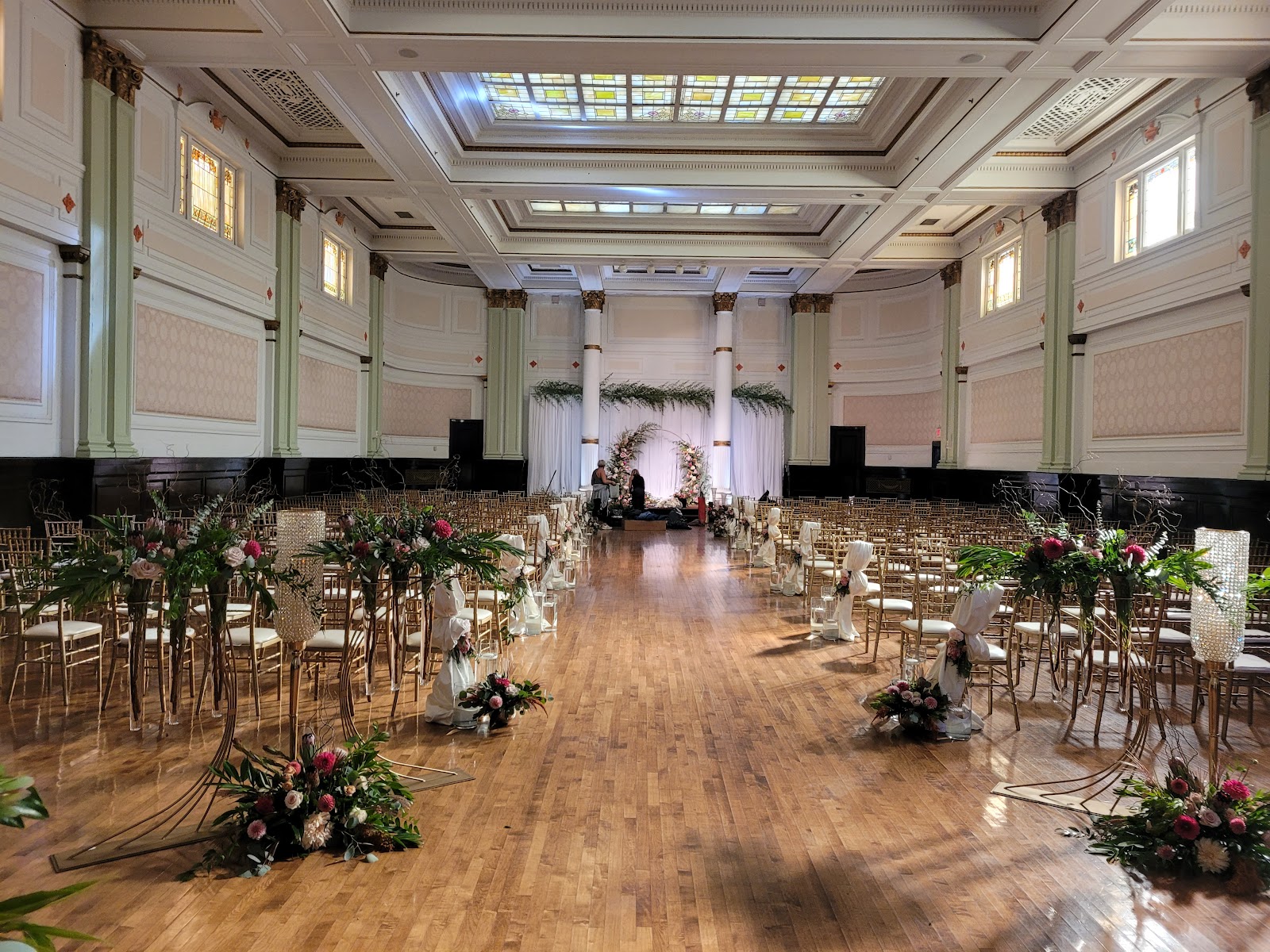
This is the central technical point in any 1920s lodge or ballroom and it is worth stating precisely. Ornate plasterwork — cornices, ceiling roses, coffering, pilasters, egg-and-dart moulding — is three-dimensional, and it reads as three-dimensional only because light striking it at an angle causes the raised parts to shade the recessed parts.
Light it from the camera position and every one of those shadows disappears. A deeply modelled ceiling becomes a flat cream surface with some faint lines on it. The single most impressive feature of the building vanishes from the photograph, and the room looks like a modern function suite that someone has stencilled.
The fix costs nothing. Put the light to one side, well off the camera axis, and feather it so the edge of the beam skims across the surface. Now every moulding casts a small shadow, the relief stands up, and the ceiling looks like what it is. This is the same amount of equipment as a frontal setup — it is purely a decision about where to stand the light.
High decorated ceilings and the end of bounce
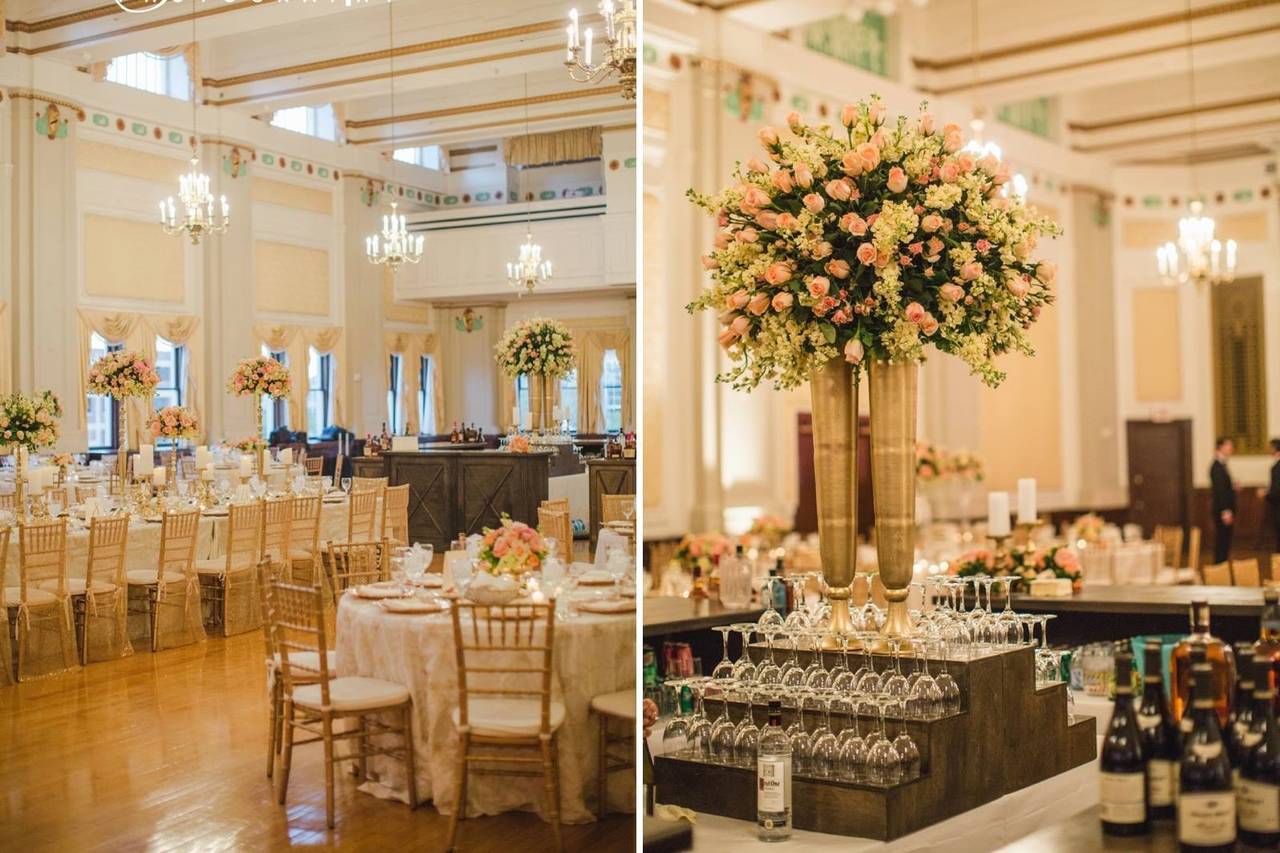
The habitual reception technique is to fire a flash at the ceiling and use the whole surface as a giant soft source. That depends on the ceiling being close and pale. In a 1920s ballroom it is high, and it is decorated — often painted, sometimes gilded — so it absorbs a large share of the light and returns the rest warm and weak.
So light comes from stands with modifiers. One flash with a softbox or umbrella as a feathered key from the side, and one placed behind the dancefloor aimed back toward the camera as a rim light. That second unit is the highest-value item in any large dark room: it separates people from the background and turns a flat crowd into a photograph with depth.
For moving coverage during dinner and speeches, on-camera flash pointed forward through a small diffuser and deliberately dialled down to fill rather than dominate. Not pointed at the ceiling, which will give you almost nothing back.
Exposure and colour in a warm windowless room
The exposure hierarchy is always the same: the light fittings are the brightest thing in the room by several stops, faces are the most important thing, and the room itself can be allowed to fall away. Expose so the chandeliers and sconces read as glowing points with structure rather than blown white holes, which means the ambient exposure sits deliberately darker than instinct suggests.
Colour needs a differential decision. Everything in a 1924 lodge adds amber — tungsten fixtures, cream and gold plaster, timber, patterned carpet — and skin with no cool component in it looks artificial. Keep the room warm in your white balance, because that is honestly what it is, and light faces with something closer to neutral so they sit inside the warmth rather than dissolving into it.
Set white balance manually per space. A ballroom, a staircase and a lobby in a building like this will not share a colour temperature, and auto white balance averages them into something wrong everywhere.
The staircase, and downtown outside
Lodge buildings almost always have a substantial staircase, and it is usually the best photographic location in the building. It gives verticality, leading lines from the balustrade, elevation to shoot from, and frequently a window on a landing providing genuine directional daylight — which in an otherwise windowless building is worth a great deal.
Place the couple a few steps below a landing window turned into it and you have the best-lit frame available indoors. Shoot from below for height and from above so the dress falls away on the steps. Ten minutes covers it and those frames will be among the strongest of the day.
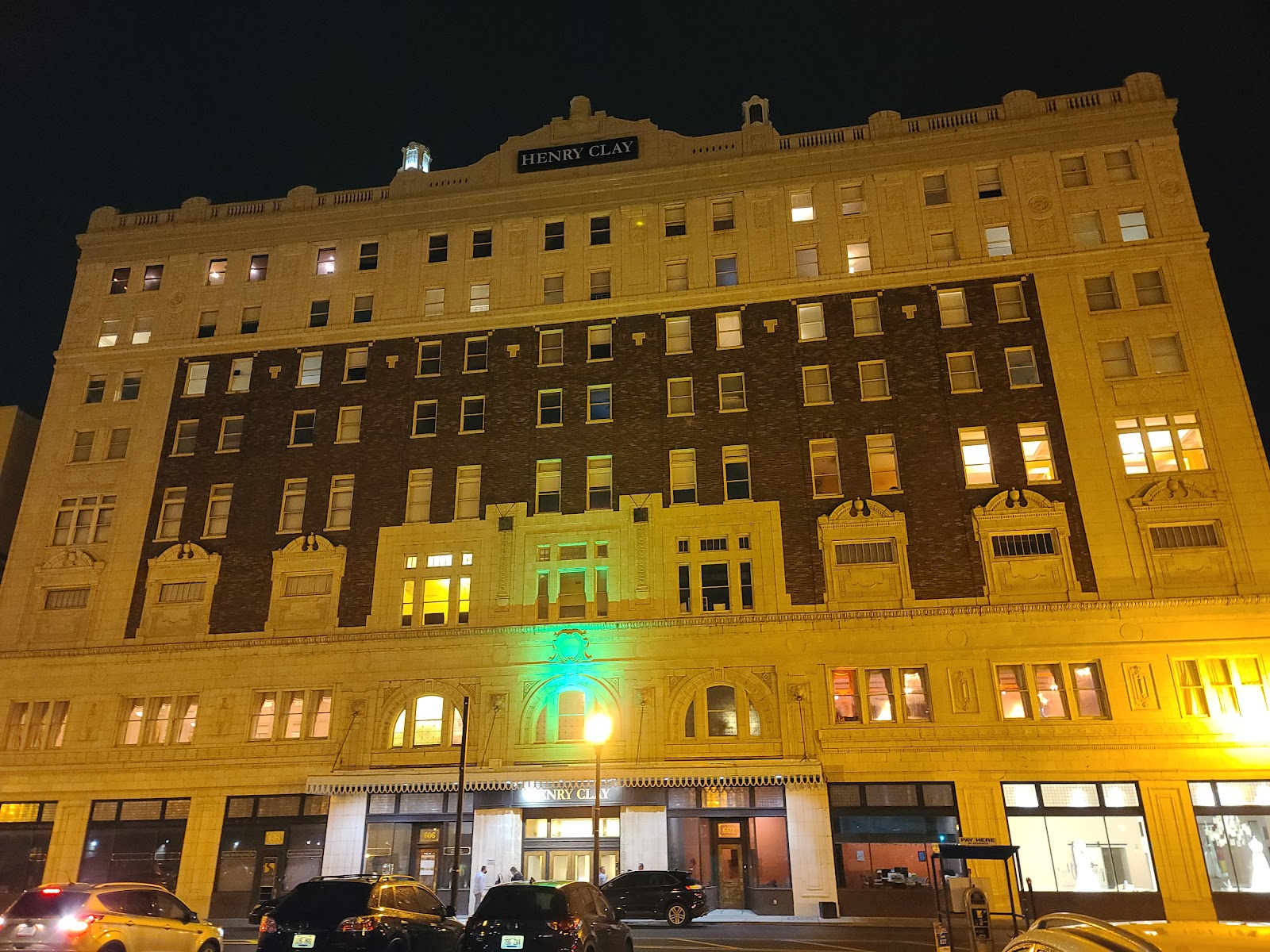
Outside, downtown Louisville gives you early twentieth-century commercial architecture within a short walk, and the twenty minutes after sunset is when it photographs best — streetlight balancing the sky, stone holding colour, wet asphalt doubling every light if it has rained. In a building with no daylight, that dusk excursion is not optional; it is the only thing in the gallery that will not be artificially lit.
What works in your favour
- Genuine 1924 ornate plasterwork that is spectacular when lit from the side
- A substantial staircase with a landing window — the best-lit frame in the building
- Pale cream and gold plaster takes side lighting beautifully and shows real relief
- Downtown location with early twentieth-century architecture minutes away
- Entirely weather-independent for the ceremony and reception
What to plan around
- Frontal flash flattens the plasterwork completely — side light is not optional
- High decorated ceilings make bounce flash ineffective
- Little or no daylight in the event spaces; the whole day is artificially lit
- Warm tungsten and gold plaster require a differential white balance or skin reads orange
- Different spaces need different white balance settings; auto will fail everywhere

More frames from The Henry Clay
The Henry Clay wedding photography: common questions
What is the single most important lighting decision here?
Put the light to the side, never at the camera. Ornate plaster relief is visible only because angled light lets the raised parts shade the recessed parts. Frontal flash removes every one of those shadows and a deeply modelled 1924 ceiling becomes a flat cream surface. It costs nothing to fix and it transforms the photographs.
Can you bounce flash off the ballroom ceiling?
No. It is high and decorated, often painted or gilded, so it absorbs most of the light and returns the rest warm and weak. Use direct modified light from stands: one feathered key from the side, and one behind the dancefloor as a rim light to separate people from the dark background.
How should the chandeliers be exposed?
So they read as glowing points with visible structure rather than blown white holes, which means letting the ambient exposure sit darker than instinct wants and bringing faces up with your own light. A 1920s ballroom is meant to look warm and pooled; correcting it to an evenly bright room removes the reason you booked it.
Why does skin go orange in these rooms?
Because everything in the building adds amber — tungsten fixtures, cream and gold plaster, timber, patterned carpet — leaving skin with no cool component at all. Keep the room warm in your white balance and light faces with something closer to neutral, so they sit inside the warmth instead of dissolving into it.
Where is the best natural light?
A landing window on the staircase, if there is one — in an otherwise windowless building that is worth a great deal. Place the couple a few steps below it, turned into the light. Beyond that, the only unartificial frames of the day will be the ten minutes you spend outside at dusk, so schedule them.
More Louisville venue guides
We are writing a photographer’s guide to every venue we would happily shoot in Louisville. Here are three more, plus the full index:
- The Olmsted: A Photographer Answers Your Questions
- The Thomas Edison House: Field Notes on a Shotgun Cottage
- Whitehall: A Season-by-Season Photography Guide
All Louisville Wedding Venues →
Planning a wedding at The Henry Clay?
One decision carries this venue: put the light to the side so the 1924 plasterwork actually shows up. Tell us your date and we will send a lighting plan for the ballroom plus the dusk window for that evening.