 The Thunderbird Inn: Field Notes on a 1964 Motor Inn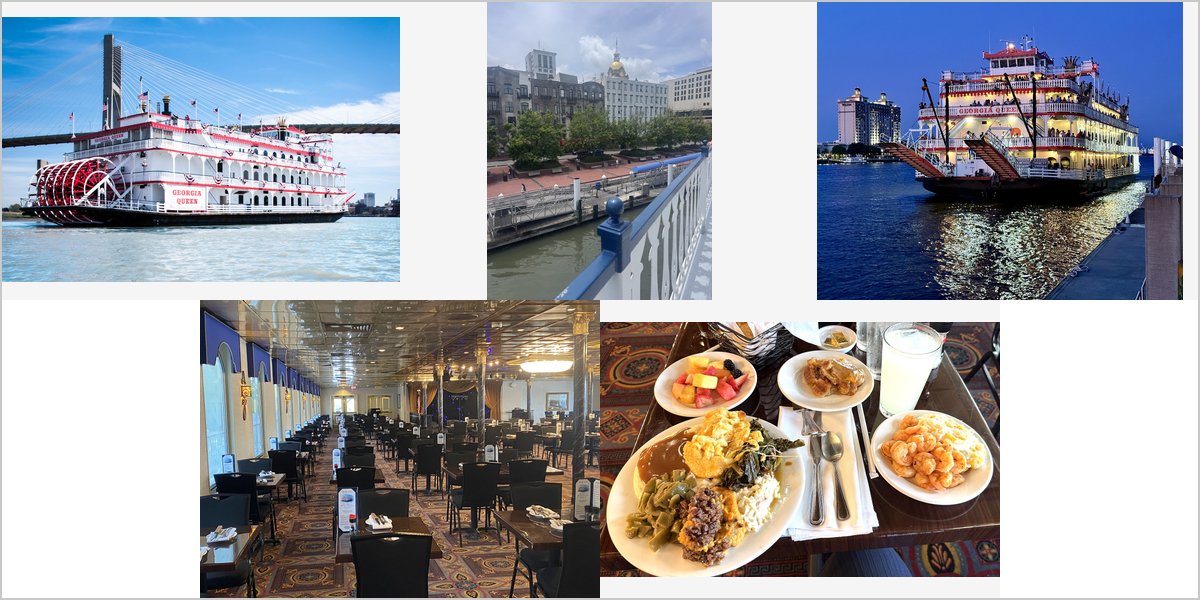
May 16, 2026
A Savannah Riverboat Wedding: Building the Shot List
A venue that moves is a different discipline. The light changes direction as the boat turns, the deck is never still, and you cannot go back to a location.
The Savannah Riverboat operates paddlewheel vessels on the Savannah River, running past River Street’s historic warehouse frontages, the waterfront and out toward the port. Wedding charters mean a ceremony and reception on a boat that is under way for much of the event.
Photographing on a moving vessel is genuinely a different discipline from photographing in a building, and the differences are not obvious until you are on board. The light changes direction continuously as the boat turns, which means your carefully chosen background may be facing the sun five minutes later. The deck vibrates and rolls. Space is extremely limited. And there is no going back — a location that passes is gone.
This guide is organised as a shot list because on a boat, planning is the only form of control you have. We have not photographed a wedding on the Savannah Riverboat. The physics of shooting on water and the geography of the river are predictable; the route, the timings and where photographers may work are for their team, and the route and schedule matter more here than at any fixed venue.
Savannah Riverboat at a glance
| Where | Savannah River, departing the historic River Street waterfront |
| Character | Paddlewheel riverboat; the venue is under way for much of the event |
| Light | Changes direction continuously as the vessel turns — nothing is fixed |
| Constraints | Vibration, motion, very limited deck space, and no returning to a location |
| Ask first | The route, the departure time, and where photographers may work on deck |
Get the route and the timings first
This is the whole game. On a fixed venue you learn where the light falls; on a boat you need to know where the boat will be and which way it will be pointing at each moment. A vessel heading downriver at sunset gives you completely different frames from one heading upriver at the same time.
Ask three things: the departure time, the route, and roughly when the vessel turns. From those you can work out when the historic waterfront will be lit, when you will be backlit, and when the twenty-minute post-sunset window falls relative to the boat’s position. That is genuinely plannable and almost nobody does it.
Then build the shot list against the schedule rather than against a list of locations. The ceremony happens when it happens; what you control is which side of the deck you stand on and which direction you shoot.
The shot list, tied to the journey
Six frames, ordered by when they become available rather than by importance.
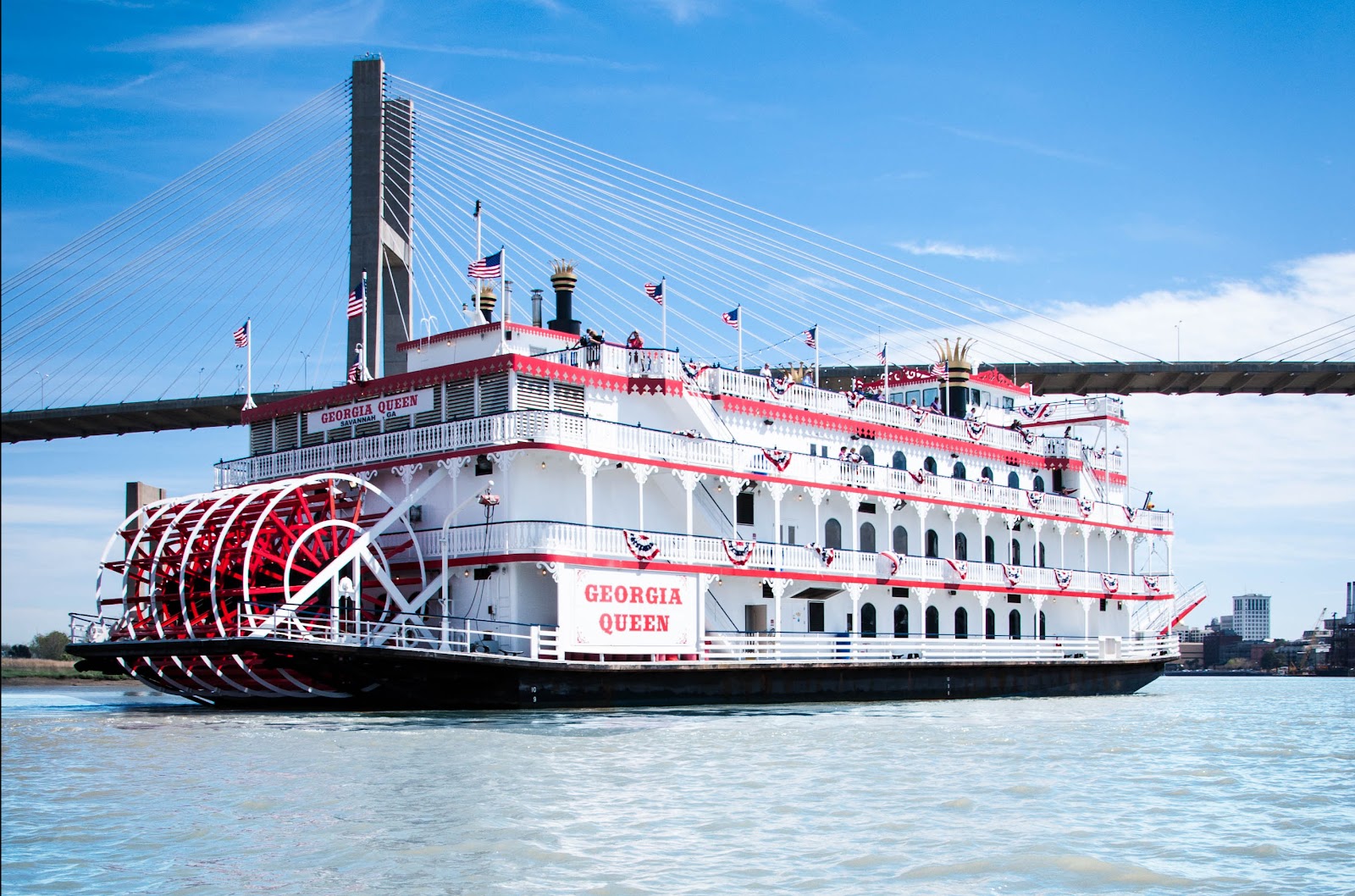
- At the dock, before departure. The only time the vessel is still and the only time you can shoot the boat itself from outside it. Take the establishing frame here or not at all.
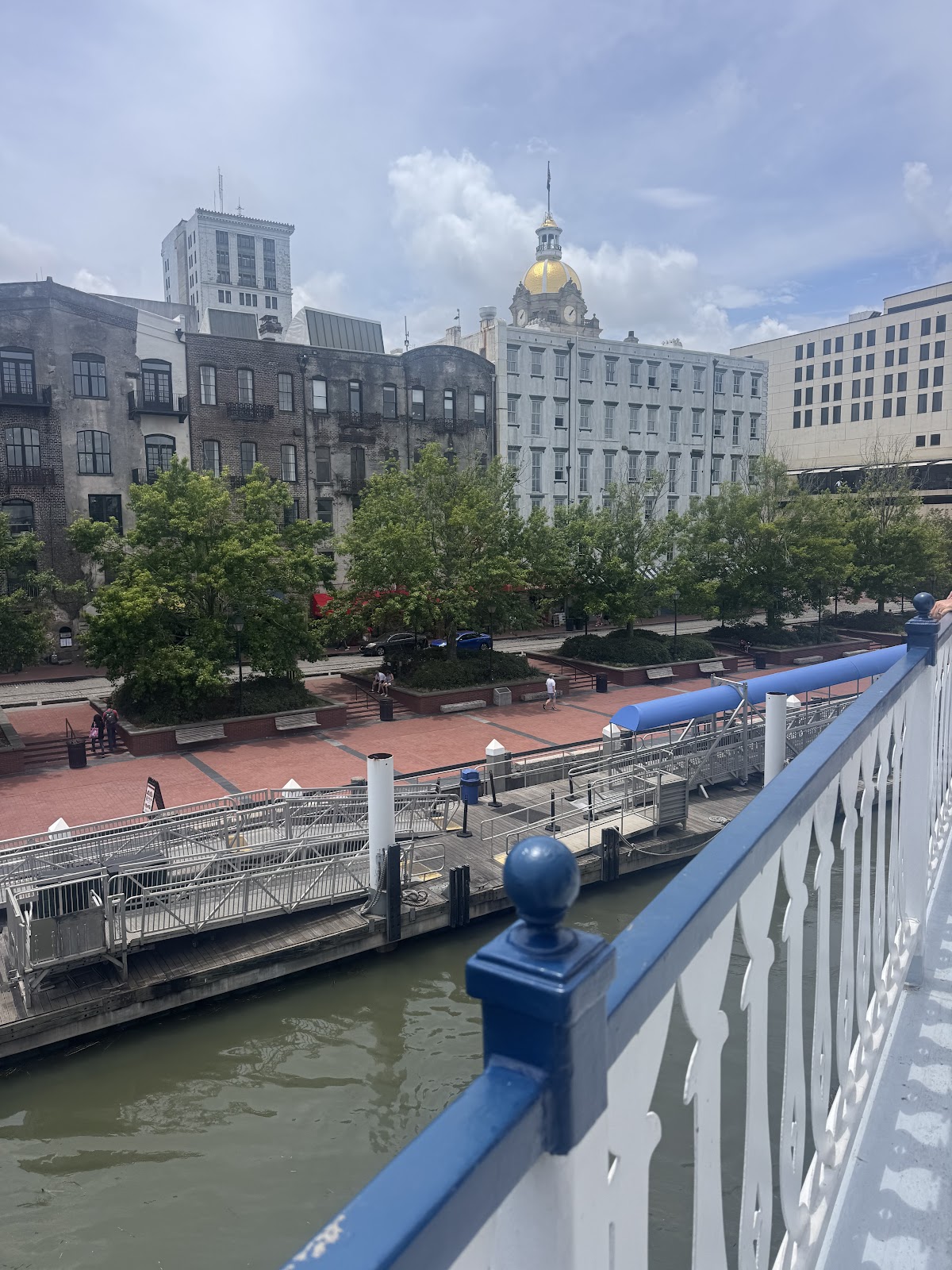
- The historic River Street frontage from the water. Nineteenth-century warehouse facades and cobbled ramps, seen from an angle no land-based photographer gets. Best when the sun is on them rather than behind them.
- The paddlewheel in motion. A fast shutter freezes the water into droplets and blades; a slow one smears it. Fast is more striking. This is the frame that says riverboat and nothing else.
- Couple at the rail, wind and water behind. Shot with a long lens from along the deck so the vessel’s lines recede. Wind will move hair and veil, which is an asset if you are ready for it.
- The bridge and the port. Industrial cranes and the suspension bridge are dramatic, graphic and unlike any wedding background — worth one frame even if it is not conventionally pretty.
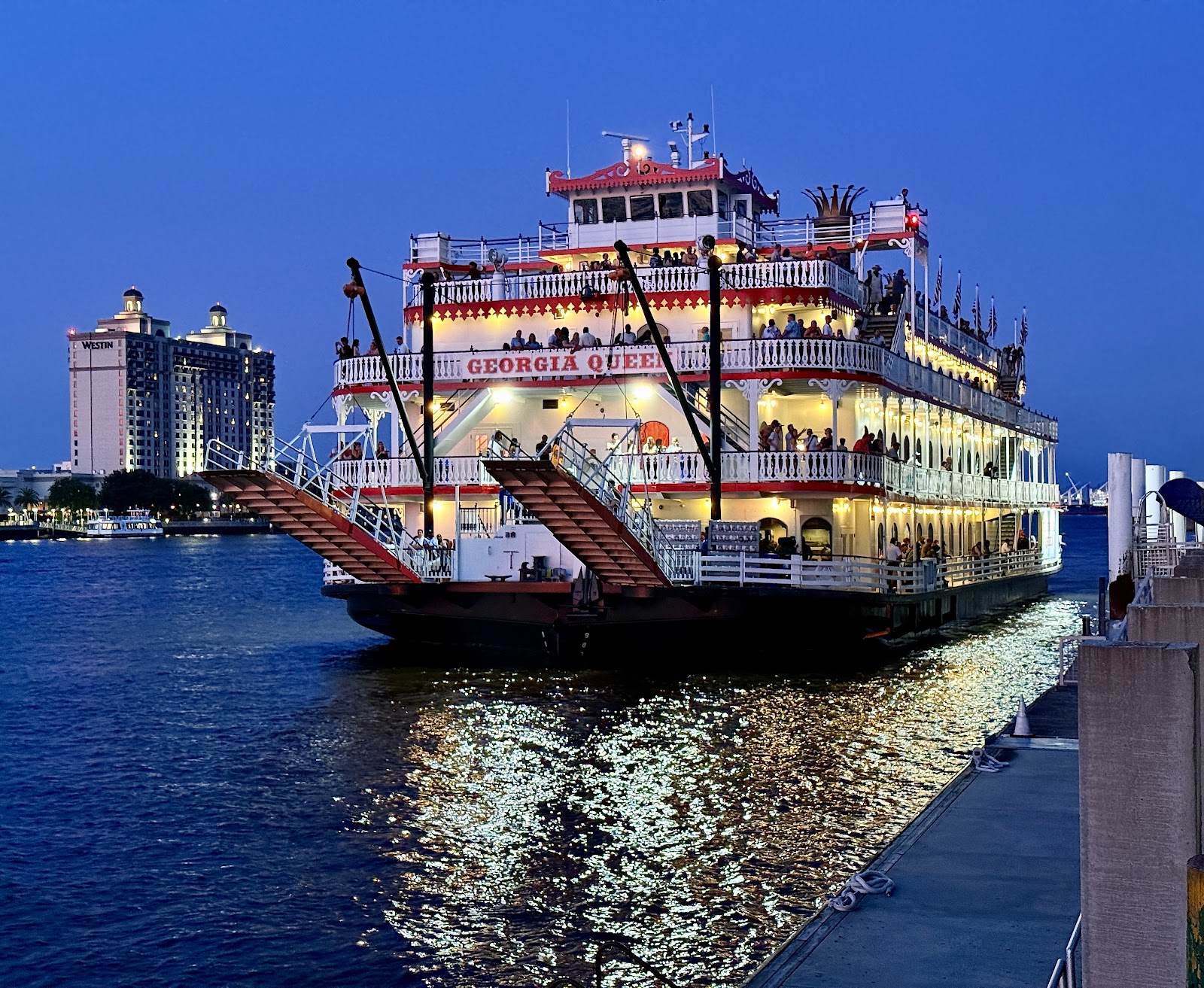
- Dusk from the water. Twenty minutes after sunset, with the waterfront lights coming up and reflections on the river. The best frame of the evening if the route puts you in the right place.
Three things about boats that nobody mentions
First: vibration. A paddlewheel vessel under power transmits a continuous tremor through the deck, and that goes into the camera. Image stabilisation helps with hand shake and does nothing for a vibrating platform. Keep the shutter at 1/250 or faster for anything you care about, and forget tripods entirely — a tripod on a vibrating deck is worse than hand-holding.
Second: the light rotates. As the vessel turns, the sun moves around the boat. A couple standing in beautiful side light will be flatly front-lit or fully backlit within a few minutes, without anyone moving. The practical answer is to work fast when the light is right and to keep checking, rather than setting up and assuming conditions hold.
Third: there is nowhere to go. Deck space is limited, interior saloons are narrow, and you cannot back up to change a composition or step aside to exclude a bystander. Wide lenses are essential, and so is accepting that other guests will be in frames. A 24mm or 28mm will do more work here than on any land venue.
Water light, wind and the practical warnings
The compensation for all of that is the light. Water reflects a great deal of light upward, which is unusually flattering — it fills shadows under brows and chins from below, the opposite of the top-down problem that afflicts atriums. On a bright day the river is effectively a giant reflector, and faces on deck are lit better than they would be on land.
Wind is constant on open water and stronger than on shore. It rules out light modifiers entirely — a softbox on a moving deck in wind is a hazard, not a tool — so plan for bare or minimally modified flash, ideally on-camera with a small diffuser. It also means hair and veils move continuously, which produces genuinely good frames if you shoot bursts rather than single exposures.
Practical cautions: spray and humidity on a lens front element, so keep a cloth accessible and check the glass often. Savannah’s summer heat and humidity are severe and a deck has no shade — the vessel’s interior is the only relief. And a boat has a hard departure time, which means a late wedding party does not simply delay the schedule; it misses the boat.
What works in your favour
- Water reflects light upward, filling shadows under brows — unusually flattering on deck
- A view of the historic River Street frontage that no land-based photographer can get
- The paddlewheel in motion is a frame unique to this venue type
- Wind gives continuous veil and hair movement you cannot manufacture
- Dusk on the water with the waterfront lit is genuinely spectacular
What to plan around
- Continuous deck vibration — keep the shutter at 1/250 or faster and abandon tripods
- The light rotates as the vessel turns, so conditions change without anyone moving
- Very limited space; wide lenses essential and other guests unavoidable in frames
- Wind rules out light modifiers entirely
- A hard departure time, no shade on deck, and spray on the front element
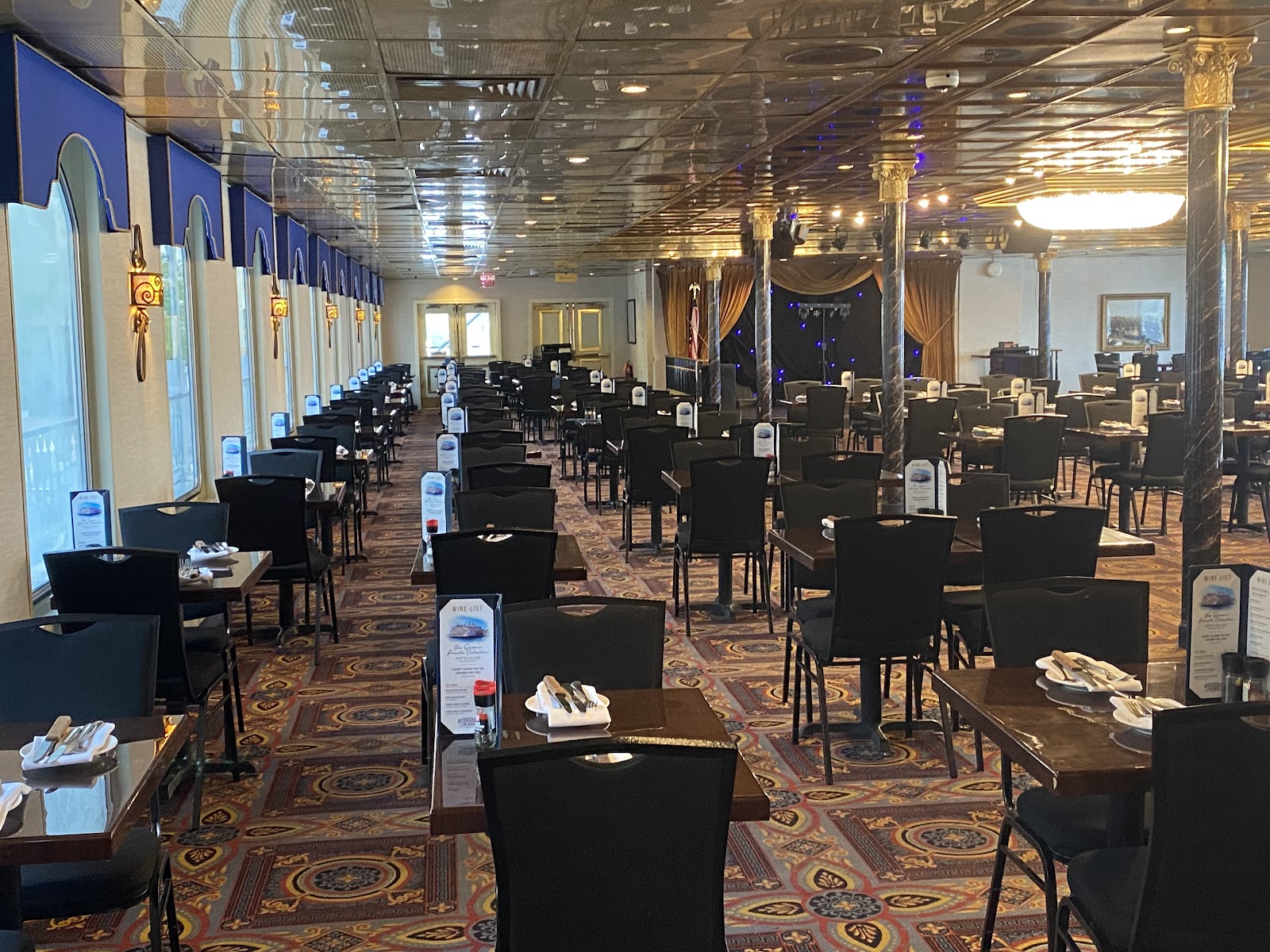
More frames from Savannah Riverboat
Savannah Riverboat wedding photography: common questions
What should we ask the operator first?
The departure time, the route, and roughly when the vessel turns. From those three facts you can work out when the historic waterfront will be lit, when you will be backlit and where the boat will be during the twenty minutes after sunset. On a moving venue that is the only real planning available.
Why does deck vibration matter?
Because a paddlewheel under power transmits a continuous tremor into the camera, and image stabilisation corrects hand shake rather than a vibrating platform. Keep the shutter at 1/250 or faster for anything that matters, and do not bring a tripod — on a vibrating deck it is worse than hand-holding.
Is the light on a boat good or bad?
Better than you would expect. Water reflects a great deal of light upward, which fills shadows under brows and chins — the opposite of the top-down problem in atriums and galleries. The difficulty is not quality but consistency: as the vessel turns, the sun travels around the boat and conditions change every few minutes.
Can you use lighting equipment on deck?
Not modifiers. Wind on open water is constant and stronger than on shore, so a softbox on a moving deck is a hazard rather than a tool. Plan for bare or minimally modified flash, ideally on-camera with a small diffuser, and let the water do the filling.
What is the biggest logistical risk?
The hard departure time. A boat does not wait, so a late wedding party does not delay the schedule — it misses the vessel. Build more buffer into the arrival than you would at a fixed venue, and take the establishing frame of the boat at the dock, because that is the only moment it is available.
More Savannah venue guides
We are writing a photographer’s guide to every venue we would happily shoot in Savannah. Here are three more, plus the full index:
- The Gastonian: A Walk-Through of Two Joined Townhouses
- The Thunderbird Inn: Field Notes on a 1964 Motor Inn
- Wormsloe Historic Site: The Oak Avenue and How to Time It
Planning a wedding at Savannah Riverboat?
On a boat the route is the venue. Tell us your date and departure time and we will work out where the vessel will be when the light is best — and plan the shot list against the journey rather than against a map.