 The Snake River Ranch, Jackson: The Venue’s Own Logic
The Cheyenne Crossing, Cheyenne: The Problem, and Four Ways Out of It
The problem is the wind. Then the emptiness. Four ways round both.
The problem at Cheyenne is not the light. The light is excellent. The problem is the wind, and after that the emptiness.
Cheyenne Crossing is a venue on the high plains of south-eastern Wyoming, at Cheyenne, which sits at something like eighteen hundred and fifty metres on short-grass prairie with the Laramie Range to the west and nothing much in any other direction.
That produces four connected difficulties, and a photographer who has only worked in sheltered landscapes will meet all of them within an hour.
The first is the wind, and it is not a matter of the occasional breezy afternoon. Cheyenne is among the windiest cities in the United States: sustained wind rather than gusts, blowing for hours or days, with speeds that regularly make outdoor work genuinely awkward and occasionally impossible.
A veil in that is not an ornament — it is a full-time job for two people, and frequently it simply does not come up. A lightstand is a hazard rather than an inconvenience. Anything light on a table leaves. And an unamplified officiant will not be heard by the third row on open ground, which is a ceremony problem rather than a photographic one and it is the venue’s to solve rather than yours.
The second is the absence of shade. Short-grass prairie has no trees to speak of, and what trees exist at a high-plains property were planted and are small. So between mid-morning and late afternoon in summer there is nowhere outdoors to stand that is not in full sun.
The third is the absence of relief. The plains here are not quite flat but they are close enough that there is no elevated viewpoint, no slope to separate a subject from a background, and a horizon that is level in every direction — which makes any camera tilt immediately obvious and removes the geometry that does compositional work almost everywhere else.
And the fourth is the emptiness, which is the interesting one. There is very little in the middle distance. A frame composed the way you would compose it in a landscape with features in it comes back as a subject, a lot of grass and a lot of sky, and it reads as empty rather than as spacious.
None of that makes Cheyenne a poor place to photograph. The light at eighteen hundred metres in dry air is genuinely superb, the skies are among the most dramatic in the country, and the emptiness is the subject rather than the obstacle once you commit to it. But the good frames come from four specific manoeuvres rather than from working the property as though it had features.
The first is to make the sky the subject. The second is to find the lee, because every property on the plains has one. The third is to use the low sun on short grass, which is a specific and beautiful condition. And the fourth is to go inside or against a building, and to do it deliberately rather than as a retreat.
The Cheyenne Crossing at a glance
| Where | A venue on the high plains at Cheyenne, Wyoming, around 1,850 m |
| The problem | Sustained wind, no shade, no relief, and very little in the middle distance |
| Four ways out | Make the sky the subject, find the lee, use low sun on grass, work against a building |
| The compensation | Dry air at altitude, and some of the most dramatic skies in the country |
| Ask first | The wind plan, the indoor capacity as a number, and what is on in late July |
Ways one and two: the sky, and the lee
The sky first, because on the high plains it is not background — it is the largest and most interesting thing available, and a photographer who treats it as the top third of a frame is throwing away the venue.
At this altitude, in dry air with very little scattering, the sky is a deeply saturated blue rather than a pale wash, and the cumulus that builds over the plains through a summer afternoon is enormous, well defined and sculptural. Towering cloud over short grass with a level horizon is a landscape of two elements, and both are good.
So compose for it: put the horizon low — a fifth of the frame, or lower — and let the sky occupy the rest. That inverts the instinct to balance a composition and it is the correct move here. A frame that is four-fifths sky with two small figures on a grass line at the bottom is a photograph about where they are, and it is the signature frame of the high plains.
A polariser earns its place, because at altitude it deepens an already saturated sky dramatically and gives cloud edges definition against it. Watch it, though: it can take the blue to an artificial near-black, and at a wide focal length it darkens the sky unevenly across the frame, which on a large area of continuous sky is very visible. Use it at a moderate focal length or not at all.
Storm structure is the version of this to plan for rather than fear. The plains produce organised convection, and the visible architecture of a developing storm — a flat anvil, a defined base, a shelf of cloud, rain visible falling in the distance without reaching you — is among the most dramatic natural subjects there is. From a safe distance and with a real plan to get everyone indoors, a storm on the horizon behind a couple is the best photograph this venue will ever produce.
That is a safety matter as much as an opportunity, and the boundary is not negotiable. Lightning on open prairie is lethal, there is no shelter, and the flattest ground gives you the longest warning and the least protection. Watch it, shoot it from the door of a building, and go in early rather than late. Never put a wedding party on open ground with active convection nearby.
The second manoeuvre is to find the lee, and every property on the plains has one because everyone who has ever lived here has built or planted for it.
Look for three things. A windbreak: a planted line of conifer or poplar along a boundary, put there specifically to break the prevailing wind, which creates a genuinely calm strip on its downwind side that can be twenty or thirty metres deep. That strip is the most usable outdoor ground on the property and it is where the veil works.
A building’s downwind face, which is calm and often the only place a lightstand will stand. And any dip, ditch, cut or shelter belt that sits below the general level — on nearly flat ground, half a metre of drop makes a measurable difference to wind at head height.
Find those on arrival and before the wind matters, because in a sustained blow you will not have time to explore. Ask the venue too — anyone operating here knows exactly where the shelter is, and it is the most useful question you can put to them.
The windbreak has a second use. A planted line of dark conifer is the only substantial vertical mass on a high-plains property, which means it is the only background that is not grass or sky. A subject two metres in front of a conifer windbreak at a moderate focal length has a clean dark background, and that is worth a great deal when everything else is pale.
One more note on wind. It does have a photographic gift, which is that it clears the air. The Laramie Range and the Front Range beyond are visible with real clarity on a windy day and hazed on a still one, so the frames that want distance are best when the conditions are worst for everything else. Take them when the wind is up, and use the lee for the portraits.
Ways three and four: the grass, and the building
The third manoeuvre is to use the light on short grass, and it is the condition that makes this landscape genuinely beautiful rather than merely large.
Short-grass prairie is fine-textured and pale — buffalo grass and blue grama, a few inches to a foot high, silver-green in summer and straw-gold from late summer through winter. What that surface does with a low sun is remarkable: raked almost horizontally, every blade and every tussock throws a shadow, and the whole ground becomes a field of texture with long blue shadows running through it.
At noon the same ground is a flat pale plane with no information in it. The difference between eleven in the morning and seven in the evening on a prairie is the difference between a blank and a landscape.
So the rule is the same one as in the desert: work in the first and last hours, and treat the middle of the day as indoor time. At eighteen hundred metres in dry air, midday sun is hard, shadows are four or five stops down with no fill in the air, and there is no shade to retreat to.
Backlighting is the specific technique to use. Grass heads and seed stalks are translucent, so a low sun behind them turns a prairie into a glowing screen — and because the grass is short, you have to get the camera low to put the light through it. Lying down on a prairie at seven in the evening produces frames that cannot be made from standing height.
Long shadows are the other. On ground this open and this level, a low sun throws shadows that run for metres, and a couple’s shadows extending toward the camera across textured grass is a frame that needs nothing else in it. That is the emptiness working for you rather than against you.
Autumn is when the grass is at its best, because straw-gold prairie under a deep blue sky is a two-colour landscape of considerable beauty, and it lasts from late August through to spring rather than for a fortnight.
The fourth manoeuvre is the building, and the important thing is to use it deliberately rather than as a retreat from the weather.
Establish first what the interiors are and what they hold, as a number, because on the high plains the indoor space is not a contingency — it is the answer to wind, to hail, to lightning and to the middle of a summer day, and it will be used. Compare that number to the guest list before the deposit.
Photographically, a high-plains building is likely to be timber or metal, plain, and functional. Timber is dark and matte and absorbs light rather than returning it, so bouncing will not work — light directly instead, with one modifier close and feathered, and let the dark interior separate the subject, which it will do completely because it sits four or five stops down.
A large doorway in any such building is the best light source on the property: an enormous soft source in a wall that reflects nothing, with very fast falloff, so a subject a metre inside is beautifully modelled with a genuinely dark side. Step the positions out rather than guessing.
And use the building’s exterior as a wall. On ground with no features, a plain timber or metal elevation is a background — flat, textured, and a different tone from grass and sky. Light it from the side so the material shows, and put the subject two or three metres off it. Corrugated metal in raking light is a surprisingly good surface, all ridges and small shadows, and it is a texture particular to working buildings in this country.
One further indoor note. Windows on a high-plains building are usually modest and the exterior is very bright, so a frame including a window will carry a five-stop range. Expose for the room and let the window blow, which reads perfectly well, or light the subject to balance it, which needs real output. The middle gives a dim face and a grey window.
The high plains, and the year
Two conditions define Cheyenne and both are consequences of being high and dry on the plains.
Altitude first. At around eighteen hundred and fifty metres the air is thinner and very dry, which means almost no atmospheric scattering — shadows are hard and four or five stops below the sunlit subject with no fill available, the sky is deeply saturated, distance resolves with extraordinary clarity, and ultraviolet is strong enough that sunburn happens faster than anybody plans for. Bring desert instincts rather than temperate ones.
The diurnal range is large, which is the dry-air signature. A summer day can begin near ten degrees and reach the low thirties, and it will drop fast once the sun is off the grass. An outdoor evening reception needs heating, and frost is possible in almost any month at this elevation.
Second, the weather is genuinely volatile in a way that surprises people, and it is worth being plain about rather than reassuring. Cheyenne sits at the western edge of a corridor that produces severe convection: hail is a real and frequent hazard here rather than a remote one, and the region gets large hail more often than almost anywhere in the country. Hail damages vehicles, marquees and equipment, and it arrives fast.
Snow is possible from September through to May and heavy spring snow is normal rather than exceptional — a May storm that closes roads is an ordinary event. A wedding in April or May here needs a genuine travel contingency.
So the practical advice for any warm-season date is: an indoor space with a known capacity, a real plan for getting everyone into it in minutes, and equipment that is not left in the open. And for any shoulder-season date: a travel contingency that assumes some guests cannot drive.
The seasons, then. June is the wettest month on the high plains and also the greenest — the short grass is at its most silver-green, wildflowers are out, and the days are long, with sunset after half past eight and civil twilight running about thirty minutes at this latitude. It is also the most storm-prone.
July and August are hot, dry and bright, with afternoon convection building most days. The grass turns from green to gold through this period. One local note that matters logistically rather than photographically: Cheyenne hosts a very large rodeo and festival in the second half of July which fills the city — accommodation, traffic and noise are all affected, and a wedding date inside that window needs planning around it. Check the dates and either avoid them or book very early.
September and early October are the best window of the year and the recommendation. The convection season winds down, the air is dry and exceptionally clear so the Laramie Range and the Front Range resolve sharply, the grass is fully gold, temperatures are comfortable, the wind is often — though not always — less relentless than in spring, and sunset around seven puts the end of the day at a civil hour. The risk is an early snow, which is a gift rather than a problem: fresh snow on gold prairie under a deep blue sky is as good as this landscape looks.
Late October into March is winter: cold, windy, with snow that blows rather than settles evenly, and a low midwinter sun near twenty-five degrees that rakes the grass all day. The light is genuinely excellent and the conditions are hard — a party in wedding clothes on open ground in a Cheyenne wind at minus ten has minutes rather than an hour, and the wind chill is the operative number rather than the temperature.
Two snow notes for a cold-season date. Snow is the best natural fill light there is, reflecting a very high proportion of what falls on it so the ground throws light upward into faces and fills eye sockets with no card at all. And it fools a meter: a mostly white scene reads as mid-grey and comes back one to two stops under, so add compensation and check a histogram. Snow in shade is genuinely blue because it reflects a blue sky, which at this altitude is a deep one, and that is correct rather than an error.
April and May are the hardest months to plan: the wind is at its most persistent, heavy wet snow is normal, and the grass is at its most colourless after winter. It is the period to advise against.
And the compensation, in any season, is the half hour after a storm passes, which on the high plains is exceptional and comes with something specific to this landscape. The air washes to absolute clarity so the ranges resolve, the grass is beaded and saturated, standing water on flat ground reflects the sky, and a low sun comes under a departing storm base — which on the plains means a lit foreground against a black sky, often with a rainbow in it, because the storm is moving away from you and the sun is behind you. That combination is the single most dramatic light available at this venue and it is worth waiting for. If a cell goes through at six, do not pack.

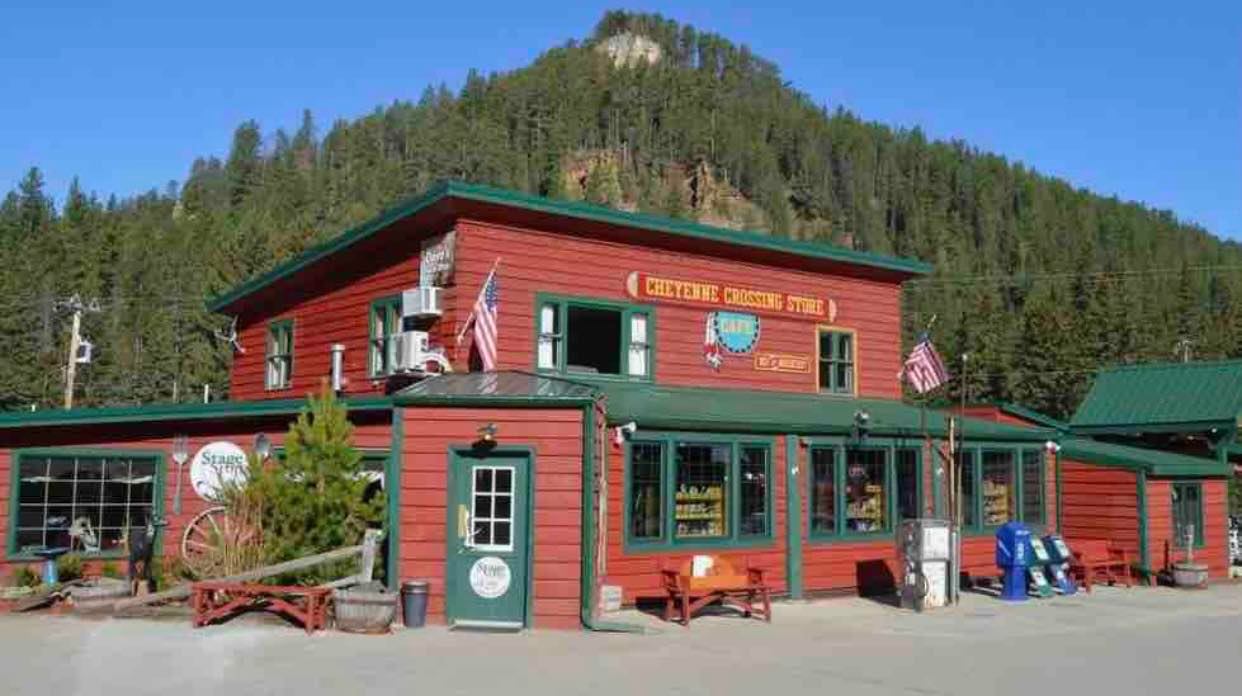
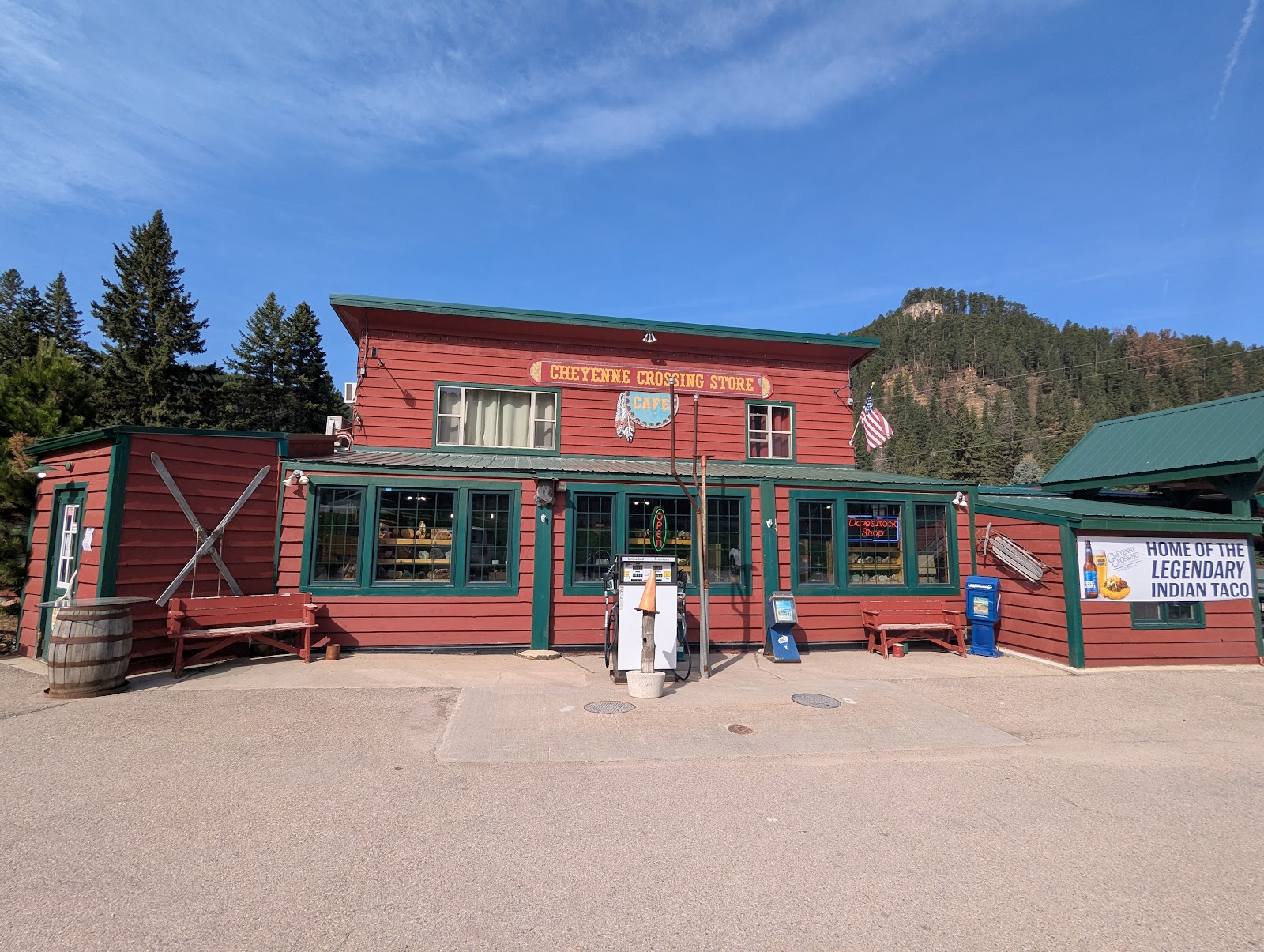
More frames from The Cheyenne Crossing
The Cheyenne Crossing wedding photography: common questions
What is the main problem here?
Wind, and not the occasional breezy afternoon. Cheyenne is among the windiest cities in the United States — sustained rather than gusting, blowing for hours or days. A veil becomes a full-time job for two people and frequently does not come up at all, a lightstand is a hazard, and an unamplified officiant will not be heard by the third row on open ground. The wind plan is the most important question to put to the venue.
How do you work around it?
Find the lee, and find it on arrival rather than when the wind matters. Every high-plains property has one because everyone who has lived here has built or planted for it: a conifer or poplar windbreak along a boundary creates a genuinely calm strip twenty or thirty metres deep on its downwind side, a building’s downwind face is calm, and on nearly flat ground even half a metre of drop makes a measurable difference at head height. Ask the venue — they know exactly where the shelter is.
How should the emptiness be handled?
By making the sky the subject rather than the background. At this altitude in dry air the sky is deeply saturated and the cumulus that builds over the plains is enormous and sculptural, so put the horizon low — a fifth of the frame or lower — and let the sky occupy the rest. A frame that is four-fifths sky with two small figures on a grass line at the bottom is the signature high-plains photograph. Composed conventionally, the same view reads as empty rather than spacious.
What does the light do to short grass?
Transforms it, but only when low. Short-grass prairie is fine-textured and pale, and raked almost horizontally every blade and tussock throws a shadow, so the ground becomes a field of texture with long blue shadows running through it. At noon the same ground is a flat pale plane with no information in it. Get the camera low and backlight it, because grass heads are translucent and a low sun behind short grass turns a prairie into a glowing screen — which needs lying down rather than standing.
Are the storms a problem or an opportunity?
Both, and the boundary is not negotiable. The visible architecture of a developing storm over the plains is among the most dramatic natural subjects there is, and a storm on the horizon behind a couple is the best frame this venue will produce. But lightning on open prairie is lethal, there is no shelter, and hail here is frequent and large enough to damage vehicles and marquees. Shoot it from the door of a building, go in early rather than late, and never put a wedding party on open ground with active convection nearby.
When is the best time of year?
September and early October. The convection season winds down, the air is exceptionally clear so the ranges resolve sharply, the grass is fully gold, temperatures are comfortable, and sunset around seven puts the end of the day at a civil hour. The risk is early snow, which is a gift — fresh snow on gold prairie under a deep blue sky is as good as this landscape looks. Two things to check: April and May are the hardest months, with persistent wind and normal heavy wet snow, and Cheyenne’s large rodeo and festival in the second half of July fills the city entirely.
More Wyoming venue guides
We are writing a photographer’s guide to every venue we would happily shoot in Wyoming. Here are three more, plus the full index:
- The Grand Targhee Resort, Alta: Suits and Does Not Suit
- The Snake River Ranch, Jackson: The Venue’s Own Logic
Planning a wedding at The Cheyenne Crossing?
Find the lee, then make the sky the subject. Tell us your date.