 The Venetian, Garfield: The Building’s Own Logic
The Maritime Parc, Jersey City: Suits and Does Not Suit
A working marina is not a landscaped terrace. That is the point, or the problem.
This venue divides couples on one question, and it is not budget or size. It is whether they want a waterfront or a water view.
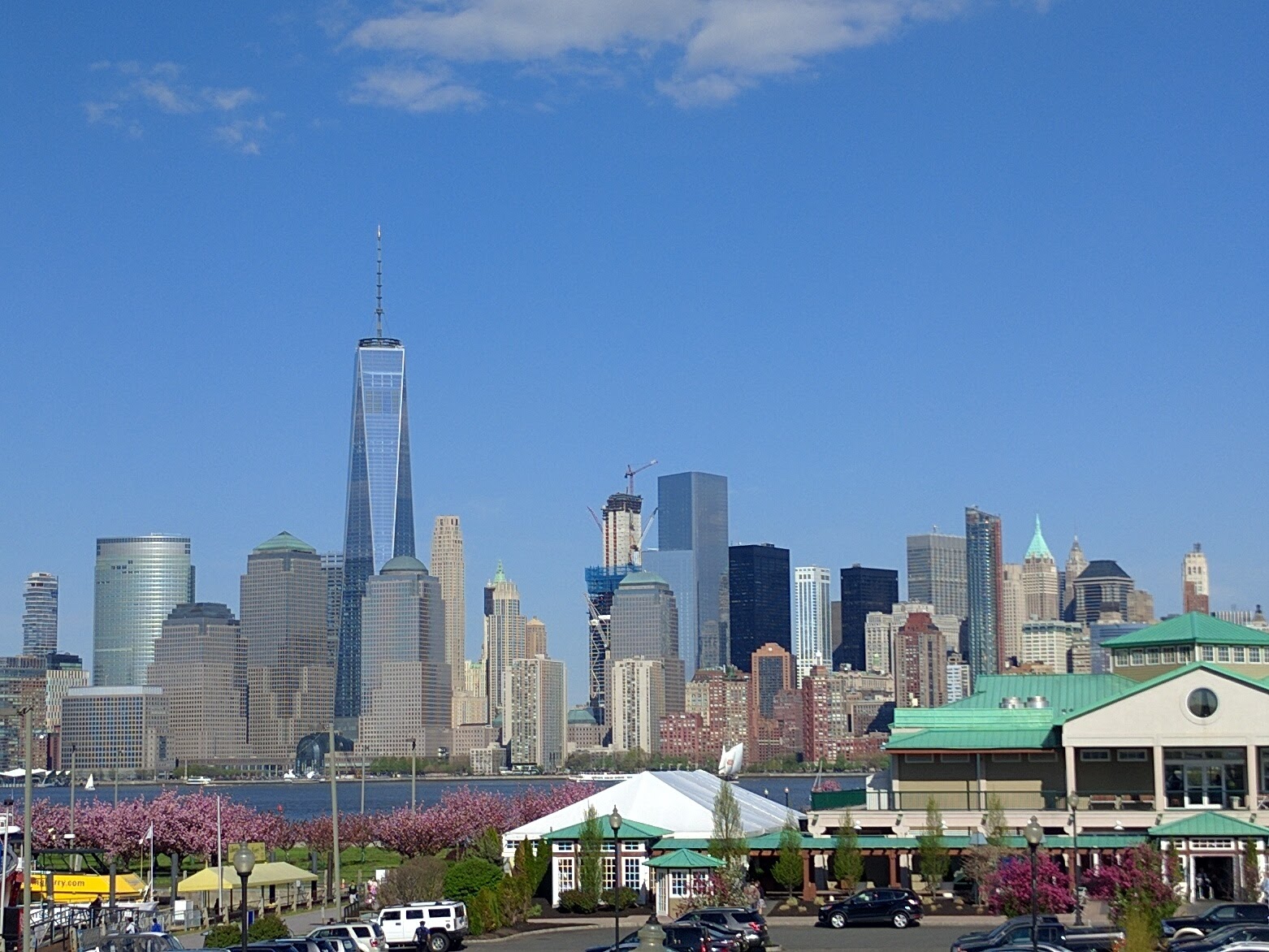
Maritime Parc sits beside a marina inside Liberty State Park, on the Jersey City side of New York Harbour, with the Statue of Liberty and lower Manhattan across the water. What is immediately outside, though, is not a landscaped terrace. It is boats: moored hulls, masts, rigging, cleats, dock lines, fuel points, gangways and the working apparatus of a marina.
That is either the best thing about the venue or a persistent irritation, and which one depends entirely on the couple.
For a photographer it is straightforwardly an asset, and worth saying why. A marina gives you three things a manicured waterfront does not. Masts, which are strong repeated verticals and the only thing on a flat harbour edge that breaks the horizon. Hulls, which are large curved pale-and-dark forms at exactly the right scale to sit behind two people. And rigging, which provides fine diagonal lines to compose against and to shoot through.
It also gives you a working atmosphere. A photograph made among boats reads as somewhere rather than anywhere, in a way that a photograph made on a paved terrace with a distant skyline does not. The skyline is shared with every venue on this shore; the marina is not.
Against that, it is a working waterfront with everything that implies: exposure, salt, tide, wind, noise, and equipment that belongs to other people and cannot be moved.
The governing geographical fact applies here as it does all along this bank and it is worth stating because most people get it backwards. You are on the west side. The statue and Manhattan are to the east. So at the end of the day the low sun is behind you, lighting the west faces of everything across the water — the skyline is front-lit and warm at sunset here, not silhouetted, with the sky deepening behind it. From the New York side you would be shooting into the sun at a dark outline. That is a real advantage and it belongs to the whole Jersey shore.
So: what this venue suits, what it does not, and then the practical business of the harbour and the year.
The Maritime Parc at a glance
| Where | A marina-side venue in Liberty State Park, Jersey City, NJ |
| Suits | Couples who want a working waterfront, masts, hulls and atmosphere |
| Does not suit | Anyone wanting a manicured terrace, or a wind-free outdoor ceremony |
| The advantage | West bank, so the skyline is front-lit at sunset |
| Ask first | Park permit rules, the indoor fallback capacity, and dock access |
What it suits
It suits a couple who actively want the boats in the photographs, and that is a real and identifiable preference rather than a matter of taste in the abstract.
The test is simple. Show them a frame with masts and rigging across the top of it and a moored hull behind the subject, and see whether they respond to it or start asking whether the boats could be moved. If the boats are the appeal, this venue delivers something that no other venue on this shore does. If they are an obstacle, a glass box further up the waterfront will make them happier.
It suits a photographer who likes to work with structure. Masts give a flat horizon something to break it; rigging gives a frame diagonals; dock lines and cleats give a foreground element at ground level; and hulls give a large simple curved form to place people against. Those are compositional tools rather than scenery, and a photographer who enjoys building frames out of geometry will get a distinctive set here.
It suits an evening wedding in the warmer half of the year, for a reason specific to a marina: once the light goes, the boats become a field of small lights at water level, riding lights and cabin lights and dock lighting, moving slightly with the water. That is a foreground of practical lights between the camera and the skyline, which is exactly what a distant city view needs and almost never has. A skyline frame with lit boats in front of it is a considerably better photograph than the same skyline over empty water.
It suits a wedding that wants both the near and the far view. This position in the park looks out on the statue and Ellis Island as well as lower Manhattan, which means three separate landmarks at three different distances — and the marina in front of them all as a foreground. That is a richer set of options than a single-view venue and the last part of this section explains how to order them.
It suits a couple happy to be in a park. Liberty State Park is large, open and public, and the venue sits inside it, which means genuine open parkland, planting, paths and an unobstructed low western sky are all a short walk away. That last one matters: the west is the one direction with no landmark in it, which means a straightforward backlit portrait with a clean sunset behind the couple is available here, and at most waterfront venues on this shore it is not, because the view is in the way. Two frames facing west, then turn round for the landmarks.
It suits an autumn or winter date better than couples usually expect, because the air over this harbour is far clearer in cold weather and the distant skyline resolves properly rather than hazing into grey. More on that below.
And it suits a photographer prepared to arrive early. A marina at first light is still, the water flattens, the masts reflect, and there is nobody about — and if a couple is getting ready on site, a ten-minute walk before anybody else is up produces frames that cannot be made at any other hour. The sun rises behind Manhattan from here, so the skyline is a hard silhouette and the water a sheet of glare, which is not a portrait condition but is a superb landscape one.
One ordering note, since it is the closest thing this venue has to a routing problem. Put lower Manhattan first, while the sun is still up and raking the towers, because it is the furthest and needs the most light. Move to Ellis Island as the colour warms, because red brick is at its best in the last ten minutes of direct sun. Take the statue as a silhouette after the sun has gone, floodlit against a graduated sky. And keep the marina itself for the balance point, when the boat lights come up. That follows the light rather than fighting it.
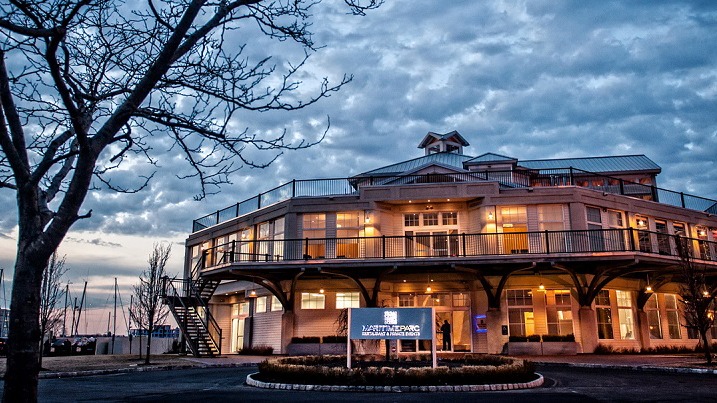
What it does not suit
It does not suit anyone who wants a wind-free outdoor ceremony, and this is the largest practical constraint at the venue.
A marina on an open harbour edge, with a mile and a half of water to the east and low ground to the west, has nothing at all to slow a breeze. A westerly arrives across the docks with force and a sea breeze comes the other way on summer afternoons. A veil in that is a two-person job, a lightstand needs sandbagging, and a microphone on an open dock will pick up wind noise that no amount of positioning fixes. A windy day here is a materially different event from a windy day in a courtyard.
So ask what the indoor ceremony fallback actually is, and ask for its capacity as a number rather than as an assurance. That number, compared to the guest list, is the single most important fact in a booking conversation at any exposed waterfront venue.
It does not suit a couple who want the surroundings tidy. A marina is somebody’s workplace and somebody else’s property. Boats are where their owners left them, tarpaulins and fenders and trolleys are where they need to be, and none of it can be moved for a photograph. Frames will contain other people’s equipment and other people’s names painted on transoms. That is part of the character, and a couple who will be bothered by it should be told before the deposit rather than after.
It does not suit equipment that is precious. Salt air is corrosive, salt spray is worse, and a windy day on an exposed dock puts a fine saline mist on everything — lenses, bodies, contacts, hinges. Wipe down properly the same evening rather than the next week, keep a rain cover accessible, and change lenses with your back to the wind. This is a genuine maintenance cost of working at marinas and it is worth naming.
It does not suit a plan that depends on the skyline in summer. Metro-area humidity produces real haze, and lower Manhattan at a mile and a half is at exactly the distance where haze dominates — a July wide frame of it from here is a pale grey suggestion, and no technique recovers it. The honest thing to tell a couple is that the distant view will look better in a February engagement session than on an August wedding day. The nearer subjects, the statue and the boats, are far less affected.
It does not suit a guest list with mobility limitations spread across it, without checking. Dock surfaces, gangways and floating pontoons move, have gaps and level changes, and are frequently not accessible. Establish which parts of the waterfront a wedding party may actually use and which are for boat owners only, and establish it before promising anybody a photograph on a pontoon.
It does not suit a photographer who has not checked the permit position. The venue and the park are not the same organisation, and a state park will very often require a permit for commercial photography or for an event anywhere outside the venue’s own footprint. That requirement is not waived by a wedding. Ask the park directly and ask early, because the best positions — the open parkland, the western sky, the shoreline paths — are park land rather than venue land.
It does not suit a tight schedule with a long walk in it. The park is large and mostly flat and open, and the good landmarks and the surviving nineteenth-century railway terminal at the far end are twenty minutes away for a party of a dozen in formal clothing. That is an hour committed, and it competes directly with the end of the day. Pick one.
And one seasonal note that belongs here. An exposed harbour dock in January is genuinely cold with nothing to shelter behind, and sunset before half past four means the whole outdoor portion of a winter day finishes early. A winter wedding here works, and the outdoor work has to be short, planned, and close to a door.
The honest summary: if the couple want a working waterfront and will enjoy the boats, and their numbers fit the indoor fallback, this is a distinctive venue that produces a set nobody else on this shore can. If they want a tidy terrace with a view, or a guaranteed calm outdoor ceremony, the same qualities that make it good will make them uneasy all day.
The harbour, and the year
Three numbers from the latitude — about forty and a half degrees north — set the shape of the day here.
The midsummer noon sun reaches about seventy-three degrees, high enough to flatten both the boats and the distant skyline into pale shapes through the middle of a summer day. The midwinter noon sun sits near twenty-six degrees, low enough to rake masts, hulls and towers from the south all afternoon. And civil twilight runs about thirty minutes in midsummer, of which the usable balance point — where the boat lights, the landmark floodlighting and the sky are within a stop of each other — runs twelve to fifteen minutes.
There is a fourth number worth knowing because this venue has subjects spread across an arc: the sun’s setting azimuth swings something like sixty degrees across the year at this latitude, from well north of west in late June to well south of west in late December. That changes the angle at which low light strikes each landmark and which parts of the skyline are lit rather than shaded by their neighbours. A composition that worked in July will be lit differently in January. Check it for the actual date.
Air clarity is the most important seasonal variable and it matters more here than temperature does. Cold dry air over the harbour is far more transparent than summer air, so in January and February lower Manhattan resolves with real detail and Ellis Island’s brickwork holds its colour, where in July and August both soften. The clearest and most modelled distant views of the year are in midwinter, and a photographer who only knows this venue in summer has not seen it at its best.
The tide is a variable that most photographers never consider and it genuinely changes the frames. This is a tidal estuary with a range of roughly a metre and a half, which means the height of every moored hull relative to the dock changes through the day by that much, and so does how much of the hull and the waterline is visible. At low water a boat sits down in its berth and you are looking at deck level from above; at high water it rides up and the hull fills more of the frame. Neither is better, and if a specific frame matters it is worth knowing which you will have — tide tables for this harbour are published and free.
Tide also affects whether a pontoon is level with the dock or a step down from it, which is a practical matter for anybody in formal shoes.
Salt spray, condensation and wind have been covered. The one to add is that the water surface here is usually moving, which means it scatters rather than mirrors: lights become long shimmering vertical columns rather than clean inverted images. Get the camera low and that column runs the full depth of the frame. On a still evening the water flattens and you get a true reflection, with masts doubled — which is the best version and cannot be arranged. Dawn is when it happens most often.
Season by season. Late September into early November is the strongest window. The humidity drops out and the air clears markedly, temperatures are comfortable in formal clothing on an exposed dock, sunset lands around six so the balance point falls at a civil hour, and the light stays low enough that boats and skyline are both modelled through the whole afternoon. Late April and May are the other good window, with clearing air, lengthening evenings and the boats coming back into the water for the season — which is worth checking, because a marina in March may be substantially emptier than the same marina in July, and the boats are half the reason to be here.
That is a genuinely important scheduling point and it is easy to miss: ask the venue when the marina is fullest. A winter frame has clear air and few boats; a summer frame has hazy air and a full marina. The shoulder seasons give a reasonable amount of both.
Summer is comfortable, long and hazy, with sunset after eight in late June putting the balance point near half past eight — comfortably inside a reception. The marina is full, which is the main argument for a summer date here. Storms move through this metro quickly, and the half hour after a cell clears is the best light of the year: washed air so the skyline finally resolves, wet decking reflecting the sky, hulls at full saturation, and a low sun under a broken ceiling. If a cell goes through at six, wait rather than pack.
Winter is clear, short and cold, with the outdoor work compressed into the early afternoon and the balance point before five, during cocktails. Put it on the timeline as a named item. The compensation is the sharpest distant views of the year and a low sun raking the docks all afternoon.
Two harbour notes to close. There is real traffic out there — ferries crossing regularly, tugs and barges working, and large vessels heading for the container terminals — and a ship passing behind a subject during the balance point is a strong and very specific frame. Ferries run often enough to plan on. And helicopters use the river corridor, which is a noise consideration for an outdoor ceremony rather than a photographic one, and worth mentioning alongside the wind.
The instruction that covers the venue: decide early whether the boats are the point, get the indoor fallback capacity as a number, check the permit position with the park, and run the evening in the order the light dictates — Manhattan, then the island, then the statue, then the marina as its lights come up.
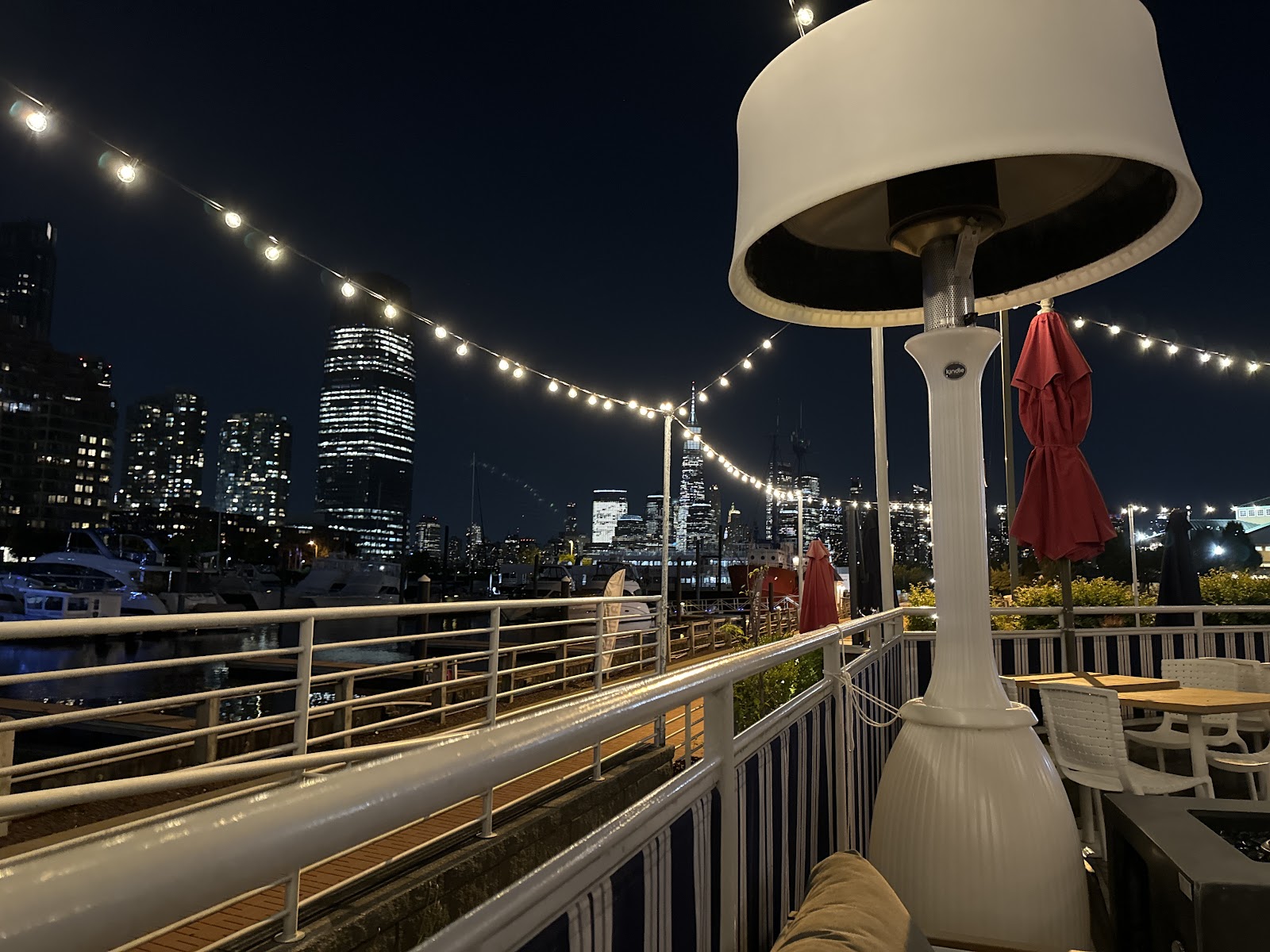
More frames from The Maritime Parc
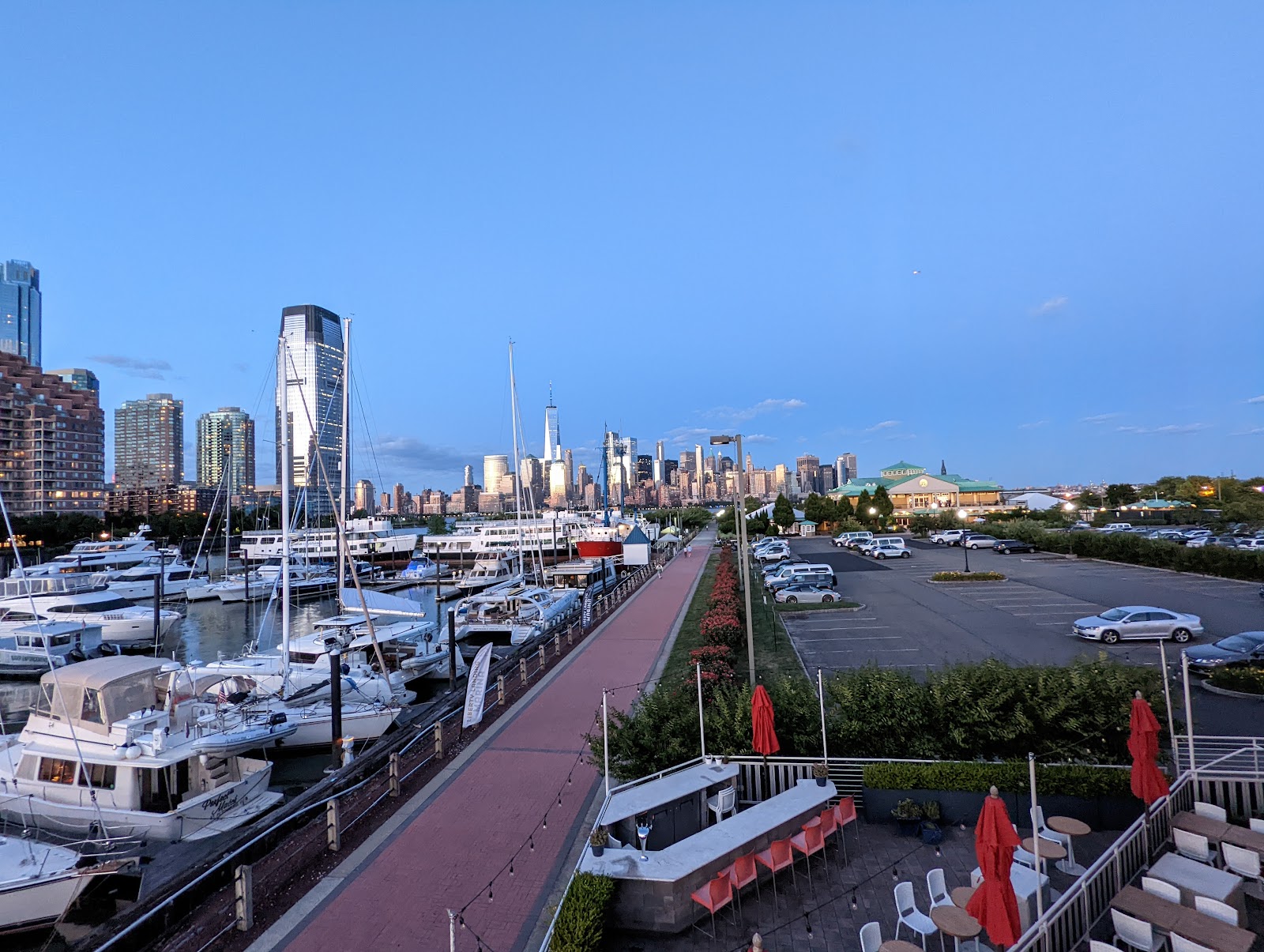
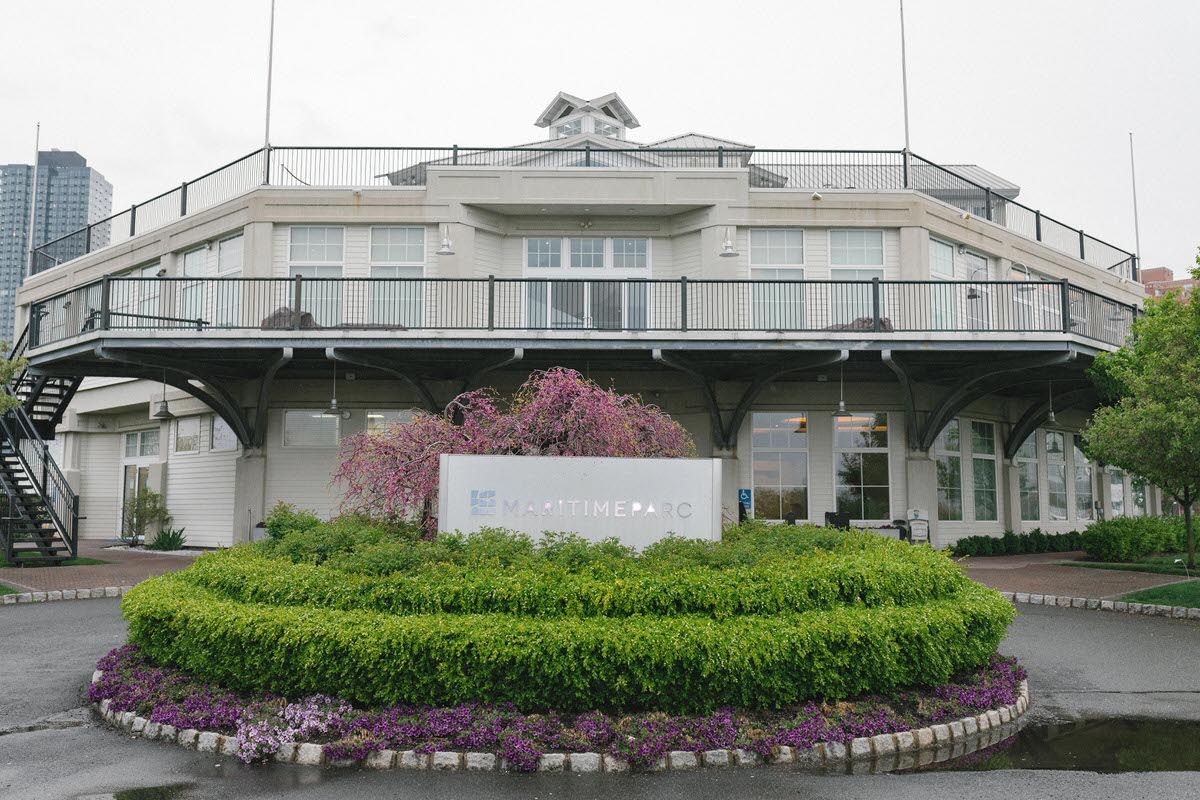
The Maritime Parc wedding photography: common questions
Who is this venue right for?
Couples who actively want a working waterfront in their photographs — masts breaking the horizon, hulls behind them, rigging to compose through — rather than a landscaped terrace with a distant view. The skyline here is shared with every venue on this shore; the marina is not, and it is what makes the set distinctive. If the instinct on seeing a mast in frame is to ask whether the boats could be moved, a glass venue further up the waterfront will suit better.
What is the biggest practical constraint?
Wind. A marina on an open harbour edge with a mile and a half of water to the east has nothing to slow a breeze, and a windy day here is a materially different event from a windy day in a courtyard — a veil becomes a two-person job, lightstands need sandbagging, and an open-dock microphone picks up noise that positioning cannot fix. Ask what the indoor ceremony fallback is and get its capacity as a number, then compare it to the guest list.
Does the tide matter?
More than people expect. This is a tidal estuary with a range of roughly a metre and a half, so the height of every moored hull relative to the dock changes through the day by that much — at low water you look down at deck level, at high water the hull rides up and fills more of the frame. It also determines whether a pontoon is level with the dock or a step down from it, which matters in formal shoes. Tide tables for this harbour are published and free.
Will the marina be full on our date?
Ask, because it is half the reason to be here and it varies by season. A winter frame has the clearest air of the year and comparatively few boats; a summer frame has a full marina and genuine haze on the distant skyline. The shoulder seasons — late April and May, late September into early November — give a reasonable amount of both, and are the best all-round windows for other reasons too.
Are there equipment concerns?
Yes, and they are real rather than theoretical. Salt air is corrosive and salt spray is worse, and a windy day on an exposed dock puts a fine saline mist on lenses, bodies, contacts and hinges. Wipe everything down the same evening rather than the next week, keep a rain cover accessible, and change lenses with your back to the wind.
What order should the evening run in?
Follow the light. Lower Manhattan first, while the sun is still up and raking the towers, because it is the furthest and needs the most light. Ellis Island as the colour warms, since red brick is at its best in the last ten minutes of direct sun. The statue as a silhouette after the sun has gone, floodlit against a graduated sky. And the marina itself at the balance point, when the riding and cabin lights come up — a skyline frame with lit boats in front of it is considerably better than the same skyline over empty water.
More Jersey City, NJ venue guides
We are writing a photographer’s guide to every venue we would happily shoot in Jersey City, NJ. Here are three more, plus the full index:
- The Park Loft, Jersey City: The Problem, and Four Ways Out of It
- The Battello, Jersey City: The Light Through the Day
- The Hudson House, Jersey City: One Frame, and How It Is Made
Planning a wedding at The Maritime Parc?
If the boats are the point, this is the shore for it. Tell us your date.