 The Audubon Aquarium: Field Notes on Photographing Through Glass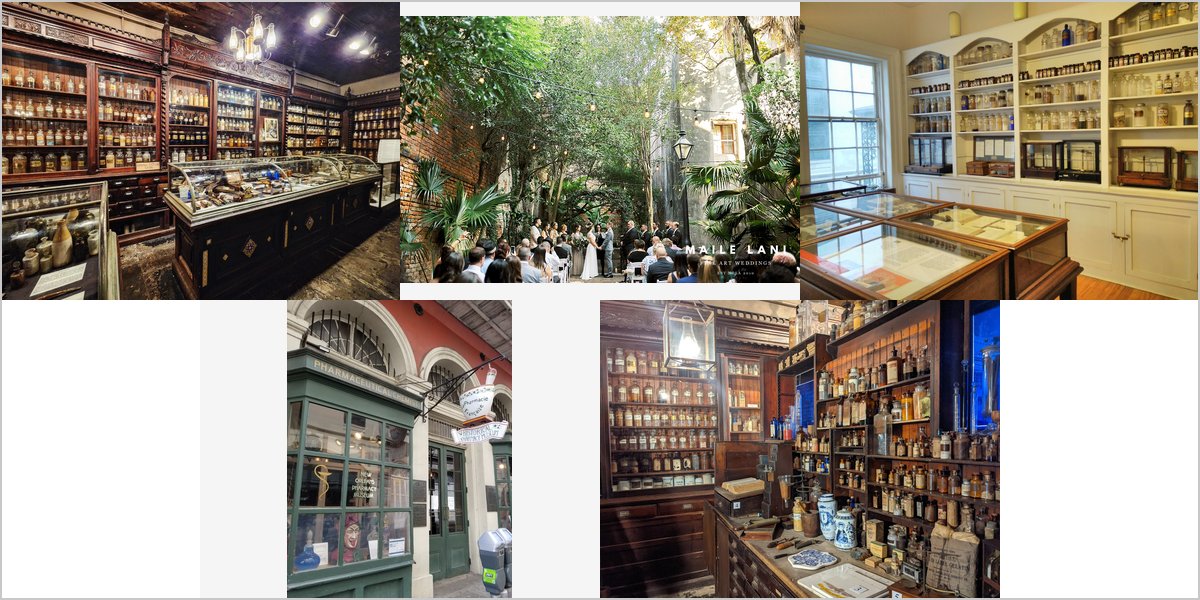
June 14, 2026
The New Orleans Pharmacy Museum: Who This Venue Suits
Original 1820s apothecary cabinets full of glass jars, and a courtyard behind. Visually extraordinary, genuinely tiny, and a courtyard that rescues it.
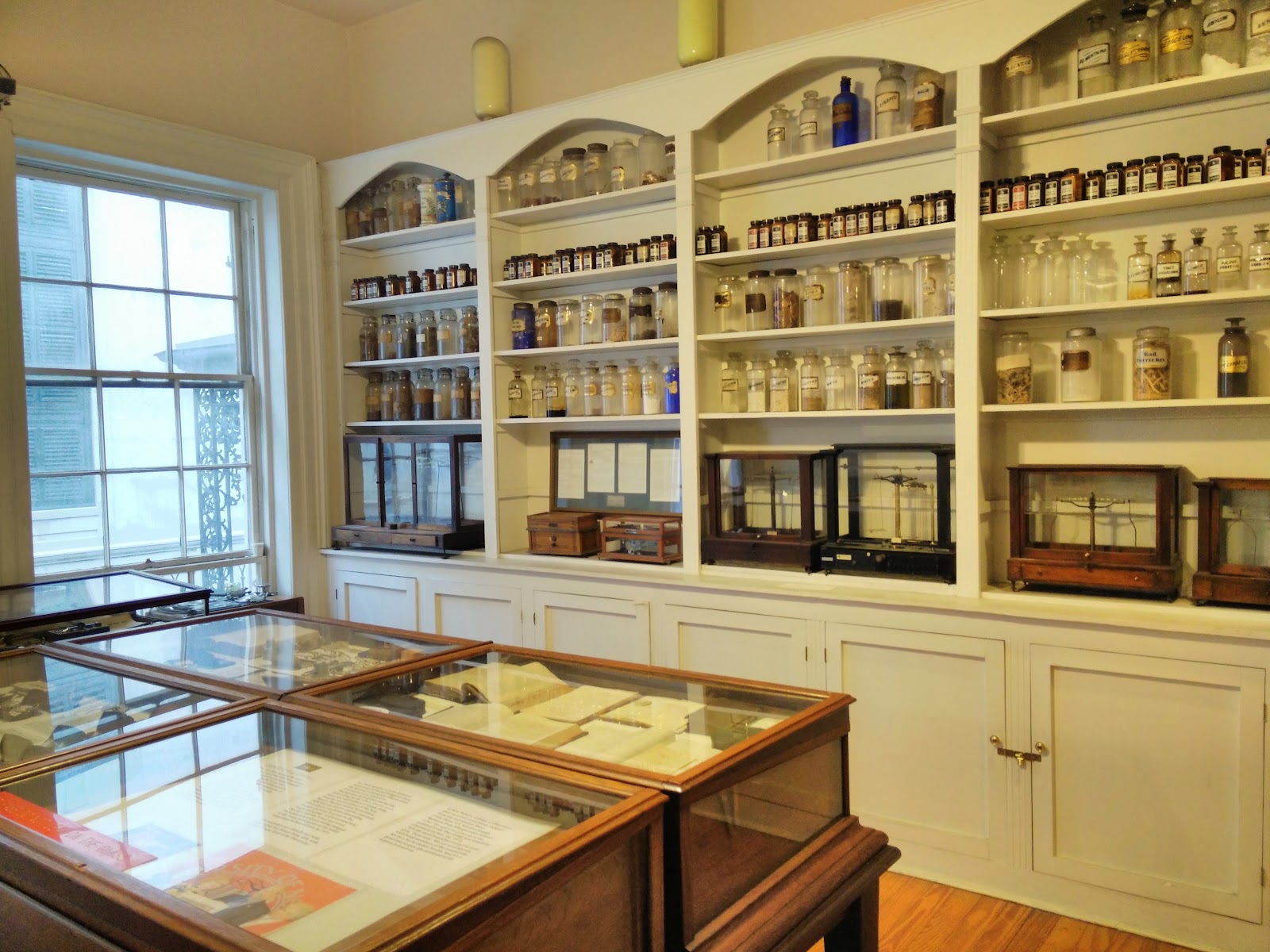
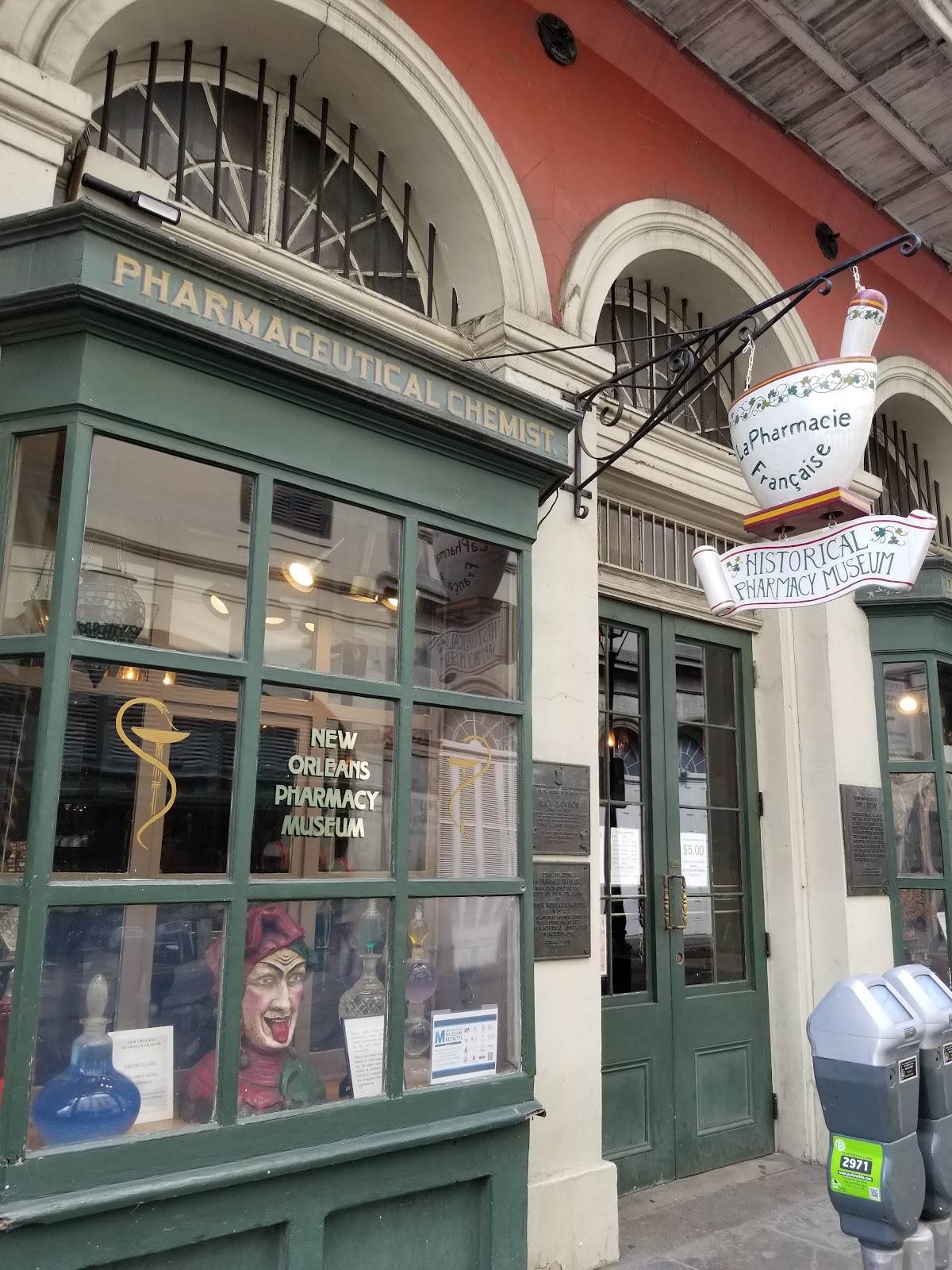
The New Orleans Pharmacy Museum occupies an 1823 building on Chartres Street in the French Quarter, built for Louis Dufilho Jr., recognised as America’s first licensed pharmacist. The interior retains original mahogany cabinetry filled with apothecary jars, bottles, instruments and period fittings, and there is a walled courtyard behind.
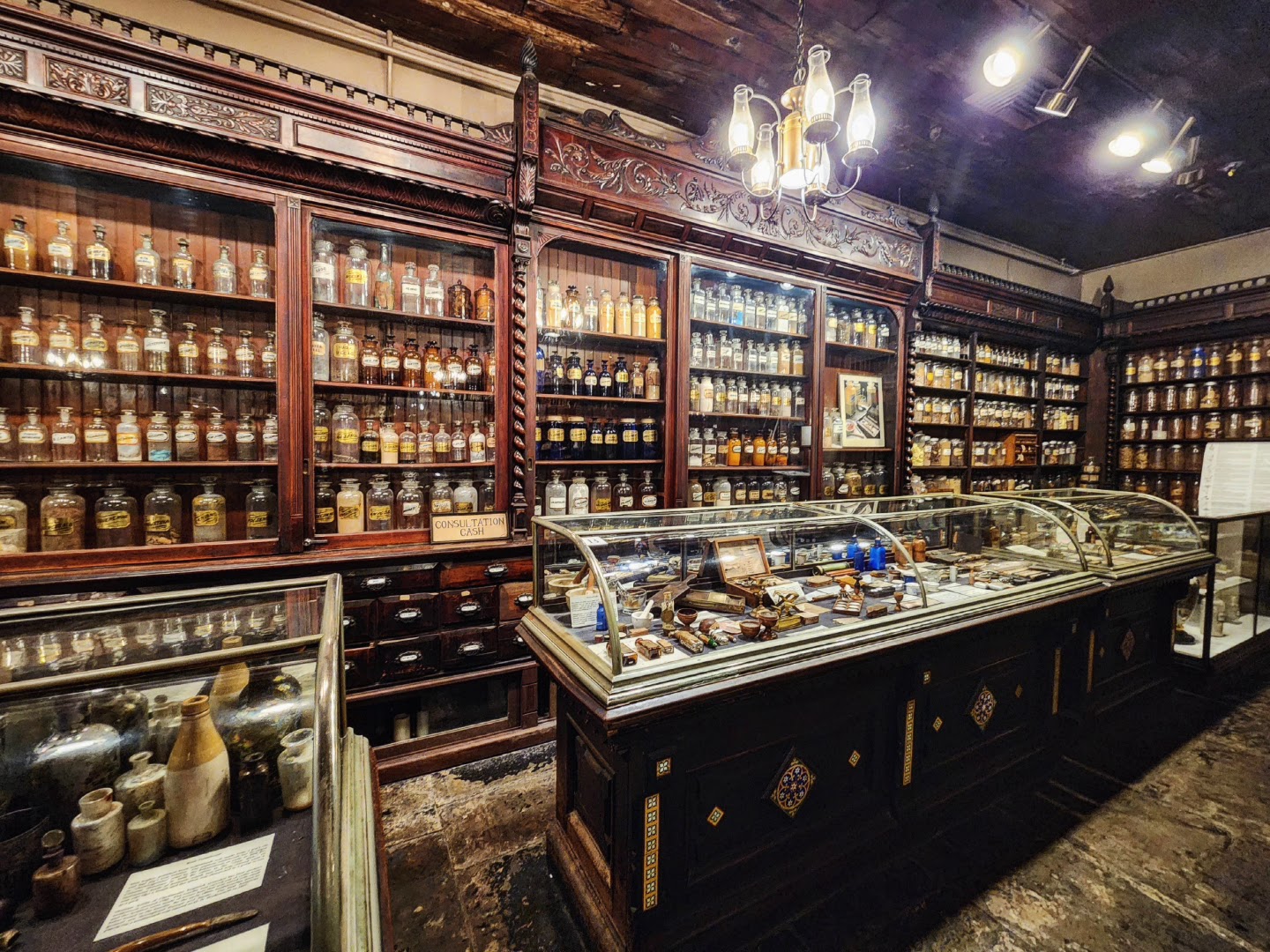
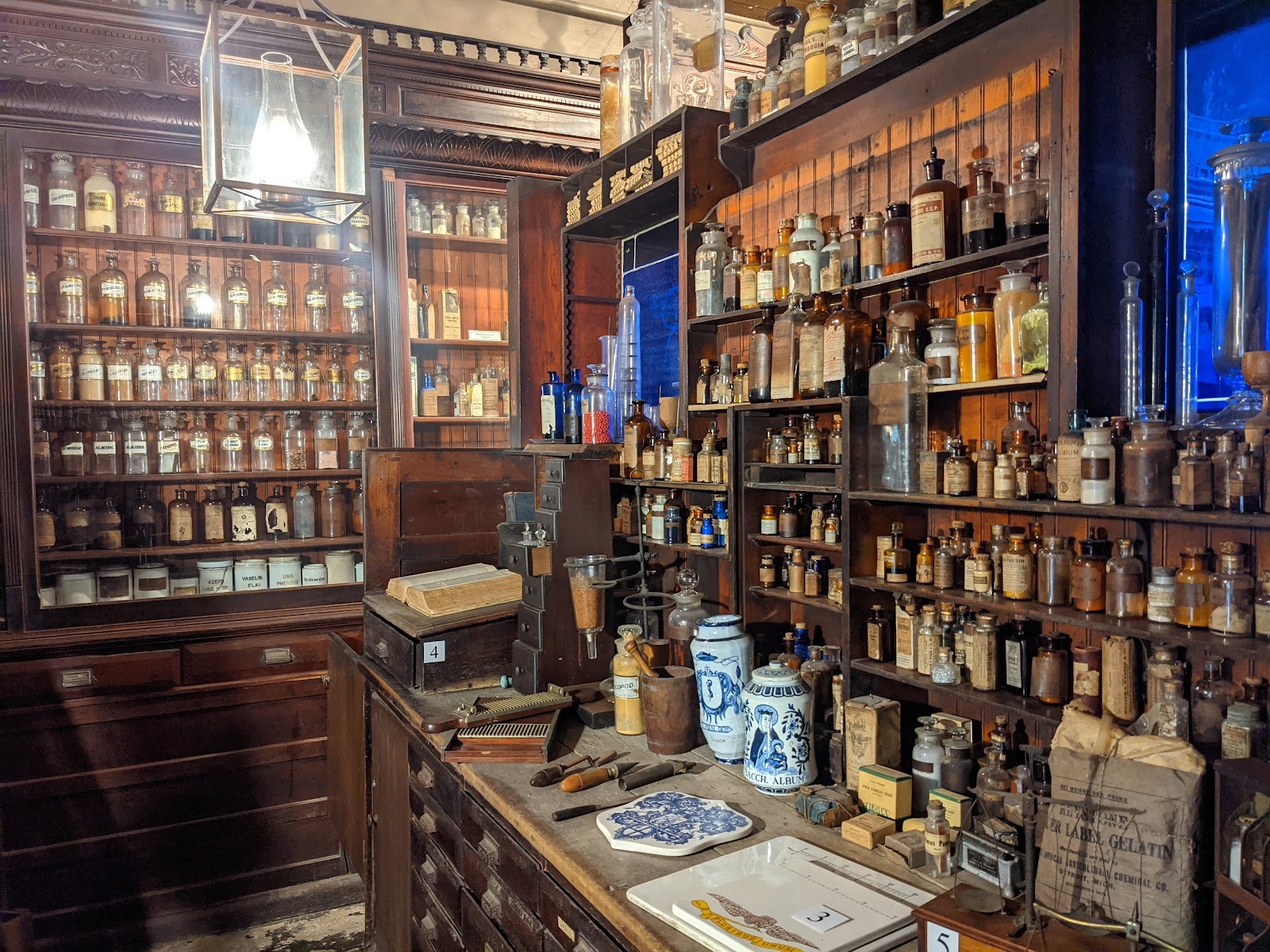
Photographically this is at the extreme end of the dense-interior spectrum. Wall-to-ceiling cabinets of glass jars are visually magnificent and they are also glass — reflective, densely detailed, and occupying the entire background of any frame taken inside. The space is narrow, the light is limited, and there is essentially nowhere to stand back.
So this is a fit assessment. We have not photographed a wedding here; glazed cabinetry and French Quarter courtyards behave predictably. Capacity, which spaces are available and the conservation rules are entirely for their team, and with a collection of glass and period pharmaceuticals expect them to be firm.
New Orleans Pharmacy Museum at a glance
| Where | Chartres Street, French Quarter, New Orleans, Louisiana |
| Built | 1823, for America’s first licensed pharmacist |
| Interior | Original mahogany cabinets filled with apothecary jars and instruments |
| Also | A walled courtyard behind the building |
| Assume | Very limited capacity and firm conservation rules around a glass collection |
What glazed cabinetry does to a photograph
Two things at once, and both need managing. First, glass reflects — cabinet doors at head height will show your lights, your camera and whatever is behind you, and a bright rectangle in a cabinet door behind a couple’s face is very hard to remove and easy to miss on a small screen. Shoot obliquely to any cabinet run rather than square-on, and keep lights well off the camera axis.
Second, the contents are visually dense in a way almost nothing else is: hundreds of jars, labels, bottles and instruments, each one a small high-contrast object. A couple standing in front of that competes with several hundred subjects, and the photograph becomes a picture of a remarkable pharmacy that happens to contain two people.
The fixes are separation, compression and hierarchy — move well clear of the cabinets, use a longer lens at a wide aperture so the contents dissolve into warm tone and glint, and light faces so your subjects are unambiguously the brightest thing in frame. Even then these are busy photographs, and one or two are enough.
The compensation is that the cabinets photograph beautifully on their own. Mahogany, glass, aged labels and brass are a genuinely lovely combination at close range, and detail frames here cost nothing in access and are what make the venue.
Who this venue suits
Four kinds of couple, and the fit is very narrow.
- Elopements and micro-weddings. Ten to twenty-five people at most. The building is narrow and full of a fragile collection; the permitted capacity will reflect that.
- Couples with a connection to medicine or pharmacy. This is America’s first licensed pharmacy. If that means something to you, the venue is unmatched and the photographs carry it.
- Anyone who wants a venue nobody else has used. It is genuinely unusual, and the frames look like nowhere else.
- Couples treating it as ceremony-and-portraits. Marry there, take a handful of frames, celebrate elsewhere. That respects the collection and plays to its strengths.
Who should look elsewhere
Directly, because the venue is seductive in photographs of the building and constrained the moment people are in it.
- Anyone with more than about twenty-five guests. The building will not take it and the collection makes numbers a conservation matter.
- Couples wanting full-length portraits indoors. There is no distance. Compositions are half-length and closer.
- Anyone wanting clean simple backgrounds. The opposite is on offer. Every interior frame is dense.
- Couples wanting a reception. Not realistic in a narrow building full of glass. Plan the celebration elsewhere from the start.
Working a nineteenth-century apothecary that is eleven feet wide
The building is a French Quarter townhouse, which means the ground floor is long and narrow — a deep room with the street at one end. That geometry sets your lens before you arrive. There is no position from which a 35mm frame contains a group of more than about six, and backing up is not an option because the wall is behind you.
So the room is photographed in pieces rather than as a whole: a 24mm or 28mm looking down the length of it to use the depth as the composition, and an 85mm working across the width for faces, letting the cabinetry go soft behind. What does not work is the middle — a 50mm here gives you neither the sweep nor the separation, and produces frames that feel cramped without being intimate.
The narrowness has one compensation that is easy to miss. In a long room with a single light source at one end, there is a natural gradient from bright to dark along the floor, and a couple placed two-thirds of the way down sits in the fall-off with the bright end behind them. That is a free rim light and a free background separation, and it only exists because the room is the wrong shape.
Plan the formal groups elsewhere. If the guest list runs past a dozen, the courtyard is where the group photographs happen and the interior is where the detail and couple work happens. Trying to force a forty-person group into an apothecary is the one mistake that costs real time on the day.
The courtyard, and what rescues the day
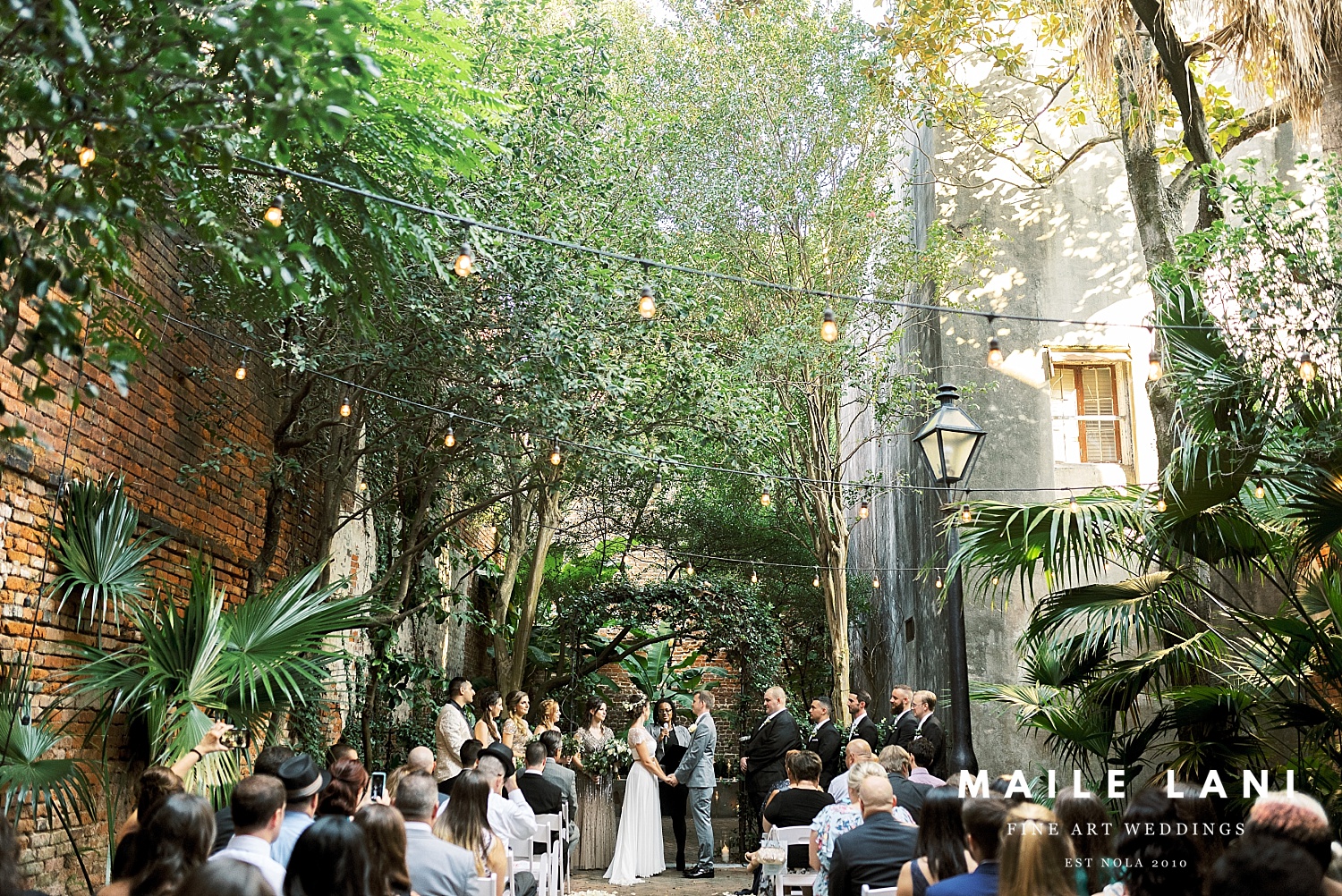
The walled courtyard behind the building is what makes this venue workable rather than merely remarkable, and it deserves to be planned as the primary space rather than an afterthought. A French Quarter courtyard is sheltered from wind, completely private, and evenly lit in open shade for much of the day, with brick and stucco bouncing warm light inward to fill shadows.
Critically it also gives you clean backgrounds. After the density of the interior, a courtyard wall with planting is a visual rest — and a gallery needs that contrast or it becomes exhausting. The strongest set from this venue pairs two or three dense interior frames with the courtyard doing the portrait work.
It is also the only space with room for even a small group, since the interior has none at all.
Beyond that, the French Quarter is immediately outside: ironwork balconies, stucco, shuttered doors and narrow streets where one side is shaded at almost any hour with warm bounce from the sunlit side opposite. That covers full-length portraits and the dusk block. New Orleans humidity applies as everywhere here — acclimatise equipment before moving between the air-conditioned interior and the courtyard, allowing fifteen to twenty minutes.
What works in your favour
- Original 1820s apothecary cabinets — visually extraordinary and unlike any other venue
- Mahogany, glass, aged labels and brass photograph beautifully at close range
- A walled courtyard: sheltered, private, evenly lit and with clean backgrounds
- Genuine historical significance as America’s first licensed pharmacy
- The French Quarter immediately outside for full-length portraits and dusk
What to plan around
- Glazed cabinet doors at head height reflect lights, camera and photographer
- Extremely dense backgrounds — every interior frame competes with hundreds of objects
- Very limited capacity, realistically under twenty-five guests
- No full-length portraits and no group photographs indoors
- Firm conservation rules around a fragile glass collection
New Orleans Pharmacy Museum wedding photography: common questions
What is the main difficulty inside?
Two things at once. Cabinet glass at head height reflects your lights, camera and surroundings, so shoot obliquely and keep lights well off axis. And the cabinet contents are hundreds of small high-contrast objects, so a couple standing in front competes with all of them. Separation, a longer lens and light on faces help, but these remain busy frames.
How many interior frames should we plan?
One or two. The interior is remarkable and dense, and a gallery full of dense frames becomes exhausting. Take a couple as a record of an extraordinary room, then do the portrait work in the courtyard where the backgrounds are clean.
Why is the courtyard so important?
It rescues the day. It is sheltered, private, evenly lit in open shade with brick bouncing warm light inward, and — crucially — it gives clean backgrounds after the density inside. It is also the only space with room for even a small group, since the interior has none.
How many guests does it suit?
Realistically ten to twenty-five. The building is narrow and full of a fragile glass collection, so the permitted capacity will reflect conservation as much as space. Treat it as ceremony-and-portraits and plan the celebration elsewhere.
Can we get full-length portraits?
Not indoors — there is simply no distance, so compositions are half-length and closer. Full-length portraits happen in the courtyard or on the French Quarter streets outside, where narrow streets give shade on one side with warm bounce from the sunlit side opposite.
More New Orleans venue guides
We are writing a photographer’s guide to every venue we would happily shoot in New Orleans. Here are three more, plus the full index:
- The Pitot House: A Walk-Through of a West Indies Colonial on Bayou St. John
- The Cabildo: Building the Shot List on Jackson Square
- The Presbytère: A Photographer Answers Your Questions
All New Orleans Wedding Venues →
Planning a wedding at New Orleans Pharmacy Museum?
An 1820s apothecary is a remarkable room and a hard one to put people in. Tell us your guest number and we will be straight about it — then plan the courtyard to do the real work.