 Indianapolis Zoo: Reading a Day From Open Grounds to Underwater Glass

Harrah’s Hoosier Park, Anderson: What It Suits and What It Does Not
Flat ground and a big facility. Camera height is the only variable you have.
A racing and gaming facility is a particular proposition and the honest way to describe it is by what a large modern venue on flat ground suits and does not suit.
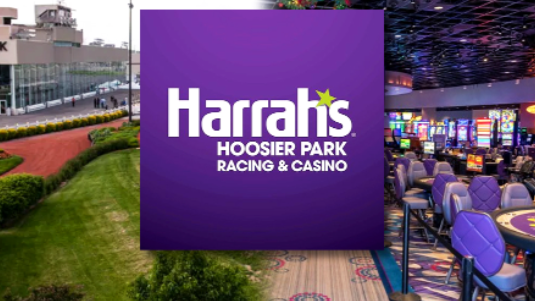
The shape of it is a grandstand and track, a gaming and hotel complex, function rooms, and extensive parking and service ground around all of it. Anderson sits north-east of Indianapolis on the central Indiana till plain — the ice sheets flattened this country and left deep, fertile, uniform soil, which means the land is genuinely level for great distances with a low unbroken horizon and no elevation anywhere.
Those two things together define the photographic problem and the photographic opportunity.
The problem is that flat ground removes the single most useful tool a photographer has. At a venue with relief, a camera can be put below the subjects to place them against clean sky, or above them to place them against country — two completely different frames from one spot. Here neither is available by walking, which leaves camera height at close range as the only variable.
The opportunity is the sky. A low unbroken horizon means the sky occupies a great deal of every wide frame by default, and in the Midwest the sky is frequently worth having: convective cumulus building on a summer afternoon, the structured cloud bases of a passing front, and the long low light of a late evening across a flat landscape.
The buildings sit on top of that, and a modern facility supplies certainty rather than character: controlled conditions, level floors, power where it is needed, and complete independence from the weather.
Anderson sits at about forty degrees north. The June noon sun reaches around seventy-three and a half degrees, the December noon sun about twenty-six and a half, days run from about nine hours fifteen to fifteen hours, and civil twilight is around thirty minutes.
We have not photographed a wedding at this venue. Which spaces are included, whether the track or the grandstand may be used for photographs, what the restrictions are and what the permitted hours are, are questions for their team.
Harrah's Hoosier Park at a glance
| Where | A racing and gaming venue at Anderson, on the central Indiana till plain |
| The ground | Genuinely flat: a low unbroken horizon and no elevation anywhere |
| Suits | Scale, controlled interiors, big skies, weather independence |
| Does not suit | Material interest, quiet, or any frame that needs a background with relief |
| Ask first | Track and grandstand access, included spaces, restrictions, hours |
What it suits
It suits the sky, and the sky is the best thing here. A low horizon means a wide frame is mostly air, and a camera placed low — kneeling or lying, with ground across the bottom of the frame — puts everything behind the subjects above the horizon.
That is the single most useful technique at a flat venue, and it is also the complete answer to the site’s visual clutter, because a large facility has a great deal of it: parking, fencing, signage, service structures, cabling. All of it is at or below the subjects’ level, and all of it falls out of a low frame.
What makes the frame is what the sky is doing. A clear blue Midwestern sky is even and featureless — better than clutter, but not interesting. A convective sky with towering cumulus, which builds on most warm afternoons over this landscape, is the best background this site ever has, and it is worth watching for and moving quickly when it appears.
The technical note is that a low camera against sky is usually a backlight or side-light situation, and two answers work. Expose for the sky and lift the subjects with a close warm-gelled source at about a stop over the ambient on them. Or turn the subjects so the sun is behind the camera, which lights them frontally and puts the deepest part of the sky behind them — the band opposite the sun is always richer in colour, and using it deliberately gives a better background at no cost.
It suits scale. A grandstand is a very long structure with strong repetition — rows, bays and columns receding — which is a compositional resource that needs the subjects small and deliberately placed to read as scale rather than as a snapshot. One-third along, well away from the centre, with a great deal of structure around them.
Large structures also mean large plain surfaces, and plain surfaces are valuable. Concrete in particular is the most colour-neutral background in this guide — mid in tone, almost entirely unsaturated — which means a white dress reads as white against it and skin holds its own colour with no cast. A facility of this kind has a great deal of concrete.
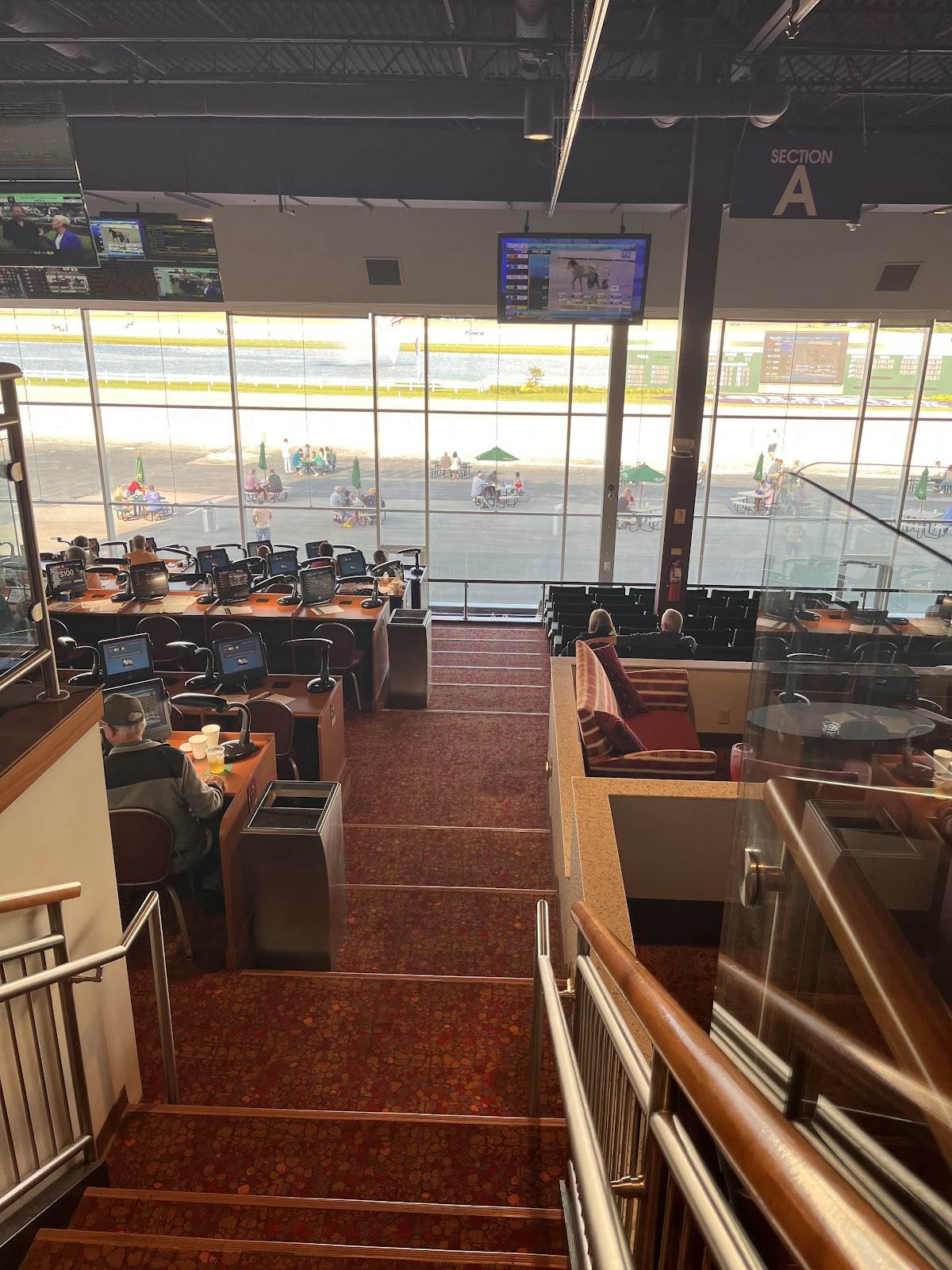
It suits control indoors. Modern function rooms mean flat walls, predictable dimensions, level floors and power where it is needed, which means a lighting setup can be built rather than improvised, and it will look the same at four in the afternoon and eleven at night. One source at forty-five degrees and slightly above eye level, with a second separating the subject from the background, is a complete portrait setup.
It suits the found light in the circulation spaces, which at any building of this type is better than the light in the main rooms. A corridor with a window at one end is a directional source with several stops of fall-off along its length. A stairwell gives a level change and a handrail line. A tunnel or an underpass — and a facility with a track has them — is a roof with open ends, which makes it a directional soft source with very fast fall-off, and it works in rain.
And it suits weather independence, which in the Ohio valley matters: the severe-weather season peaks from April into June, and winter here brings some of the cloudiest weather in the United States. An indoor venue is the same venue in every month.
What it does not suit
It does not suit any frame that needs a background with relief, and on the central Indiana till plain there is no fixing that. There is no rise to shoot from below, no high ground to shoot from above, and every wide frame has the same horizon at the same height.
The answers are camera height at close range — kneeling and lying — and any accessible elevated position, which at a facility with a grandstand may exist and is worth asking about. An upper level of seating looking down at the track and the country beyond is the one high viewpoint on a flat property, and it produces frames that cannot be got any other way.
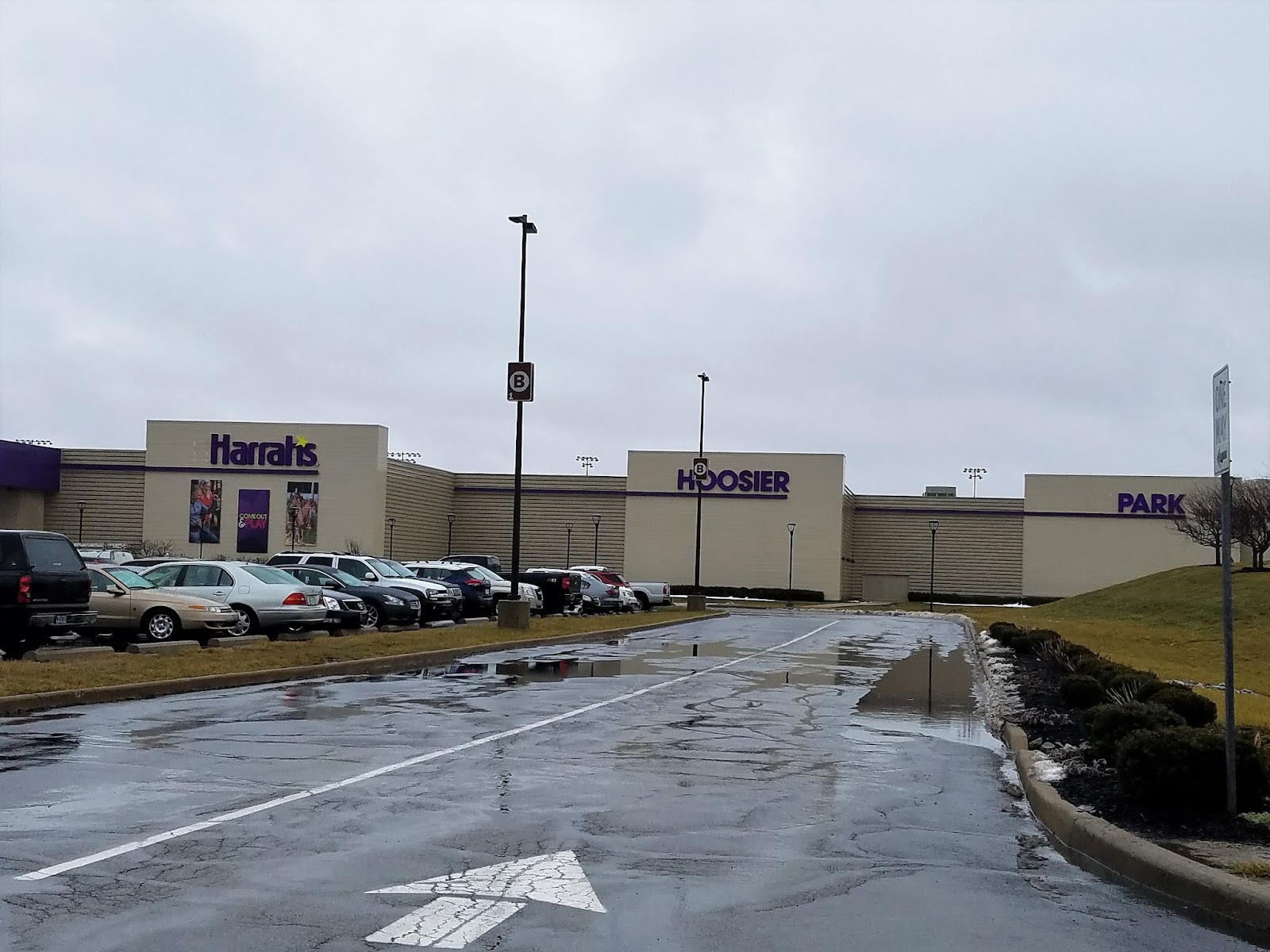
It does not suit material interest. Everything here is new, functional and smooth: painted steel, concrete, asphalt, glazing, patterned carpet. There is nothing weathered or accidental, which means the work has to shift entirely to the people and the light.
It does not suit an unmodified frame. A modern function room photographed as it is — flat overhead lighting, patterned carpet, painted walls, ceiling grid — produces a picture that looks like a conference. Every frame needs something done: a light introduced, a shallow depth of field, a tight crop, a level change, or a move to the circulation spaces.
The specific hazards are the ceiling grid and the carpet pattern, both of which are strong repeating fields that draw the eye. A lower camera angle, a tighter crop or a longer lens removes either.
It does not suit a bounced flash without thought. A pale ceiling at moderate height reproduces exactly the top-heavy light the fittings already give. An off-axis source close to the subject, with a second at low output on the background, is the better approach.
It does not suit quiet. A working entertainment and racing facility contains a public, and a wedding party is inside it. Long lenses that compress a crowd into soft texture, and timing that uses the quieter parts of the building, are the real answers.
It does not suit precision-free work on its plain surfaces, and that is worth saying because it is the flip side of concrete’s virtue. A plain grey field shows every misalignment: a degree off level against a concrete edge, or a subject placed almost-but-not-quite deliberately, reads as an error instantly, where the same imprecision would disappear entirely in a textured setting.
It does not suit an exterior of itself. A large modern facility in a commercial setting has no good outdoor frame of the building — the frontage is functional, the approach is parking, and there is nothing to place people against.
The solutions are the low-camera sky frames, the concrete and painted-steel surfaces, the tunnels, and at dusk a frame using the building’s own lighting against a deep blue sky, which crosses within about a stop for roughly ten minutes and needs scouting in daylight.
And the till plain itself is worth one note as an exterior resource, because it is not nothing. Central Indiana farmland is level and vast, with big skies, long light and — in season — standing crop that is tall enough to fill a frame behind standing subjects. Whether any of that is reachable from the site is worth asking, because a field edge at the end of the day gives something the facility cannot.
Two practical matters. Flat open ground here is windy as a baseline, which makes a lightstand a liability and means every source is handheld or weighted. And the Ohio valley severe-weather peak from April into June, on a large open site with no natural shelter, makes a named indoor alternative in those months a requirement.
- Low camera against sky: the whole answer to flat ground and to clutter
- Turn the subjects so the deepest part of the sky is behind them
- Concrete is the most colour-neutral background in this guide
- Ask about an elevated position — a grandstand may have the only one
- A plain grey field shows every degree of tilt
The central Indiana year
Four real seasons, and one regional characteristic that dominates half of them: the winter cloud.
The Ohio valley and the southern Great Lakes have some of the cloudiest winters in the United States, and from November through February persistent low overcast is the normal condition rather than an interruption.
At this venue that cuts a specific way. The low-camera sky frames — the site’s best exterior technique — depend entirely on the sky being worth having, and a flat grey overcast is the one sky that is not. That removes the exteriors almost completely in midwinter.
What is available instead is soft directionless light, which on a site whose dominant material is neutral grey concrete produces frames of real cleanliness: even illumination, no shadows to manage, and a background with no colour in it at all. That is a genuinely good combination and it is worth saying, because an overcast forecast at most venues is a compromise and here it suits half the frames well.
The practical reading is that an Indiana winter wedding here is an interior wedding with a concrete-and-corridor exterior, and that is workable.
Snow, when it lies, changes things considerably. It covers the parking, the paving and the service ground — the three things that make a facility exterior unphotographable — and it is the best natural fill available, lifting shadows to within a stop and fooling a meter by about two, so open up deliberately. A lit building against falling snow on a dark evening is the best exterior frame the site will produce.
The December noon sun at around twenty-six and a half degrees means that on the clear days that do occur, the whole short day rakes rather than floods, and the dusk crossing point arrives just after five rather than after nine — which for an evening reception lands the exterior sequence before the event.
Spring brings the severe-weather season with it, from April into June, and on a large open site that is a real planning matter. It also brings the best convective skies of the year: the structured cloud of a passing front over a flat landscape is the finest background this country offers, and a low camera under it is the frame to be ready for.
Summer is warm and humid, with dew points in the low twenties Celsius. On the flat till plain that costs less than it would in hill country, because there is no distance to lose — the horizon is close and low, and the haze mostly affects the sky’s clarity rather than a view.
Days run to fifteen hours at the solstice with about thirty minutes of civil twilight, which gives a genuinely long and generous evening: the low light arrives after nine and lasts. On flat ground with an unobstructed western horizon the whole of it is usable, which is not true at a valley or wooded venue.
Autumn is the best season for the exteriors. Central Indiana turns in the first half of October, and on a facility site that colour arrives in the planted trees and the perimeter rather than as a landscape — a background resource rather than a subject. The air is at its clearest of the year, the skies are often structured, and harvest leaves the surrounding farmland as stubble and bare soil, which is a far better neutral than summer green.
By November the overcast has returned and the concrete, the corridors and the function rooms carry the day.

More frames from Harrah's Hoosier Park
Harrah's Hoosier Park wedding photography: common questions
What is the main limitation?
Flat ground. There is no rise to shoot from below and no high ground to shoot from above, so camera height at close range is the only variable.
What is the single most useful technique?
A low camera with ground across the bottom of the frame. Everything behind the subjects becomes sky, and all the site’s clutter falls out of frame.
Which part of the sky is best?
The band opposite the sun, which is always deeper in colour. Turn the subjects so the sun is behind the camera and that band is behind them.
Why is concrete useful?
It is mid-toned and almost entirely unsaturated, which makes it the most colour-neutral background in this guide — and it shows every degree of tilt.
Is an overcast day a problem?
For the exteriors, yes — the sky frames need a sky worth having. For the concrete and the interiors, soft even light suits them well.
When are the exteriors at their best?
The first half of October: clearest air of the year, often structured skies, and harvested farmland as a neutral rather than summer green.
More Indiana venue guides
We are writing a photographer’s guide to every venue we would happily shoot in Indiana. Here are three more, plus the full index:
- Indianapolis Motor Speedway: The One Decision That Governs Everything
- The Pines at Porter, Indiana: The Problem and Four Ways Out of It
- Potawatomi Inn, Angola: How the Light Moves on a Kettle Lake
Planning a wedding at Harrah's Hoosier Park?
Flat ground, and one technique that answers it. Tell us your date.