 The Bierstube: What Changes When the Reception Is in a Bar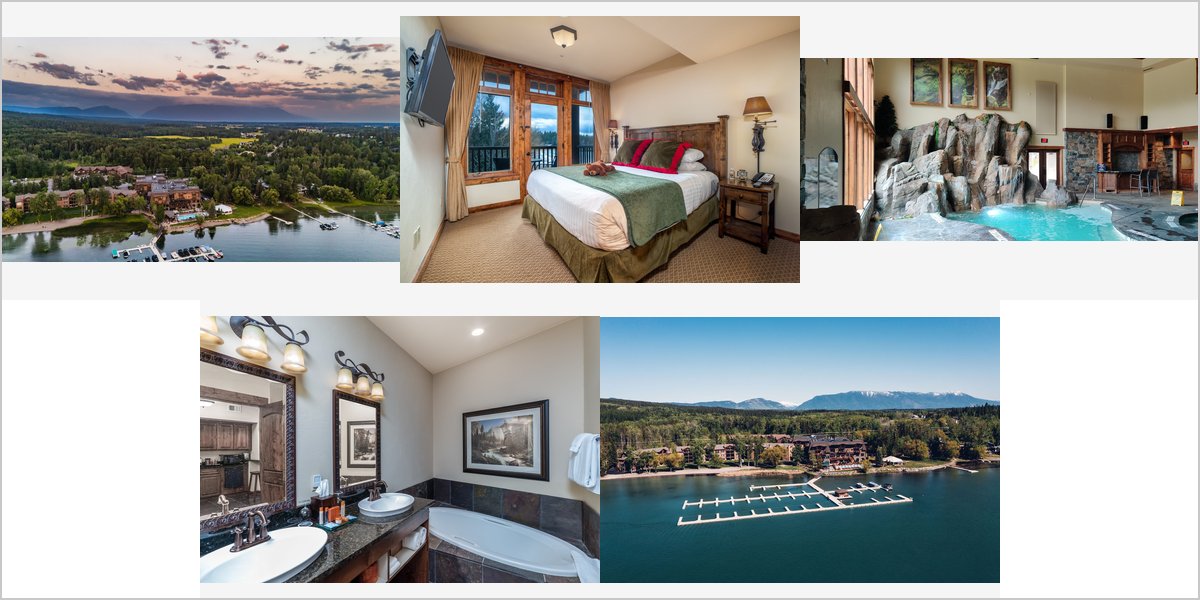
June 24, 2026
The Lodge at Whitefish Lake: Reading a Mountain Lake Hour by Hour
Two things make this venue’s light unusual: a large west-facing water surface, and a June sunset close to ten at night.
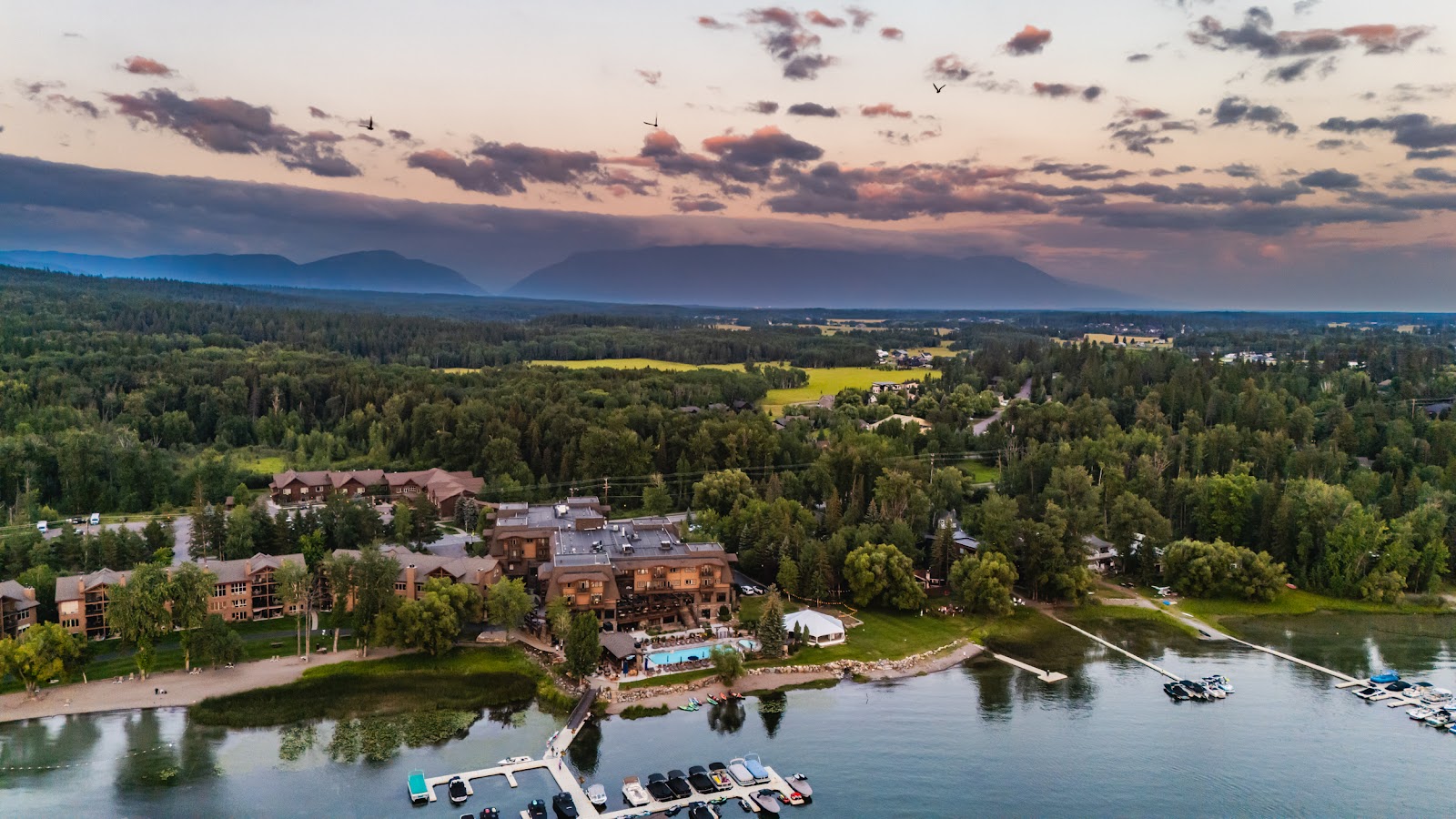
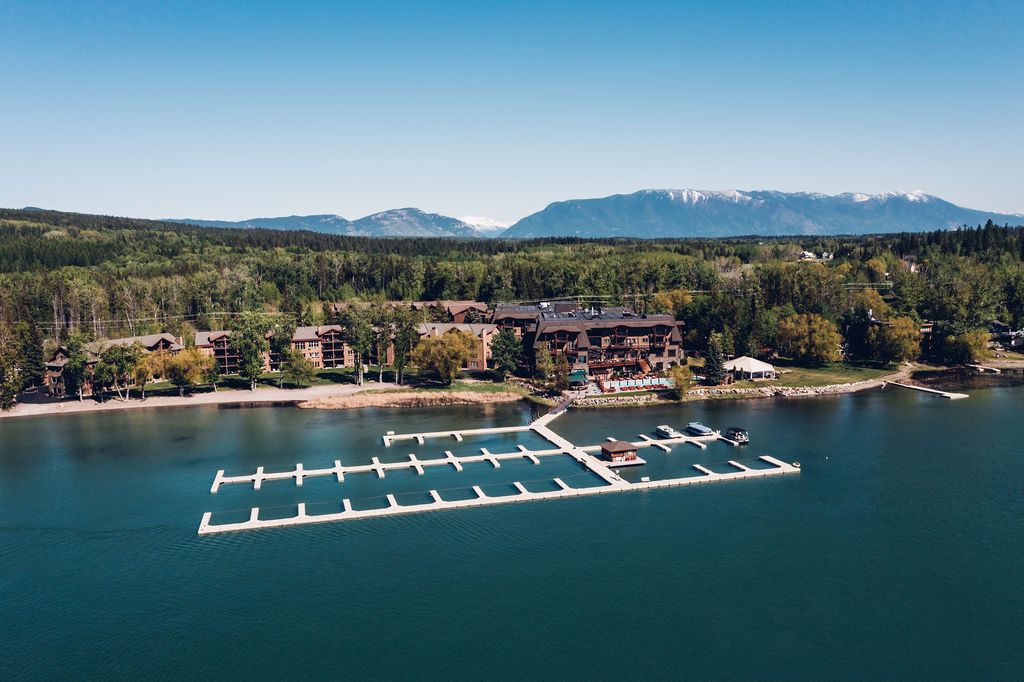
The Lodge at Whitefish Lake sits on the shore of Whitefish Lake in northwest Montana, a timber-and-stone building in a town that functions as the western gateway to Glacier National Park. Mountains on three sides, a large lake in front, and the Whitefish Range catching light long after the valley floor has gone into shade.
Two facts govern photography here more than any architectural detail. The first is the lake: a large water surface acts as a second sky, bouncing light upward into faces and doubling every colour in the sky at either end of the day. The second is latitude. Whitefish sits near the forty-eighth parallel, which means a late-June sunset lands close to ten at night and civil twilight runs past half past ten — and that single fact reshapes the entire timeline of a summer wedding.
What follows walks the light through a summer day here. We have not photographed a wedding at this venue; high-altitude mountain light and large-lake reflection behave the same wherever they meet. Indoor spaces, ceremony locations, dock access and shoulder-season availability are questions for their events team.
The Lodge at Whitefish Lake at a glance
| Where | The shore of Whitefish Lake, Whitefish, Montana |
| Character | Timber-and-stone mountain lodge with lake frontage |
| The lake | A second sky — bounces light up into faces, doubles sunset colour |
| The catch | June sunset near 10pm; golden hour is after dinner, not before |
| Plan for | Thin-air contrast at midday and August wildfire haze |
Morning: the lake is the softbox
Early light at a mountain lake is the gentlest you will get all day, and it comes from two directions at once. The sun is low and coming over the eastern ridgeline, which means it arrives filtered through more atmosphere and reads warm rather than white. At the same time the lake surface is bouncing a broad, dim, even fill upward — which fills the eye sockets and under-chin shadows that low side light would otherwise carve.
That combination is very good for preparation coverage and for any first-look or early portrait block. A couple standing on a dock or lawn facing the water in the first two hours after sunrise gets a warm key from one side and a large soft bounce from below, and needs no reflector, no scrim and no flash. It is the cleanest natural light the venue offers.
The practical obstacle is that nobody wants to be photographed at six in the morning in July. If the couple are willing, an early portrait block is genuinely worth proposing — and in a place where sunset falls near ten at night, an early session is often the only way to get both ends of the day.
Midday: thin air, hard edges, and why shade matters more here
Whitefish sits around three thousand feet, and the resort above town runs considerably higher. Thinner, drier air scatters less light, so mountain sun at noon is harder and more contrasty than sun at sea level at the same hour. Shadows have crisper edges, highlights clip sooner, and the gap between a lit cheek and a shaded eye socket can exceed what a single exposure holds.
So midday at altitude is not a matter of taste — open sun genuinely will not hold a face and a mountain sky in one frame without help. There are three working answers: put people in full open shade and expose for them, letting the background go bright; use fill flash outdoors, which at these light levels means real power rather than a pop; or schedule around it entirely and keep midday for details, room shots and interiors.
Conifer shade needs one caveat. Lodgepole pine and Douglas fir throw dense shade with a strong green cast, and green on skin is the hardest colour error to correct convincingly. Open shade beside a building, under a broad deck or on the north face of the lodge is cleaner than shade under trees. If you must work under conifers, set a custom white balance there rather than trusting auto.
Evening: the part that actually reshapes the day
This is the section to read if you read only one. In late June a Whitefish sunset falls close to ten at night, with usable colour in the sky until nearly half past. In mid-September it is closer to half past seven. That is a two-and-a-half hour swing across a single season, and every timeline decision follows from which side of it the date falls.
For a June or July wedding, golden hour is after dinner. A ceremony at five means portraits at six in light that is still high and hard, and the genuinely beautiful light arrives while the reception is running. The fix is to build a deliberate ten-minute break into the reception — after the meal, before dancing — and walk the couple out to the water. Ten minutes of that light is worth more than an hour of the afternoon, and guests barely notice the absence.
The lake pays a second dividend here. Water reflects the sky, so a sunset over a large lake gives you the colour twice: once above the ridgeline and once on the surface. Shoot low, keep the horizon high in the frame, and let the reflection carry the bottom two-thirds. That frame is the reason the venue is on anyone’s list.
Then there is alpenglow, which is specific to mountains and easy to miss. For roughly fifteen minutes after the valley floor has gone into shade, high peaks still catch direct light and glow pink and orange while everything below is in cool blue shadow. If you have a sight line to the Whitefish Range, that is a frame with a warm lit peak, a cool foreground and a couple in between, and it exists nowhere that lacks mountains.
What works in your favour
- A large lake bounces soft fill upward and doubles every sunset colour
- Alpenglow on the Whitefish Range after the valley has gone into shade
- Very long summer evenings — usable colour past ten at night in late June
- Timber and stone architecture that takes warm light well
- Genuine seasonal range, from summer lake light to full winter snow
What to plan around
- Thin-air midday sun is harder than sea-level sun at the same hour
- Conifer shade carries a strong green cast that is difficult to correct
- June golden hour falls during the reception, not before it
- August wildfire haze can flatten mountain views without warning
- Remote enough that equipment failures have no same-day solution
Two Montana variables nobody mentions in the brochure
August wildfire smoke is a real regional condition in the northern Rockies, and it changes photographs rather than ruining them. Haze scatters light, kills distant contrast, pushes everything orange and erases mountain views that were the reason for the booking. It can arrive in a day and leave in a day, and no forecast three months out will tell you.
It is worth treating as a creative variable rather than a disaster. Smoke produces a diffused, directionless, strongly warm light that is extremely flattering on skin and makes the sun a visible orange disc you can put behind a couple. What it takes away is the view. So a smoke plan is simply this: if the range disappears, work tight, work into the sun, and lean on the venue’s architecture and the lake edge rather than the horizon.
The other variable is distance. Whitefish is a small mountain town a long way from a camera shop that stocks professional bodies. Every failure here is one you carry the spare for or do without — two bodies, doubled cards, doubled batteries, and a charging plan that assumes the power at an outdoor site is optimistic. That is a normal remote-venue discipline, but it is easy to relax in a place that feels this comfortable.
More frames from The Lodge at Whitefish Lake
The Lodge at Whitefish Lake wedding photography: common questions
When is sunset at Whitefish Lake in summer?
Close to ten at night in late June, with usable sky colour until nearly half past, dropping to about half past seven by mid-September. That two-and-a-half hour seasonal swing is the single biggest factor in a summer timeline here, because golden hour on a June date falls during the reception rather than before it.
How do you get golden-hour portraits if the light comes at ten?
Build a deliberate ten-minute break into the reception, after the meal and before dancing, and walk the couple out to the water. Ten minutes of that light is worth more than an hour of the afternoon, and guests barely register the absence. The alternative is an early-morning session instead.
Why is midday light harder in Montana than at home?
Altitude. Whitefish is around three thousand feet and the air is thinner and drier, so less light is scattered. Shadows have crisper edges and highlights clip sooner, and the gap between a lit cheek and a shaded eye socket can exceed what one exposure holds. Open shade or real fill flash, not a pop.
What does the lake do for the photographs?
It works as a second sky. The surface bounces a broad soft fill upward into faces, which fills the shadows low side light would otherwise carve, and at either end of the day it reflects the sky so you get sunset colour twice — above the ridgeline and on the water.
What happens if there is wildfire smoke?
Distant contrast disappears, the mountains vanish and everything goes orange. It is a creative variable rather than a disaster: the light is diffused and flattering, and the sun becomes a visible disc you can shoot into. Work tight, use the architecture and the lake edge, and stop relying on the horizon.
Is shade under the trees a good option?
Less than it looks. Lodgepole pine and Douglas fir throw dense shade with a strong green cast, and green on skin is the hardest colour error to correct. Open shade beside the building or under a deck is cleaner. If you must work under conifers, set a custom white balance there.
More Whitefish venue guides
We are writing a photographer’s guide to every venue we would happily shoot in Whitefish. Here are three more, plus the full index:
- The Stillwater River Lodge: One Variable Changes the Whole Venue
- The Bierstube: What Changes When the Reception Is in a Bar
- The Garden Wall: How to Work a Genuinely Small Venue
All Whitefish Wedding Venues →
Planning a wedding at The Lodge at Whitefish Lake?
Mountain-lake light rewards a plan and punishes a default timeline. Tell us your date and we will map the light hour by hour before anything else gets decided.