 The Venetian, Garfield: The Building’s Own Logic
The Rockleigh, Rockleigh: Field Notes
Several weddings share this building on a Saturday. The pictures have to show one.
These are field notes on a multi-ballroom venue, and the first note is the one that shapes everything: on a busy Saturday this property is hosting more than one wedding at the same time.
That is what a venue of this kind is built for, and it works — separate ballrooms, separate cocktail spaces, staggered timings and staff who do this every week. It is the reason such places are reliable.
It creates one specific photographic problem, though, and it is not about light. The shared parts of the property — the grounds, the lobby, the main entrance, the garden positions — are being used by other weddings too, which means the good positions are occupied, the timing is not yours alone, and a frame composed carefully may have somebody else’s guests in the background.
So the whole day has to be planned around exclusivity rather than around the light. Which positions are private to your event, which are shared, and when the shared ones are likely to be free — those three answers are worth more here than any technique.
The second note is that the timings are fixed and tight. A venue running parallel events transitions on a schedule, which means the portrait window is a defined slot rather than an opportunity that can be extended when the light improves.
The third note is that the grounds are landscaped and bounded, as they are at most venues of this type in a densely developed county: lawns, beds, a gazebo or pergola, ornamental water, and whatever is beyond the planting is not part of the frame.
We have not photographed a wedding at the Rockleigh; multi-ballroom venues behave consistently. Which rooms and outdoor areas are exclusive to your event, how many other events run on the date, what the actual timings and transitions are, whether the ballroom lighting can be dimmed, and what daylight reaches the preparation rooms are questions for their team — and the first two decide the day more than anything below.
Rockleigh at a glance
| Where | A multi-ballroom venue at Rockleigh, Bergen County |
| The problem | Shared grounds and shared timing with other weddings on the same day |
| The solution | Establish what is exclusive, and plan the route around it |
| The clock | A fixed portrait slot, not an opportunity that can be extended |
| Ask first | What is exclusive, how many events, the timings, lighting control |
The shared property: the problem, and the solutions
The problem with a shared property is visible in two ways: other people in the frame, and the good position already occupied.
The first solution is information, and it is worth getting before the day rather than discovering it. A simple list — which outdoor areas are exclusive, which are shared, how many other events are running, and when the other ceremonies are scheduled — tells you exactly when the shared positions will be free. Other weddings are on a schedule too, and their schedules are knowable.
The practical use of that is timing rather than avoidance. If the second ceremony is at half past four, the garden is busy at a quarter past and empty at five — so the portrait route is planned around that rather than around a hope.
The second solution is to work close, which removes the problem entirely. A longer lens at a wider aperture dissolves everything beyond the subject into tone, which means a group of strangers thirty metres away becomes an unrecognisable soft shape. At that scale it does not matter who else is on the lawn.
That is not a compromise so much as a redirection. Closer framing puts the emphasis on the people, which at a wedding is where it belongs — and a set of frames made that way is a better record than a set of wide views of a shared garden.
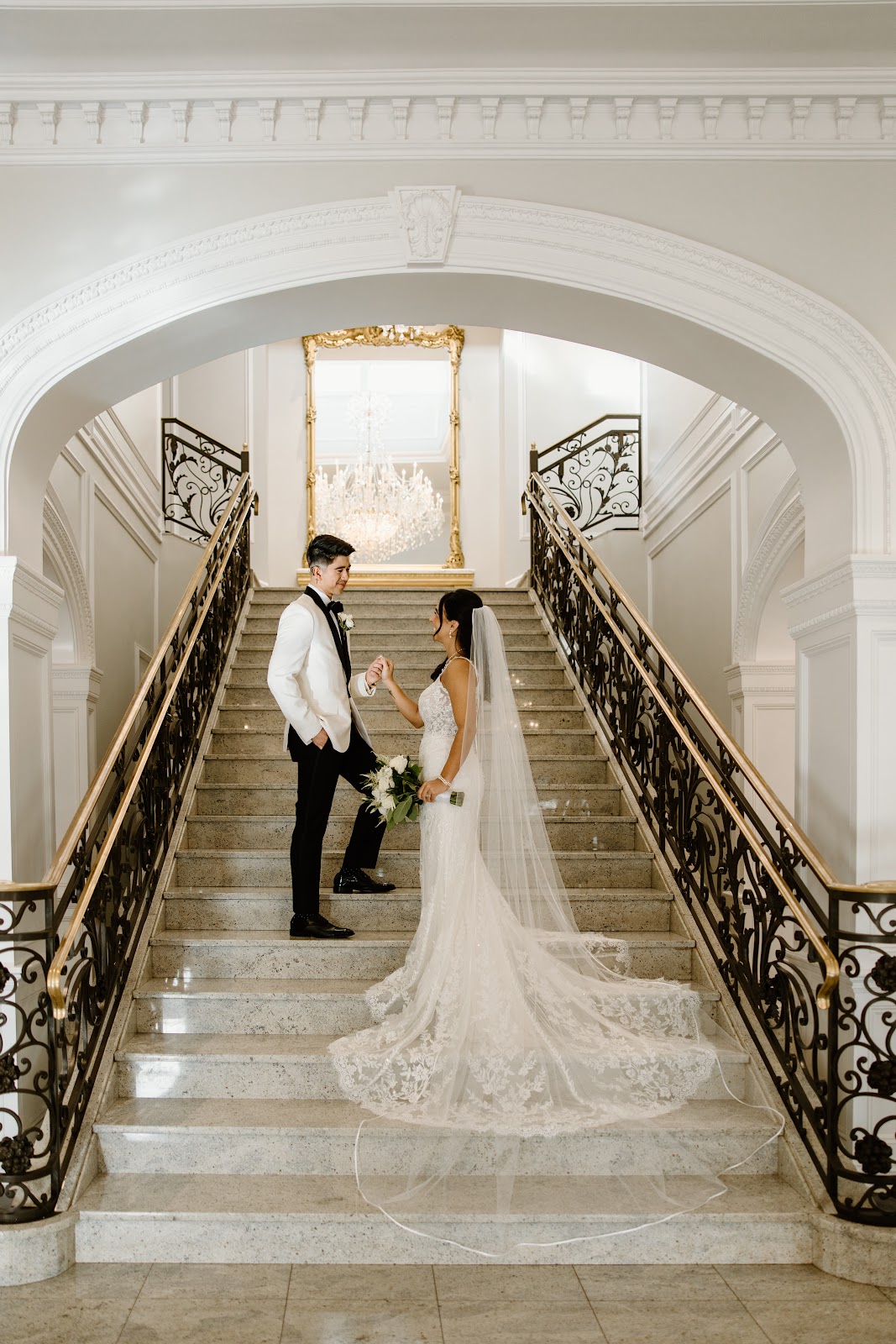
The third solution is to find the positions nobody else uses. Every shared property has them: a service courtyard, a side entrance, a stretch of wall behind a building, a stair, a corridor. Those are frequently better light than the obvious garden positions and they are reliably empty.
The best of them is usually a large plain wall in shade. It is a soft directional source facing open sky, it gives a clean uncluttered background, it works at any hour in any weather, and nobody photographs there because it is not pretty. Plain surfaces demand precision — an approximate composition against a blank wall looks like a mistake — but they are honest and they are yours.
The fourth solution is the building’s architectural shade, which is where the midday positions are at a landscaped venue. A porte-cochère, a colonnade, a deep overhang or any solid-roofed structure blocks the overhead component, restricts the light to a horizontal band that models a face properly, bounces off paving to fill from below, and cannot dapple. Two or three metres in from the open edge.
The distinction that matters at a venue with ornamental structures is solid versus slatted. A gazebo with a solid roof is shade; a pergola with gaps between its members is a striped dappling machine, and a face beneath one in direct sun is unusable. The test is universal: look at the face rather than the ground, and any hard edge on skin means move.
And the landscaped grounds’ own resources are worth using where they are free. Clipped evergreen hedge is the best background in any garden — dark, even and two or three stops below a subject — with the standard metering correction of skin rather than hedge. Ornamental water is a horizontal reflector that doubles the sky and throws light upward into faces beside it, with a reflection running about a stop darker than what it reflects.
The clock, and the rooms
The fixed schedule is the second problem and it needs a plan rather than an improvisation.
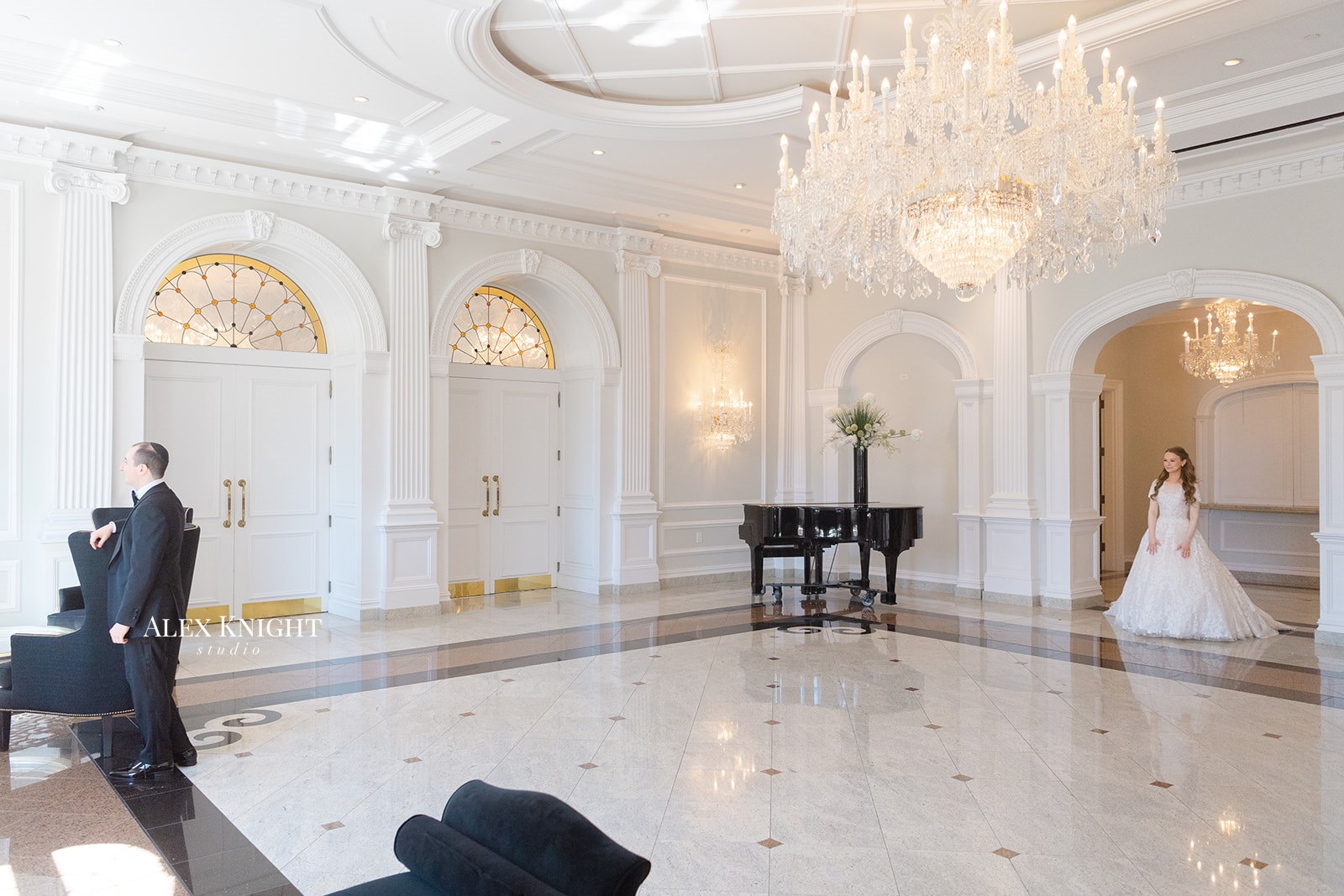
The arithmetic is simple. If the portrait window is twenty or thirty minutes, then the route matters more than the options: three positions close together, chosen in advance, produces considerably more than six spread across the property with walking time between them. Walking the grounds once beforehand and picking those three is the highest-value preparation available here and it takes ten minutes.
The second half of the plan is knowing when the good light falls relative to the slot. In June the best low light arrives after eight in the evening, hours after the ballroom has opened; in December it falls comfortably inside any afternoon slot. That difference is the single biggest seasonal variable at a venue that runs to a clock.
Where the light and the slot do not coincide, there are two honest answers. Ask in advance about stepping out for a few minutes later in the evening — most venues will allow it and it is much easier agreed beforehand than requested on the night. Or accept the slot and light it properly, which is entirely workable: one close gelled source at a stop above the ambient turns flat afternoon shade into directional portrait light anywhere on the grounds.
What does not work is hoping the schedule will flex on the day, because at a venue with another event behind yours it will not.
The preparation rooms are worth assessing for one thing: whether there is a usable window. Where there is, a subject a metre from the glass turned about forty-five degrees to it gets horizontal light at head height with steep fall-off behind — the best light on the premises — with the room lights off and a custom white balance set on the face.
Where there is not, the hour is a lighting exercise and the approach is to make one good source and reuse it: a single light through a modifier, placed to one side, with the room’s own light exposed a stop or so under. That produces window-like light in a windowless room and it is consistent from frame to frame, which matters when the coverage is continuous.
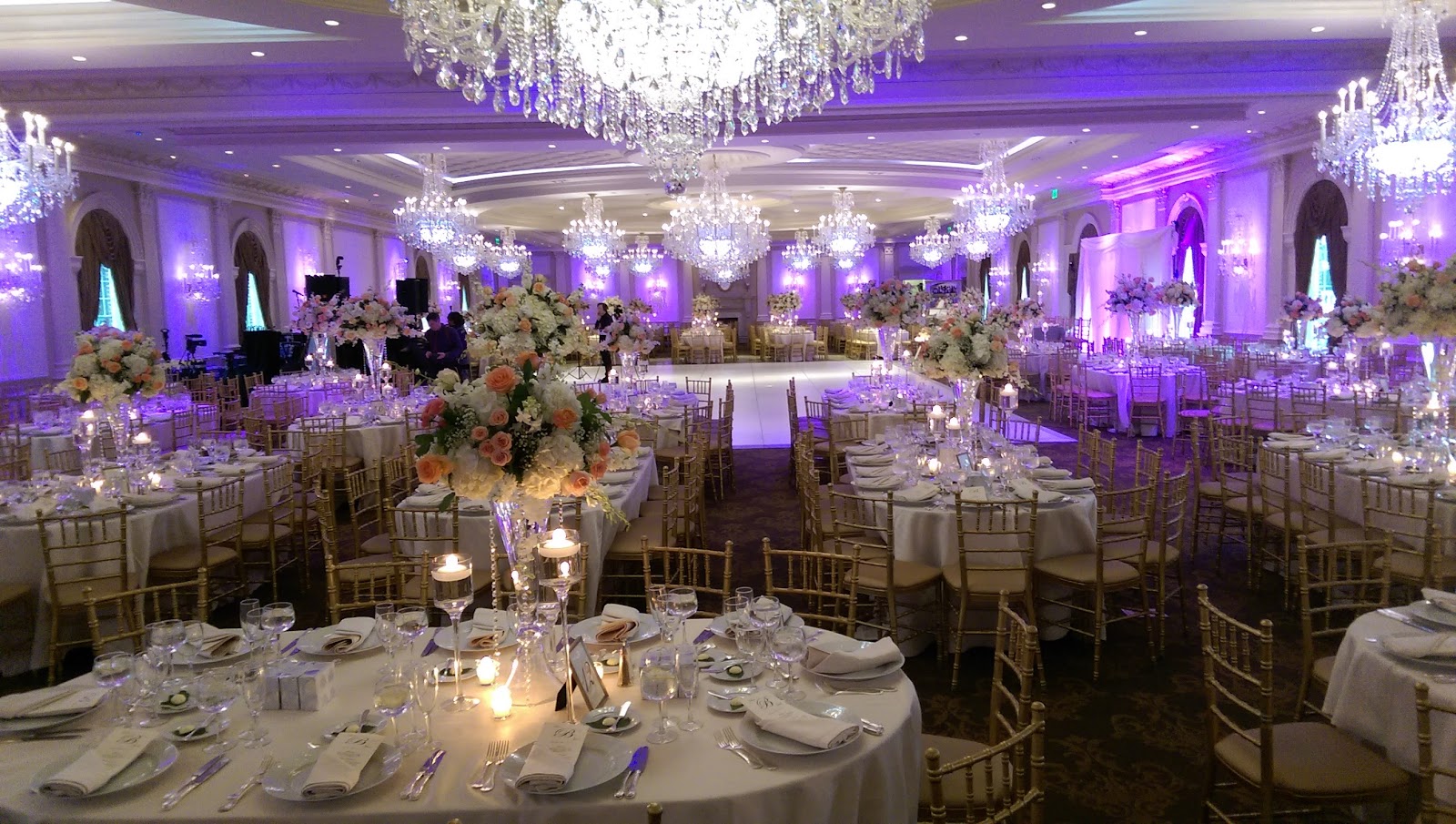
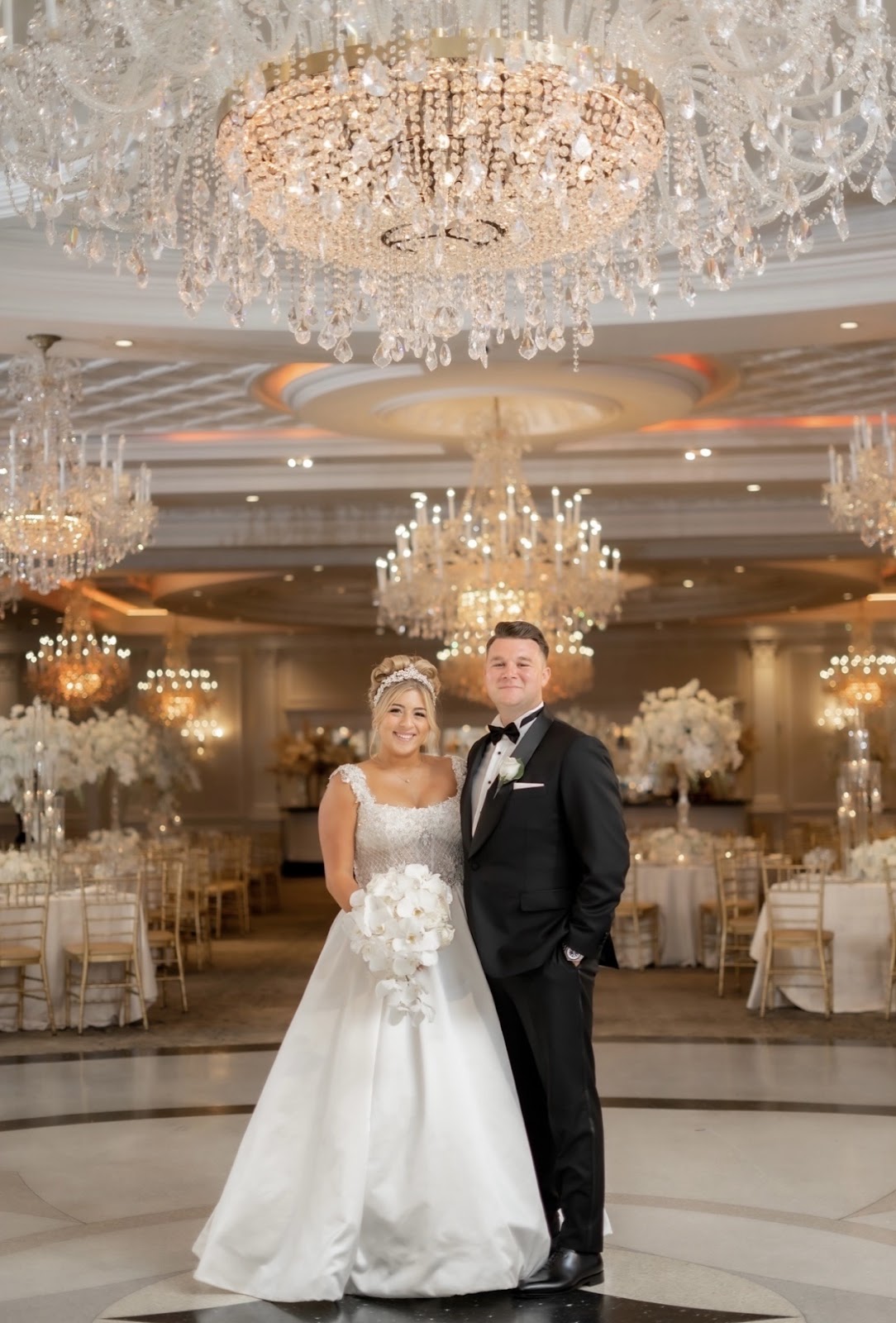
The ballroom is where the technical work concentrates and the method is the standard one. Expose the ambient about a stop or a stop and a half under what skin needs, so the fittings hold their structure and the room keeps depth, then add one source for the faces gelled warm to match, set just above what the ambient gives the skin, and diffused so it does not read as flash. The white balance goes to the gel.
The instinct to raise sensitivity until the room looks bright produces the characteristic bad picture of a banquet room: flat, uniformly warm, no depth, every table identical. The reversal prevents it.
A lower ceiling is the room’s real advantage and it should be used: under about four metres it is a usable bounce surface, so a flash aimed into it returns soft overhead-forward light across the space. The caution is colour, because a warm-painted ceiling colours the bounce and the white balance has to follow it.
Coloured uplighting is a resource rather than a problem once it is handled: decide which light lands on the face, set the white balance for that, and let the walls be whatever colour they are. Reset it when the lighting changes through the evening, because at a venue with cues it will.
And the polished dance floor is the room’s best single frame: a couple reflected in it during a first dance, with the lighting doubled around them. Used deliberately that is strong; ignored, it reflects the photographer and the service doors — and a few degrees of camera angle is the whole difference.
- Ask what is exclusive and how many other events run that day
- Work close: a longer lens removes other people from the frame entirely
- Find the plain wall nobody photographs against — it is better and it is free
- Pick three positions close together in advance, not six spread out
- Ballroom: expose a stop under, one gelled source, bounce off the low ceiling
The Bergen County year
Northern New Jersey has four genuine seasons with hot humid summers and cold winters, and at a venue that runs to a clock the season decides whether the good light falls inside the slot.
Winter is the most convenient season here for exactly that reason. The December sun at this latitude reaches only about twenty-six degrees above the horizon, so the whole short day rakes rather than floods — which means there is no bad hour outdoors and a four o’clock portrait slot falls in good light. In July the same slot falls in the hardest light of the day.
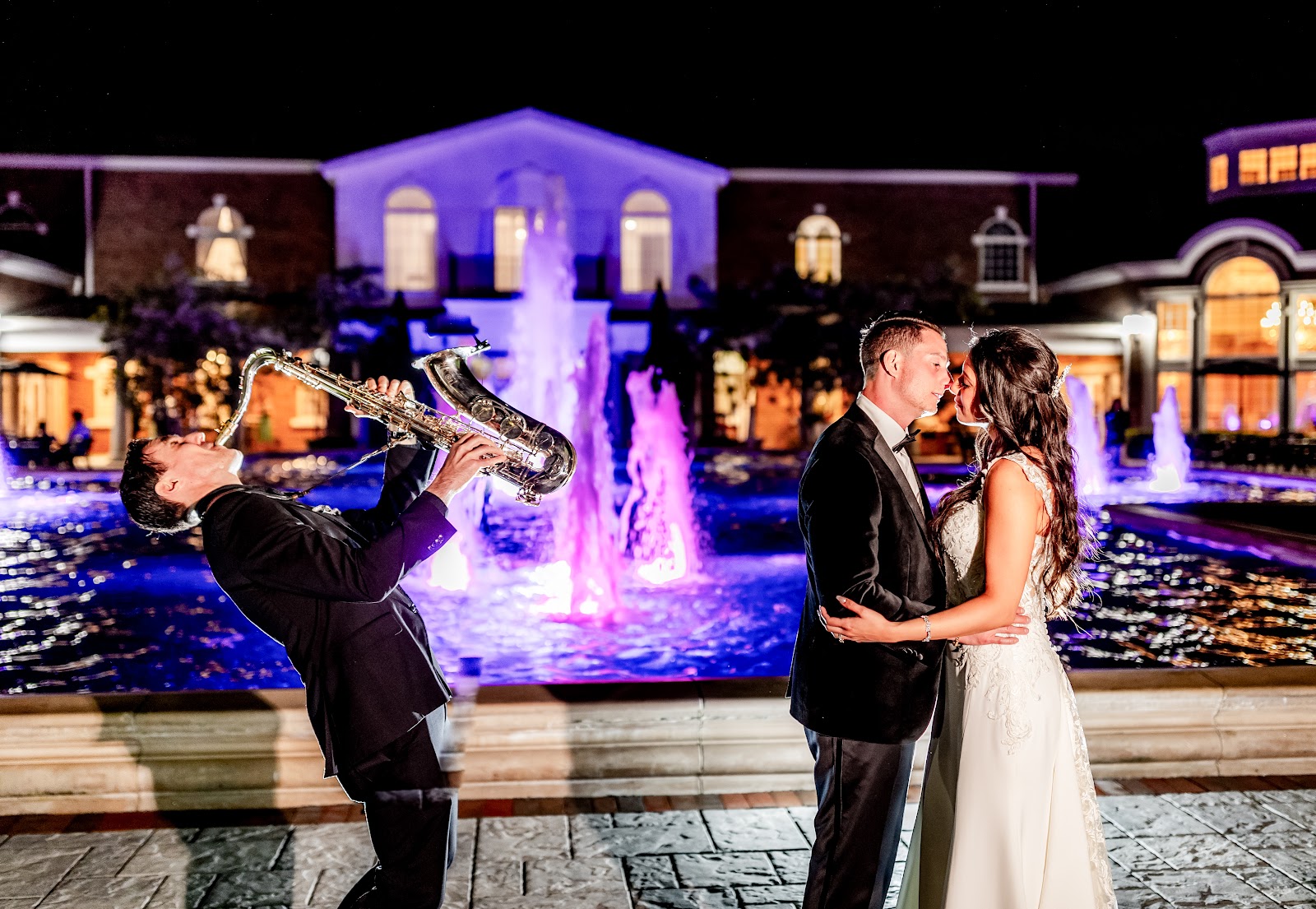
Winter also puts the after-dark exterior frames, with the building lit from within, inside a normal running order rather than after eight in the evening.
And snow solves the shared-grounds problem better than any technique: it covers ground-level clutter, simplifies every background, and turns the whole property into a reflector that lifts every shadow. Snow against dark clipped evergreen or a dark façade gives the widest brightness range on the site — expose for the snow and let the rest go dark, overexposing deliberately relative to the meter, which snow fools by about two stops.
Indoors, the same low sun enters any window almost horizontally and travels much further into a preparation room than a summer sun does, which widens the usable band beside the glass considerably.
The costs are a short day, cold hands, batteries draining faster, and a cold camera fogging when brought from a winter garden into a heated ballroom. Spares in an inside pocket and bodies bagged until they warm.
Early spring is the weakest outdoor part of the year: bare planting, brown lawn and wet footing. Indoors it makes no difference at all, which is a legitimate reason to weight an April wedding toward the interior — and at a venue built around its ballrooms that is no loss.
Late spring is when landscaped grounds peak, because they are designed to: beds filled, hedges dense, lawns green. The complication is the long days, which push the good low light to after eight — the worst mismatch of the year between the light and a fixed slot.
Summer is hot and humid — commonly upper eighties Fahrenheit and above with high humidity — with afternoon thunderstorms a real feature from June into August. At a venue of this size the covered alternative is usually the easiest part of the plan, and the heat on open lawns is a welfare matter that shows in photographs: scheduling, shade and water do more about it than any camera decision.
Summer is also the busiest season, which at a multi-event venue means the shared grounds are at their most contested. That is the practical argument for the closer-framing approach in July and for knowing the other events’ timings in advance.
Autumn is the best season on every count. The humidity breaks in September, the air reaches its clearest of the year, foliage in Bergen County peaks from the middle of October into early November — and the days are short enough for the good light to fall inside a normal afternoon slot.
On a landscaped property the autumn effect is composed rather than continuous: specimens turn as whole objects with room around them, each a distinct mass of scarlet, gold or russet. Because the species turn at different rates the window runs two or three weeks, and for a venue whose interiors are elaborate and artificial that outdoor colour is what gives the whole set of pictures a place and a season.
More frames from Rockleigh
Rockleigh wedding photography: common questions
What is the central problem at a multi-ballroom venue?
The grounds and the shared spaces are being used by other weddings at the same time, so the good positions are occupied and the timing is not yours alone.
How do I plan around it?
Ask which areas are exclusive and when the other ceremonies are. Their schedules are knowable, so you can time the shared positions rather than hope.
What removes the problem entirely?
Working close. A longer lens at a wider aperture turns a group of strangers thirty metres away into an unrecognisable soft shape.
What is the best overlooked position?
A large plain wall in shade. Soft directional light, a clean background, works at any hour, and nobody else photographs there.
What if the light will be better later than the slot?
Ask in advance about stepping outside for a few minutes during the reception. It is much easier agreed beforehand than requested on the night.
Which season is most convenient?
Winter, because a low sun means no bad hour and an afternoon slot falls in good light — and snow simplifies the shared grounds. October is the best-looking.
More New Jersey venue guides
We are writing a photographer’s guide to every venue we would happily shoot in New Jersey. Here are three more, plus the full index:
- Royal Manor, Garfield: The One Decision That Governs Everything
- Skylands Manor, Ringwood: The Light Through the Day
- The Terrace, Paramus: Field Notes
Planning a wedding at Rockleigh?
A shared property, planned properly. Tell us your date and the timings.