 The Venetian, Garfield: The Building’s Own Logic
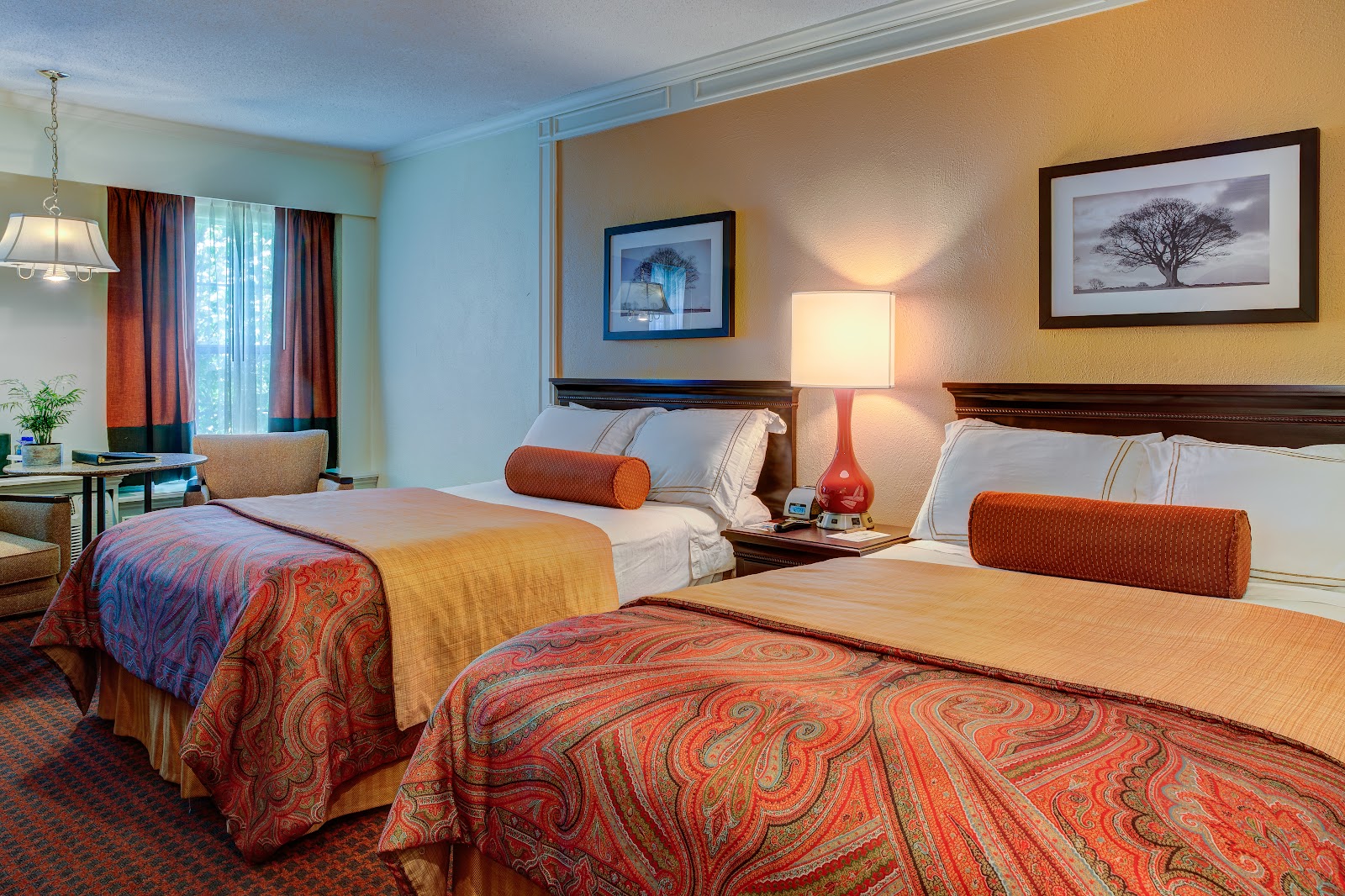
Olde Mill Inn, Basking Ridge: One Frame, and How It Is Made
A low beamed room with one window and a fire. Everything in it absorbs, which is the point.
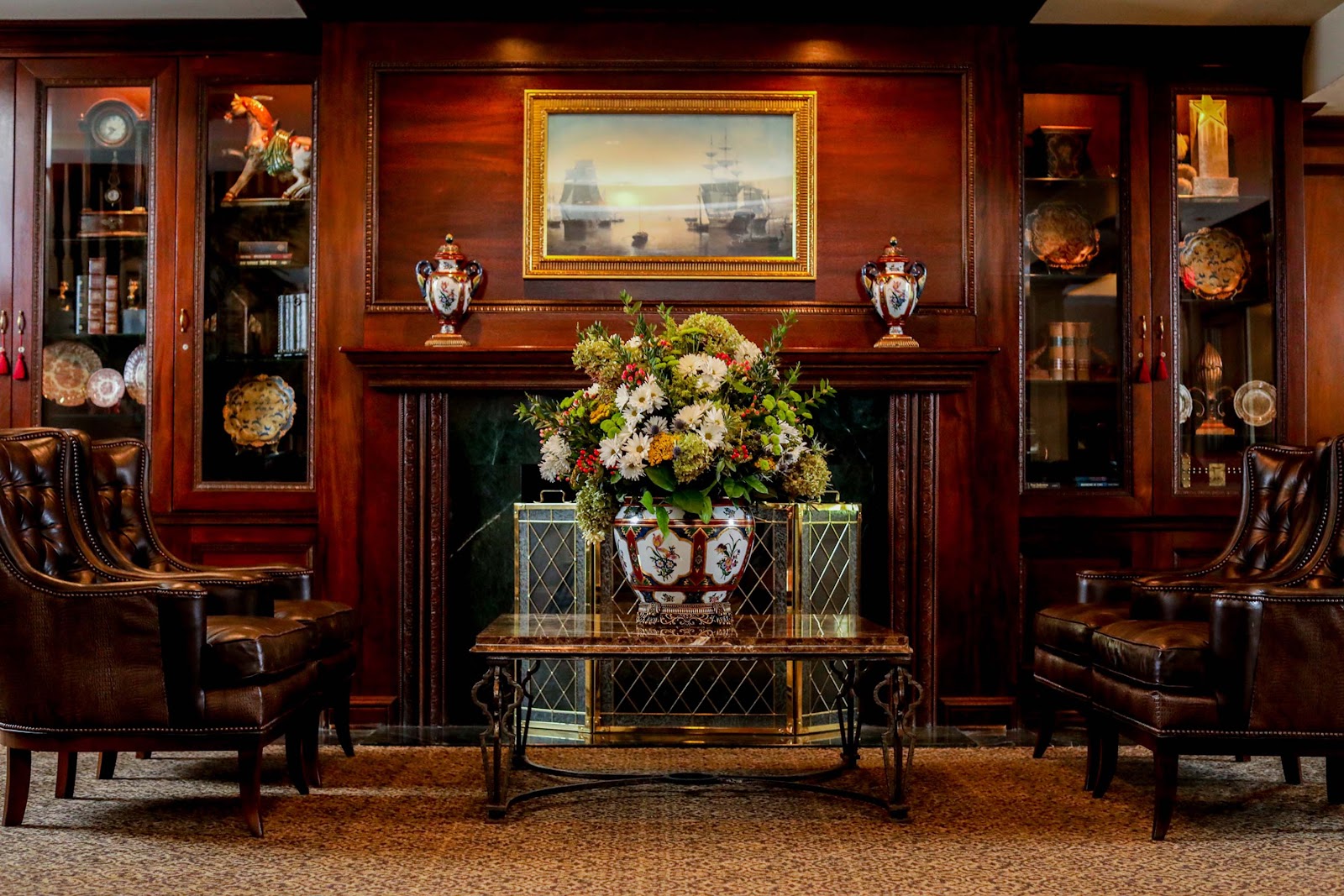
There is one frame a low-ceilinged old inn gives better than any other kind of building, and it is worth building properly because the instinct is to fight the room rather than use it.
A subject sits or stands beside a fireplace in a low beamed room, lit from one small window to the side, with dark beams overhead and dark panelling or plaster behind. The room is dim, the light is horizontal and restricted, and everything in the frame except the face and the fire falls away toward black.
It works because of three things and all of them are consequences of the building’s age.
The ceiling is low and beamed, which means the light cannot come from above. A high pale ceiling scatters light down into a room and fills every shadow; a low dark beamed one absorbs it, which leaves only the horizontal component from the window — and horizontal light at head height is the most flattering direction there is.
The materials absorb. Aged timber, dark plaster and worn masonry return very little, which means the ambient is a stop or two below what the eye estimates and the background behind a subject drops away steeply. That is free separation and it is the single most valuable thing an old room gives.
And the windows are small. A modest opening in a thick wall restricts the light into a narrow band, which is a natural snoot — so the fall-off across a face is sharper and the frame is more dramatic than the same position in a building with tall glazing.
We have not photographed a wedding at the Olde Mill Inn; historic country inns behave consistently. Which rooms are included, whether the fireplaces are usable, whether the lighting can be dimmed, what daylight reaches the preparation rooms, and which parts of the property are historic and which are later additions are questions for their team.
Olde Mill Inn at a glance
| Where | A historic country inn at Basking Ridge, northern New Jersey |
| The frame | A face beside a fireplace in a low beamed room, lit from one window |
| Why it works | A low dark ceiling removes the top light; small windows restrict the rest |
| The materials | Aged timber and plaster absorb — the background drops away for free |
| Ask first | Rooms included, working fireplaces, lighting control, which parts are historic |
How the frame is made
The distance from the window is the first decision and in a building with small openings it is closer than instinct suggests. A metre is the working distance and drifting to two loses more here than in a building with tall glazing, because a small window is a small source and its light falls off fast.
The turn is the second. Facing the window squarely gives flat even light; turning about forty-five degrees so the light crosses the face gives a lit side, a shadowed side and a gradient between — which is what makes a face read as three-dimensional. The catchlight confirms it: broad and low on the window side of each eye.
The background is the third and in an old room it is the easiest decision of all, because almost everything qualifies. Dark beams, aged panelling, a stone or brick chimney breast, an unlit doorway — all of them sit two or three stops below a lit face without anything being done. The choice is which dark thing is behind, and a step to one side is the whole adjustment.
The fire is the fourth element and it needs handling deliberately rather than being left as a bright spot. A lit fire is a source, and it is strongly warm — considerably warmer than daylight and warmer than most artificial lighting. Which means a subject lit partly by a window and partly by a fire has two colours on one face, and no white balance renders both.
There are three honest resolutions. Set the balance for the window light, which renders the fire as a warm glow — usually the right answer, because the fire is meant to look warm. Set it for the fire, which renders the window light blue and works when the fire is the dominant source. Or move the subject so only one of them reaches their face.
What does not work is averaging, which leaves skin somewhere between two colours and looks like neither.
A fire is also a moving source, which means its output changes between frames — and it is dim. A domestic fire is a great deal less bright than it appears to an adapted eye, and a frame exposed for a face lit only by firelight requires either very high sensitivity or a long shutter. The honest approach is to use the fire as a background element and an accent rather than as the light on a face, unless the whole frame is intended as a very dark one.
The exposure is the fifth decision and it runs the dark-room way in its strongest form. A meter looking at a low dark beamed room tries to lift it toward mid-grey, which overexposes a face by two stops or more — and the correct frame has a great deal of near-black in it, because that is what the room is.
So: metering on skin, in manual, with the room allowed to stay dark. Metering off a hand in the same light as the face is the fastest reliable method, and the check is whether the beams have gone black rather than grey.
Where a source is needed, it must be close, because nothing in an old room bounces. The light reaching a face is only the light aimed at it, falling off with the square of distance — so a source at two metres needs roughly a quarter of the output of the same source at four, and close is also softer relative to the subject.
And it must be gelled warm, because everything in the room is: aged timber, plaster and firelight all pull the same direction, and an ungelled source produces a face that reads cooler than its surroundings, which the eye catches immediately. The white balance then goes to the gel.
The one genuine advantage of a low ceiling, which no historic mansion or ballroom has, is that it is a usable bounce surface if it is pale — but in a beamed room it usually is not, and bouncing off dark beams returns almost nothing and colours it heavily. Direct through a modifier is the working approach.
What breaks it, and the rest of the property
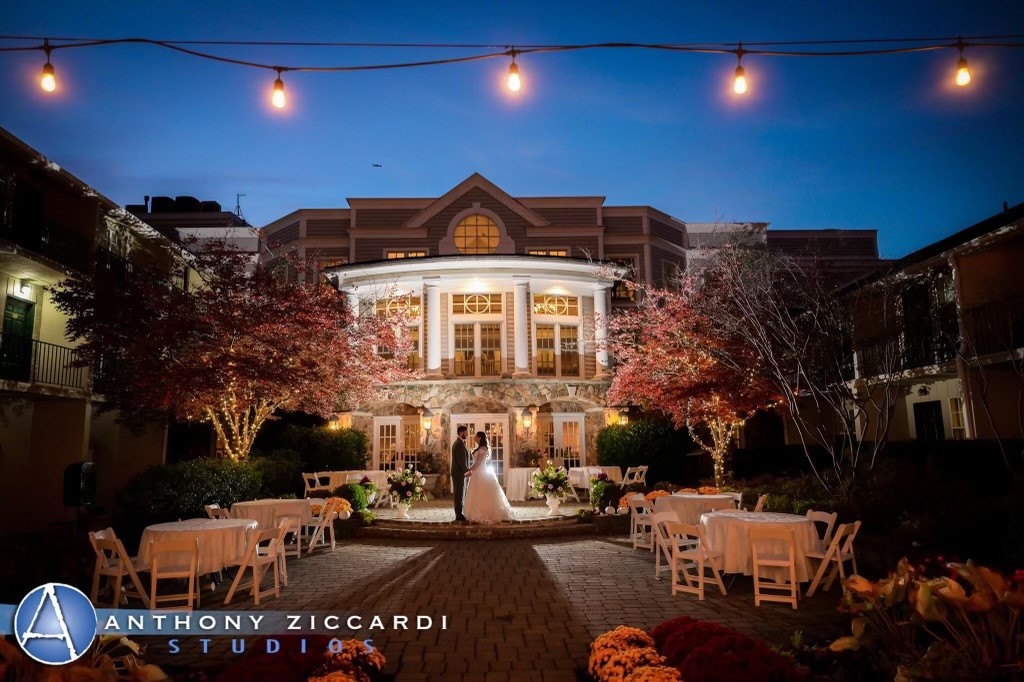
Direct sun through a small window breaks the frame, because it lands as a hard-edged patch and a bright band across an eye is not correctable. Old windows frequently have glazing bars, which cut it into several patches at once. A sheer curtain turns the window into a diffuser; a shaded or north-facing window avoids it; and half a metre either way is frequently the fix.
Overhead fittings break it in the other direction. Downlights, spots or a ceiling fixture in a low room put a hard band on the top of a head and leave the eyes dark, and they are usually a different colour from the daylight as well. Where they can be turned off for a few minutes, that is the ask — and it is free.
A pale-painted room breaks it completely, and some rooms in any inn have been redecorated. A pale wall bounces the window light back, fills the shadow side of the face and lifts the background — so the modelling flattens and the separation disappears. The frame is not available in a white room, and looking for a dark one is faster than fighting a light one.
Drifting from the window is the commonest failure and it is invisible while it happens. A metre feels close, so people move to two, and at two metres a small window gives a quarter of the light and half the separation. The fix is to step forward until the light is obviously good and then not drift.
The rest of the property is variations on the same physics plus, usually, a modern addition that follows the opposite rules.
A stair in an old inn is worth finding: it gives height, an architectural frame on both sides, and a subject on a different level from everyone else. The light usually comes from a window on a landing, which means from above and behind — so a subject looking up the stair catches it in the eyes and one looking down is in their own shadow.
A porch or covered entrance is the outdoor equivalent of the frame described above: a solid roof blocks the overhead component, restricts the light to a horizontal band that models a face properly, bounces off the deck to fill, and cannot dapple. Two or three metres in from the open edge, and it works at any hour in any weather.
The ballroom or function room, if it is a later addition, inverts everything. It will be pale, flat-ceilinged and evenly lit, which means the problem there is separation rather than light: find something dark to put behind the subject, use whatever glazing exists as a directional source at forty-five degrees, or add a source to create the shadow side the room’s bounce has filled in.
The one real advantage of a modern function room is the low flat ceiling, which is a usable bounce surface — unlike a beamed one. A flash into it returns soft overhead-forward light across a whole room.
For the evening, expose the ambient about a stop under what faces need so the room keeps its character, then add one warm-gelled source just above skin level with the white balance set to the gel.
Outdoors, northern New Jersey gives oak-dominated woodland with maple, beech and tulip poplar, which filters as much as it blocks and therefore dapples: look at the face rather than the ground, and a bright patch on skin means move a metre. A mature specimen’s canopy edge is the reliable position — soft directional light in front, darkness behind, which is this frame’s physics without a building.
And the inn’s own exterior takes raking light far better than flat light: whatever its material, texture shows only when light crosses a surface rather than falling onto it, which puts the architectural frames in the last two hours.
- A metre from a small window at forty-five degrees, and do not drift
- Meter on skin and let the beams go black, not grey
- Set white balance for the window or for the fire — never the average
- Added light must be close and gelled warm; nothing in an old room bounces
- The frame does not exist in a pale room. Find a dark one instead
The northern New Jersey year
Northern New Jersey has four genuine seasons, and for a building whose best frame is entirely interior the season affects the quality of that frame more than it affects whether the day works.
Winter is the best season for this building and it is the opposite of the intuition. The December sun at this latitude reaches only about twenty-six degrees above the horizon, which means it enters a small window almost horizontally and travels much further into a low room than a high summer sun does — so the usable band beside the glass widens considerably, and the light arrives at exactly the head height the frame wants.
Snow adds to it: a snow-covered exterior reflects light up into every window and measurably brightens a dim room, sometimes by a stop. An old inn after snowfall is noticeably easier to work in than the same inn on a dull dry day.
And winter is the season the frame belongs to in another sense, because a fire in a low beamed room is a winter picture. A lit fire in July reads as a decoration; the same fire in January reads as the reason the room is the shape it is.
Outdoors, snow is the best natural fill available — lifting every shadow and throwing light upward into faces — and snow against a dark timber or masonry exterior gives the widest brightness range on the property. Expose for the snow, let the building go dark, and overexpose deliberately relative to the meter, which snow fools by about two stops.
The costs are cold, a short day, batteries draining faster, and a cold camera fogging when carried into a warm room. Spares in an inside pocket and bodies bagged until they warm.
Early spring is the weakest part of the year outdoors: bare trees, brown ground and wet footing. Indoors it makes no difference at all, which is a legitimate reason to weight an April wedding toward the interior.
Late spring is comfortable and green, with new foliage transmitting light beautifully — and one interior consequence worth knowing: a window with a tree outside it in leaf delivers green-tinged light where the same window in March delivered neutral. A custom white balance handles it.
Summer is hot and humid — commonly upper eighties Fahrenheit and above with high humidity — and afternoon thunderstorms are a real feature from June into August. An old inn handles all of that comfortably, which is one of its virtues.
The summer effect on the frame is the one to note: a high sun barely enters a small window at all, which means the usable band is at its narrowest in June and July, and a metre from the glass becomes half a metre. That is workable and it is worth knowing before the day.
Autumn is the best season overall. The humidity breaks in September, the air reaches its clearest of the year, the sun is low enough by mid-October that the interior light has begun to improve, and foliage in northern New Jersey peaks from the middle of October into early November.
Oak russet, maple scarlet, beech bronze and tulip poplar yellow arrive over two or three weeks, and against a dark old building that colour reads at full saturation because the background is dark enough to hold it without competing. An October wedding here gets both the improving interior light and the best exterior of the year, which makes it the easiest date on every count.
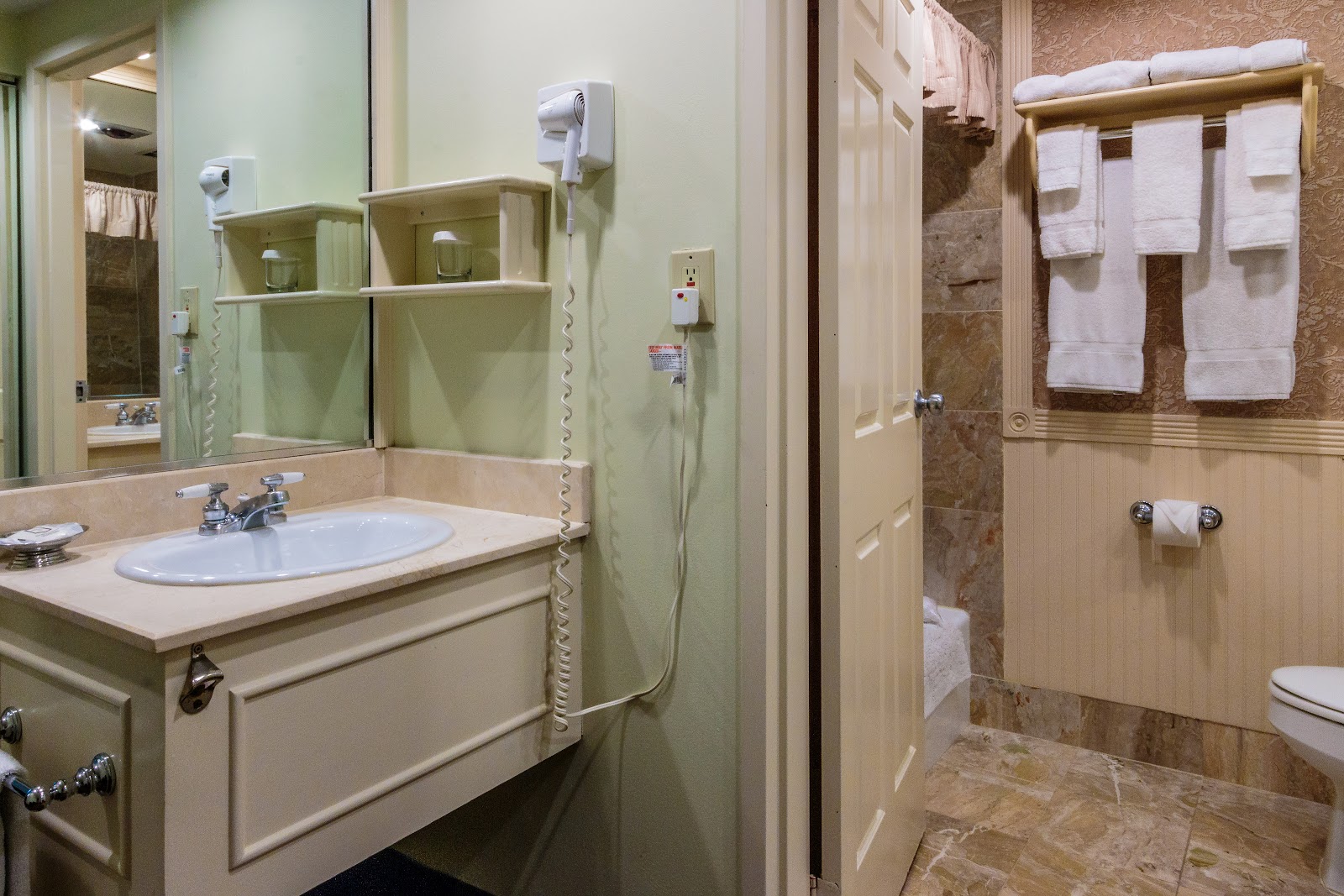
More frames from Olde Mill Inn
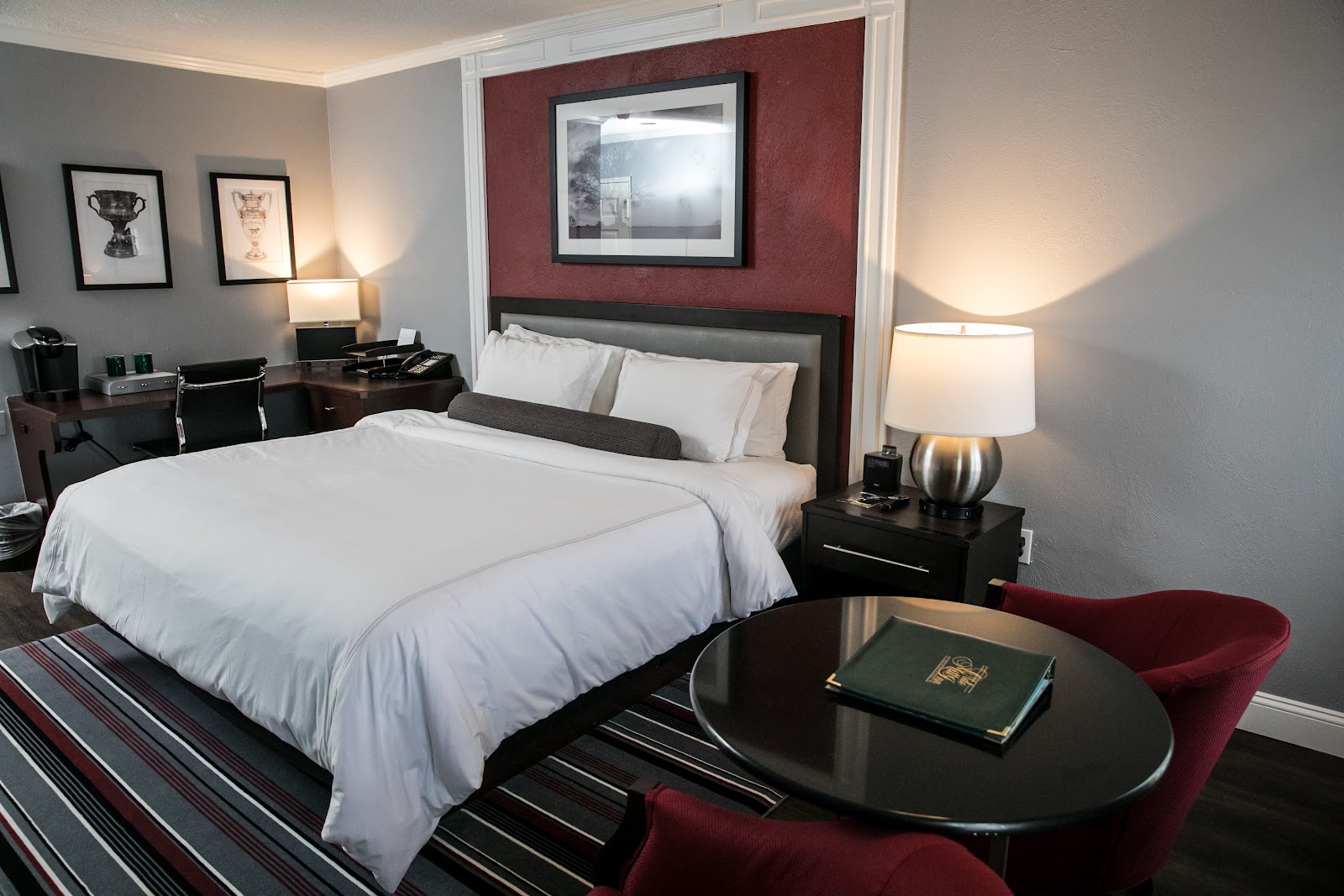
Olde Mill Inn wedding photography: common questions
What is the frame?
A face beside a fireplace in a low beamed room, lit from one small window to the side. The low dark ceiling removes the top light and the materials absorb the rest.
Why a metre and not two?
A small window is a small source, so its light falls off fast. At two metres there is a quarter of the light and half the separation.
How do I handle the fire?
Set the white balance for the window light and let the fire read as a warm glow, or set it for the fire and let the window go blue. Never average the two.
Can I light a face with firelight?
Rarely. A domestic fire is much dimmer than it looks to an adapted eye. Use it as an accent and a background element instead.
What breaks the frame?
A pale-painted room, which bounces the light and kills the fall-off — plus direct sun through the glazing bars, and drifting away from the window.
When is the frame strongest?
December. A low sun enters a small window almost horizontally and reaches much further into a low room, and snow outside brightens it by up to a stop.
More New Jersey venue guides
We are writing a photographer’s guide to every venue we would happily shoot in New Jersey. Here are three more, plus the full index:
- Park Savoy, Florham Park: What It Suits and What It Does Not
- Pleasantdale Chateau, West Orange: The Light Through the Day
- Princeton University Chapel: One Frame, and How It Is Made
Planning a wedding at Olde Mill Inn?
One frame, and an old building that makes it. Tell us your date.