 The Venetian, Garfield: The Building’s Own Logic
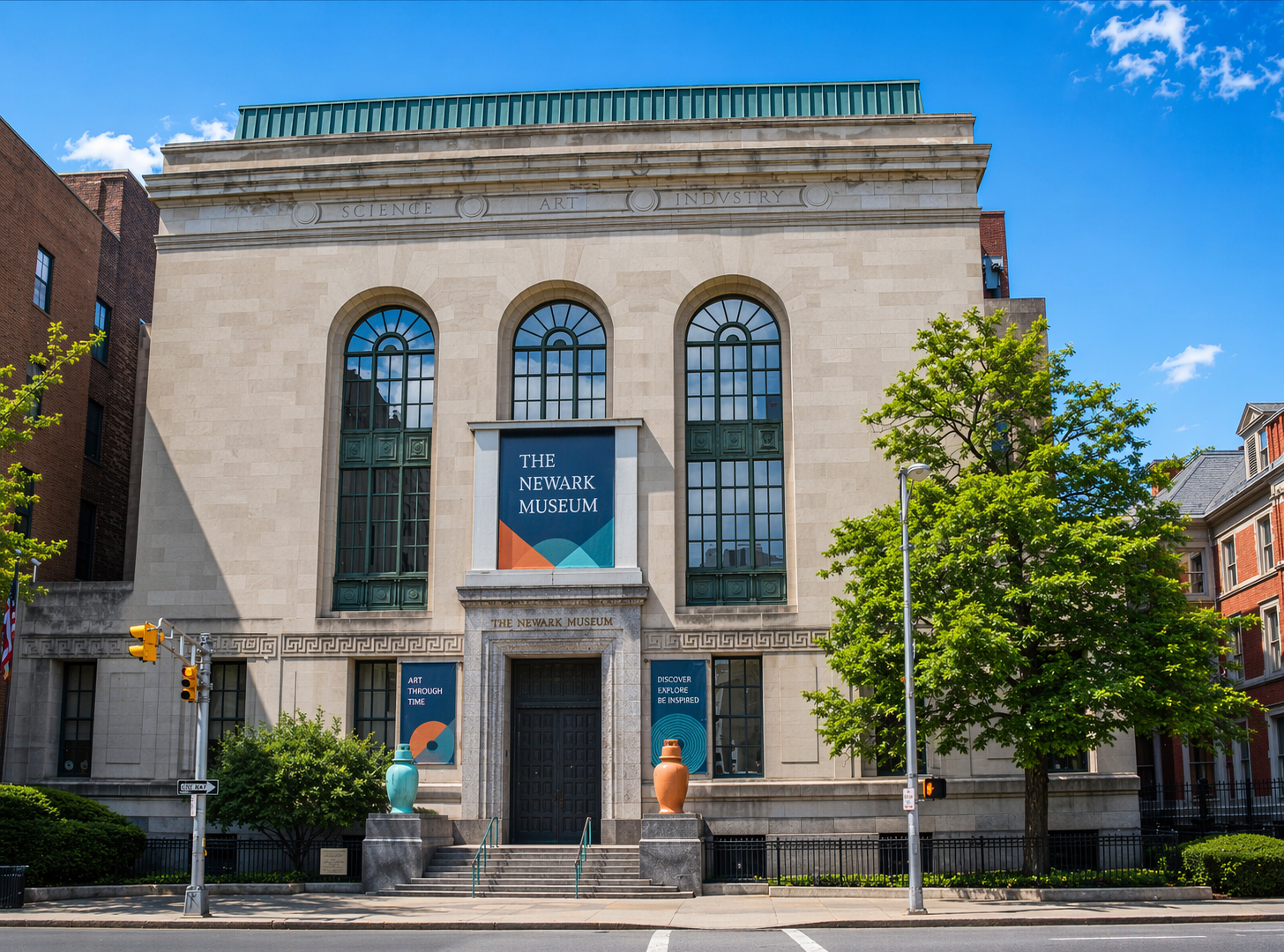
Newark Museum of Art: A Walk Through the Site
Gallery lighting is designed for objects. Faces are not objects, and that is the whole problem.
This is a walk through the site in the order a wedding day tends to use it, and the organising fact is that a museum is lit for things rather than for people.
That distinction matters more than it sounds. Gallery lighting is designed to render a painting or a sculpture accurately and to keep stray light off the walls — which means it is directional, it comes from above, it is frequently low in level to protect the works, and it is aimed at surfaces rather than into the room. A face standing in that light has a lit forehead, dark eye sockets and a shadow under the chin.
Everything else in a museum follows from the same priority. The walls are neutral so they do not compete. Daylight is controlled or excluded so it does not damage anything. Levels are low. And flash is frequently prohibited, for the same conservation reasons.
Which means a museum is a building of four quite different photographic environments, and knowing which is which before the day is most of the preparation.
A skylit or glazed court, if there is one, is the best daylight in the building. The galleries are dark and awkward. A historic house attached to a museum of this kind is an entirely different proposition again — domestic scale, window light, dark interiors. And the garden or courtyard between them is the outdoor space.
We have not photographed a wedding at the Newark Museum of Art; city art museums behave consistently. Which spaces are included, whether flash and tripods are permitted and where, whether the gallery lighting can be adjusted, what access there is to the historic house and the garden, and what the conservation rules require are questions for their team — and the flash question in particular decides the approach more than anything below.
Newark Museum of Art at a glance
| Where | A city art museum in Newark, New Jersey |
| The problem | Gallery lighting is made for objects: directional, from above, and low |
| The court | A skylit or glazed court is the best daylight in the building |
| The house | An attached historic house is a different building entirely |
| Ask first | Spaces included, flash and tripod rules, lighting control, house access |
The court, and the galleries
Start in the court, because it is the one space in the building with abundant light and the one where most of the group photographs will happen.
A skylit or glazed court is a very large overhead diffuser. Light arrives from directly above, softened by the glazing, filling the space evenly — which means there is no dappling, no squinting, no hour to avoid, and a group of a hundred can stand anywhere. That is the court’s genuine value and it is why it is the right place for the formal photographs.
What overhead light does not do is model a face. It lands on the forehead, the nose and the cheekbones and leaves the eye sockets and the underside of the chin in shadow — the characteristic top-light look, and it is the court’s one weakness.
There are two fixes and both are free. Stand the subject near a vertical surface that is catching the light — a pale wall, a pale column — so it bounces horizontally into the face and fills the sockets. Or position them near the edge of the court rather than under the middle of the skylight, where the light arrives at more of an angle.
The third fix costs something: one source off the camera axis at about half a stop above the ambient, which restores the horizontal component the skylight does not supply. In a court it needs to be subtle rather than dominant, because the space’s own light is the character of the frame.
The metering in a court runs the pale-surface way: a meter looking at bright glazing overhead and pale walls underexposes a face, so metering on skin and working brighter than the camera suggests is the rule. And a court with tall glazing carries the reflection problem — a few degrees off perpendicular removes the camera from the glass.
The court’s other gift is height. Any balcony, upper level or stair overlooking it gives a position from which the volume reads as a shape rather than an expanse, which is the one frame wide-angle work at floor level cannot produce. Finding it is worth ten minutes.
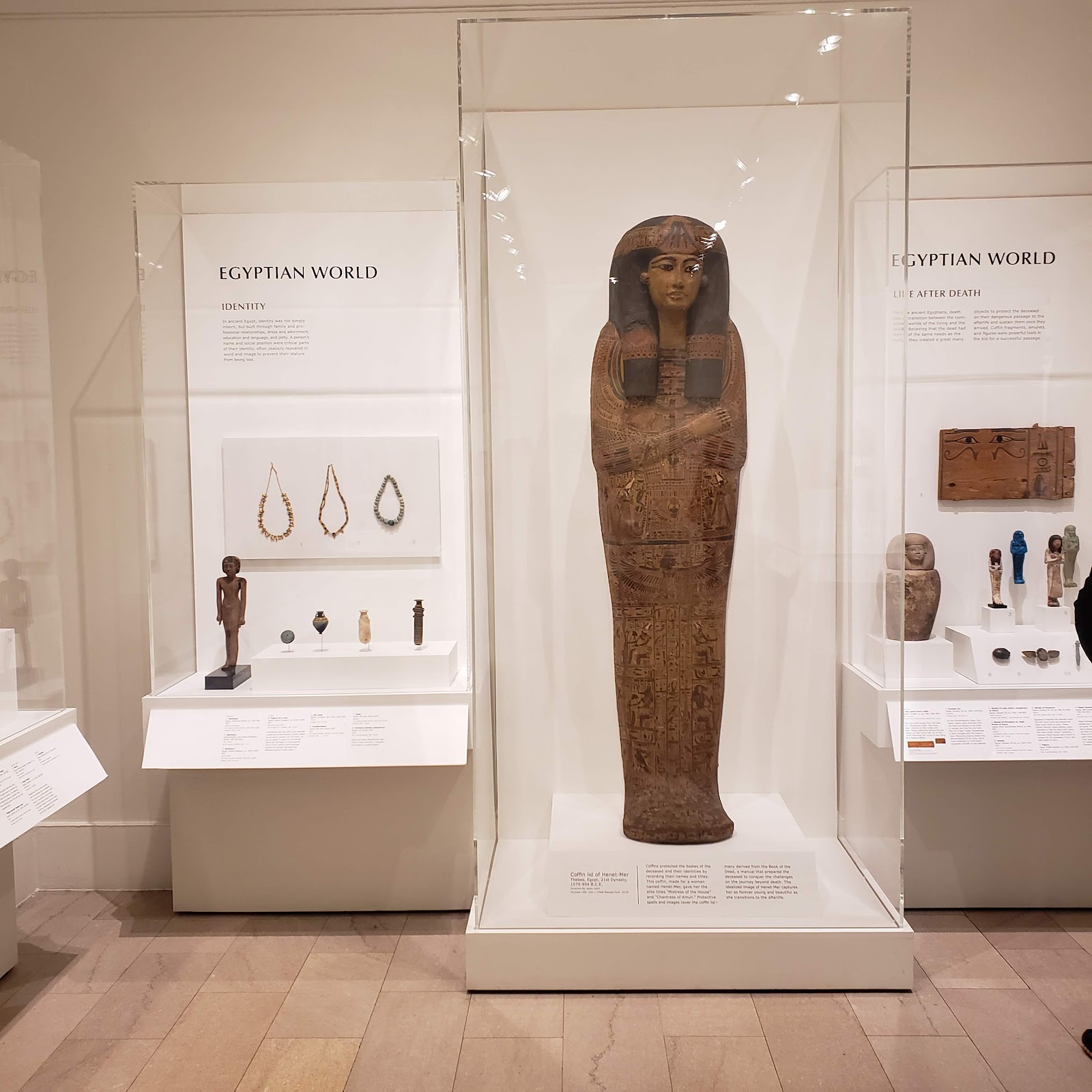
The galleries are the second environment and the honest note is that they are difficult. The lighting is directional from above and low in level, the walls are neutral, and the works on them are the intended subject of every sightline in the room.
The approach that works is to treat the gallery as a dark room with a tricky overhead source. Expose the ambient about a stop under what faces need, so the room keeps its own look, then add one gelled source off the camera axis at just above what the ambient gives the skin. That renders the face properly and leaves the gallery reading as a gallery rather than as a flatly lit corridor.
The colour needs deciding rather than averaging. Gallery lighting is chosen for colour accuracy on the works, which means it may be markedly warm or markedly neutral depending on the room — and it can differ from gallery to gallery. Setting the white balance on a face in each room, rather than once, is the working method.
Where flash is prohibited — and it frequently is — the approach changes rather than failing. Without added light the answer is to find the places where the gallery light happens to be horizontal: near a wall washer, beside a lit case, in a doorway between two differently lit rooms. Those exist in every gallery and they take a walk to find.
The works themselves are a compositional matter rather than a lighting one. A recognisable painting behind a couple’s heads is a third subject competing for attention, and the frames that work either include it deliberately and squarely or exclude it entirely. The awkward middle — half a canvas behind a shoulder — is the commonest failure, and a step to one side is the whole fix.
Whether photographing particular works is permitted is a separate question with a definite answer, and it is worth asking rather than assuming, because loan agreements can restrict it.
The historic house, the garden, and the street
An attached historic house is the third environment and it is the best portrait space in the whole complex, for reasons that have nothing to do with the museum.
A period house has tall sash windows in rooms of domestic scale with dark finishes, which is the classic portrait condition: horizontal light entering at head height, falling off steeply into a dark room. A subject a metre from the glass, turned about forty-five degrees to it, gets real modelling with a background two or three stops down for nothing.
The catchlight confirms it — broad and low on the window side of each eye. And the two free rules apply: turn off whatever lighting can be turned off, because warm bulbs against cool daylight put two colours on one face; and set a custom white balance on a face in position.
The metering runs the dark-room way, which is the opposite of the court’s: a meter looking at a dark panelled interior overexposes the face by a couple of stops. So a day that moves between a bright court and a dark historic room needs the correction reversed within a few paces, and that is exactly what automatic exposure cannot do.
Small-paned sash windows cut direct sun into hard patches, which is charming on a wall and unusable on a face — a sheer curtain or a shaded window solves it. And a low domestic ceiling is a genuine advantage: it is a usable bounce surface, unlike a gallery’s or a court’s.
The other thing a historic house gives is the thing a museum cannot: rooms that look lived in. Furniture, textiles, fireplaces, mirrors and objects at human scale, all of which give a frame texture and incident where a gallery gives neutrality. If the house is available, it is where the couple’s portraits belong.
The garden or courtyard is the fourth environment and in a city museum it is usually enclosed, which is an advantage. An enclosed courtyard is sheltered from wind, which makes a lightstand usable where it would not be on a street; and the surrounding walls provide shade on one side at any hour.
The standard rules apply. A wall in shade facing open sky is a soft directional source; a shaded wall behind a subject is a dark background. Any arcade, loggia or covered walk restricts the light to a horizontal band and cannot dapple, which makes it the reliable midday position. Two or three metres in from the open edge.
Where there is planting, the northeast rules hold: broad-leaved canopy filters as much as it blocks, so it dapples — look at the face rather than the ground, and a bright patch on skin means move a metre. A city garden’s specimen trees are usually planted deliberately and in quantity.
The street is the last environment and it has the ordinary urban logic. A street is a canyon, so the light on the pavement depends on which way it runs and how high the buildings are — an east-west street is lit along its length at the ends of the day, a north-south one only near the middle. Two minutes with a map tells you which.
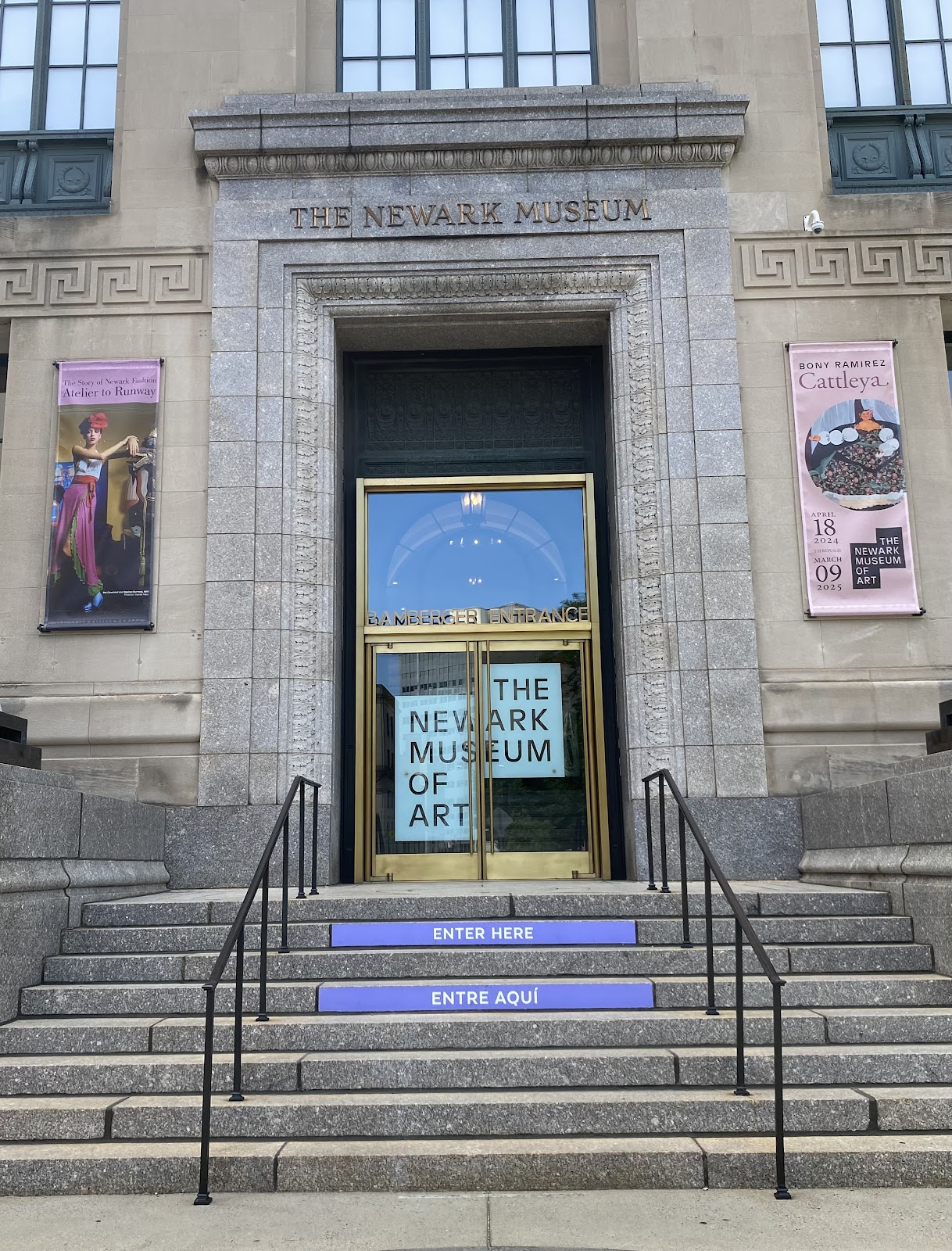
Doorways, recessed entrances, arcades and solid awnings are the midday shade, and a city has them in quantity. A museum’s own entrance, if it is a substantial portico or recessed doorway, is frequently the best exterior position on the whole site: a horizontal band of light, a dark surround, no dappling, and an architectural frame.
And a museum façade is usually stone, which absorbs — so it gives a mid to dark background rather than a bright one, and it takes raking light in the last hour better than it takes flat light at midday.
After dark a city street is a resource rather than a limitation: lit windows, street lighting, and wet pavement after rain doubling everything in reflection. A tripod, a few seconds and a close gelled source on the faces — and tripod permission, which in a museum is a question worth asking for the interior as well.
- The court is for groups: even light, but top light — fill the eye sockets
- Galleries: expose a stop under and add one gelled source per room’s colour
- Decide whether a work is in the frame or out; half a canvas fails
- The historic house is where the portraits belong, if it is available
- Reverse the metering crossing from a bright court to a dark period room
The year, in a building that mostly ignores it
A city museum is among the most weather-independent venues in this guide, so the season affects the court’s light, the historic house’s light and the outdoor half of the day rather than whether anything works.
Winter is cold with snow in most years, and for the building it barely matters — the honest argument for a museum on a February date, and a strong one.
Where winter matters is indoors and it matters positively. The December sun at this latitude reaches only about twenty-six degrees above the horizon, which means light entering a skylit court arrives at a steep but not vertical angle, and light entering the historic house’s tall sash windows comes in almost horizontally and travels three or four metres into a deep room rather than one.
So the historic house is better lit in December than in June — significantly so — and the court’s top-light problem is slightly reduced, because a low sun through a skylight has more horizontal component in it than a high one.
Snow adds to both: a snow-covered courtyard or street reflects light up into every window and measurably brightens the interiors, and snow against a dark stone façade is the widest brightness range on the site. Expose for the snow, let the stone go dark, and overexpose deliberately relative to the meter, which snow fools by about two stops.
Winter also gives the earliest evening, which means the after-dark street frames are available from mid-afternoon rather than after eight — comfortably inside a normal running order.
The costs outdoors are cold, a short day, batteries draining faster, and a cold camera fogging when brought from a winter street into a warm building. Spares in an inside pocket and bodies bagged until they warm.
Spring is mild and increasingly clear, and it is the most straightforward season for combining the interiors with the garden and the street. A city garden’s flowering trees are deliberate and concentrated, and late April is a genuinely good fortnight for the courtyard.
Summer is hot and humid in northern New Jersey — commonly upper eighties Fahrenheit and above with high humidity — with afternoon thunderstorms a real feature from June into August. Indoors none of that matters, and an enclosed courtyard is more comfortable than an open street.
The summer effect on the court is worth knowing: a high sun through a skylight is at its most vertical, which makes the top-light problem worst in June and July. That is when the fill technique matters most — near a pale vertical surface, or at the edge of the court rather than under the middle of it.
And the summer effect on the historic house is that the light reaches least far into the rooms, so the usable band beside the windows is narrowest.
Autumn is the best season for everything that is not fully enclosed. The humidity breaks in September, the air reaches its clearest of the year, the sun is low enough by mid-October to improve both the court and the house, and city street and garden trees turn from the middle of October into early November.
Against a dark stone museum façade that colour reads at full saturation, because the background is dark and neutral enough to hold it without competing — which makes the exterior frames in late October the strongest the site produces.
More frames from Newark Museum of Art
Newark Museum of Art wedding photography: common questions
Why is gallery lighting difficult?
It is designed for objects: directional, from above, low in level and aimed at walls. On a face it lights the forehead and leaves the eyes dark.
What do I do about the court's top light?
Stand the subject near a pale vertical surface that bounces light horizontally, or at the edge of the court rather than under the middle of the skylight.
What if flash is prohibited?
Find the places where the gallery light is already horizontal — beside a wall washer, next to a lit case, in a doorway between differently lit rooms.
Where do the portraits belong?
The attached historic house, if it is available: tall sash windows, domestic scale and dark finishes give the best portrait light in the complex.
What about the artworks in frame?
Include one deliberately and squarely, or exclude it entirely. Half a canvas behind a shoulder is the commonest failure, and a step to one side fixes it.
Which season matters most?
December indoors, because a low sun reaches much further into the historic house and reduces the court’s top-light problem — and late October outside.
More New Jersey venue guides
We are writing a photographer’s guide to every venue we would happily shoot in New Jersey. Here are three more, plus the full index:
- Olde Mill Inn, Basking Ridge: One Frame, and How It Is Made
- Park Savoy, Florham Park: What It Suits and What It Does Not
- Pleasantdale Chateau, West Orange: The Light Through the Day
Planning a wedding at Newark Museum of Art?
Four buildings in one. Tell us your date and we will walk them in order.