 Whitney Center, Hamden: The Problem, and Four Ways Out
Woodwinds, Branford: The Problem, and Four Ways Out
A set-piece garden is small, and everything just outside it is not a garden at all.
The problem at a banquet venue with a purpose-built ceremony garden is spatial rather than technical, and naming it precisely is what makes it solvable.
A garden of this kind is a set piece. It was designed to look complete from one direction — from where the guests sit, looking at where the couple stands — and it is exactly as large as it needs to be for that. Which means it is small, it has a front and a back, and the illusion depends on the camera staying roughly where the congregation is.
Step ten metres to either side, or turn around, and the working reality of the site appears: parking, service access, fencing, a neighbouring property, plant and equipment, the back of the building. None of that is a fault — a venue has to function — but it means the usable angles in the garden are a narrow set rather than a free choice.
Three consequences follow. The wide frames are limited to a handful of directions and they repeat quickly. The group photographs have to happen where the background works rather than where the space is convenient. And a photographer who wanders looking for new angles will find them and they will not be usable.
The second half of the problem is that a set-piece garden has no mature canopy in it. Purpose-built planting is young or ornamental in scale, which means there is nothing overhead — so the garden is bright, open and exposed in the middle of a clear day.
There are four ways out. We have not photographed a wedding at Woodwinds; banquet venues with landscaped ceremony gardens behave consistently. Which spaces are included, whether more than one event runs on a date, what the actual timings are, whether the function-room lighting can be dimmed, and what the covered alternative is are questions for their team.
Woodwinds at a glance
| Where | A banquet venue with a landscaped ceremony garden at Branford |
| The problem | A small set-piece garden with a working site immediately around it |
| Way one | Establish the usable angles before the day |
| Way two | Work close and let the garden be texture, not place |
| Ways three and four | Light it properly; and use the building’s own geometry |
Ways one and two: the angles, and working close
The first way out is to establish the usable angles in advance, and it is ten minutes of walking that decides the whole ceremony coverage.
The method is simple: stand where the couple will stand and look outward in a full circle, then stand where the guests will sit and do the same. The directions in which the background is clean are the frame; the directions in which it is not are where the camera does not go. Writing down three or four of them is enough.
What that produces is a plan rather than an improvisation, and at a ceremony — where there is no second chance and no time to reposition — a plan is the difference between clean frames and compromised ones.
Two specific angles are worth looking for. A position that puts the couple against the densest planting rather than against the fence line, because dense foliage is both a clean background and a dark one. And a position low enough that a flower bed or hedge crosses the bottom of the frame, which hides whatever is at ground level behind it — a low camera is the most effective single fix for a bounded site.
The group photographs need the same treatment and they need it more, because a group is wide. A twenty-person frame takes in far more background than a two-person one, which means the number of viable positions drops sharply — and the one requirement that cannot be negotiated is that everyone is in the same light. A group half in dappled shade is unfixable, so the choice is full even shade, full overcast, or full sun with the sun behind the camera, and the position follows from that before it follows from the background.
The second way out is to work close and let the garden be texture rather than place, and it is the honest answer to a small site.
A longer lens at a wider aperture turns a modest bed of planting into a field of soft colour behind a face, which reads as a garden without showing how large it is. At that scale it does not matter whether the bed is three metres deep or thirty, and it does not matter what is behind the bed at all.
That is not a compromise so much as a redirection: closer framing puts the emphasis on the people, which at a wedding is where it belongs, and it works in any weather at any hour. A set of frames made that way is a better record of the day than a set of wide views of a small garden.
Flowers reward it specifically. Thin petals transmit light as well as reflecting it, which means a bed lit from behind or the side glows rather than being lit from outside — so the strongest close frames have the low sun behind the planting and the faces lifted by a close warm-gelled source.
And the exposure rule for any flower garden is to expose for the reds. A saturated red is the first thing in a frame to lose its detail: it clips in one channel while the rest of the picture still looks correctly exposed, and that is not recoverable. If the deep colours hold texture the frame works, and skin can be lifted afterwards.
A custom white balance set on a face in position handles the green cast bouncing off foliage, which a daylight preset renders badly — and it needs resetting when the subject moves out of the planting.
Ways three and four: the light, and the building
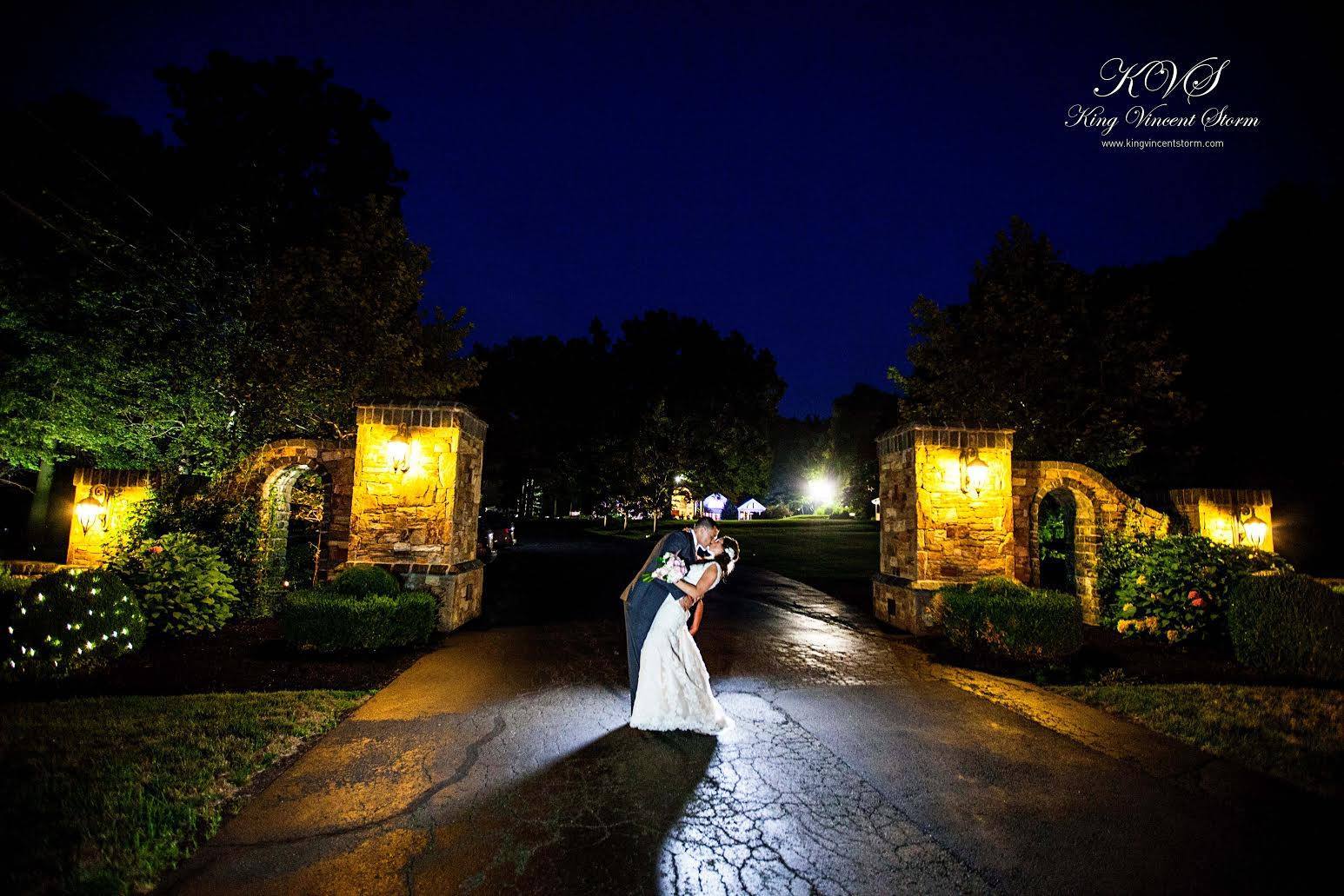
The third way out is to light the garden properly, because a bright open set-piece has no shade in it and an added source is what makes the middle of the day workable.
The situation is straightforward: high sun on open planting gives vertical shadows under the brows, a hard line under every chin and squinting from anyone facing the light. Young ornamental trees filter rather than block, so they dapple — and the test never changes: look at the face rather than the ground, and a bright patch on skin means move.
One source, close, at about a stop above what the ambient gives the face, fixes it. Close matters because a garden bounces very little: a source at two metres needs roughly a quarter of the output of the same source at four, and close is softer relative to the subject. Gelled warm at the ends of the day, neutral in the middle, with the white balance set to whatever the gel is.
The alternative is a held diffuser above and to one side, which turns hard overhead sun into soft directional light. On a sheltered inland site that is more practical than on a coast — a panel is still a sail in wind, but a garden surrounded by building and planting is calmer than open ground.
And overcast does the whole job for nothing. Under cloud the brightness range collapses: no dappling, no squinting, no clipped whites, the greens and the flower colours saturate rather than glaring, and every position in the garden becomes usable at any hour. A grey day at a set-piece garden is straightforwardly better than a bright one, and it is worth telling a couple that rather than apologising for the sky.
The fourth way out is the building, and at a banquet venue it is more useful than it looks.
The building’s own shaded wall is the most dependable position on the property. A large wall in shade facing open sky is a soft directional source, and a shaded wall behind a subject is a clean uncluttered background — which at a bounded site is worth as much as the light. Plain surfaces demand precision, because an approximate composition against a blank wall looks like a mistake, but they are honest and they work at any hour in any weather.
Any porte-cochère, covered entrance, overhang or colonnade is better still: a solid roof blocks the overhead component, restricts the light to a horizontal band that models a face properly, bounces off paving to fill from below, and cannot dapple. Two or three metres in from the open edge is the working position.
Indoors, the preparation rooms are worth assessing for one thing only: whether there is a usable window. Where there is, a subject a metre from the glass turned about forty-five degrees to it gets horizontal light with steep fall-off behind, with the room lights off and a custom white balance set on the face. Where there is not, the hour is a lighting exercise — one source through a modifier, placed to one side, with the room’s own light a stop under, which gives window-like light and stays consistent frame to frame.
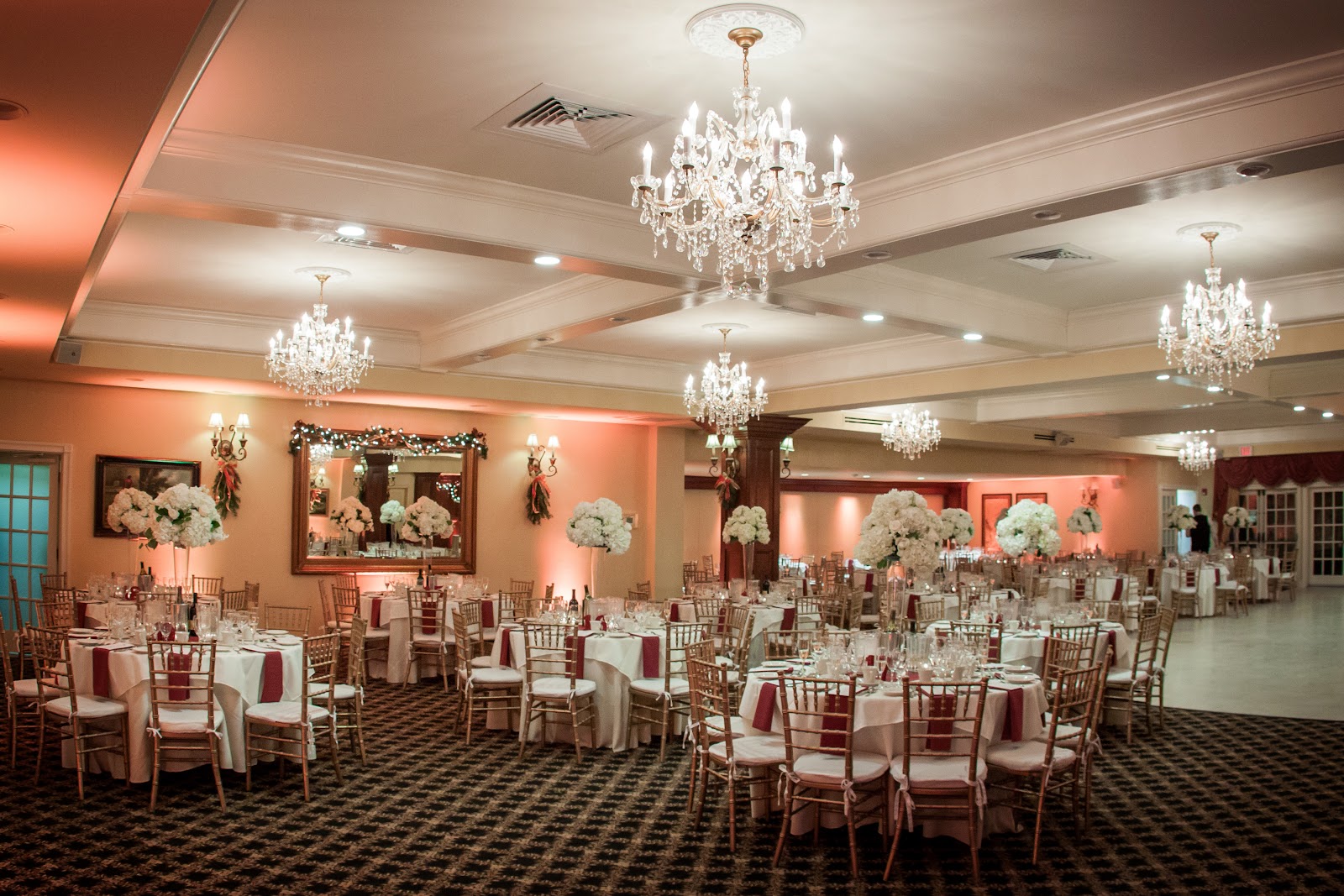
The ballroom follows the standard approach and a banquet room is more tractable than a historic one because the ceiling is lower and therefore usable as a bounce surface. Expose the ambient about a stop under what faces need, so the room keeps depth and its own lighting keeps presence, then add one warm-gelled source just above skin level, bounced rather than aimed directly. The white balance goes to the gel.
The thing to resist is raising sensitivity until the room is bright, which produces the characteristic bad banquet frame: flat, uniformly warm, and identical from table to table.
And the schedule is the last practical matter. A venue that may run more than one event in a day has fixed timings and a defined portrait slot, which means the light available at that slot is the light available — and asking in advance about stepping out for a few minutes later in the evening is much easier than asking on the night.
- Walk the circle first and write down the three or four clean angles
- Work close: a longer lens turns a small bed into a field of colour
- Expose for the reds; they clip before anything else in the frame
- One close source at a stop above ambient fixes the middle of the day
- Overcast removes every problem — a grey day is better than a bright one
The southern Connecticut year
Southern Connecticut has four genuine seasons with real moderation from the Sound a few miles away, and at a garden venue the calendar decides what exists to photograph more than at an indoor one.
Winter is cold with snow in most years, and a purpose-built garden in winter is bare: cut-back beds, dormant planting and nothing in flower. What winter gives instead is snow, which at a bounded site is unexpectedly useful — it covers the ground-level clutter that limits the angles, simplifies every background, and turns the whole garden into a reflector that lifts every shadow.
Snow against dark bare planting or dark brick gives the widest brightness range available on the property, and it fools a meter by about two stops toward underexposure, so deliberate overexposure relative to the camera is the rule.
The December sun at this latitude reaches only about twenty-six degrees above the horizon, so the whole short day rakes rather than floods, which removes the open-garden problem entirely and means the portrait slot falls in good light whenever it happens to be. At a venue with fixed timings that is a genuine advantage: in December there is no bad hour outdoors, and in July there is.
The costs are a short day, cold hands, batteries draining faster, and a cold camera fogging when brought back into a heated room.
Early spring is mud season and the weakest part of the year outdoors: bare beds, brown ground and wet footing. Late April brings the garden’s first real colour — bulbs and early flowering shrubs, which in a designed garden are usually planted in quantity and deliberately — and that is a genuinely good fortnight.
Late spring is when a set-piece garden comes into its own, because it was designed to peak: planting filled in, fresh green everywhere, and the light lengthening. Late May and June are the months this kind of garden looks most like the photographs that sold it.
The long days are the complication. In June the good low light arrives late — genuinely eight in the evening rather than six — which at a venue with a fixed portrait slot means the best light will fall after the ballroom has opened. That is worth negotiating in advance rather than regretting.
Summer is warm and humid — mid-eighties Fahrenheit with high humidity — with afternoon thunderstorms a real feature from June into August, which for a garden ceremony makes a named covered alternative a requirement rather than a courtesy. Roses and summer perennials give a second colour peak, and the middle of the day belongs to the building’s shade rather than the beds.
The humidity warms and diffuses the light at the ends of the day, which flatters skin and suits transmitted light through petals.
Autumn is the best season for the wider frames. Foliage in southern Connecticut turns from the middle of October into early November, and while a young ornamental garden contributes little, any mature trees on or beyond the property do — and autumn colour is the one thing that makes a bounded site’s background genuinely worth showing.
Autumn also brings the clearest air, the most settled weather, the most comfortable temperatures, and days short enough that the good light falls inside a normal afternoon slot rather than hours after it. For a venue that runs to a clock, that last point is the real argument for an October date.
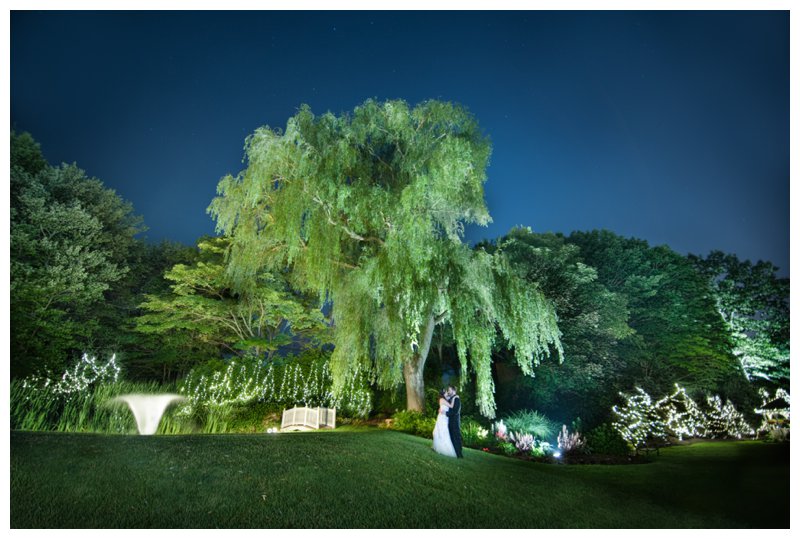
More frames from Woodwinds
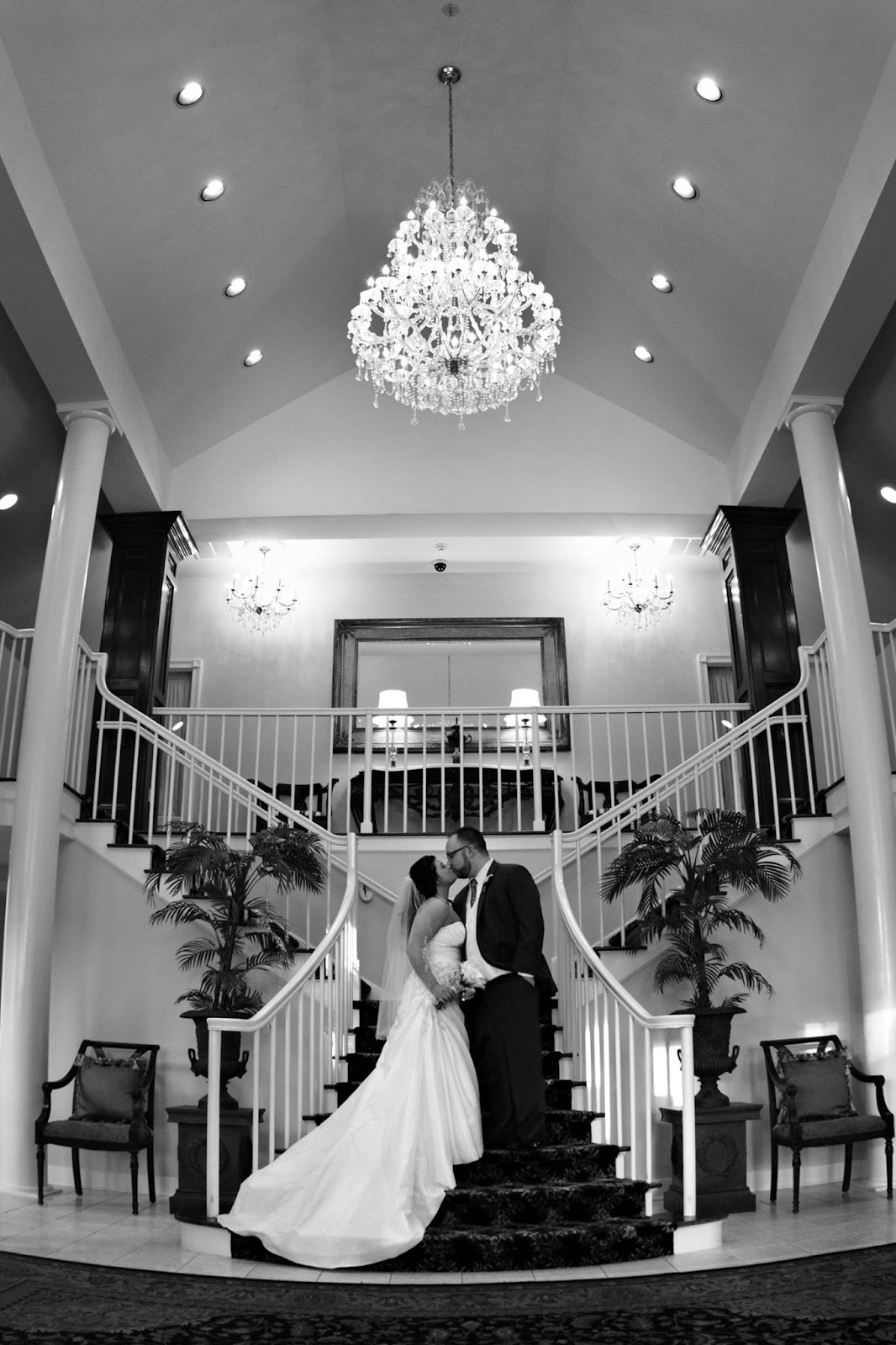
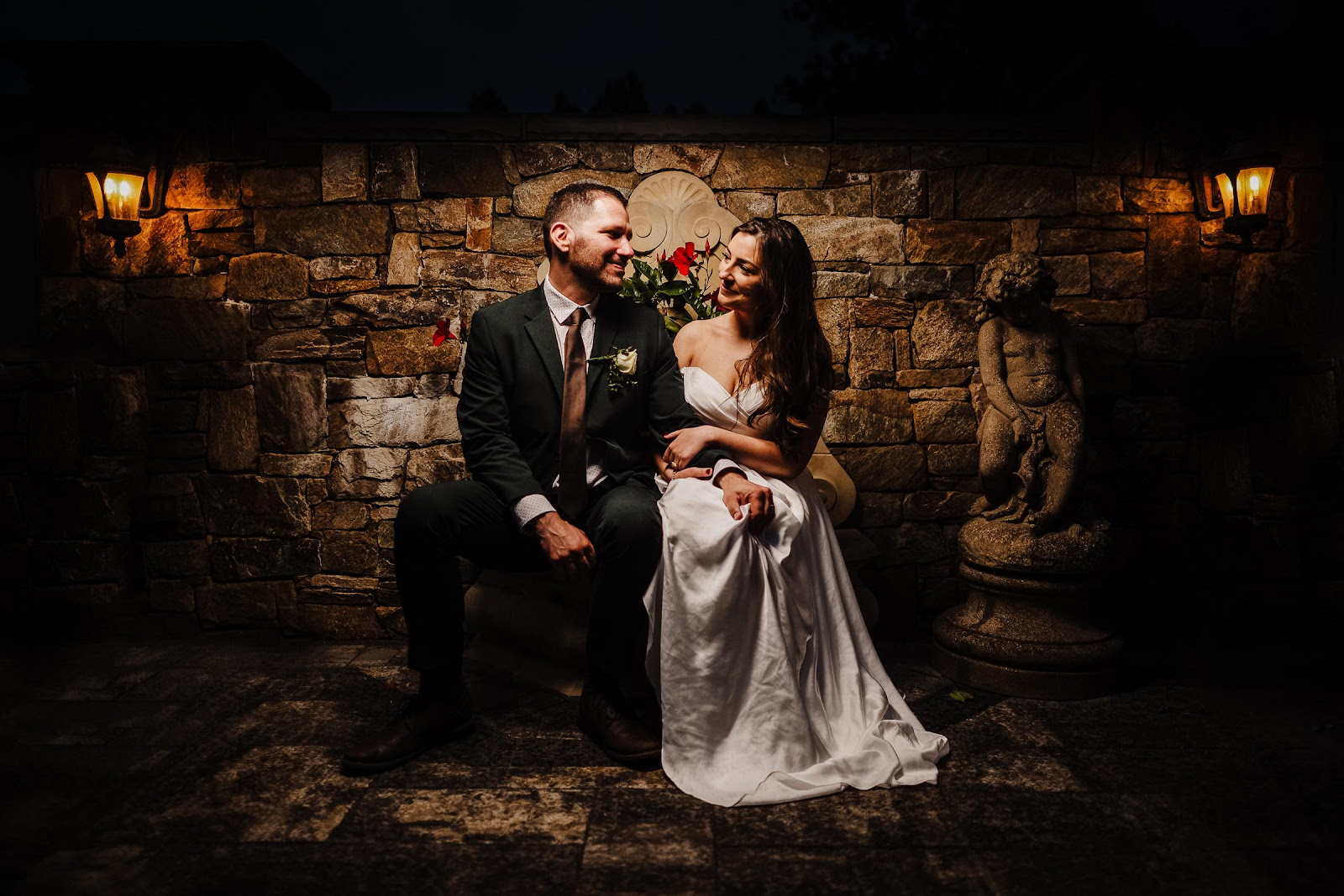
Woodwinds wedding photography: common questions
What is the problem with a set-piece garden?
It is designed to look complete from one direction and it is only as large as it needs to be. Step aside or turn round and the working site appears.
What should I do first?
Walk a full circle from where the couple and the guests will be, and write down the three or four directions where the background is clean.
What about the group photographs?
They take in far more background, so the viable positions are fewer — and everyone has to be in the same light before anything else is decided.
How do I make a small garden look bigger?
Don’t. Work close with a longer lens so the planting becomes a field of colour, and it stops mattering how deep the bed is.
What handles the middle of the day?
One close source at about a stop above the ambient, or the building’s shaded wall and any covered entrance. There is no canopy in the garden.
When is the garden at its best?
Late May and June, which is what it was designed for — with the caution that the good light then falls late. October is easier for a fixed slot.
More Connecticut venue guides
We are writing a photographer’s guide to every venue we would happily shoot in Connecticut. Here are three more, plus the full index:
- The Bond Ballroom, Hartford: One Frame, and How It Is Made
- The Hartford Club, Hartford: Suits and Does Not Suit
- The Society Room, Hartford: The One Decision That Governs Everything
Planning a wedding at Woodwinds?
A small garden, used properly. Tell us your date and we will walk the angles.