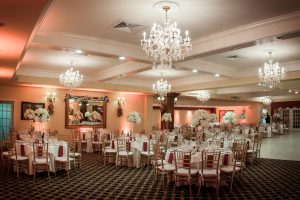
 Woodwinds, Branford: The Problem, and Four Ways Out
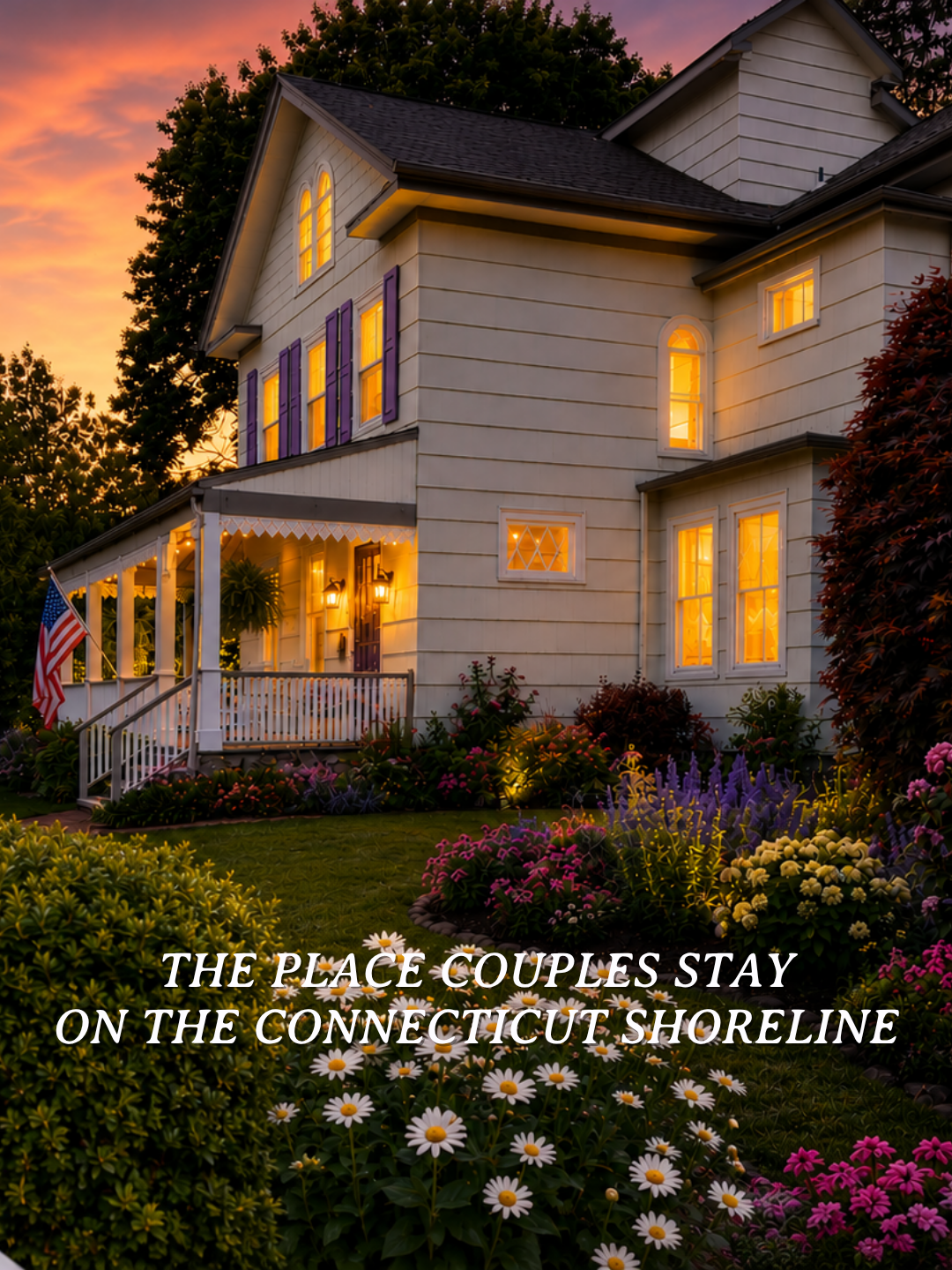
Westbrook Inn, Westbrook: One Frame, and How It Is Made
A white porch is a roof, a floor and a wall, all working as one light. That is the whole frame.
There is one frame a New England clapboard inn gives better than anything else, and it is worth building properly because it is the most reliable portrait position in this guide.
A couple stands two or three metres inside a covered porch, with the white-painted ceiling above them, white-painted boards behind them and the pale deck beneath their feet, looking out at the open garden. That is it. No equipment, any hour, any weather.
It works because such a porch is three light modifiers at once, and each one does a distinct job.
The roof blocks the overhead component of daylight, which is the thing that puts eye sockets in shadow and a hard line under a chin. Once it is gone, the light on a face can only arrive horizontally — which is the most flattering direction there is.
The white-painted ceiling turns that blocked light into a source. Light bouncing up off the bright deck hits the painted boards above and returns as a large soft overhead-forward fill, which lifts the eye sockets the roof has just protected. That is why a white porch is so much better than a dark one: a stained or unpainted ceiling absorbs the bounce, and the frame loses half of its quality.
And the pale deck fills from below, softening whatever shadow is left under the chin and the brow.
The result is a wrap of soft directional light from front, above and below, produced entirely by paint and geometry. We have not photographed a wedding at the Westbrook Inn; New England clapboard inns behave consistently. Which rooms and outdoor areas are included, the covered alternative, whether the function-room lighting can be adjusted, and what the guest limit is are questions for their team.
Westbrook Inn at a glance
| Where | A clapboard inn near the Connecticut shore at Westbrook |
| The frame | Two or three metres inside a white-painted covered porch |
| Why it works | The roof blocks the top light; the white ceiling and deck fill it back in |
| The requirement | White paint. A dark porch ceiling loses half the effect |
| Ask first | Areas included, covered alternative, lighting control, guest limit |
How the frame is made
The distance in is the first decision and two or three metres is a compromise between two failures.
Too close to the open edge and the sky reaches the face again, which reintroduces the overhead component the porch exists to remove — so the modelling flattens and the eye sockets darken. Too far in and there is not enough light arriving at all, which makes the frame a silhouette against a bright garden.
The catchlight settles it, and it is the single most useful diagnostic on this site. A broad low catchlight on the open side of each eye means the porch is doing the work. A catchlight high in the eye means the sky is still reaching and the position should move back. No catchlight at all means it has gone too far in.
The turn is the second decision and it decides whether the light is directional or flat. Facing straight out gives even light on both sides of the face; turning about forty-five degrees so the light comes across the face gives a lit side, a shadowed side and a gradient between, which is what makes a face read as three-dimensional.
The background is the third and on a porch there are three choices, each a different picture. White-painted boards behind the subject give a bright, clean, high-key frame — which is what this kind of inn is for, and which requires the exposure to be right because white boards clip easily.
The interior of the building through a doorway gives a dark background, which is two or three stops down and produces a low-key frame in the middle of a bright property. That is the strongest version and it is worth walking a few paces to find.
And the garden beyond the porch’s far side gives a bright background with depth in it, which works when the frame is exposed for the faces and the garden is allowed to go bright.
The exposure is the fourth decision and it runs in a direction that catches people out. White painted clapboard is highly reflective, which means a meter looking at it pulls it toward mid-grey — so the frame comes out underexposed, with grey boards and dark faces. The correction is to meter on skin, in manual, and to expose deliberately brighter than the camera suggests, often by a stop or more.
The check is the highlights: white boards should read white with the texture of the boards still visible in them, not grey and not a featureless blank. That single check tells you whether the frame is right.
The white balance is the fifth and it is straightforward here for once, which is worth noting. White paint is neutral in colour, unlike stone, timber or foliage — so the bounced light it returns is not tinted, and a daylight setting is close to correct. A custom white balance set on a face is still better, because the open sky contributing to the light is cool, but the correction is small.
The exception is where the porch looks onto dense planting: then the light arriving from the open side has passed over or through green foliage and carries a green cast, which does need setting on the face.
And direct sun is the one thing to check for rather than fix. Low sun at the ends of the day can reach under a porch roof and land on a face directly, which is a different and often lovely frame — but it is not this one, and it means the position has to move further in or the frame has to be built around the raking light instead.
What breaks it, and the rest of the property
A dark porch ceiling breaks the frame more than anything else, and it is worth checking rather than assuming. Stained timber, dark green paint or an unpainted soffit absorbs the bounce, which means the roof still blocks the top light but nothing puts it back — and the result is a face lit only horizontally, with dark eye sockets and no fill.
That is workable and it is a different frame: more contrast, more shadow, and a source or reflector needed to lift the eyes. The honest version is to look up before deciding where to stand.
A deep porch with a low roof is the other variation, and it changes the geometry rather than breaking it. A low roof restricts the light to a narrower horizontal band, which is more directional and more dramatic — and it means the working distance moves closer to the edge, because the light does not reach as far in. The catchlight test handles it.
Screening breaks the frame in a specific way. A screened porch — common on New England properties — puts a fine mesh between the subject and the light, which cuts the amount by a stop or so and, more importantly, appears in any frame shot through it. Shooting from inside the screened area outward, rather than through the screen, is the fix.
Rain does not break the frame at all and that is the point of it. A covered porch works in rain exactly as it works in sun, and rain actually improves it: the garden beyond goes soft and even, the boards darken and saturate, and the brightness range between inside and outside narrows to something a single exposure holds easily. A rainy day at a clapboard inn is a better day than a bright one for this frame, and it is worth saying so.
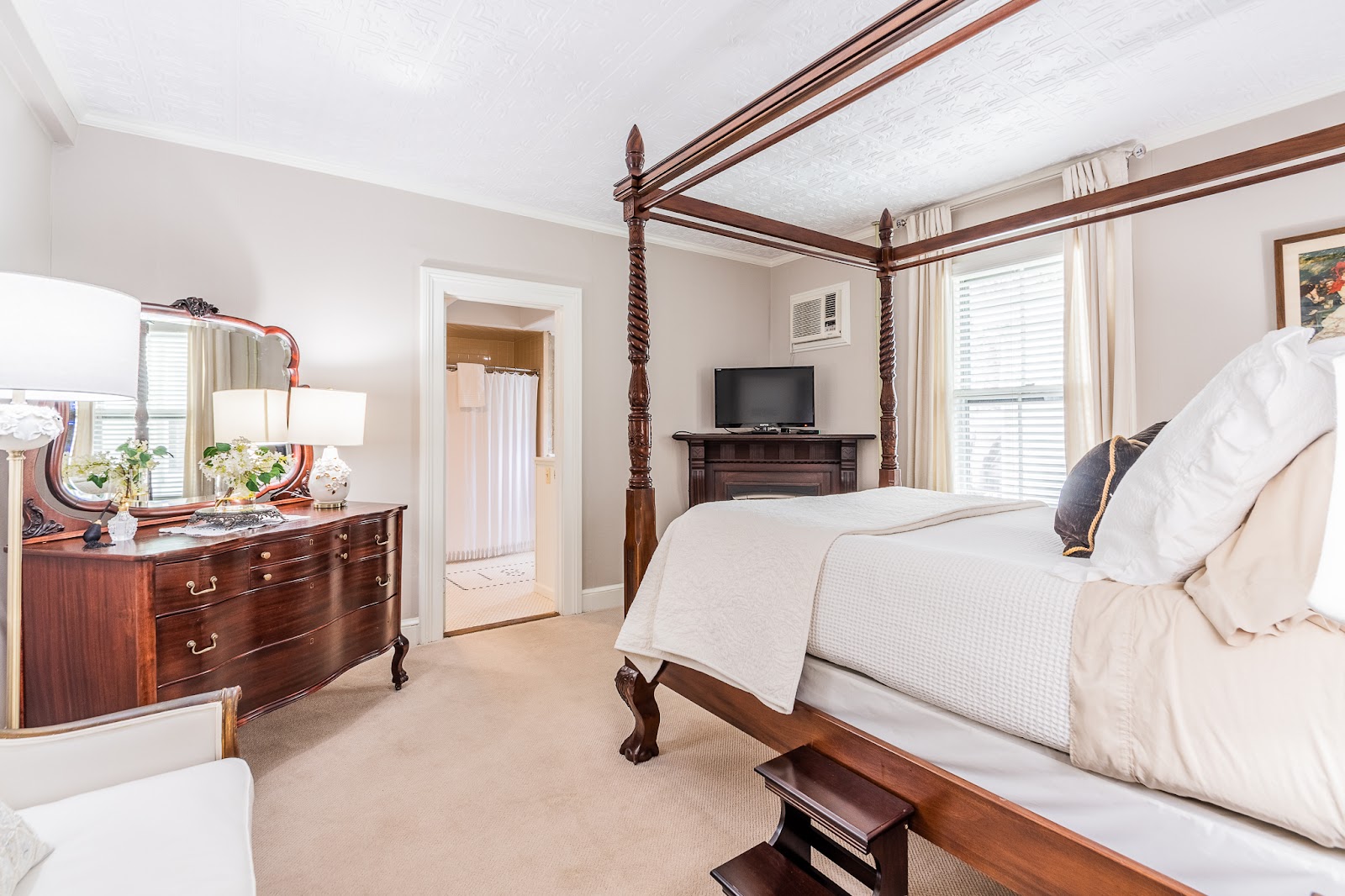
The rest of the property is variations on the same physics. Indoors, a New England inn has sash windows with small panes in relatively low rooms — which means the light enters at a lower angle than in a grand building and reaches less far into the room. A metre from the glass is the working distance and drifting to two loses more here than it would elsewhere.
The glazing bars cut direct sun into small hard patches, which is charming on a wall and unusable on a face. A sheer curtain turns the window into a diffuser; a shaded window avoids it.
Two free rules indoors: turn the room lights off, because warm bulbs against cool daylight put two colours on one face; and set a custom white balance on a face in position, because a window looking onto lawn and trees delivers green-tinged light.
A low ceiling is the interior’s real advantage. Under three metres it is a usable bounce surface, so a flash aimed into it returns soft overhead-forward light across the whole room — the same physics as the porch, indoors. The caution is colour: a warm-painted or beamed ceiling colours the bounce and the white balance has to follow it.
Outdoors, the garden has no shade beyond the trees, and this coast’s trees are the New England mix: maple, oak, birch and hickory, which filter as much as they block and therefore dapple. Look at the face rather than the ground, and a bright patch on skin means move a metre. Conifer, where there is any, gives the real full shade.
The other free resource is the building’s own shaded wall. A large white wall in shade facing open sky is a soft directional source, and a shaded white wall behind a subject is a bright background — which is the porch’s physics without the roof, and it works at any hour. The same metering correction applies: brighter than the camera suggests, metered on skin.
For the evening, expose the ambient about a stop under what faces need so the room keeps its character, then add one warm-gelled source just above skin level with the white balance set to the gel, bounced off the low ceiling rather than aimed directly.
- Two or three metres in; the catchlight tells you whether you are right
- Turn forty-five degrees to the open side, not straight out
- Meter on skin and expose brighter — white boards fool every meter
- Look up first: a dark porch ceiling loses half the effect
- Rain improves this frame rather than spoiling it
The shoreline Connecticut year
This part of the coast keeps a maritime New England calendar. The Sound moderates it, so summers are cooler and winters milder than inland, and both spring and autumn arrive later here than up the valley.
Winter is cold with snow in most years, and a historic inn is a cold building, so whether it is properly heated is a practical question with a definite answer.
Photographically winter suits this frame better than any other season, for a reason specific to white clapboard. Snow outside turns the entire garden into a reflector, which roughly doubles the light arriving under the porch roof — and because that light bounces off the white ceiling and the deck as well, the porch becomes markedly brighter and softer than in summer.
So the snow version of this frame is the best version. Snow fools a meter by about two stops toward underexposure, so deliberate overexposure relative to the camera is doubly required — and the highlight check matters even more, because snow and white boards together are the brightest combination on the property.
The December sun at this latitude reaches only about twenty-five degrees above the horizon, so the whole short day rakes rather than floods — which means a low sun reaches right under the porch roof and along the whole length of it, modelling every board and every column. That is a different frame from the soft one described above and it is the most beautiful light the building receives.
Indoors, the same low sun enters the small sash windows almost horizontally and travels further into the rooms than a summer sun does, which widens the narrow usable band beside the glass. A colonial-style building is better lit in December than in June.
The costs are a short day, cold hands, batteries draining faster, and a cold camera fogging when carried into a heated room.
Spring is late on the shore because the water keeps the land cool: raw wet weather into May is possible and the garden is slow to fill. Late spring is the first reliably good season, and new foliage transmits light beautifully — with the note that green light under a new canopy does need a custom white balance where white paint does not.
Summer is comfortable rather than hot: the Sound keeps the shore several degrees below inland temperatures and an afternoon sea breeze is reliable. Low eighties Fahrenheit with high humidity is typical, and afternoon thunderstorms are a real feature from June into August — which for a property whose outdoor spaces are garden and porch makes the porch’s weather-independence its central virtue.
Humidity softens contrast and warms the light at the ends of the day, which flatters skin and suits a white building. The one summer caution for the porch frame is that a high sun means the garden beyond is very bright, which widens the gap between inside and out — so a frame exposed for the faces will have a bright garden, and that has to be a choice rather than an accident.
Tropical storm season runs from roughly August into October on this coast. Direct hits are uncommon and the effects of a passing system are not: wind-driven rain reaches under a porch roof in a way that vertical rain does not, which is the one weather condition that does defeat this frame. It cannot be planned for, only acknowledged.
Autumn is the best season overall. Foliage on the shore turns from the middle of October into early November, later than inland, and against white clapboard that colour is exceptional — white is the most neutral background there is, which means scarlet and gold read at full saturation against it without competing.
Autumn also brings the clearest air, the most settled weather and the most comfortable temperatures of the year, and it puts the low raking light at a civilised hour rather than at eight in the evening.
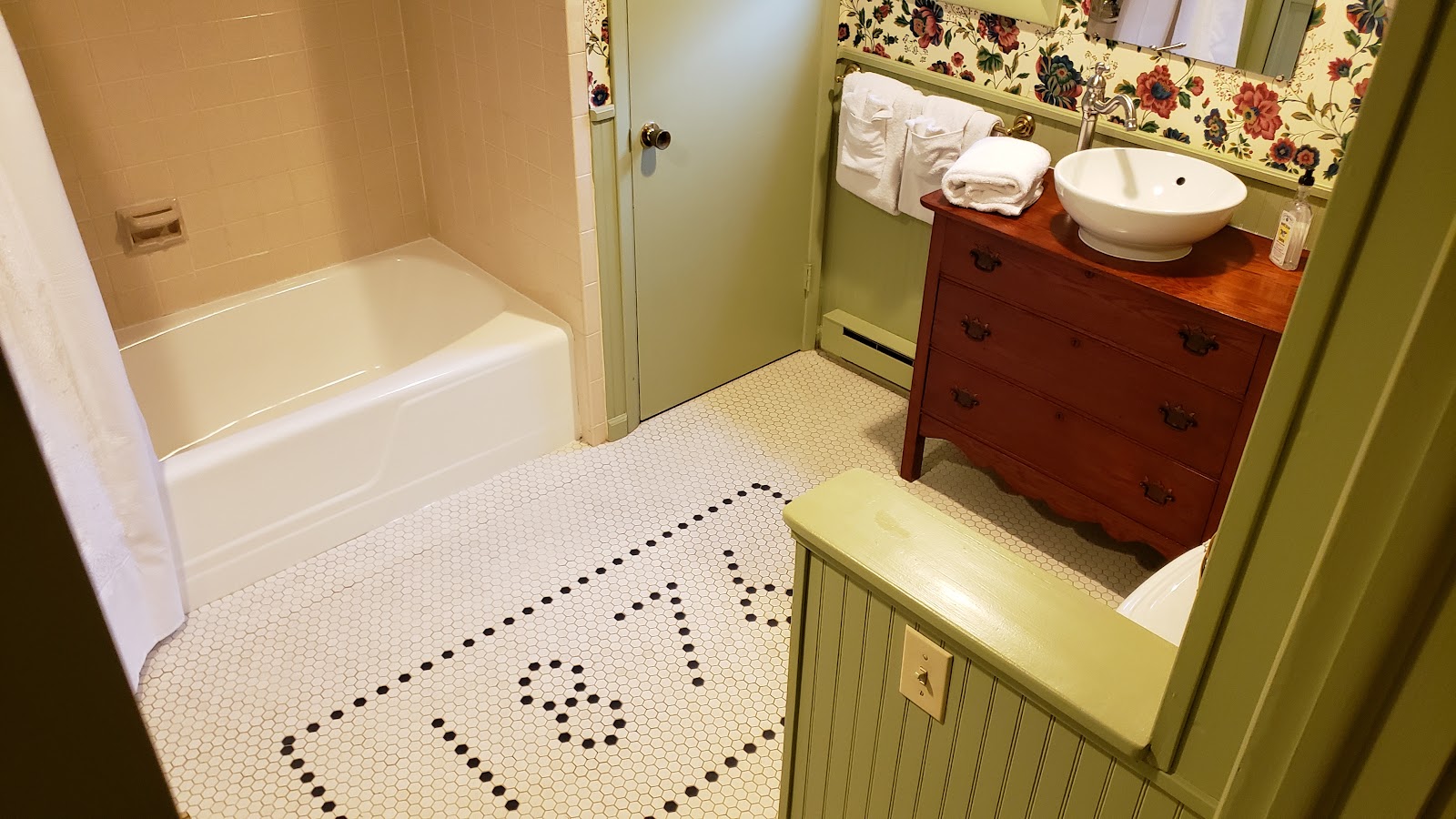
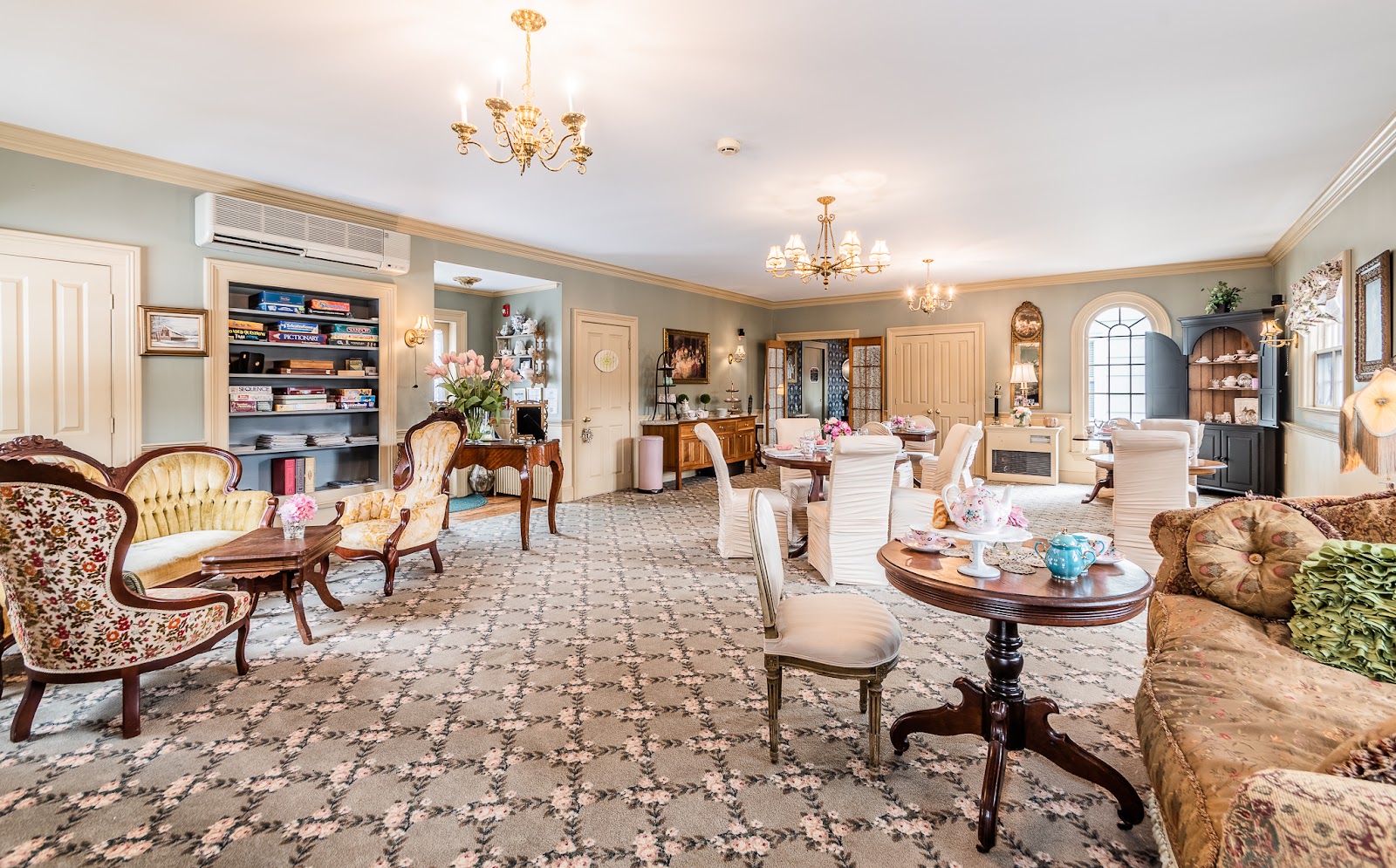
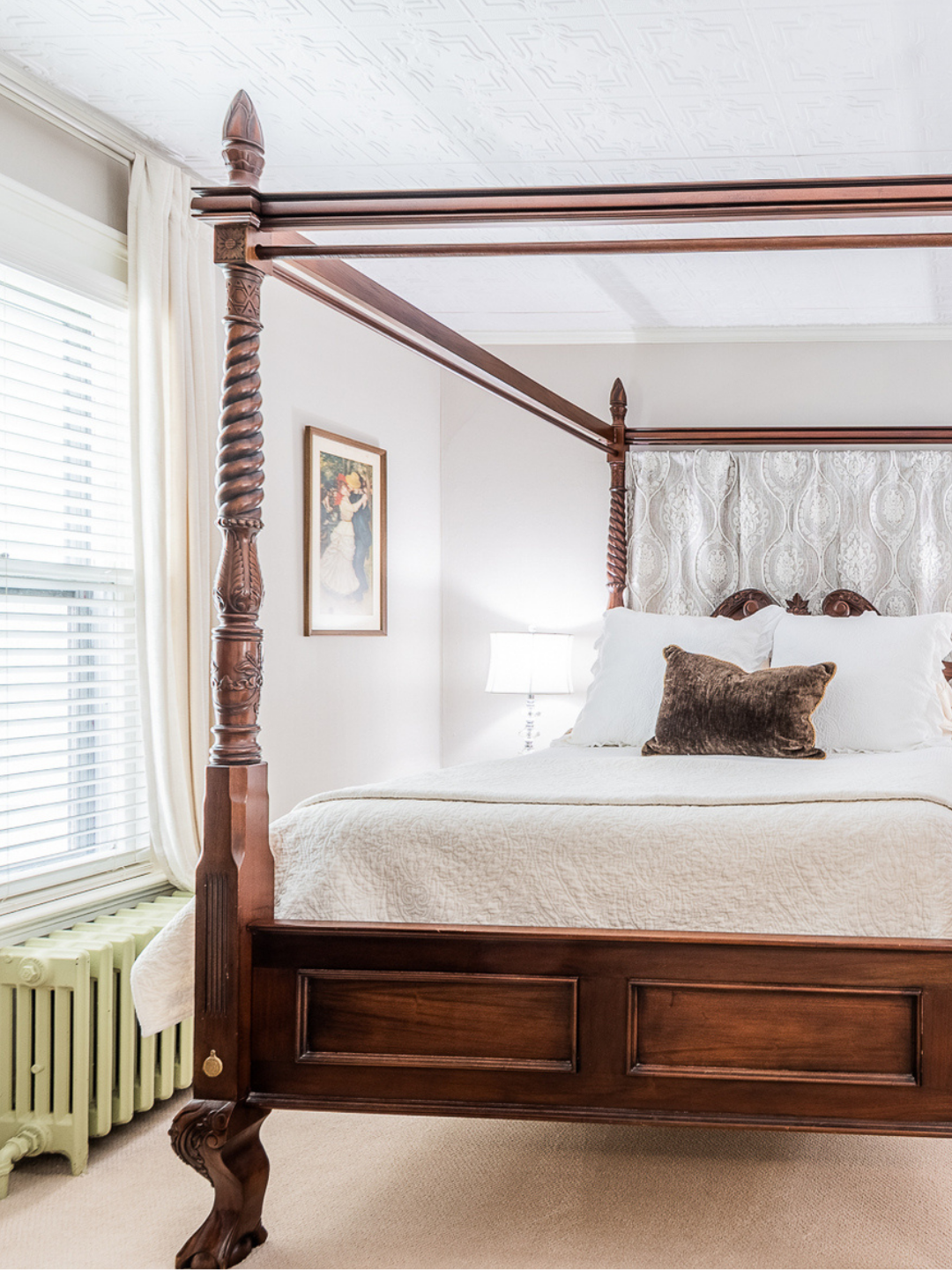
More frames from Westbrook Inn
Westbrook Inn wedding photography: common questions
What is the frame?
A couple two or three metres inside a white-painted covered porch. The roof blocks the top light and the white ceiling and deck put it back as soft fill.
How do I know I am standing in the right place?
The catchlight. Broad and low on the open side of each eye is right; high in the eye means step back; none at all means come forward.
Why does the paint matter?
White paint returns the bounce that lifts the eye sockets. A stained or dark ceiling absorbs it, which leaves the face lit only horizontally.
Why expose brighter than the meter says?
White clapboard is highly reflective, so a meter pulls it toward mid-grey and gives grey boards and dark faces. Meter on skin and go up a stop or more.
Does rain spoil it?
It improves it. The garden beyond goes soft, the boards saturate, and the range between inside and out narrows. Only wind-driven rain defeats it.
When is the frame best?
After snow, which doubles the light reaching under the roof — and in mid-October, when scarlet and gold read at full saturation against white boards.
More Connecticut venue guides
We are writing a photographer’s guide to every venue we would happily shoot in Connecticut. Here are three more, plus the full index:
- Whaler’s Inn, Mystic: The Light Through the Day
- Whitney Center, Hamden: The Problem, and Four Ways Out
- Woodwinds, Branford: The Problem, and Four Ways Out
Planning a wedding at Westbrook Inn?
One frame, and the building makes it. Tell us your date.