 Park Hyatt Aviara, Carlsbad: The One Decision That Governs Everything
Ojai Valley Inn, Ojai: What It Suits and What It Does Not
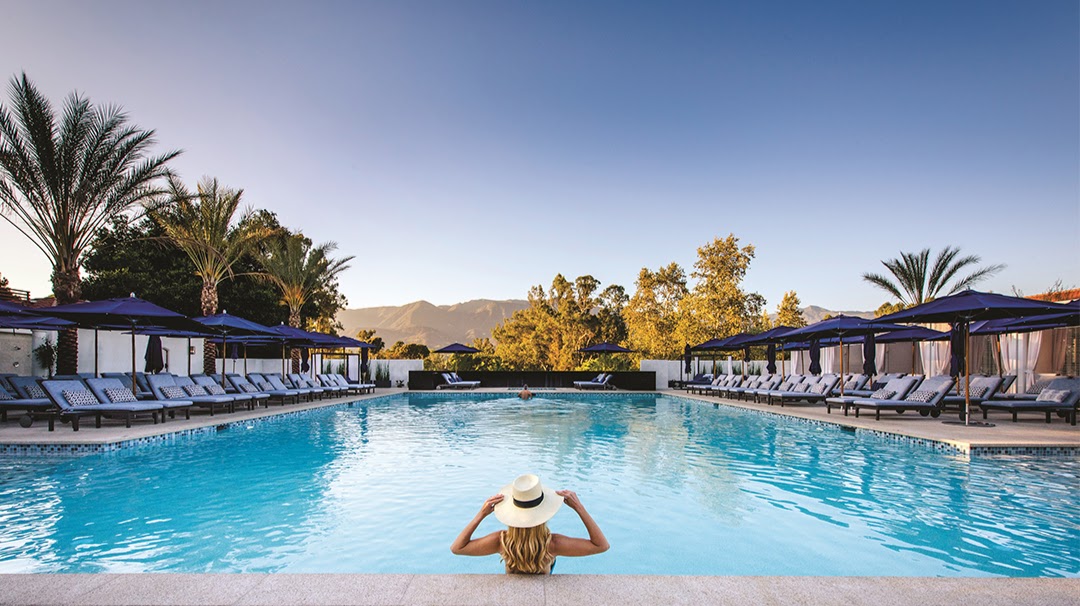
This valley runs east to west, so the sun travels along it. That is worth more than any terrace.
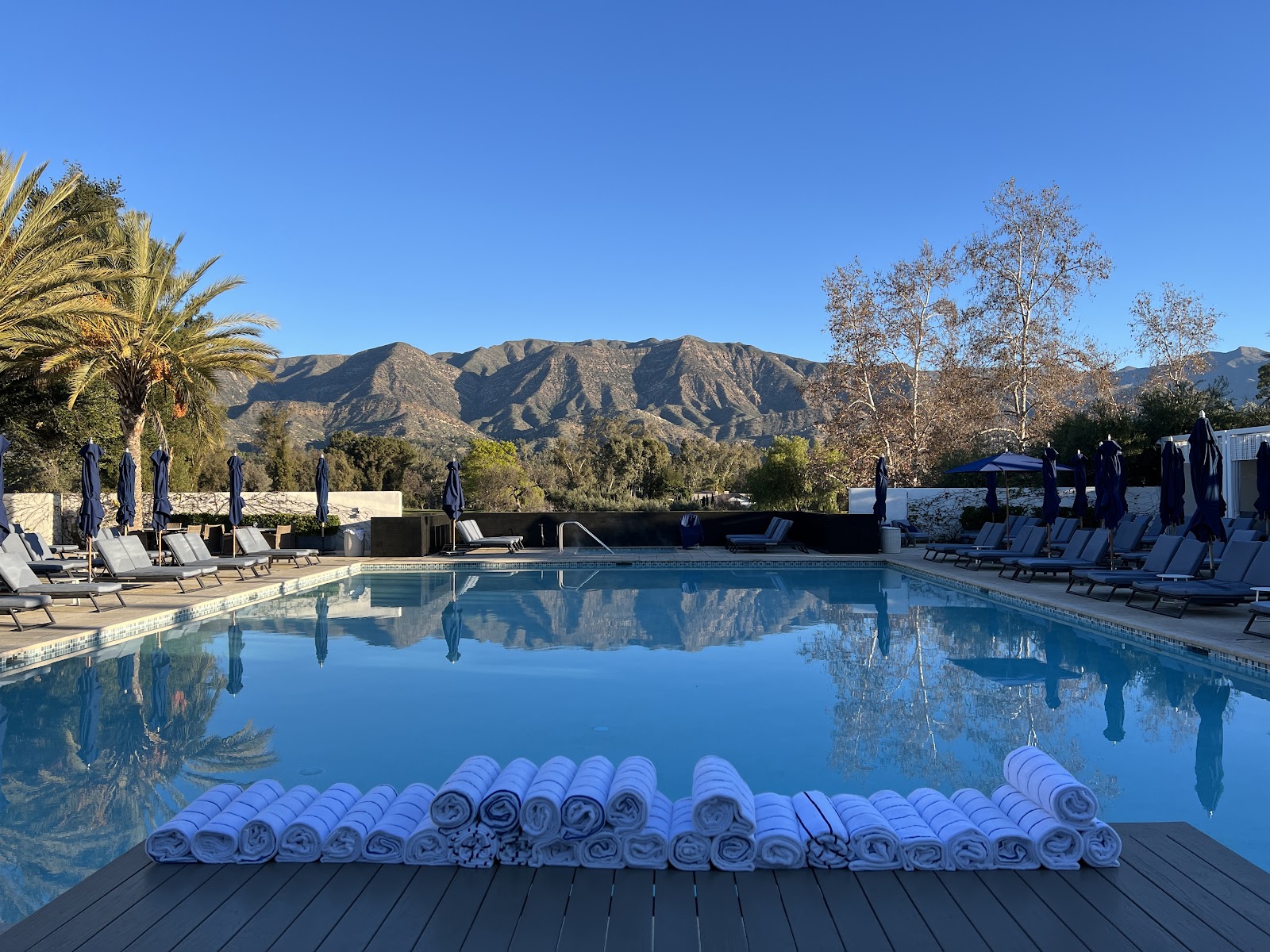
The Ojai Valley has a geographic peculiarity that does more for photography than anything built here, and it is the first thing to say about the site.
The valley runs east to west, because the mountain ranges in this part of southern California do — the Transverse Ranges are one of very few places on the Pacific coast where the mountains run across the grain rather than along it. Most valleys run north to south, and their sides cut the day short at both ends.
Here the sun travels along the valley rather than across it. The consequence is that the day is long and full, the mountain walls to the north and south stay lit while the floor is in shade, and the last light comes down the length of the valley rather than being blocked by a ridge — which is why this valley has a local reputation for its evening light, and why that reputation is deserved rather than invented.
The second fact is that the valley is inland and enclosed, which means it is hot and dry in summer, cold at night, and largely free of the marine layer that greys the coast twenty miles away.
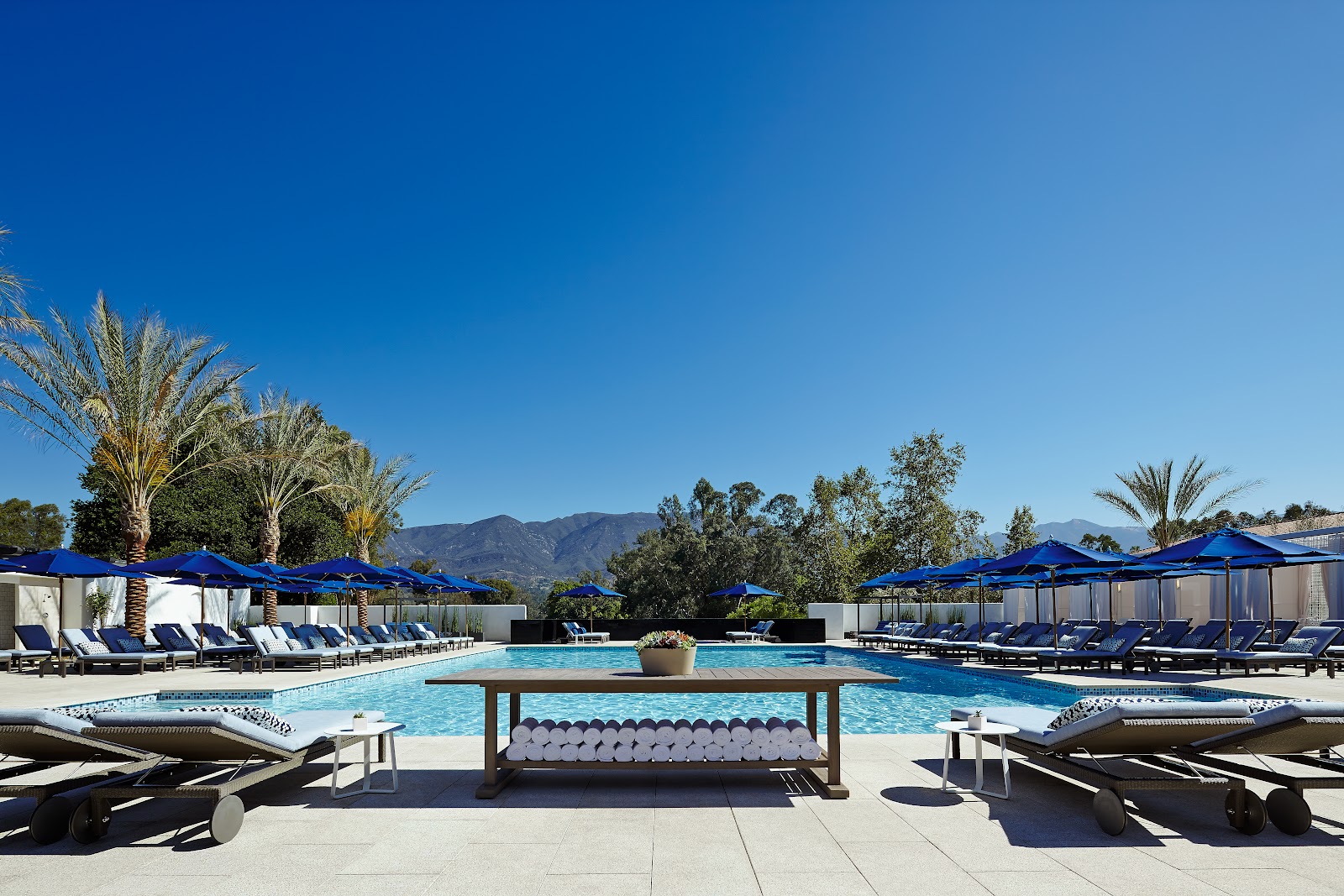
The third is the built character: Spanish Colonial revival, which means pale stucco, red tile, arcades, courtyards and deep openings — a set of qualities that behave very consistently in bright light.
That combination suits some weddings very well and others poorly. We have not photographed a wedding at the Ojai Valley Inn; Spanish Colonial resorts in inland valleys behave consistently. Which rooms and outdoor areas are included, the covered alternative, whether the function-room lighting can be adjusted, and what the golf course access arrangements are on a given date are questions for their team.
Ojai Valley Inn at a glance
| Where | The Ojai Valley, an east-west valley inland of the Ventura coast |
| Suits | Long evening light, mountain-wall backdrops, and oak shade |
| Does not suit | Midday outdoor ceremonies, heat-averse guests, or dark moody frames |
| The buildings | Pale stucco and deep arcades — bright, warm-bouncing, reliable |
| Ask first | Areas included, covered alternative, lighting control, course access |
What it suits
It suits the end of the day better than almost any venue in this guide, and that is the strongest reason to choose it.
The mechanism is the valley’s orientation. Because the sun sets down the length of the valley rather than behind a side ridge, the low light arrives across the whole floor at once and keeps coming for longer — so the warm hour here is genuinely longer than in a north-south valley, and it is not cut short by terrain.
It also produces the valley’s signature condition: the mountain wall on the north side stays brilliantly lit after the floor has gone into shade, and because that wall is close and high it fills a frame. A couple in soft even light with a lit mountain face behind them is the picture this place gives, and the window runs twenty or thirty minutes.
That frame is made by exposing for the mountain and lifting the faces with a close warm-gelled source, not by underexposing the rock to match the faces. Close matters because open valley ground bounces little — a source at two metres needs roughly a quarter of the output it needs at four — and the gel is what stops the faces reading as pasted in against light that is very warm at that hour.
The lens matters as much as the exposure. A wide lens renders a close mountain wall as a small pale band above a lot of lawn, which throws away the reason to be here. A longer lens brings the wall forward as a presence, and in dry inland air that compression holds detail with very little haze.
It suits oak shade, which is the second thing this landscape gives. Coast live oak is the characteristic tree here and it is an unusually good shade tree: a dense, broad, low-spreading evergreen crown of small stiff leaves that blocks rather than filters, giving genuinely full shade under a mature specimen and the same shade in February as in August.
A few metres inside the canopy on the side facing open sky is the working position — soft directional light in front, a background three or four stops down behind, and no equipment required. It carries the standard trap: a meter looking at dark oak overexposes the face by a couple of stops, so manual and metered on skin.
It suits pale architecture used deliberately. Spanish Colonial revival means pale stucco, which bounces energetically, and deep arcades and openings, which restrict light to a horizontal band. A subject in an arcade facing out gets modelled light and a darker surround; a subject in the courtyard facing a sunlit stucco wall gets soft warm directional light from a source the size of a building.
The warmth is worth naming: pale stucco in strong sun reflects a warm light rather than a neutral one, which means a custom white balance set on a face in position renders skin correctly where a daylight preset gives a slight orange cast. Thirty seconds, reset per position.
And it suits a morning start. The valley’s diurnal swing is large because the air is dry and the valley is enclosed — commonly thirty degrees Fahrenheit or more between night and afternoon — which makes a morning here cool, still and soft while the same day’s afternoon is hot and hard.
What it does not suit
It does not suit a midday outdoor ceremony, and in an enclosed inland valley that is the firmest of the limits.
Summer afternoons here routinely exceed ninety-five degrees Fahrenheit and the air is very dry and clear, which means direct sun at midday is hard and high: vertical shadows, dark eye sockets, a hard line under every chin, and a squinting congregation. A face half in sun is unrecoverable rather than merely awkward.
There is no botanical answer on open ground, because lawns and courtyards have nothing overhead. The answers are the oaks, the arcades and anything with a continuous solid roof — and the important distinction is that a slatted pergola, a trellis or a gapped shade structure is not shade but a striped dappling machine. The test is universal: look at the face rather than the ground, and any hard edge on skin means move.
So a midday ceremony here is either under cover, under oak, or a compromise everyone will see in the pictures. The free alternative is simply a different hour, and in a valley whose evening light is its greatest asset that is an easy trade.
It does not suit heat-averse guests in high summer. A party in formal clothes on open ground in an enclosed inland valley in July is uncomfortable in a way that shows in the photographs — colour in faces, damp shirts, and people standing where they want rather than where they were asked. The mitigations are scheduling, shade and water rather than anything to do with a camera, and they are worth raising in planning rather than on the day.
The other side of the same coin is the evening, which cools quickly for the same reason the afternoon is hot: dry enclosed air loses heat fast after sunset. A ceremony that is warm at six can be genuinely cold at nine, and a party who expected a hot California evening will not have brought anything for it.
It does not suit dark, moody, low-key photographs, which is the aesthetic limitation. That look depends on a background two or three stops below the subject, and a pale stucco property in bright dry light has very little that goes dark: pale walls are bright, pale paving fills from below, and open sky is brighter still.
It can be built — a deep arcade with a dark interior behind a subject standing in the light, an oak canopy, or an added source strong enough to let the ambient fall several stops — but that is work rather than something the site offers. A couple who wants dark romantic frames has chosen a property whose character is the opposite, and saying so is more useful than delivering an approximation.
Two further notes on the limits. The valley’s enclosure means the views are of the mountain walls rather than out to a distance, so there is no long vista in the way a hillside or coastal site has one. That is a different kind of picture rather than a lesser one, and it favours the longer lens throughout.
And the transitions are sharp. Crossing from a bright stucco courtyard into deep oak shade is a four-stop change and a colour change within a few paces — and crossing from either into a dim interior is another. Resetting exposure and white balance at each transition, rather than once at the start of the day, is the discipline of working a property like this, and it is exactly what automatic exposure cannot do.
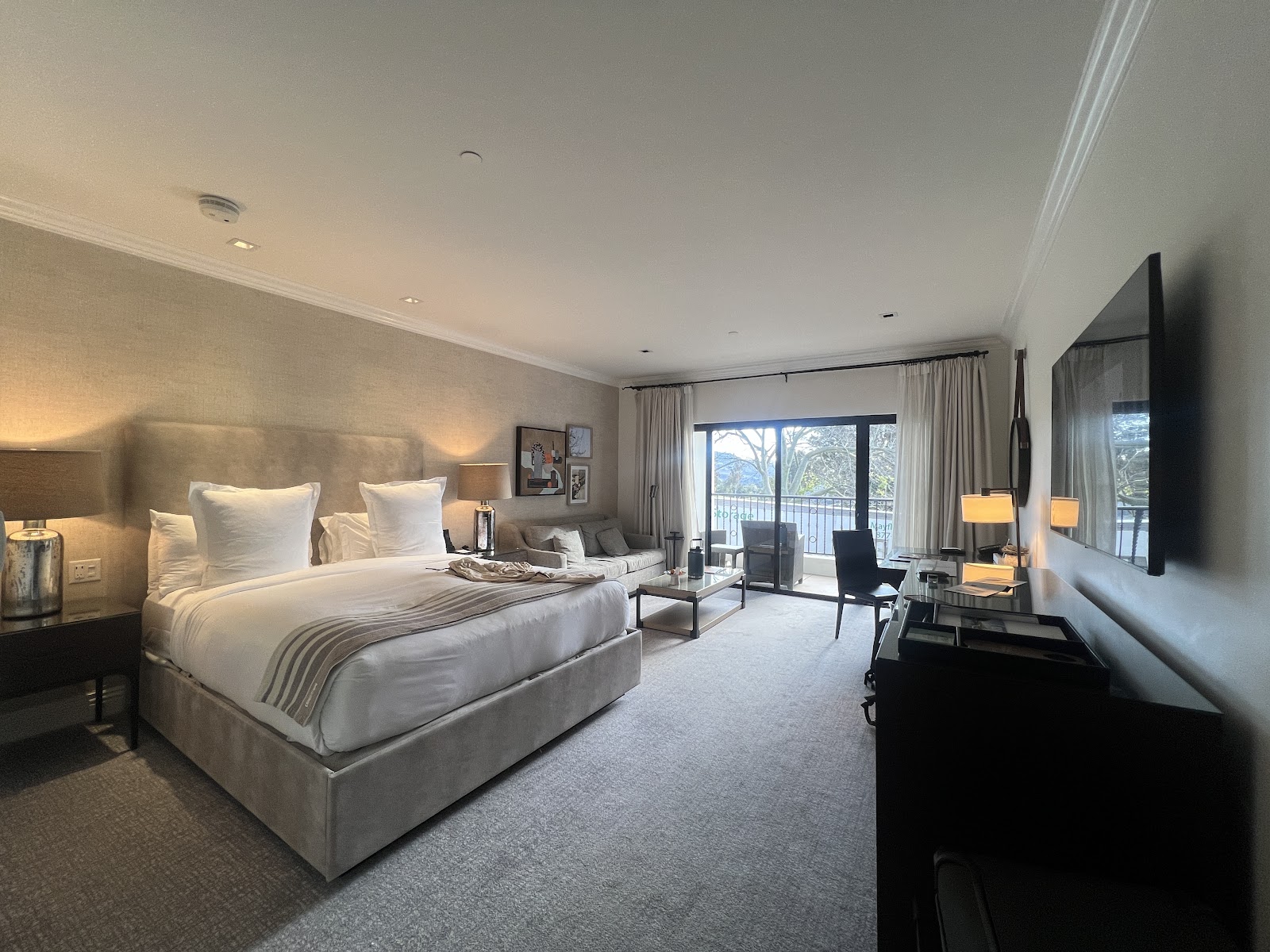
Indoors, Spanish Colonial interiors tend to be relatively dark, with small deep-set windows, heavy timber and tiled floors — which means the ambient is a stop or two below what the eye estimates, and the compensation is steep fall-off that separates a subject from a background for nothing. One warm-gelled source at about a stop above the ambient, white balance set to the gel, does more than three lights and keeps the room looking like itself.
- Suits the last hour, mountain-wall frames and oak shade
- Does not suit midday outdoors, hot-weather guests or low-key frames
- Longer lens throughout: the mountain walls are close, and wide loses them
- Solid roofs and oaks only — slatted structures dapple
- Reset exposure and white balance at every transition; they are sharp here
The Ojai Valley year
This valley has a Mediterranean climate with a hotter summer and a colder night than the coast twenty miles away, and the seasonal difference is more pronounced here than at a coastal venue.
The wet season runs roughly November through March and it is concentrated: a small number of substantial storms rather than steady rain. A covered alternative is not optional for an outdoor ceremony in those months, and the valley can receive a good deal of rain in a single event because the mountains force the air upward.
What rain gives is the best version of a pale-stucco property in an enclosed valley: soft even light, no dappling anywhere, stucco that stops clipping, saturated red tile, wet paving that mirrors the arcades, and mountain walls that come forward rather than hazing. A grey day here is technically easier than a bright one.
Winter is also when the valley is green — the hills and mountain slopes are green only in the wet half of the year, turning gold by early summer and staying that way until the rains. Green slopes against pale stucco and red tile is the strongest combination the site offers, and it is a winter and spring condition rather than a summer one.
The December sun at this latitude reaches only about thirty-four degrees above the horizon, so the whole short day rakes rather than floods — which removes the hard-light problem entirely, models every stucco surface and tile course, and makes even the open lawns usable from morning to evening. In an east-west valley that raking light comes along the valley all day rather than for an hour, which makes December the easiest month here on the light alone.
Nights in winter here are cold for southern California and can approach freezing in an enclosed valley, which is worth mentioning to a party planning an outdoor evening.
Spring is the best combination of comfort and appearance: green slopes, mild temperatures, long light, orange blossom in the valley’s citrus groves through late winter and spring, and the ornamental planting at its fullest. It is the season the valley looks most like its reputation.
Citrus is worth a note because it is the valley’s own agriculture. Groves in fruit or in blossom are a local background that exists nowhere else in this guide, and whether any are accessible or visible from a given position is a question worth asking rather than assuming.
Summer is hot, dry, reliable and hard. Rain is genuinely unlikely from roughly May to October, the marine layer rarely reaches this far inland, and the afternoons are the hottest in this guide outside the desert. The day splits: a cool soft morning, a middle that belongs to oaks and arcades, and an unusually long and good last hour.
September and October are the best months overall. The heat eases, the air is at its clearest of the year, the light is long and low at a civilised hour, and the evening frame against the north wall is at its most reliable.
Autumn is also the peak of southern California’s fire season and of its dry offshore winds, and in an enclosed inland valley both are real. Offshore wind days are hot, extremely dry and the clearest of the entire year — photographically exceptional and physically uncomfortable, with wind strong enough that a lightstand on open ground is a liability. Smoke, when present, turns the sun orange and flattens contrast in a way no white balance resolves. Neither can be planned for, only acknowledged, and a venue’s own contingency is a fair question.
Autumn colour is modest in a largely evergreen valley; what deciduous planting there is, particularly sycamore along watercourses, turns yellow through November and reads strongly against dark oak.
More frames from Ojai Valley Inn
Ojai Valley Inn wedding photography: common questions
Why does the valley's orientation matter?
It runs east to west, so the sun travels along it rather than across it. The day is longer and fuller, and the last light is not cut off by a side ridge.
What is the signature frame here?
A couple in soft shade with the lit north mountain wall behind them, in the twenty or thirty minutes after the valley floor loses the sun.
What does it not suit?
A midday outdoor ceremony, heat-averse guests in high summer, and dark low-key photographs — a pale stucco property has almost nothing that goes dark.
Where is the shade?
Coast live oak, arcades, and anything with a continuous solid roof. Slatted pergolas and trellises dapple rather than shade.
Why reset white balance so often?
Pale stucco bounces warm, oak shade filters green, and a dim interior is warmer still. The transitions are only a few paces apart.
Which months are best?
September and October for reliability and clear air, spring for green slopes and blossom, and December for the easiest light of the year.
More California venue guides
We are writing a photographer’s guide to every venue we would happily shoot in California. Here are three more, plus the full index:
- Park Hyatt Aviara, Carlsbad: The One Decision That Governs Everything
- Pema Osel Ling, Corralitos: What It Suits and What It Does Not
- Post Ranch Inn, Big Sur: One Frame, and How It Is Made
Planning a wedding at Ojai Valley Inn?
A valley built for the last hour. Tell us your date and we will plan the evening.