 The Venue, Asheville: A Season-by-Season Guide
The North Carolina Arboretum, Asheville: A Garden in a Blue Haze
The haze that names these mountains is real, and it is in every frame with distance in it.
The Blue Ridge Mountains are named for something a photographer sees in every frame: a persistent bluish haze over the middle and far distance that softens every long view and never quite clears.
It is not pollution and it is not water vapour alone. Dense forest releases volatile organic compounds, and those scatter light towards the blue end of the spectrum — which is why successive ridges here separate into progressively bluer, paler layers rather than staying sharp. It is the region’s signature and it is genuinely useful: it turns distance into tone, which is a depth effect a photographer would otherwise have to work for.
The second condition is rainfall. This is among the wettest parts of the eastern United States, which makes the vegetation dense, the greens saturated, and the overcast frequent — and overcast is the best soft light there is, which makes this a much easier place to photograph than a sunnier one.
The third is elevation. An arboretum in these mountains sits well above the surrounding lowlands, which makes it cooler and cloudier than the valley below, and which spreads the autumn colour over a long season rather than a fortnight.
We have not photographed a wedding at the North Carolina Arboretum; mountain gardens and Blue Ridge conditions behave consistently. Which areas are included, what the access and path rules are, and what the covered alternative is are questions for their team.
The North Carolina Arboretum at a glance
| Where | The Blue Ridge Mountains above Asheville, North Carolina |
| The haze | Forest-derived scattering that turns distance into blue tone |
| The rainfall | Among the wettest in the eastern states — dense growth, frequent cloud |
| The elevation | Cooler and cloudier than the valley, with a long autumn season |
| Ask first | Areas included, path and access rules, covered alternative |
What the haze and the rain give
The haze is the first thing to use rather than correct. Successive ridges separating into paler, bluer layers is aerial perspective occurring naturally and strongly — and it means a frame with distance in it has depth built into it, which a clear-air landscape does not.
The practical consequence is that long lenses work here in a way they do not in dry country. Compressing three or four ridgelines into stacked layers of decreasing contrast is the region’s own frame, and it needs a long focal length and a position with a view rather than any equipment.
It also means one editing restraint worth naming: pulling contrast back into a hazy distance undoes the effect. The blue and the softness are the subject, and a dehazed Blue Ridge looks like somewhere else.
The rain is the second thing and it is more a gift than a problem. This is among the wettest parts of the eastern United States, which produces three photographic consequences.
Overcast is frequent, and overcast is the best soft source there is — even, shadowless, and saturating greens rather than washing them out. A garden under cloud is a genuinely better portrait environment than the same garden in sun, and in this region that condition is common enough to plan around rather than hope for.
The vegetation is dense, which means full shade is abundant and reliable. That matters because dappled light is the central hazard in any wooded garden: bright patches and deep shadow on the same face at a ratio nothing holds. Here the canopies are thick enough that genuinely full shade is easy to find, and the test is the universal one — look at the face rather than the ground, and any bright spot means move a metre.
And wet surfaces read better than dry. Foliage darkens and saturates, stone and paving go reflective, and a garden after a shower with light returning is the best condition of any day because the air has been washed clean — briefly reducing even the haze. A shower here is an opportunity delayed rather than a day lost, and a venue in this climate needs a named covered alternative with a known capacity as a matter of course rather than as a precaution.
The dense canopy throws green onto skin from whichever side it is thickest, localised so global white balance cannot remove it. A custom white balance set on a face in the position being used is the fix, and a metre further from the foliage roughly halves it — which in a garden means standing on a path rather than in the planting.
The elevation, and the garden's own structure
Elevation is the third condition and it does three things worth planning around.
It makes the place cooler and cloudier than the valley below, which is comfort and good light at the same time. It means cloud sits on the site rather than above it — so a mountain garden can be inside the cloud while the city is clear, and a valley view can disappear entirely within twenty minutes. That is worth knowing rather than being surprised by, and it argues for taking frames when the light and the view are there rather than saving them.
And it stretches the autumn season. Colour in these mountains peaks at the highest elevations first, typically in early October, and works down into the valleys through the month and into early November — which means a site with a range of elevations has colour somewhere for several weeks rather than for one weekend. That is a real advantage over a single-elevation venue and worth asking about specifically, because the venue will know how their own planting behaves.
The colour carries one exposure note: intense red and orange foliage saturates the red channel long before the overall exposure looks bright, so a frame that reads as correct may already have lost detail in the reds. Err a third of a stop darker than instinct suggests and watch the individual channels.
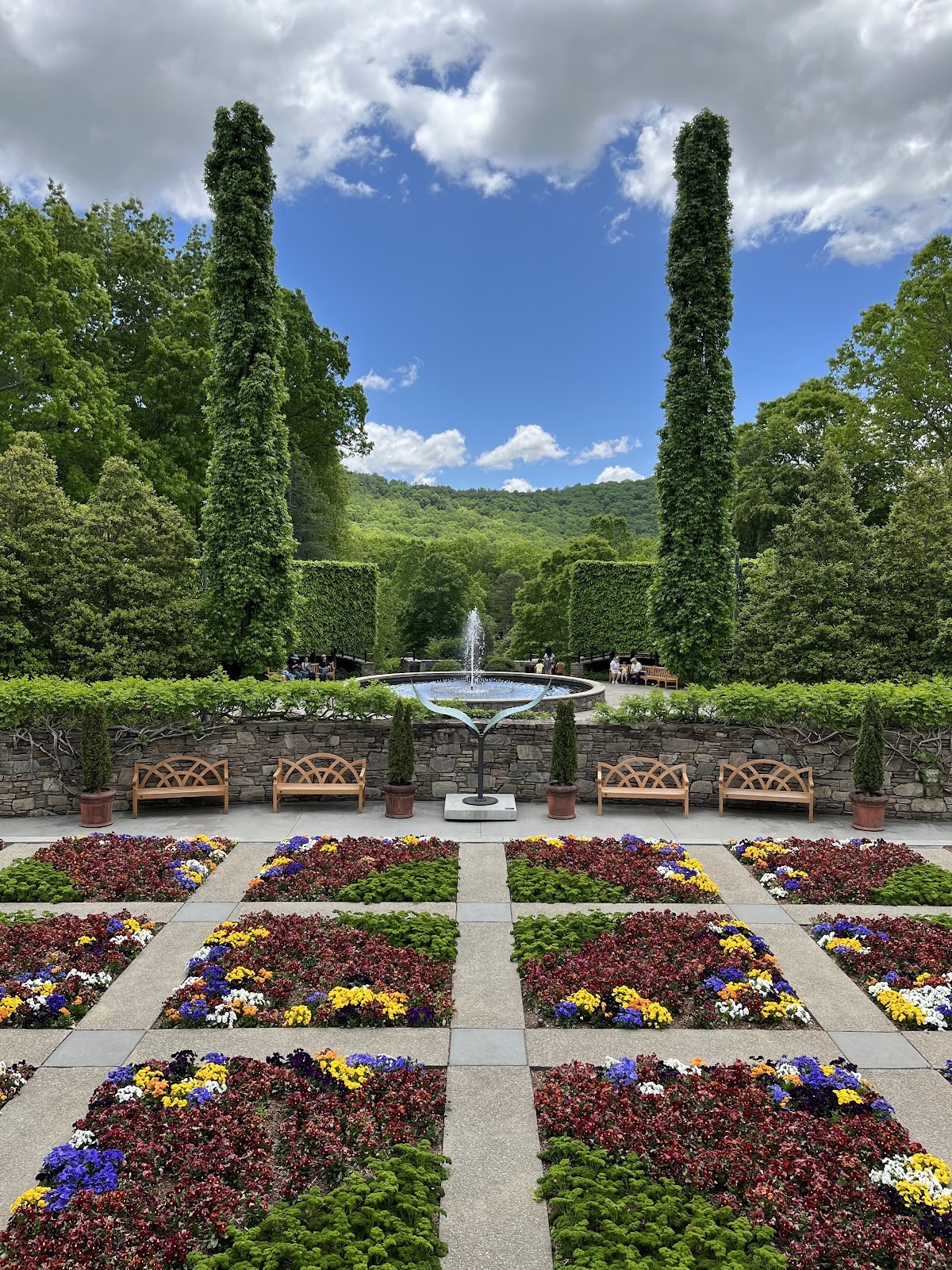
The garden’s own structure is the fourth thing and a designed garden gives what wild woodland does not.
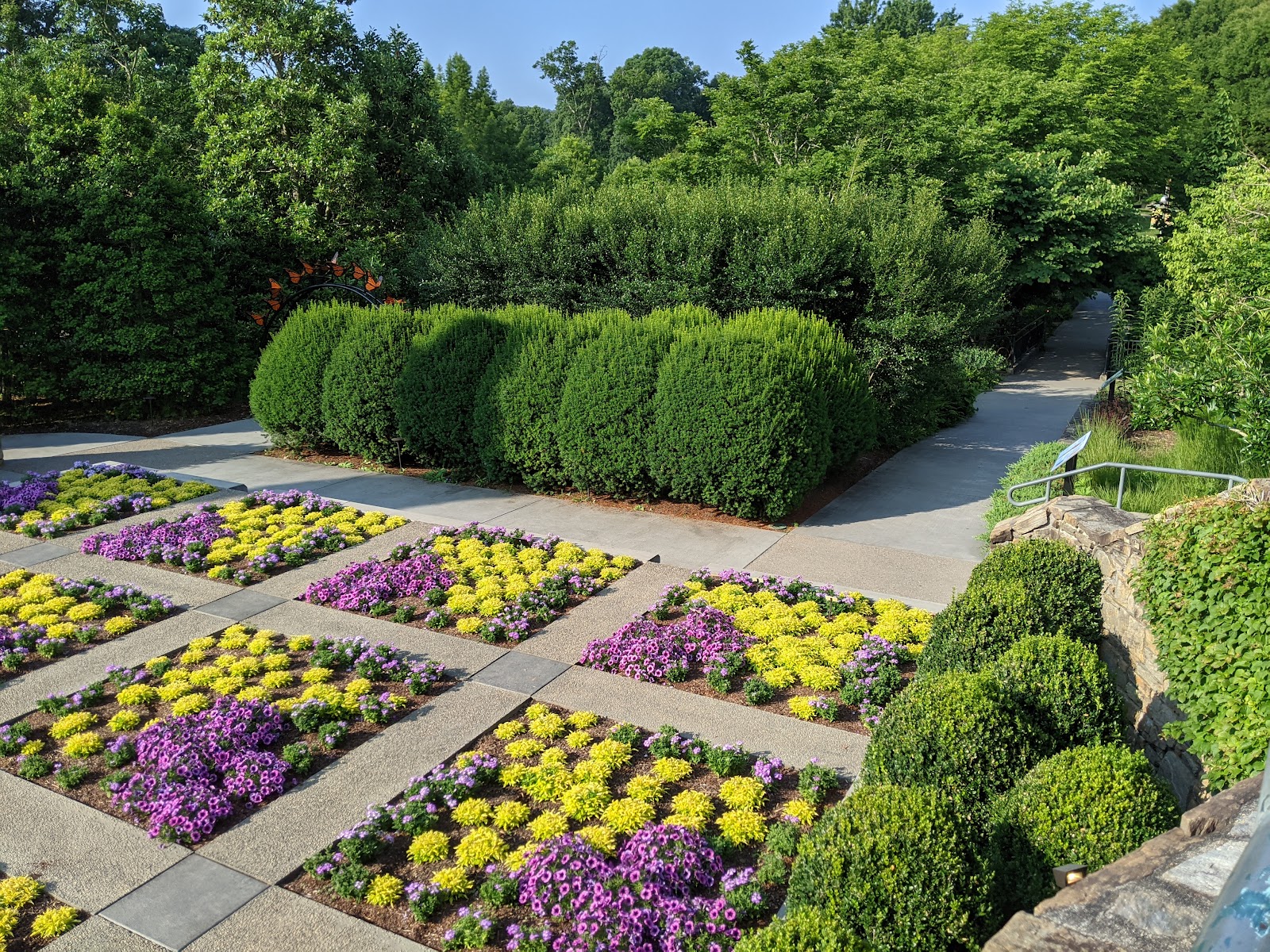
Specimen planting is the first of it: a tree or a shrub placed to be seen from all sides has a broad crown and space around it, which gives full shade across a large area and makes it a subject in its own right rather than part of a mass.
Paths and axes are the second. A designed garden has sightlines, and a subject placed on one with the view receding behind them is separated by depth alone, with no equipment and no lighting decision.
Hard landscaping is the third — stone, steps, walls and paving — and all of it reads only under raking light while providing what soft planting cannot: solid edges that make directional shade rather than dappled shade, and steps that give elevation for a group so a camera above sees faces rather than the backs of heads.
Glasshouses or covered structures, where a garden has them, are the fourth and the most reliable. A roof with an open face removes the overhead component that ruins faces, restricts the light to a horizontal band, and bounces off the floor to fill — and it cannot dapple, because the roof is solid. That is also the rain answer.
And the rules matter at a botanical collection: expect restrictions on where people may walk and stand, what may be set down, and group sizes, because plant collections are fragile and slow to recover. Those belong in the booking conversation, and the working assumption is no stands, nothing on the planting, and a source in a hand.
- Use the haze: long lenses stacking ridgelines into layers of tone
- Do not dehaze in editing — the blue is the subject
- Overcast is the best condition here, and it is frequent
- Full shade only; look at the face, not the ground
- Ask how the site’s own elevations stagger the autumn colour
The Carolina mountain year
Spring is long and staged here because of the elevation range, which is unusual. Flowering works uphill through April and May rather than arriving all at once, and the canopy has not yet closed — so more light reaches the ground and the dappling problem is at its mildest of the year. Late April into May is the best combination of flowering and forgiving light.
Summer is warm, very humid and frequently cloudy, which sounds unpromising and is not. The cloud is the best soft light there is; the humidity softens shadows further; and the canopy is at its densest, which makes full shade abundant. What it costs is the long views, which the haze thickens in summer to the point where distant ridges can dissolve almost entirely.
Afternoon thunderstorms are a real possibility, which in a garden on a mountainside is a genuine hazard rather than an inconvenience — and it is why the named covered alternative matters. The compensation is that a storm clearing off a mountain, with cloud tearing through the ridges below, is the most dramatic frame the region produces.
The fogging problem is severe in this humidity and it runs the opposite way from a cold climate: a body carried from an air-conditioned vehicle into July air fogs on every surface at once, and at these dew points it does not clear quickly. A bag opened twenty minutes before going out is the whole fix.
Autumn is what these mountains are known for and it is long rather than sharp: peaking at the highest elevations in early October and working down through the month and into early November. The air also clears as the humidity drops, which means the long views are at their best — so autumn gives the colour and the distance at the same time, which is the region’s strongest combination.
Morning fog and cloud inversions are frequent in autumn and they are the region’s other signature frame: from any elevated position, cloud filling the valleys below while the ridges stand clear above it. That burns off, so it is an early opportunity rather than something to schedule, and it is worth being on site for.
Winter strips the deciduous canopy, which changes the garden completely. Far more light reaches the ground, the dappling problem disappears entirely, and the structure of the place — the paths, the axes, the hard landscaping, the ridgelines beyond — becomes fully visible rather than screened. For a designed garden that is arguably the most legible it ever is.
The December midday sun at this latitude, about thirty-five and a half degrees north, reaches only about thirty-two degrees above the horizon, which means the whole short day is raking light — exactly what stone, bark and branch structure all need. Snow is occasional at this elevation and when it comes it turns the ground into a reflector and gives the region’s rarest frame: snow on evergreen with blue ridges behind.
The winter constraints are the short day and the possibility of the site being in cloud for it — which at elevation is more likely than in the valley, and which is a reason to have interior or covered options.
More frames from The North Carolina Arboretum
The North Carolina Arboretum wedding photography: common questions
What causes the Blue Ridge haze?
Dense forest releases compounds that scatter light towards the blue end of the spectrum, which makes successive ridges separate into progressively bluer, paler layers.
Should it be corrected?
No. The blue and the softness are the subject — a dehazed Blue Ridge looks like somewhere else. Use long lenses to stack the layers instead.
Is the frequent cloud a problem?
The opposite. Overcast is the best soft source there is, and in one of the wettest parts of the eastern states it is common enough to plan around.
What is the central hazard?
Dappled light, as in any wooded garden. The test is to look at the face rather than the ground — any bright spot means move a metre.
How does elevation affect autumn?
It staggers it. Colour peaks at the highest elevations in early October and works down through the month, so a site with a range has colour for weeks.
When is the garden most legible?
Winter. The bare canopy removes the dappling entirely and makes the paths, axes, hard landscaping and ridgelines fully visible.
More Asheville venue guides
We are writing a photographer’s guide to every venue we would happily shoot in Asheville. Here are three more, plus the full index:
- The U.S. Cellular Center, Asheville: The Problem, and Four Ways Out
- The Asheville Masonic Temple: A Photographer’s Walk-Through
- Biltmore Estate: Reading the Light on 8,000 Acres
All Asheville Wedding Venues →
Planning a wedding at The North Carolina Arboretum?
Use the haze rather than fighting it. Tell us your date and we will plan for cloud.