 The Riverside Hotel, Boise: The Light Through a Day
The Boise Depot, Idaho: The One Decision That Governs Everything
A building on a hill above a city can be the subject or the vantage point. Not both at once.
A former railway depot on high ground above a city has two entirely different things to offer, and the governing decision is which of them the day belongs to.
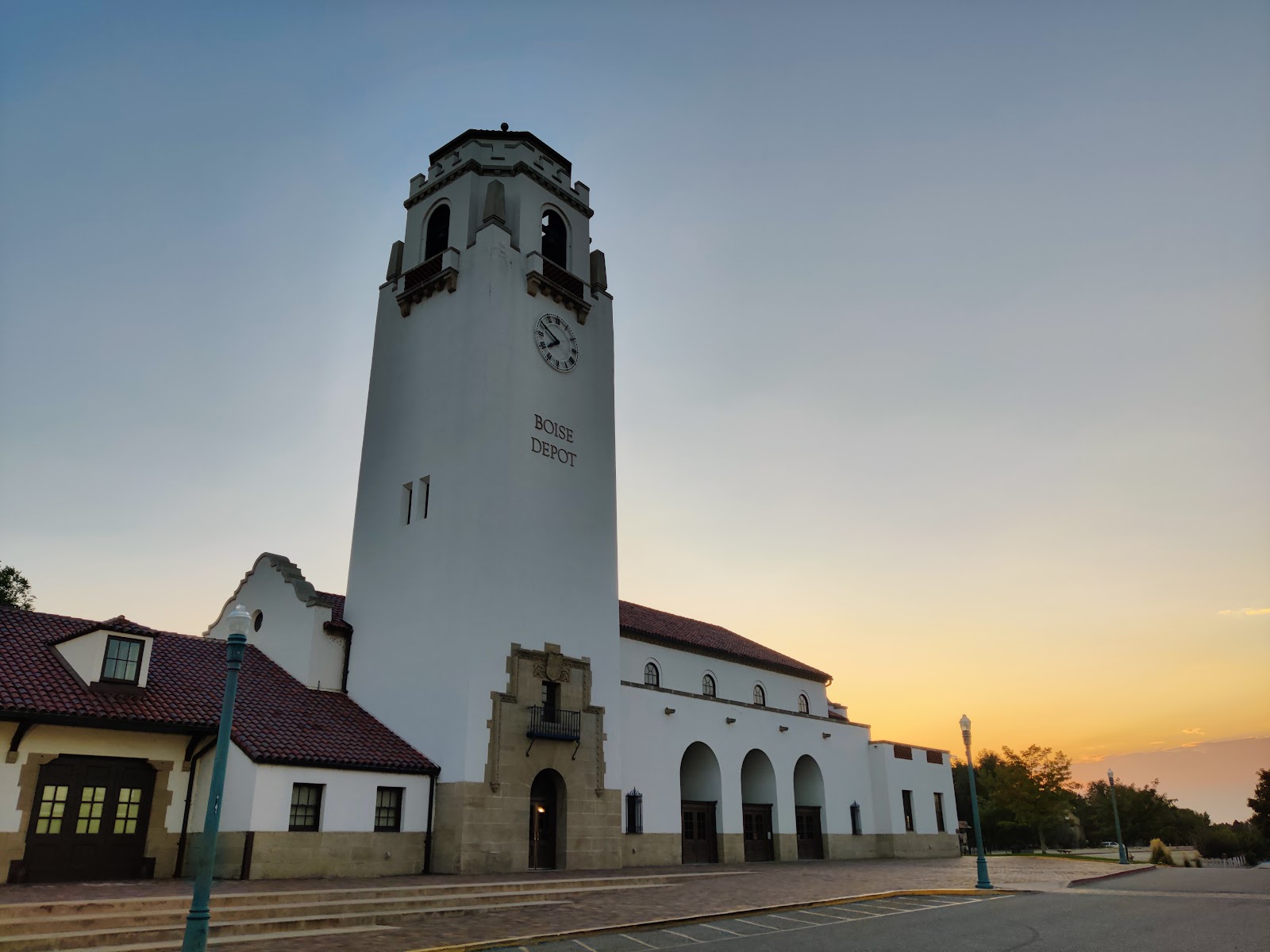
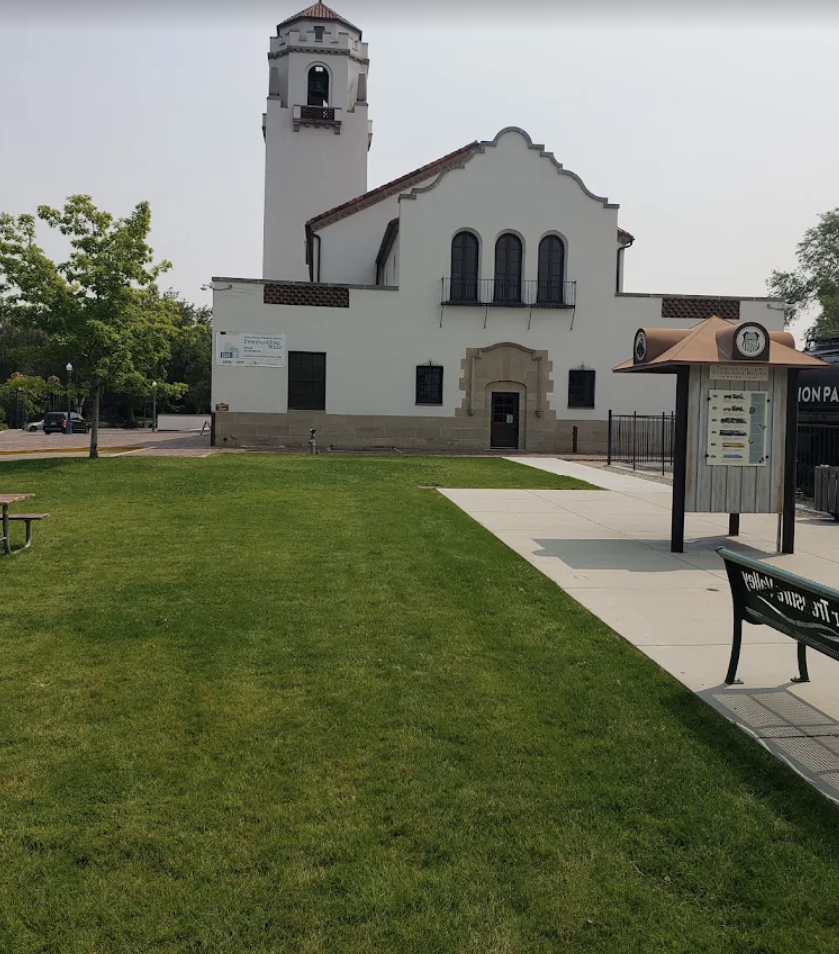
As a building it is a subject: a substantial early twentieth-century structure with a great hall, arched openings, tiled roofs and a tower — the kind of architecture that photographs as a thing rather than as a backdrop, and which reads only when light rakes along it.
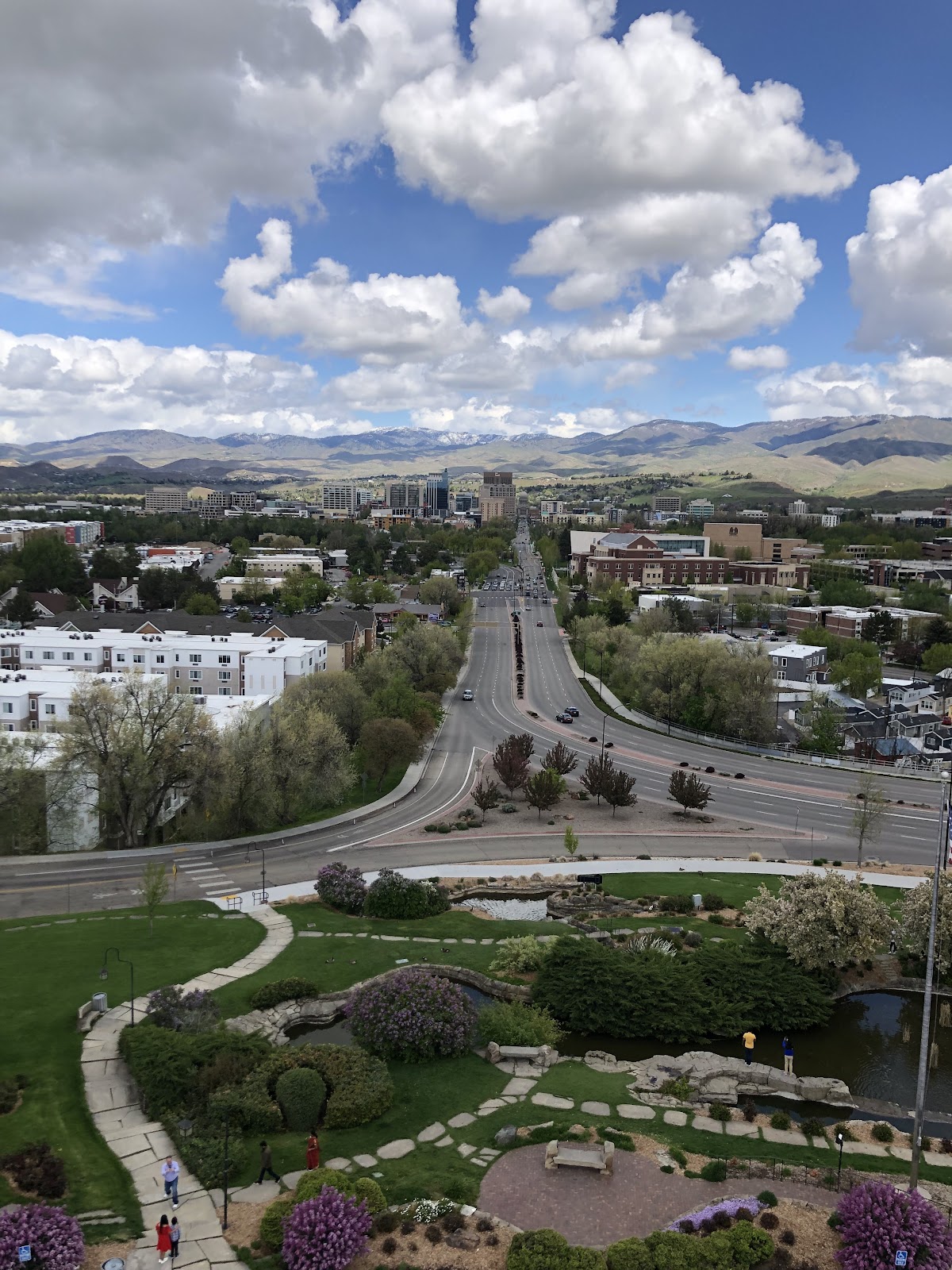
As a vantage point it is a view: elevated ground looking out across a valley to a city and a mountain front beyond, which in a high desert climate means clear air, hard definition and long sightlines that most venues cannot offer at all.
Those want different hours, different lenses and different positions. The building wants low sun on a chosen elevation and tight framing; the view wants the ends of the day, a long lens, and an exposure set for the distance rather than the faces. Doing both well requires deciding which is primary rather than alternating between them.
We have not photographed a wedding at the Boise Depot; hilltop historic buildings and high desert valleys behave consistently. Which spaces are included, whether the grounds and terraces are available, and whether the lighting is adjustable are questions for their team.
The Boise Depot at a glance
| Where | On high ground above Boise, Idaho |
| The decision | The building as subject, or the view as subject |
| The building | Arched openings, tiled roofs, a tower — all needing raking light |
| The view | A valley, a city and a mountain front in unusually clear air |
| Ask first | Spaces included, grounds and terrace access, lighting control |
The building as subject, and the view as subject
If the building is the subject, the first thing to establish is which elevation the sun will be skimming at the planned hour. Stucco, tile, cast stone and arched masonry all read only under raking light: light running along a moulded or textured surface lifts every profile, while the same light facing it square flattens the whole facade into a field of one colour.
On a building with a tower and several elevations that means a walk around it rather than a single position, and it means the good hours are the ends of the day rather than the middle. The reward is a building that reads as architecture, and in a high desert climate the light doing the raking is exceptionally clean — dry air scatters little, so a low sun here has more definition than the same angle in a humid place.
The arched openings are the building’s best photographic feature and they work like any roofed opening: a solid top, solid sides and one open face, which blocks the overhead component of the sun, restricts the light to a horizontal band and bounces off the floor to fill under the chin. Two or three metres inside an arch, facing out, is good directional light at any hour — and an arch is also a framing device, which a flat wall is not.
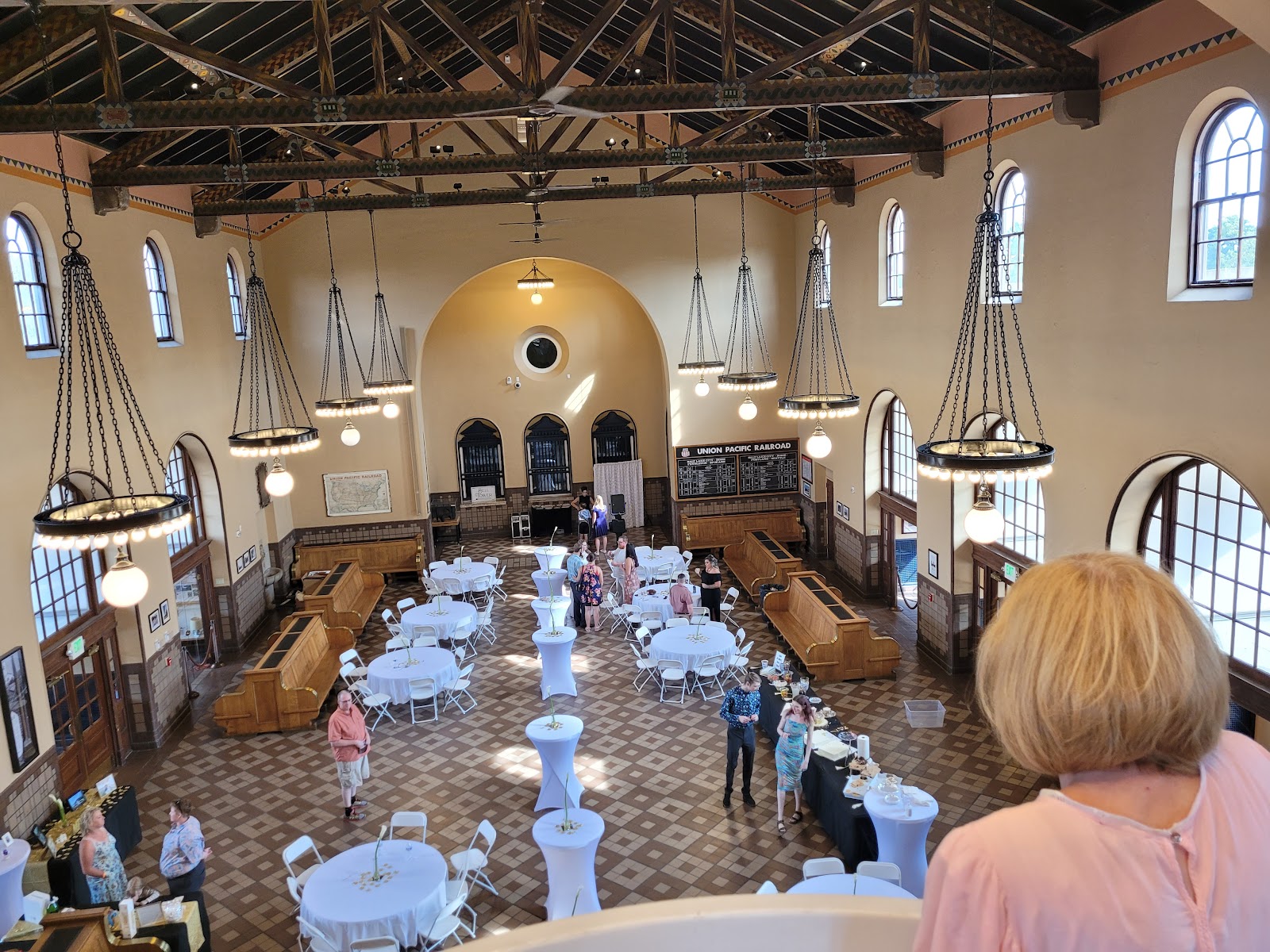
A great hall inside is the other building subject, and a depot hall has the conditions of its type: high windows throwing light in patches, a hard floor that reflects, and volume above. The light comes from high up, which is nearly the worst direction — and the floor is what fixes it, because a hard reflective floor lies directly beneath everyone and sends that light back up. Standing where the floor is brightest rather than where it is shaded is the whole technique.
The exposure in a hall is set on the faces with the windows allowed to clip, because a hall with correctly exposed windows has black faces in it.
If the view is the subject, everything changes. The exposure goes on the distance rather than the faces, because a bright valley and a lit mountain front hold the detail that matters and clip irrecoverably, while faces can always be lifted by a close source — and metering on skin produces a white sky and a flat view, which is the commonest failure of an elevated venue.
The lens goes long. A long focal length compresses a valley into layers and makes a distant mountain front read as a wall rather than as a smudge, which is what an elevated position is for. A wide lens from high ground gives a great deal of foreground and a small distant strip, which is the opposite of the point.
And the hours are the ends of the day, because in the middle of the day a high desert valley is flat and hazy while at the ends it is raked and layered. The mountain front north-east of the city catches low light directly in the morning and goes into shade early in the evening, which means the two ends give completely different versions.
What follows from the decision
Once the primary subject is chosen, the day’s shape follows and the other becomes secondary rather than absent.
If the building is primary, the schedule works around its elevations: the interior hall at any hour, because it does not change, and one chosen exterior elevation in the last hour. The view then becomes a background for a portrait rather than a subject in itself, which needs it kept as a band rather than a field and the exposure still set for the faces.
If the view is primary, the schedule works around the light on the valley and the mountains: the last hour and the crossing, with the building as a foreground element or a silhouette. That produces fewer frames but more distinctive ones.
Either way, the crossing is the one frame that cannot be moved: twenty-five to forty minutes after sunset, when the sky still holds colour at about the brightness of the city’s lights below, so one exposure holds couple, valley and sky. From elevated ground that frame is better than from the valley floor, because the whole grid of city lighting is visible rather than a few buildings.
In a dry climate that window is shorter than in a humid one, because clear air holds less afterglow — so it is a scheduled ten minutes rather than a leisurely wander. And since the interior does not change through the day, taking it costs nothing.
The high desert conditions run under all of it and they are worth knowing. Boise sits in a semi-arid valley at around two and a half thousand feet, which means the air is dry and clear: shadows are harder than in a humid climate at the same sun angle, the sky is a deeper blue, and long views hold detail in a way they do not in the east.
That cuts both ways. The clarity is what makes the view worth having; the hardness is what makes the middle of the day unusable in the open, because with a June midday sun around seventy degrees above the horizon and nothing in the air to soften it, eye sockets go into shadow and every chin gets a hard line.
Shade is the answer and it is scarcer here than in the east. Sagebrush foothills have no trees at all; the valley’s shade is in the riparian corridor along the river, where cottonwoods give genuinely full shade, and in built structures. So the arched openings, any covered terrace and the river corridor are the midday positions, and the rule is absolute: full shade only, because dappled light through a thin crown puts bright patches and deep shadow on the same face at a ratio nothing holds.
And any pale stucco or stone on the building is a reflector rather than a background. A sunlit pale elevation is a soft source at architectural scale, so a couple three or four metres out from one, facing it, is well lit for nothing — needing a custom white balance set on a face, because that bounce is warmer than daylight.
- Choose the building or the view as primary, then schedule for it
- Walk round the building to find the elevation the sun is skimming
- For the view: long lens, exposure on the distance, faces lifted by a source
- In the great hall, stand where the floor is brightest and let the windows clip
- Full shade only at midday — arches, covered terraces, or the river cottonwoods
The Idaho year
The high desert seasons here are sharper than a coastal or eastern year and two of them have conditions worth naming.
Summer is hot and very dry, which means the middle of the day is unusable in the open and the ends of it are exceptional: dry clear air at low sun gives the hardest, cleanest raking light a photographer will meet, which is what stucco, tile and a mountain front all want. The valley also browns off through summer, so the foothills turn from green to gold — which is a warm, distinctive background and a completely different one from spring.
Late summer brings a condition that deserves naming honestly because it has become a reliable part of the western calendar: wildfire smoke. Smoke from fires elsewhere in the region can sit in a valley for days at a time, and its effect is substantial — long views flatten to grey, the mountain front disappears, the sun turns orange and loses its edge, and the deep blue sky goes.
For a venue whose asset is a view, that matters more than at most places. It is not all loss — smoke is diffusion, so faces are softly and warmly lit, and successive ridges separate into flat grey layers, which is genuinely striking — but a couple booking August or early September should know the clear panorama is not guaranteed, and that belongs in the booking conversation.
Autumn is the best window of the year: the smoke usually clears, the air returns to its normal clarity, the cottonwoods along the river turn yellow, and low sun arrives at a civilised hour. Late September into October is the strongest period for both the building and the view.
Winter brings the valley’s own distinctive condition, which is the inversion. Cold air settles in the valley under warmer air above, and that traps haze and fog at low level for days at a time — which means the city below can sit under a grey lid while the ground above is clear and sunlit.
From an elevated position that is a remarkable frame rather than a problem: fog or haze filling the valley with the mountain front standing clear above it, and the couple in sunshine above the lid. It is the one condition a hilltop venue has that a valley-floor one cannot, and it is worth being on site early for.
The reverse is also true: on a day when the inversion is thick and the site is inside it rather than above, the view simply is not there. Which is the honest caveat.
Snow is regular at this elevation in winter and it does the usual two things: outdoors it is the best natural fill available, lifting exactly the shadows a low sun carves while fooling a meter by about two stops toward underexposure; and indoors it turns the ground into a reflector, which brightens the great hall’s high windows considerably.
The December midday sun at this latitude, about forty-three and a half degrees north, reaches only about twenty-three degrees above the horizon, which means the whole short day is raking light — so winter is the best season for the building’s material and the one time the middle of the day works outdoors.
More frames from The Boise Depot
The Boise Depot wedding photography: common questions
What is the one governing decision?
Whether the building or the view is the subject. They want different hours, lenses and positions, and alternating between them produces neither well.
How should the view be exposed?
For the distance, with the faces lifted by a close source. Metering on skin gives a white sky and a flat view, which is the commonest failure at an elevated venue.
Which lens for the view?
A long one. It compresses the valley into layers and makes a distant mountain front read as a wall — a wide lens from high ground gives foreground and a thin strip.
How do you fix the great hall's high light?
Stand where the hard floor is brightest. A reflective floor lies directly beneath everyone and sends the high light back up to fill the shadows it carves.
What about wildfire smoke?
Late summer it can sit in the valley for days, removing the long view entirely. Good warm diffusion, no panorama — and it belongs in the booking conversation.
What does winter give a hilltop venue?
Inversions. Fog or haze filling the valley with the mountain front clear above it, and the couple in sunshine above the lid — a frame a valley-floor venue cannot have.
More Boise, ID venue guides
We are writing a photographer’s guide to every venue we would happily shoot in Boise, ID. Here are three more, plus the full index:
- The Idaho Botanical Garden, Boise: A Walk Through the Site
- The Owyhee Hotel, Boise: A Building Converted Twice
- The Riverside Hotel, Boise: The Light Through a Day
Planning a wedding at The Boise Depot?
Building or view — choose first. Tell us your date and we will plan for one.