 The Bierstube: What Changes When the Reception Is in a Bar
Lone Mountain Ranch, Big Sky: The Light Through a Mountain Day
In a mountain valley the day starts late and ends early. Everything else follows from that.
A mountain valley keeps its own time. The sun clears the eastern ridge long after it has risen and drops behind the western one long before it sets, which means the period of direct sunlight on the ground may be five or six hours rather than the fifteen a June table promises.
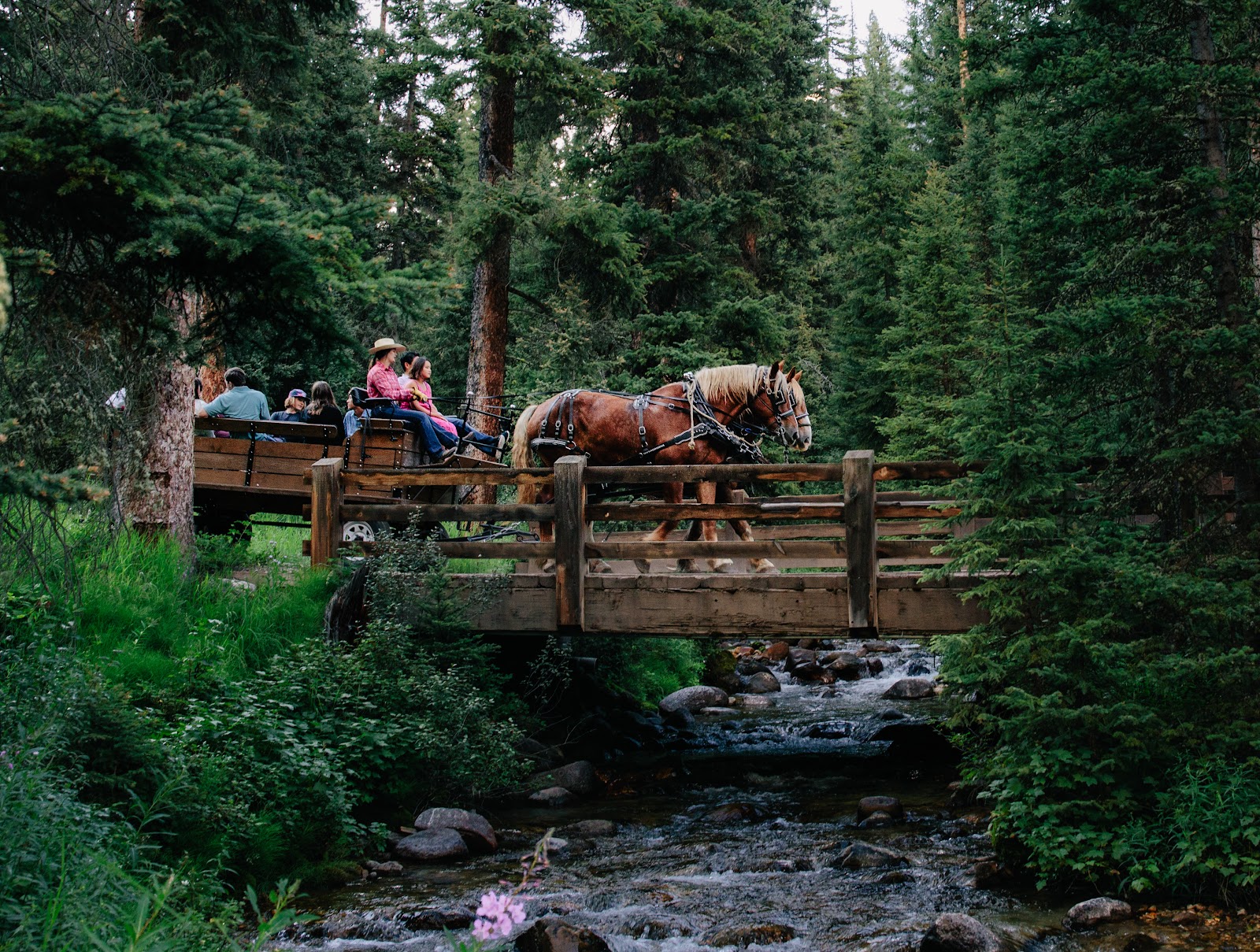
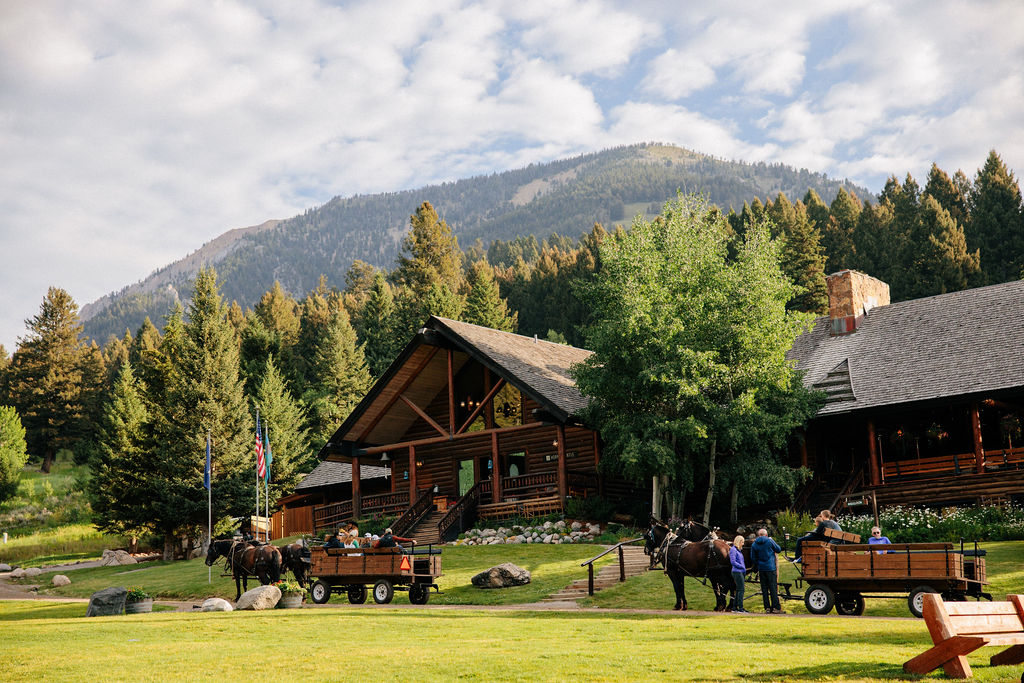
At a ranch spread along a valley floor, with meadow, conifer, water and timber buildings, that produces a day with a very specific shape: a long soft morning, a short bright middle, a long soft evening, and then a brief and spectacular interval when the peaks above are still lit and the ground is not.
Knowing that shape in advance is most of the job here, because the good light is abundant but it is not where or when a sea-level instinct expects it.
This is the day in order. We have not photographed a wedding at Lone Mountain Ranch; mountain valleys and ranch buildings behave consistently. Which areas are included, what the ceremony site’s altitude and aspect are, and what the weather arrangements are are questions for their team.
Lone Mountain Ranch at a glance
| Where | A valley at Big Sky, Montana, around 7,000 feet |
| Morning | Long open shade before the sun clears the ridge — genuinely good light |
| Middle | A few hours of hard direct sun; meadow shade and conifer edges |
| Evening | Long soft light, then the peaks lit while the valley is not |
| Ask first | Areas included, site aspect, weather plan, vehicle access |
Morning and the middle of the day
The first hours are open shade and they are better than most people expect. Before the sun clears the ridge the valley is lit entirely by the strip of sky overhead and by whatever bounces off the slopes — which is soft, comes downward at an angle rather than from a point, and has no hard shadows in it anywhere.
That is a good portrait condition, not a waiting period, and it has one specific advantage: it is the only time of day when both a subject and the distant peaks are within a manageable brightness range of each other. Later, when the valley is in sun and the peaks are too, the range opens up; in the evening the peaks are lit and the valley is not, which is dramatic but not a portrait condition.
Meadow is the ground here and it behaves usefully. Mown or grazed grass takes raking light beautifully, picking up every blade when the light comes across it, and it throws a mild green upward onto skin from below — subtle but real, and handled by a custom white balance set on a face in the position being used rather than a grey card in the middle of the field.
Through mid-morning the sun clears the ridge and the transition is abrupt. At this altitude — around seven thousand feet, with roughly a quarter less atmosphere overhead to scatter sunlight — direct sun is harder than at sea level, shadows go deeper and sharper, and the ratio between lit and unlit exceeds what a sensor holds by a wider margin. A face half in sun is beyond rescue here rather than merely difficult.
So the middle of the day is a shade exercise, and in a valley there are three kinds worth knowing.
The conifer edge is the best of them. Standing at the edge of an evergreen stand, in its shade, facing out into the lit meadow, gives light from the bright open ground in front and darkness behind — which is directional, soft, and gives three or four stops of separation with no equipment. Dense conifer absorbs almost all the light falling on it, which makes it the darkest natural background there is.
Under a building’s eaves or a porch is the second: a roof above with an open face restricts the light to a horizontal band, removing exactly the overhead component that ruins faces. It is also rainproof, which in a mountain summer matters.
And full shade under a single mature tree is the third, with one absolute condition: full shade only. Dappled light through a thin canopy puts bright patches and deep shadow on the same face, and at this altitude that ratio is further beyond rescue than anywhere lower.
Evening, and the interval after it
The afternoon light lengthens early because the western ridge intervenes, which means the good raking light arrives sooner than a table suggests and the whole evening is longer and softer than at sea level. Practically, the best hour on the ground may be well before the nominal golden hour, and the only way to know is to ask the venue when the sun leaves their site — a question they will answer precisely, because everything they do depends on it.
In that hour the meadow is the asset. Low sun across grass makes it glow and gives it texture, the conifer behind goes darker still by contrast, and a couple standing in lit meadow with a dark treeline behind is the frame the valley exists to give. It needs no equipment beyond a decision about where to stand.
Then the valley falls into shadow and the interval begins. Because the peaks stand above the ridgeline, they remain in direct sun after the ground has lost it — sometimes for twenty or thirty minutes — and at this altitude, in this air, that light is strong, warm and very clean.
Photographically that is a reversal worth planning for. While a photographer at sea level would be packing up, the mountains here are arriving at their best moment, and the frame is a couple in soft shade in the foreground with brilliantly lit peaks behind. It has one technical requirement: the brightness range between shaded faces and sunlit rock is wide, so the faces need lifting by a source rather than the peaks being underexposed. One source, close, gelled warm to match the light on the rock, at about a stop below it.
After the peaks lose the sun, the crossing follows — sky still holding colour at about the brightness of the buildings’ own lighting. At this latitude, about forty-five degrees north, that twilight is long in June and short in the clear cold air of January, and in either case it is the last timed frame of the day.
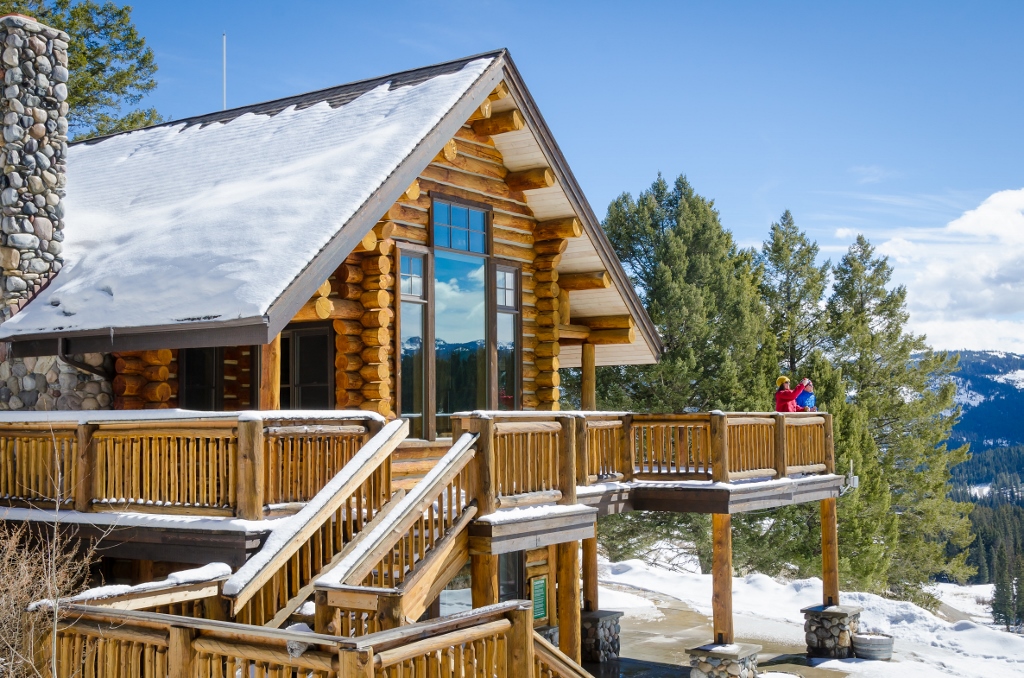
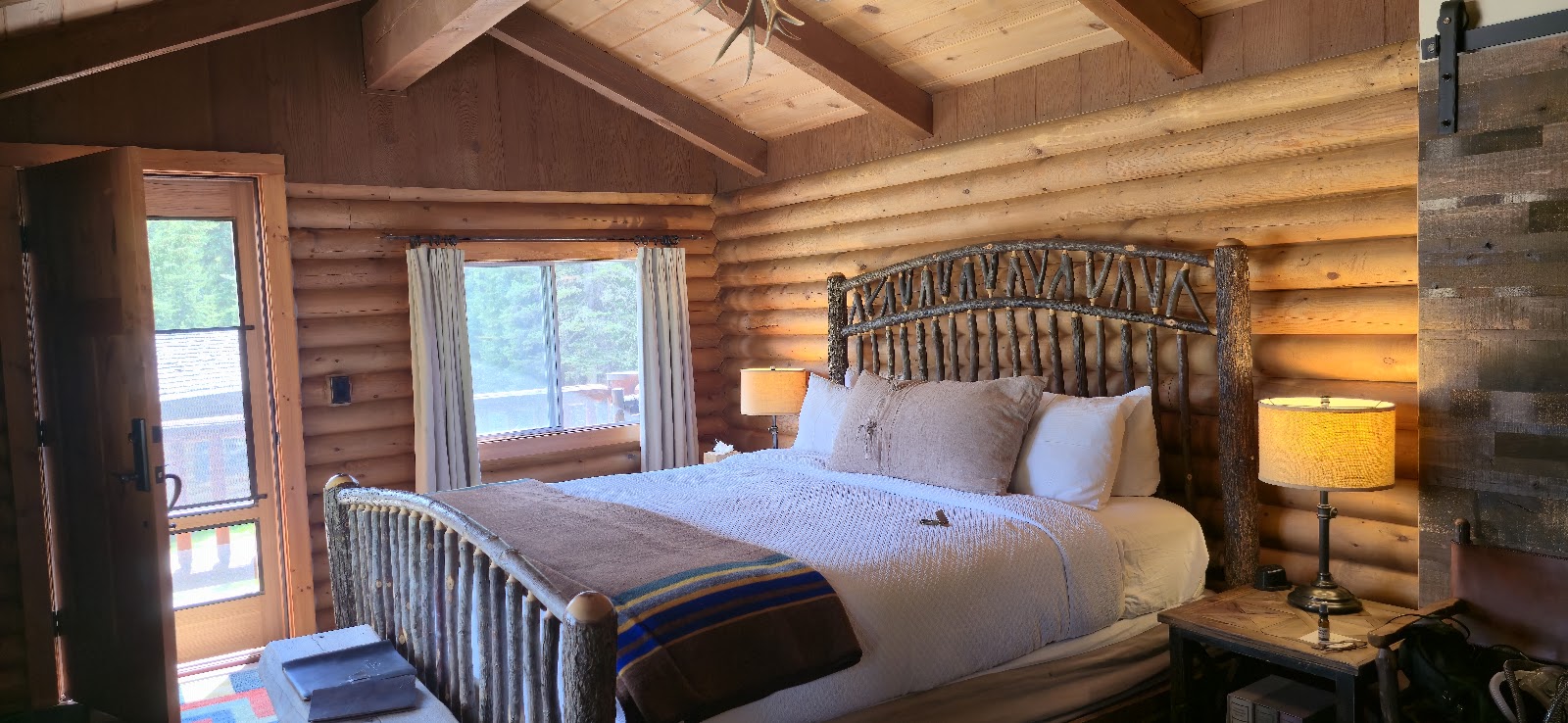
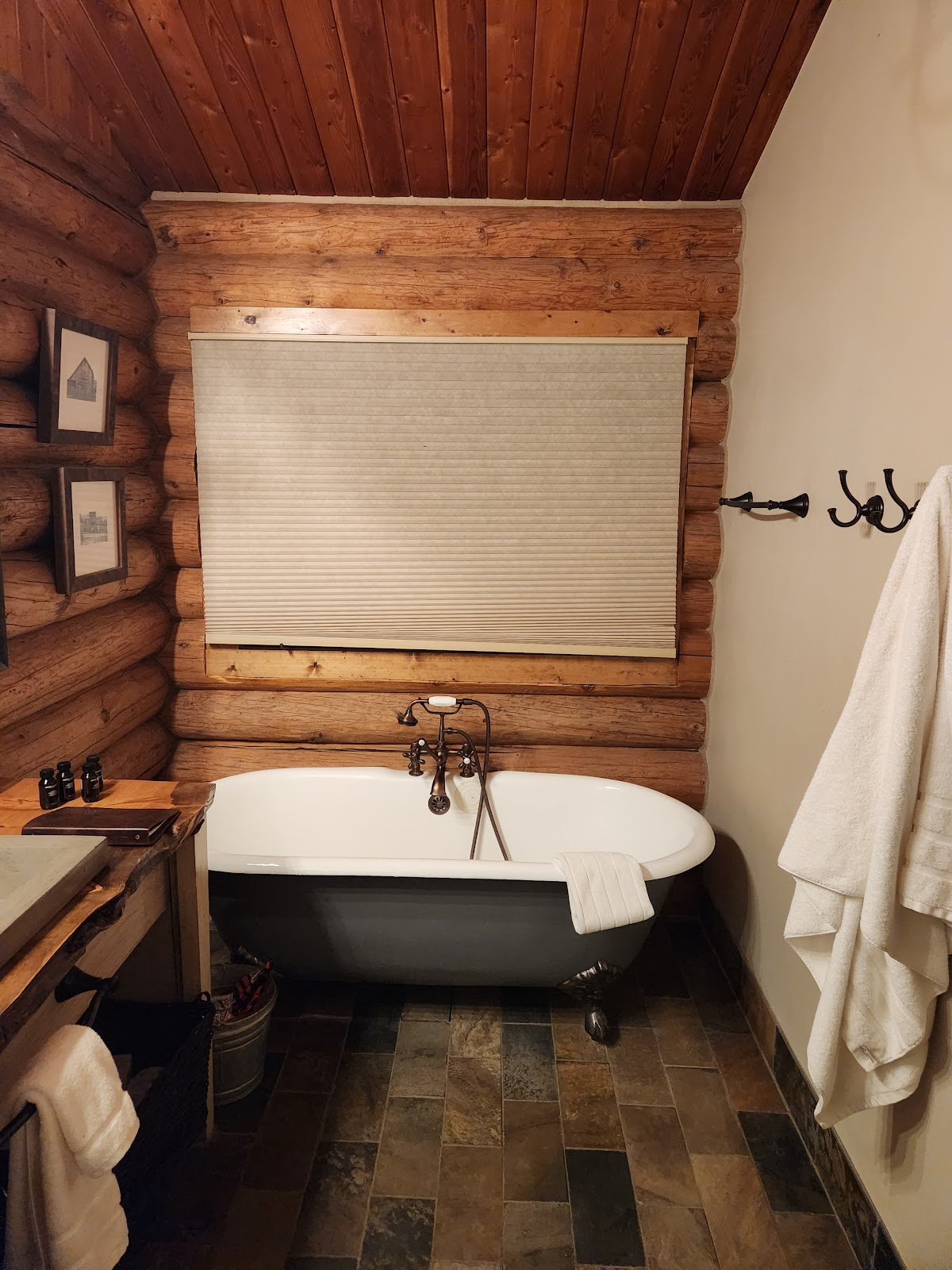
Inside, the ranch buildings follow the timber pattern: warm, dark and absorbent. A timber-lined room sits two or three stops below a pale one and returns very little to a bounced flash, which removes the advantage a low ceiling usually gives — one test frame aimed at the ceiling settles it, and the usual answer is to light directly into a modifier instead.
The compensations are steep fall-off, which is free separation, and generous windows, because a ranch building is oriented to look out. Largest window on the shaded side, every overhead fitting off, lamps out of frame, two to three metres back. And when there is snow outside a window becomes dramatically brighter and softer, because the ground is an enormous reflector — a lodge window in February beats the same window in July, and it is cooler in colour, so a custom white balance is worth setting.
- Use the morning shade: the only time subject and peaks are in one range
- Work the conifer edge at midday — lit meadow in front, darkness behind
- Ask when the sun leaves the site; the best hour is earlier than the table says
- Plan for the interval: lit peaks above a shaded valley, faces lifted by a source
- Test bounce indoors; dark timber usually returns nothing
The Montana year, and the practicalities
Summer in a high valley is short, green and cool, and the meadow is at its best from late June into August. Afternoon thunderstorms build over high terrain from roughly July into September, and they produce lightning, which on open meadow is a genuine hazard rather than an inconvenience — so a named indoor alternative is a requirement and the decision to use it belongs to whoever is responsible for the party.
The compensation is that mountain cloud is the best diffusion available here, and a valley with cloud moving through it — treelines appearing and disappearing, light shifting minute to minute — is more atmospheric than a clear day and worth working rather than waiting out.
Late August into September brings a condition that deserves naming honestly, because it has become a reliable part of the western calendar: wildfire smoke. Smoke from fires elsewhere in the region can sit in mountain valleys for days, and the effect is substantial — long views flatten to grey, the sun turns orange and loses its edge, and the deep blue sky that altitude normally gives disappears.
It is not all loss. Smoke is diffusion, so faces are softly and warmly lit; successive ridges separate into flat grey layers, which is genuinely striking; and the sun becomes a disc that can be photographed directly. But a couple booking late August should know that the clear panorama is not guaranteed, and that belongs in the booking conversation rather than the day.
Late September and early October are the best short window of the year: the smoke has usually cleared, the aspen turn strong yellow against the dark conifer, the afternoons are stable, and sunset falls at a reasonable hour. It lasts a week or two either side of peak and it is worth asking the venue what their recent years looked like.
Winter is long and it is the valley’s own season. At this latitude the December midday sun reaches only around twenty-one degrees above the horizon, which means the whole short day is raking light rather than overhead light — so for once the timing problem disappears, and a snow-covered meadow with dark conifer behind under a low sun is the strongest frame the place offers.
Snow is useful twice: outdoors as the best natural fill available, lifting exactly the shadows a low sun carves while fooling a meter by about two stops toward underexposure; indoors as an enormous reflector improving every window. And snow with conifer in the same frame is the widest natural brightness range a photographer meets — expose for the snow, which holds the detail and clips irrecoverably, and accept the trees as near-black.
Three practicalities close it out. The diurnal swing at altitude is large — well over twenty degrees Celsius between afternoon and evening is normal, and a valley cools faster than open ground — so a party comfortable at four is cold by seven and coats are the answer. Ultraviolet is markedly higher here, so an hour outdoors burns faster than expected, including under cloud and including over snow. And anyone arriving from sea level feels seven thousand feet, so a portrait route should be short and close rather than ambitious.
One last note specific to a ranch in this country: this is bear habitat, and food, waste and unattended gear all matter. That is the venue’s business rather than a photographer’s, but it is a reason not to leave a bag open in a meadow and walk away from it.
More frames from Lone Mountain Ranch
Lone Mountain Ranch wedding photography: common questions
Why does the valley have its own clock?
Because the sun clears the eastern ridge long after sunrise and drops behind the western one long before sunset — direct light on the ground may last five or six hours, not fifteen.
Is the morning shade usable?
It is genuinely good light, and it is the only time of day when a subject and the distant peaks sit within a manageable brightness range of each other.
What is the best midday position?
The conifer edge — standing in evergreen shade facing out into lit meadow, which gives directional light in front and three or four stops of darkness behind.
What is the interval after sunset?
The peaks stay in direct sun for twenty or thirty minutes after the valley loses it. The frame is shaded faces in front of brilliantly lit rock, with the faces lifted by a source.
What about wildfire smoke?
Late August into September it can sit in the valleys for days — good warm diffusion, no panorama, and a deep blue sky that disappears. It belongs in the booking conversation.
What is the best short window of the year?
Late September into early October: the smoke has usually cleared, the aspen turn yellow against dark conifer, and the afternoons are stable.
More Big Sky, MT venue guides
We are writing a photographer’s guide to every venue we would happily shoot in Big Sky, MT. Here are three more, plus the full index:
- The Rainbow Ranch Lodge, Big Sky: Field Notes on a Riverside Lodge
- The Yellowstone Club, Big Sky: One Frame, and How It Is Made
- The 320 Guest Ranch, Big Sky: The Problem, and Four Ways Out
Planning a wedding at Lone Mountain Ranch?
A day with an unfamiliar shape. Tell us your date and we will map it.