 Indianapolis Zoo: Reading a Day From Open Grounds to Underwater Glass
The Century Center, South Bend: The One Decision That Governs Everything
A glazed civic building has two halves that behave nothing alike. Deciding which one the day belongs to comes first.
A modern civic centre built beside a river has a structural split in it, and the governing decision is which side of that split the day belongs to.
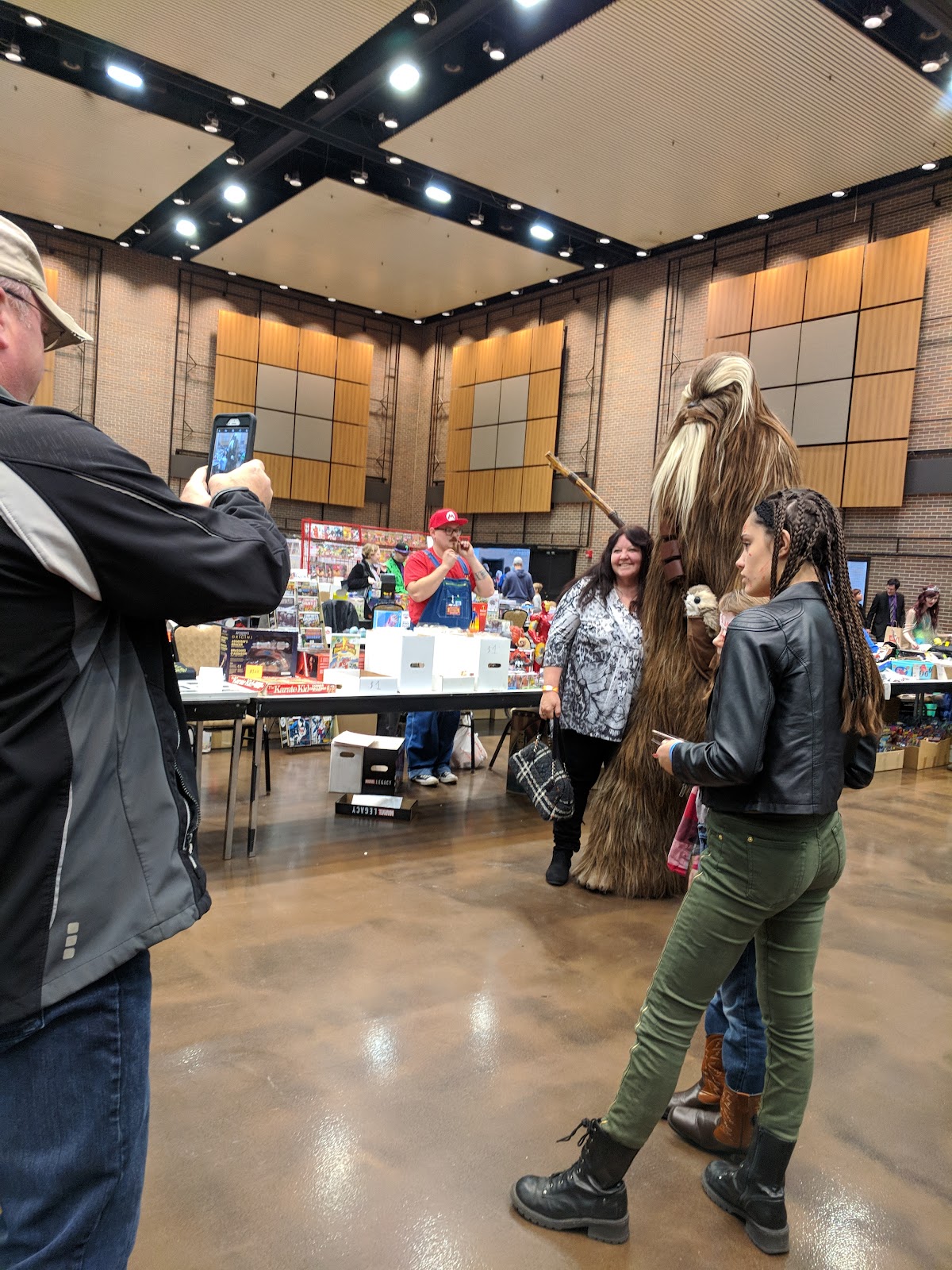
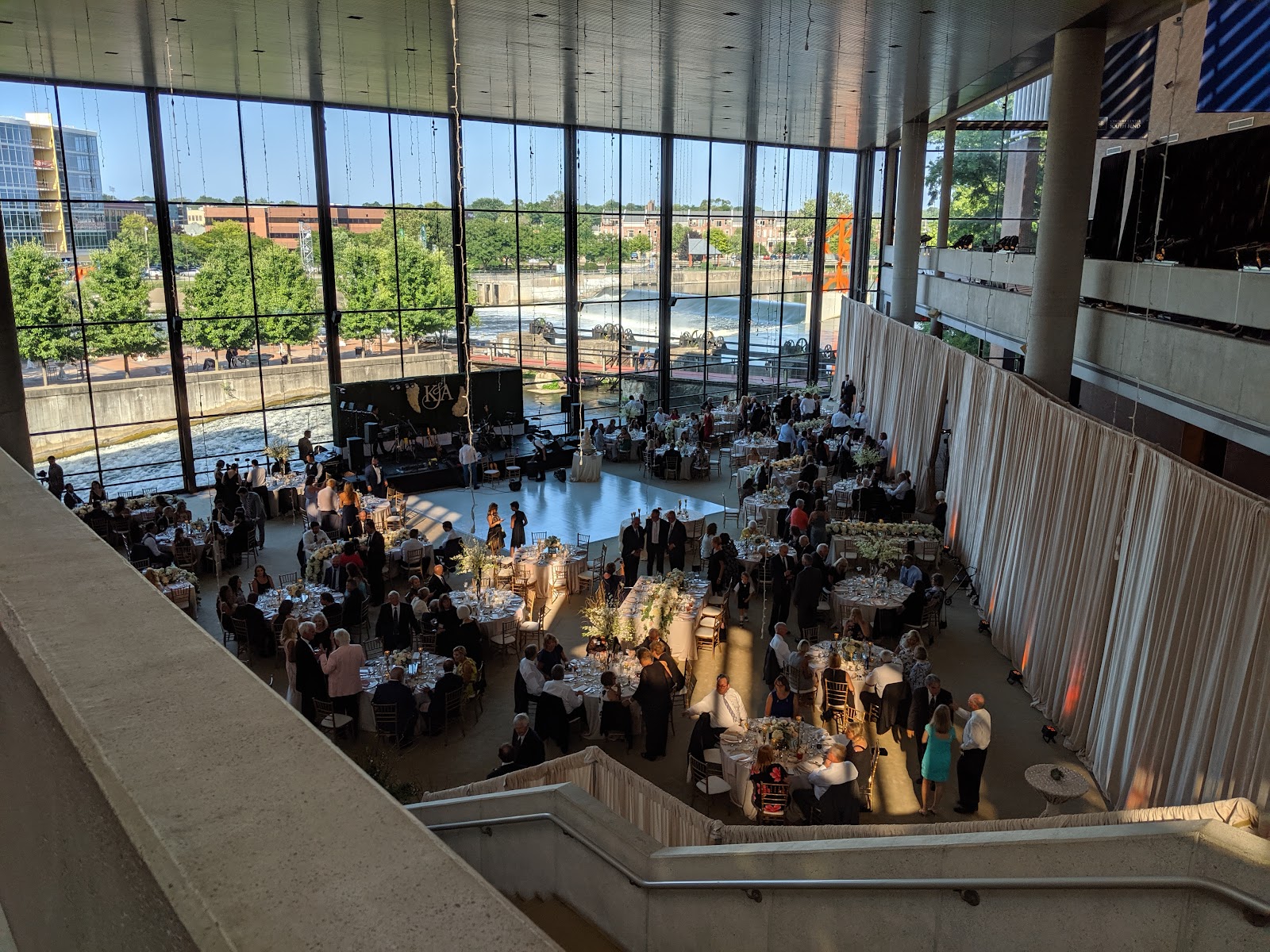
On one side is the glazing: a glazed frontage or atrium facing the water, which is the only significant daylight in the building and one of the better soft sources any venue offers. On the other are the halls — deliberately neutral, evenly lit from above, pale and featureless, with no daylight at all.
Between the two there can be three or four stops, and they are frequently adjacent. A photographer moving between them without changing anything produces a sequence that looks like two different weddings, and automatic exposure makes it worse by splitting the difference in both.
So the decision is not stylistic but operational: cluster the day by space and change configuration at the door, rather than drifting between them. Everything else follows from that.
We have not photographed a wedding at the Century Center; modern civic facilities behave consistently. Which spaces are included, whether there is riverside access and whether the lighting is adjustable are questions for their team.
The Century Center at a glance
| Where | Beside the St. Joseph River, South Bend, Indiana |
| The decision | Glazing or halls — cluster by space, not by activity |
| Glazing | Daylight settings, no flash, groups three metres back from the glass |
| Halls | High ISO, added light, separation built geometrically |
| Ask first | Spaces included, riverside access, lighting control, fixings |
The two halves, and how each is worked
The glazing is the building’s best asset and it behaves like a very large window. The conditions are the ordinary ones: the shaded side or an overcast day rather than direct sun, which turns a soft source into a hard one with a hard edge; and about three metres back from the glass, so a row of people is evenly lit rather than dropping off the far end. At a metre a row parallel to glazing has a two-stop spread across it; at three it is even.
That three metres is the single most useful number in this building, because it is what makes a glazed atrium capable of lighting a thirty-person formal group with no equipment at all — a capability most venues do not have.
Two checks. Commercial glazing is frequently coated for solar control, which throws a localised green or blue cast onto anything near it that global white balance cannot remove — one test frame rather than a discovery in editing. And South Bend sits at about forty-two degrees north, where the midday sun reaches roughly seventy-one degrees above the horizon in June and barely twenty-five in December, so a south-facing glazed wall is a high soft source in summer and carries direct low sun through most of a winter afternoon. Which wall is usable is a seasonal question with a definite answer.
The configuration for the glazing is daylight: a low ISO, a moderate aperture, white balance set for daylight, and usually no flash at all. Adding light to a large glazed volume is more likely to unbalance it than improve it.
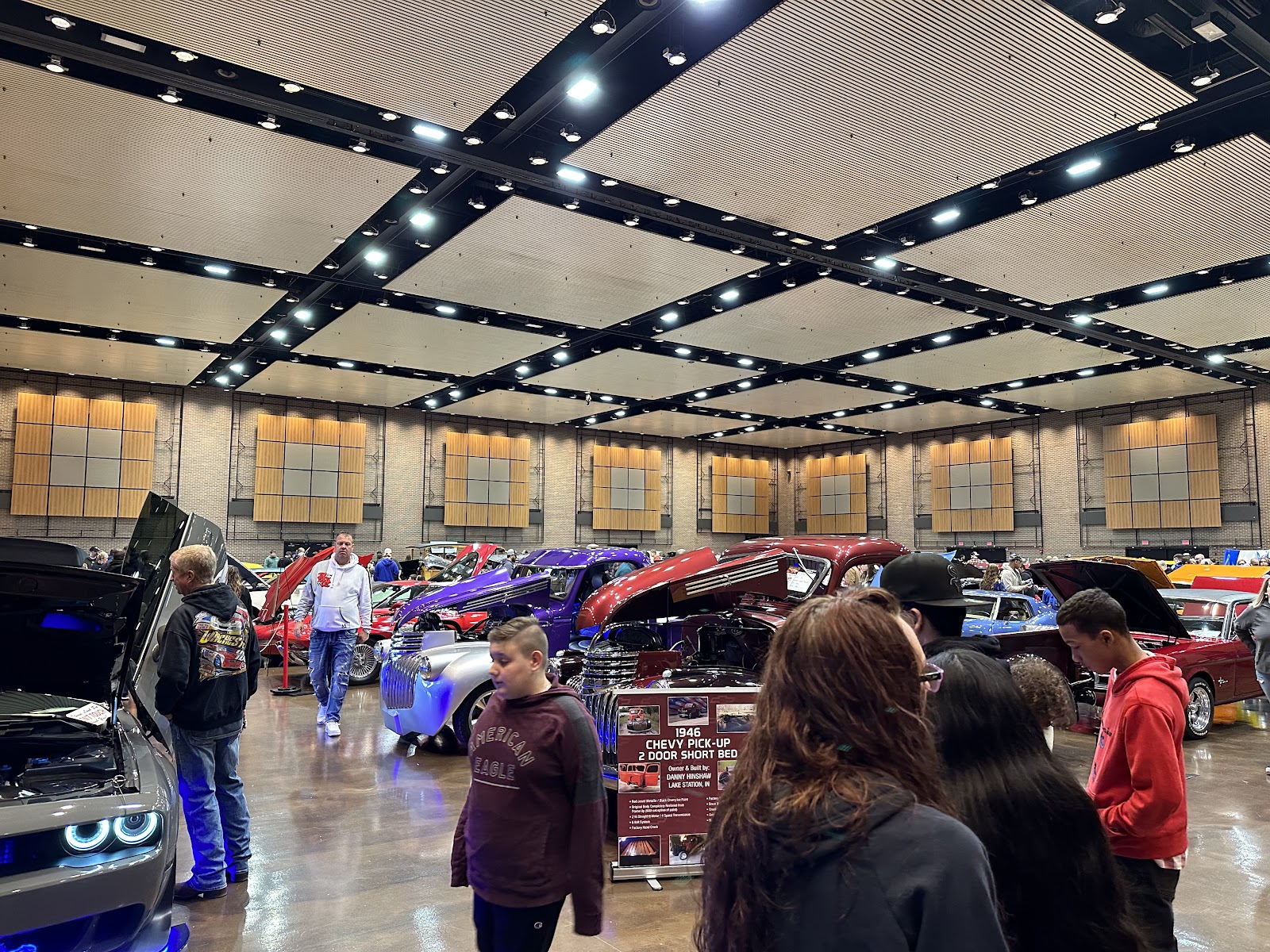
The halls are the other half and they have the neutral-room problem: pale, hard-surfaced, evenly lit from above and featureless, which means the wall behind a face is as bright as the face and the picture flattens. Nothing about that is recoverable, because the information was never recorded.
The fixes are geometric and they all work. Five metres between subject and background rather than one, so fall-off does something. The darker end of the hall, because every evenly lit room is in fact unevenly lit and one end is always half a stop to a stop down. A background that is depth rather than a near wall — an open doorway, a corridor, a further space. And a source brighter on the face than the room is on the wall, which is the only version that works regardless of geometry.
The configuration for the halls is the inverse of the glazing: higher ISO, a wide aperture, white balance set to the fittings or to a gelled source, and an added light. Switching at the door rather than in the middle of a room is what produces a coherent gallery.
And the ceilings decide the bounce. Exhibition and ballroom ceilings are typically well over four metres, which returns almost nothing; pre-function areas, corridors and meeting rooms are frequently lower, where a bounced source is a very large soft one. One test frame per space is thirty seconds well spent and it changes what has to be carried.
What follows: the threshold, the river, and the colour
Once the two halves are treated separately, the best frame in the building appears at the join between them, and it is worth finding on arrival.
The threshold between a dark hall and a bright glazed space is a natural light gradient. Standing in the atrium looking into the hall, the interior is a dark field; standing just inside the hall facing out into the atrium, a subject is lit by a soft daylight source of enormous size with total darkness behind them. The second of those is the single best portrait position in a building of this design and it needs no equipment at all.
The geometry has to be right: far enough into the shadow that the background is genuinely dark, near enough to the opening that the light still reaches the face at a usable level. Two or three metres inside is usually the answer, and one test frame at two, three and four metres shows where the trade sits.
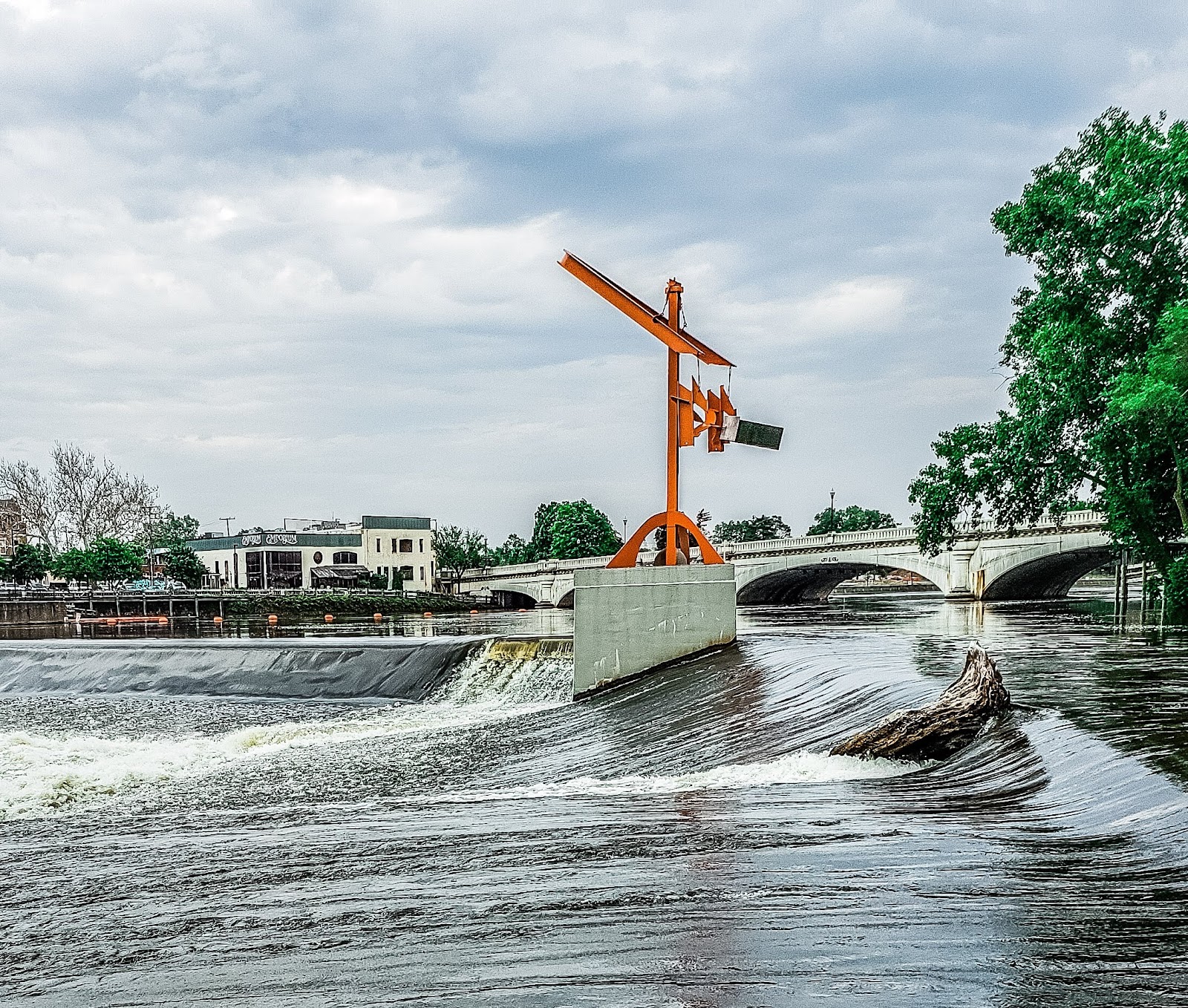
The river is the second thing that follows, and at a riverside civic building it is the only exterior background that is neither car park nor more building. Water reflects, which doubles anything lit; it bounces light upward, filling the shadows a high sun carves; and it gives depth and a natural line.
Camera height is the governing variable. A low camera looking across the surface sees a mirror reflecting sky and whatever stands beyond; a high camera looking down sees through to the bottom. Half a metre changes the frame completely and the low position is usually the good one.
The two exterior windows are the last hour of daylight, which rakes the water and any facade, and the twenty-five to forty minutes after sunset, when sky and lit building sit at the same brightness — and at a glazed building that crossing is particularly good, because the lit interior reads through the glass and one exposure holds building, couple and sky. Since the halls do not change through the day, taking those windows costs nothing indoors.
Colour is the third thing that follows and it is the standing condition throughout. A civic building relit in stages has fluorescents, LEDs of varying quality, warmer decorative fittings in the public areas, stage or rigging lighting in the halls, and any coloured uplighting installed for the event. Three temperatures on one face cannot be reconciled afterwards, so pick the one that should be correct, set white balance to it, and switch off or overpower whatever else lands on skin.
Coloured uplighting is usually the worst offender and frequently the easiest thing to have turned off for the ten minutes the portraits need — a reasonable request rather than a compromise.
And the underlying direction problem is the same everywhere in these buildings: dense downlighting shadows eye sockets and cuts a line under every chin. One source placed to the side at face height fixes every face in the building at once, which is the most economical improvement available.
- Cluster by space, switch configuration at the door
- Three metres back from the glazing — that number makes group formals possible
- Stand two or three metres inside a hall threshold facing the atrium
- Build separation geometrically in the halls; flatness is not recoverable
- Test bounce per space; halls return nothing, corridors and meeting rooms do
Outside, and Indiana's year
South Bend has one climatic feature that distinguishes it sharply from the rest of the Midwest, and it changes what a photographer should expect for months at a time: it sits in the lake-effect snowbelt southeast of Lake Michigan.
The mechanism is straightforward. Cold air crossing relatively warm lake water picks up moisture and dumps it downwind, which means this area gets substantially more snow than places at the same latitude away from the lake — and, more importantly for a photographer, it means persistent overcast. Winters here are among the cloudiest anywhere in the country outside the Pacific Northwest.
That is not the disadvantage it sounds. Overcast is the best soft source there is, and months of it means a glazed atrium gives even, shadowless, flattering light with no hard-sun problem at all — the direct-sun caveat about which wall to use simply does not arise on a grey January day. For a building whose best asset is its glazing, a cloudy winter is a good season rather than a poor one.
Snow compounds it. Snow turns the ground into an enormous reflector, so glazing in February gives softer, brighter and more even light than at any other time of year, with light arriving from below as well as above so facial shadows nearly vanish. Outdoors it is the best natural fill available, lifting exactly the shadows a low sun carves while fooling a meter by about two stops.
The short December day is the real winter constraint: at this latitude sunset falls in the middle of the afternoon, which compresses the outdoor block into a couple of hours and means the riverside positions should be decided in advance rather than explored.
Summer is hot and genuinely humid, and the humidity is the photographic fact rather than the heat. Moist air scatters light, which softens shadows and slightly flattens distance — good for faces, less good for a long view along the river. Severe afternoon thunderstorms are a real possibility from late spring onward, which at an entirely indoor venue costs a decision rather than a picture.
The humid fogging problem is the equipment issue that matters here, and a large civic building makes it worse because the halls are cooled hard for full occupancy. A body carried straight out into July air fogs on every surface at once and does not clear quickly; opening a bag twenty minutes early is the whole fix.
Autumn is the best light of the year. The humidity drops, the air clears, the deciduous cover along the river turns, and low sun arrives at a civilised hour — usually mid-to-late October, and the river with turning trees on both banks at that time is the strongest exterior frame the location gives.
Spring is variable and wet, with the thunderstorm season beginning; late May and early June are the sweet spot, with long days and the worst of the summer humidity not yet arrived.
More frames from The Century Center

The Century Center wedding photography: common questions
What is the one governing decision?
Which half of the building the day belongs to. The glazing and the halls are three or four stops apart and need different configurations, switched at the door.
What is the most useful number here?
Three metres. A row of people parallel to glazing at one metre has a two-stop spread across it; at three it is even, which is what makes group formals possible in daylight.
Where is the best portrait position?
Two or three metres inside a hall threshold, facing out into the glazed space — a very large soft source in front, total darkness behind, no equipment needed.
How do you fix the halls?
Geometrically: five metres off the wall, the darker end of the room, depth behind rather than a near surface, and a source brighter on the face than the room is on the wall.
Is the cloudy winter bad here?
No. South Bend is in the lake-effect snowbelt, so winters are persistently overcast — which is the best soft light there is and removes the direct-sun problem from the glazing entirely.
When is the glazing at its best?
February. Snow turns the ground into an enormous reflector, so light arrives from below as well as above and facial shadows nearly vanish.
More Indiana venue guides
We are writing a photographer’s guide to every venue we would happily shoot in Indiana. Here are three more, plus the full index:
- The Four Winds Casino, South Bend: The Problem, and Four Ways Out
- The Morris Performing Arts Center, South Bend: A Walk Through a Historic Theatre
- The Oliver Mansion, South Bend: A House Built Before Electric Light
Planning a wedding at The Century Center?
Two halves, two configurations. Tell us your date and we will split the day properly.