 The Thunderbird Inn: Field Notes on a 1964 Motor Inn
The King Plow Arts Center, Atlanta: Field Notes on a Converted Factory
Brick, steel and height are three conditions that always come together, and each one wants something different.
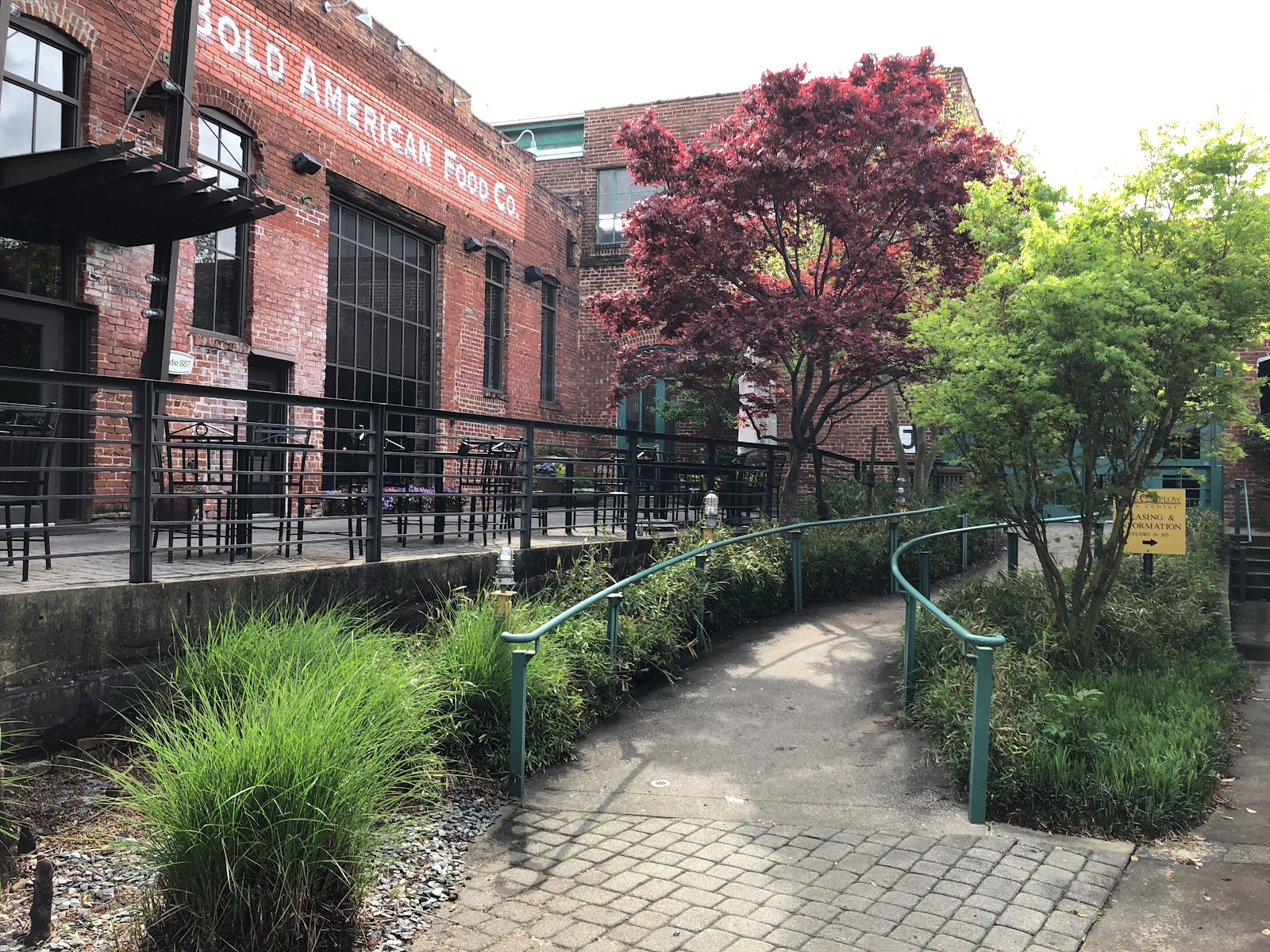
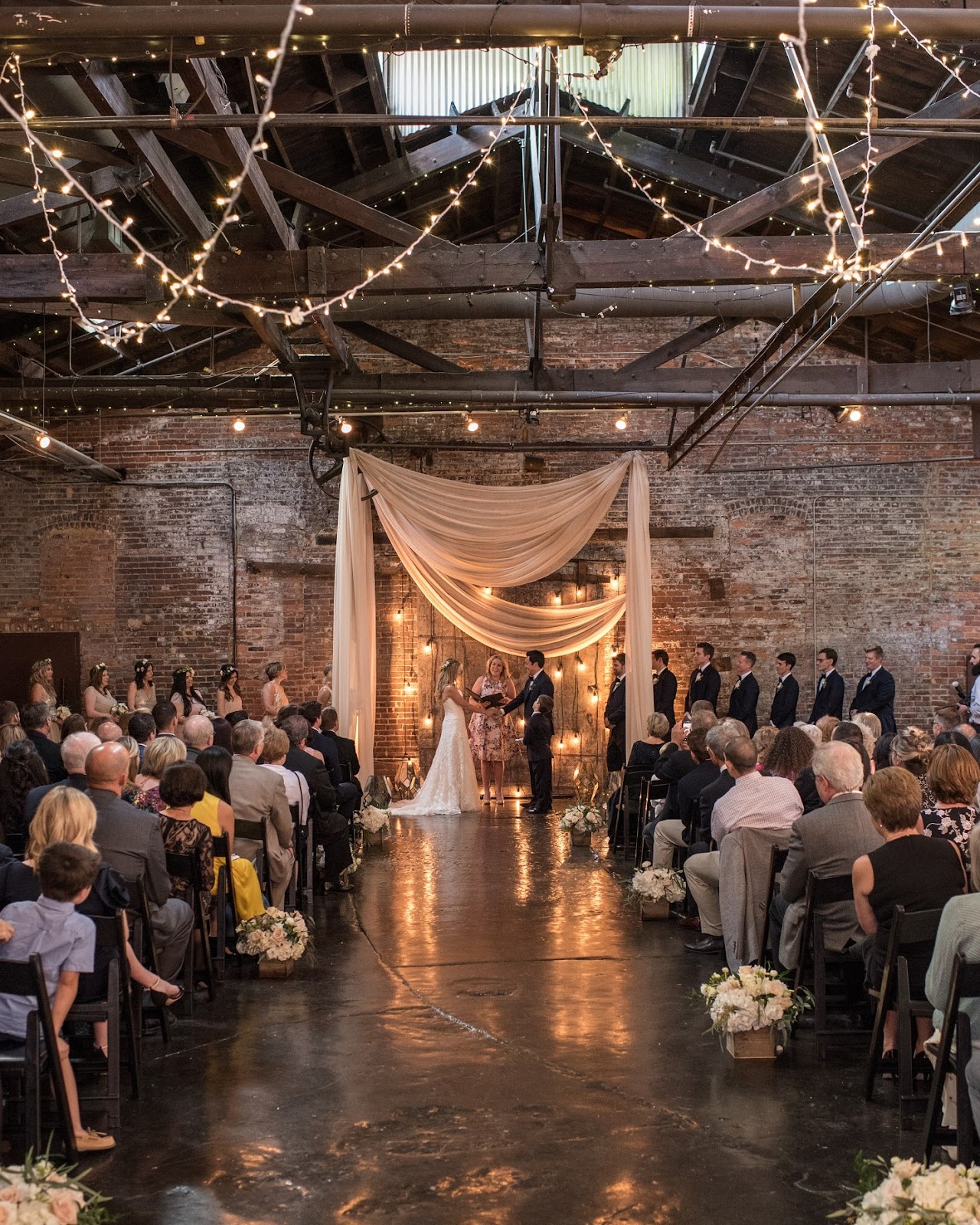
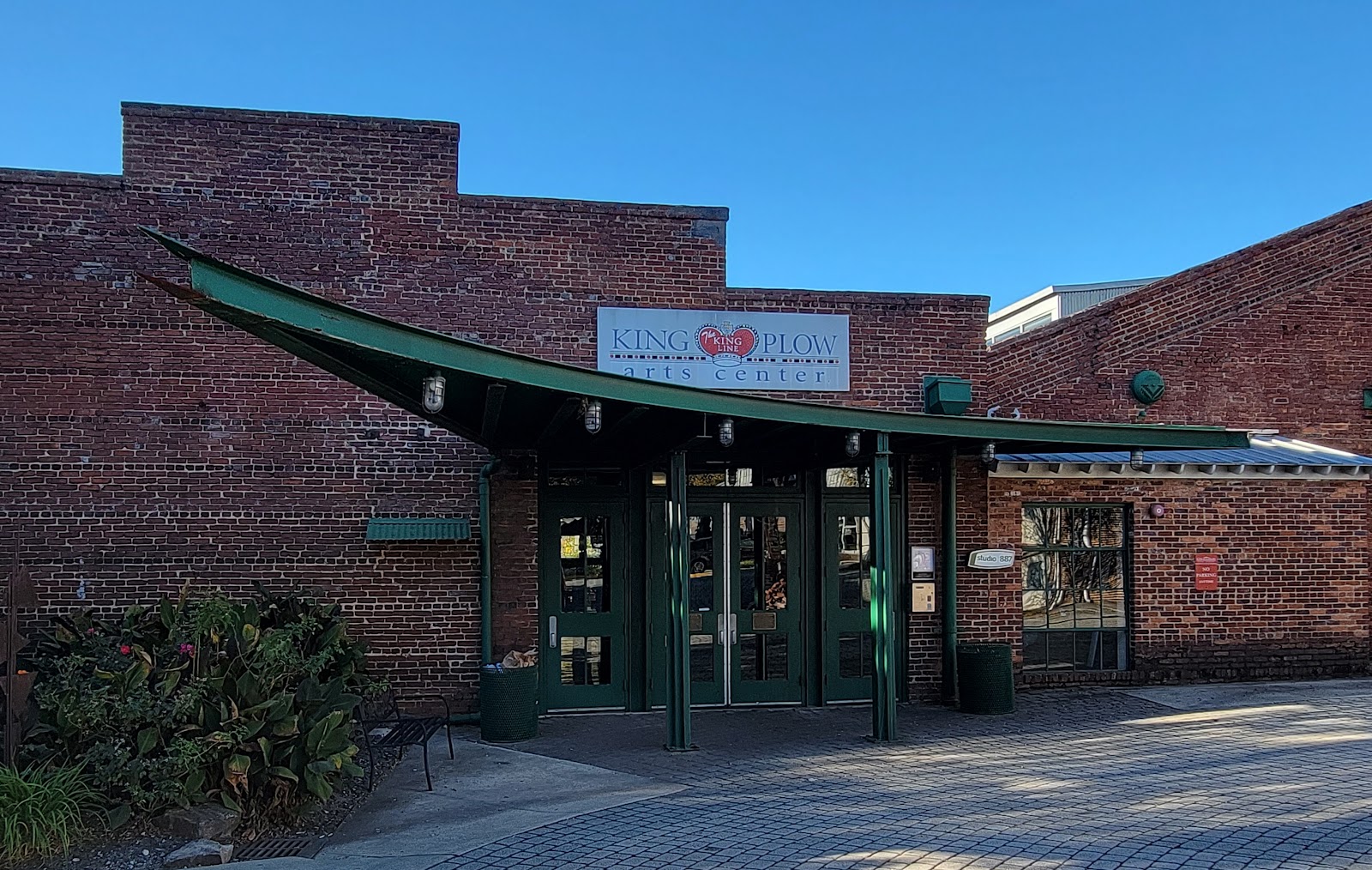
The King Plow Arts Center has exposed brick walls, high ceilings and original steel beams which, in its own description, produce an atmosphere both grand and intimate.
Grand and intimate at once is an accurate description of a factory conversion, and it comes from a specific combination: a very large volume with very close-textured surfaces in it. That is worth unpacking, because it produces four conditions that always occur together in this building type and each one needs a different response. Brick is forgiving and warm. Steel is cool and specular. Height removes bounce. And large openings, where they survive, are the best light in the building.
These are field notes: what you will meet and what each one needs. We have not photographed a wedding at King Plow; converted factories behave the same wherever they stand. What may be attached to brick or steel, which openings exist and on which elevation, and whether the house lighting is adjustable are the questions for their team — restored industrial fabric usually takes no fixings at all.
The King Plow Arts Center at a glance
| Where | Atlanta, Georgia |
| Character | A converted factory arts complex with brick, steel and high ceilings |
| Four conditions | Warm brick, cool steel, no bounce, and large openings |
| Best light | Two metres inside a large opening on the shaded elevation |
| Ask first | Fixings, which openings and where, lighting control |
What you meet, and what each one needs
Brick is the first condition and it is the most forgiving surface any venue offers. It is a mid-tone, so it meters predictably; it has real texture, so it never leaves a frame feeling empty; and it holds detail across a wide exposure range rather than clipping. The one thing it demands is raking light — light running along a brick wall lifts every mortar line into relief, while light pointed at the same wall flattens it into a plain brown field. The position worth finding is always the one where the key grazes the surface rather than facing it.
Brick also bounces strongly warm, which is the colour half of the problem. Anyone standing within a metre or two of a brick wall picks up an orange cast on the shadow side of the face, and because it is bounced and localised, global white balance cannot separate it from the subject. Make one source the authority on faces — gelled to a chosen temperature with white balance set to it — and let the brick be as warm as it is.
Steel is the second condition and it behaves in the opposite direction, which is what makes a conversion interesting. Painted or bare steel is cool and it is partly specular: it returns a bright reflection of a source rather than a soft scatter, so a light aimed near a steel plane produces a hot line or a hot spot rather than a gentle lift. Angle sources away from steel, or place the reflection deliberately along a beam where it reads as a highlight.
Steel structure is also the compositional asset. Beams, columns and bracing repeat, and repetition reads immediately — and in a spare volume a crooked horizontal is conspicuous with nothing else to distract from it, so these frames reward a moment with the electronic level.
Height is the third condition and it removes the reflex indoor move. A factory roof is far enough away that a flash aimed upward returns almost nothing usable, so bounce barely functions. Test it with one frame on arrival; where it fails, a pale wall at a sensible distance is the better surface and direct modified light better than either. Distance compounds it: in a large volume a source adequate in a hotel room is lost, so power and modifiers have to assume real working distance.
The compensation for height is steep fall-off, which is free separation: a couple three metres in front of anything else sits against natural darkness with no equipment at all.
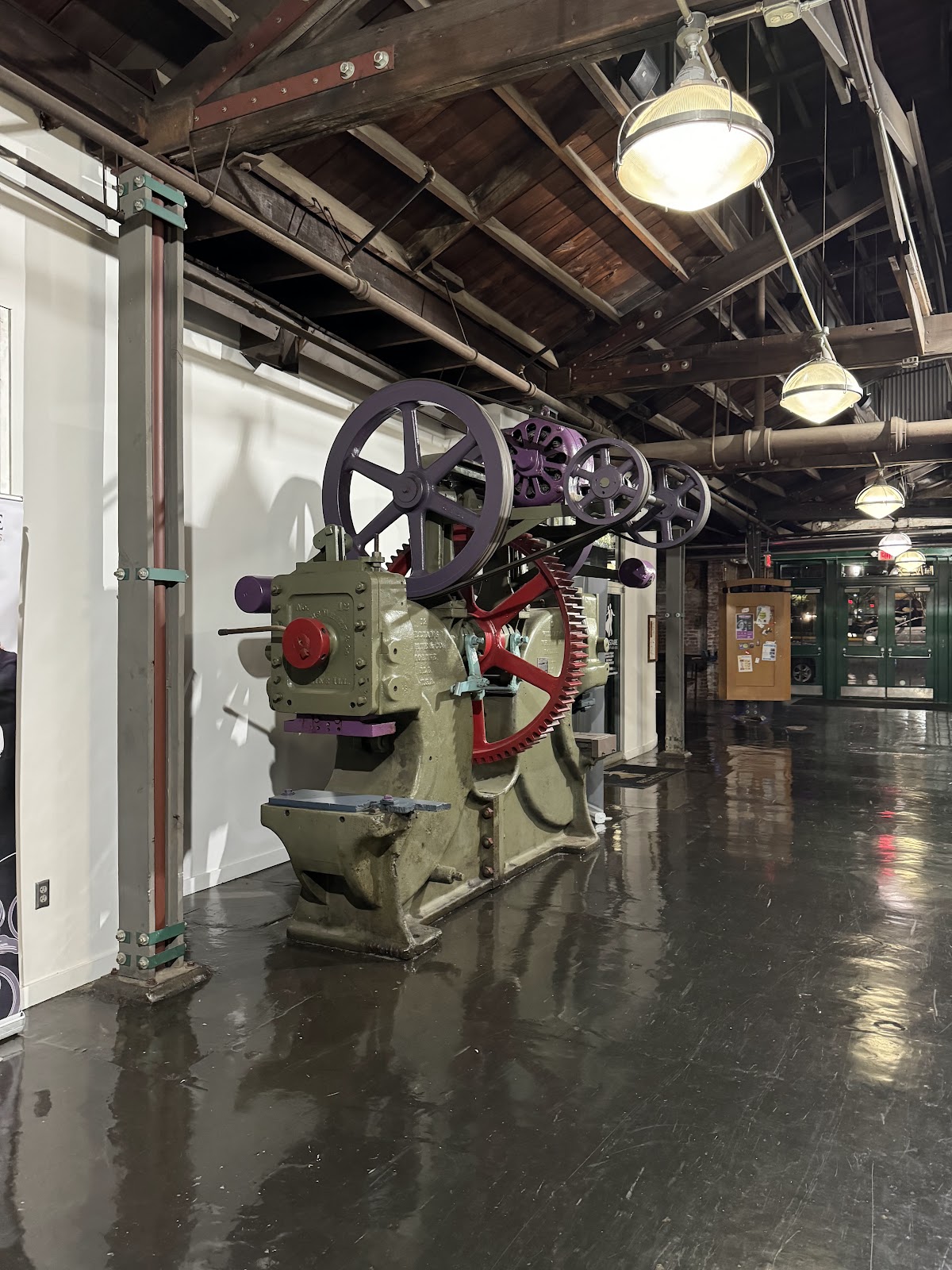
Original machinery or industrial remnants, where they survive, are the details that identify the building and they are worth photographing in their own right on a fast lens at a raised ISO. They also make strong co-subjects, with the usual rule: commit to one deliberately so both it and the couple read, or exclude it with a long lens. Half-in fails.
The openings, and the shape of the day
Large openings are the fourth condition and the best asset a factory conversion has, because they behave as very large soft sources close to the subject. A person standing two metres inside a big opening gets a broad wraparound key with natural fall-off into the room behind, which is better light than anything that can be carried.
The position is two metres inside rather than in the opening. Standing in it puts a subject in open light from a very wide angle, which is bright but flat; two metres in, the opening subtends a smaller angle, the light becomes clearly directional, and the volume behind darkens into a natural background.
Turning the subject gives three setups without moving anything: facing the opening, which is broad and even; side-on, which is the classic portrait position with a shadow side; and back to it, which gives a strong rim and needs fill from the front.
Which elevation the openings are on decides the day. A shaded opening gives soft directional light for the whole day with no hotspots anywhere in it; a sunlit one gives a hard patch and, through steel framing or glazing bars, a grid of hard shadow across anything in it — attractive on brick and unusable on a face.
Because the interior lighting does not change through the day and the openings do, the running order should be built around the openings rather than around the rooms: preparation and portrait work while the shaded opening is giving good light, and everything else afterwards.
After dark the openings invert, as all glazing does: the lit interior becomes brighter than outside, so large windows reflect the room rather than showing the street, and wide frames that worked at four o’clock become cluttered at nine. The crossing is worth catching — roughly twenty minutes around sunset when the outside falls to interior brightness and one exposure holds the lit room, the couple and the district beyond. Take the clock time from sunset and treat it as an appointment.
Mixed sources are the accompanying colour problem, because an arts complex will have several generations of light: daylight through openings, warm decorative fittings, and cooler work or track lighting. Three colour temperatures in one frame cannot be resolved afterwards, so pick the one that should be correct, set a manual white balance to it, and switch off or overpower whatever else lands on skin.
- Rake the brick; facing it flattens it to a brown field
- Angle lights away from steel, or run the highlight along a beam deliberately
- Test bounce once on arrival; a factory roof returns almost nothing
- Two metres inside a large opening, not standing in it
- Build the running order around the shaded opening, not around the rooms
Outside, and Atlanta's weather
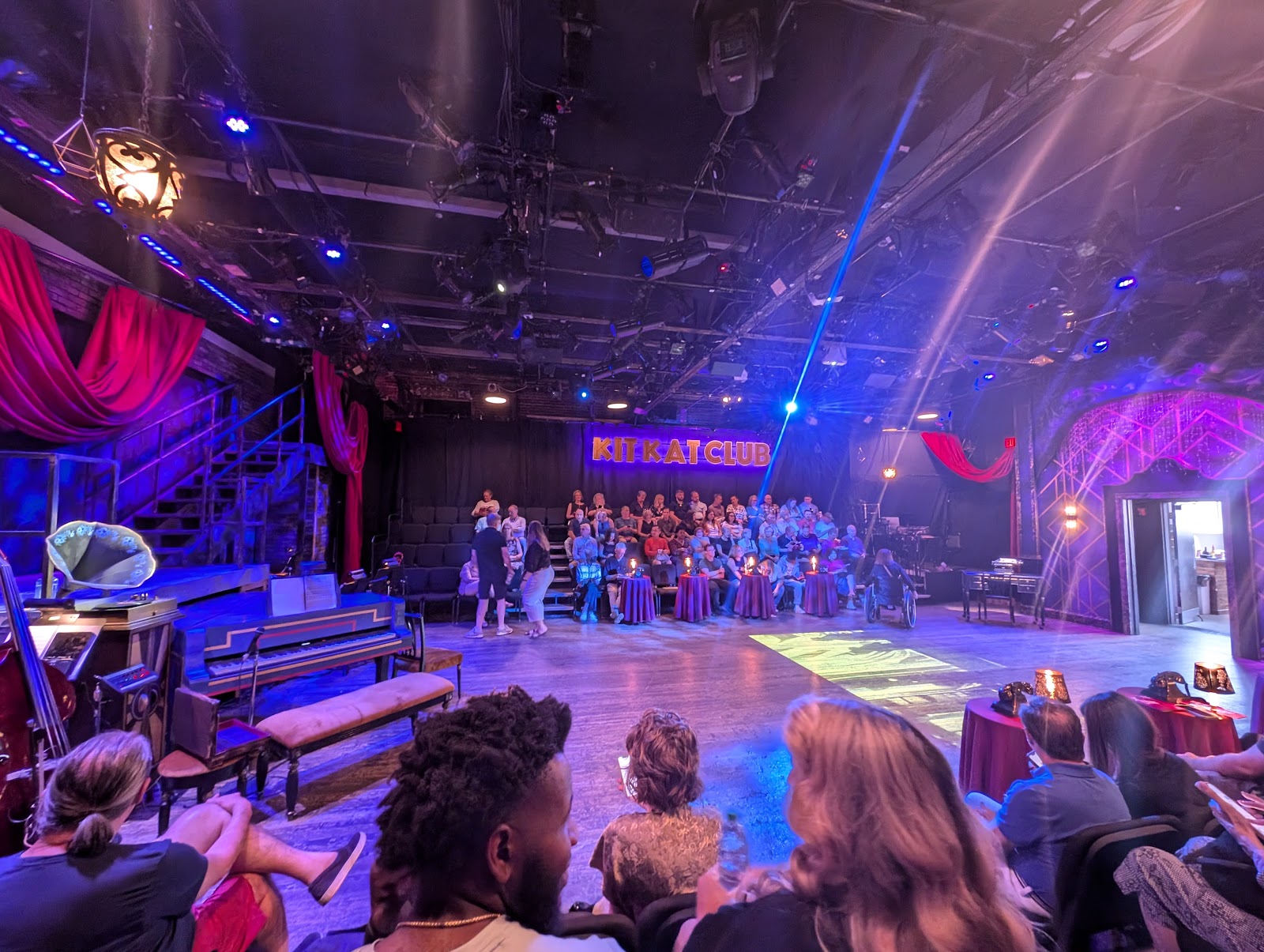
The exterior of an industrial complex is coherent material and worth using deliberately. Brick frontages, loading openings, metalwork and service elevations all photograph well in raking light, and alleys and service sides are the most dependable positions anywhere: walls on both sides give directional light, a contained background with nothing distracting in it, and shelter. Service elevations also hold the most texture, because nobody ever tidied them.
Atlanta’s geography is worth knowing. The towers are clustered rather than continuous, which means an industrial district may have a distant skyline view rather than towers overhead — and distance is what a long lens wants. Compression brings a cluster of towers close behind a couple as a layered mass where a wide lens reduces it to a strip on the horizon.
Atlanta’s tree canopy is abundant even in built-up districts, because this is one of the most heavily wooded major cities in the country. Mature shade is rarely far away and it is the midday resource outdoors, with dapple as its hazard: hot spots several stops above the surrounding shadow, shifting with every breeze, so full shade, open light, or wait for the sun to drop.
Summer heat and humidity make long outdoor blocks genuinely difficult in formal clothes, so trips should be short and purposeful — and a brick industrial district holds heat, which makes the building’s own shadow the reliable midday shade.
Afternoon thunderstorms are close to a daily feature of an Atlanta summer rather than an occasional event, which for a large enclosed building is an advantage: the day continues indoors without a decision. And rain against big industrial openings, with the room warm and lit behind, is one of the better frames a conversion offers — worth recording rather than waiting out, and worth going back out for afterwards, because wet brick under low sun with a dark sky behind is better than anything a dry afternoon gives.
Humidity produces the region’s equipment problem: a camera chilled by a strongly air-conditioned interior fogs comprehensively on reaching the outside air and can take many minutes to clear. Warm the kit before the outdoor block, and plan one excursion rather than three.
Spring brings pine pollen in late March and April, coating surfaces in a visible yellow film and hanging in the air — it lands on brick and metal as much as on cars, shows as a yellow cast on pale surfaces, and affects guests as well as equipment. And Atlanta’s mild winters keep outdoor coverage viable all year, with a clear winter afternoon giving low raking light for hours rather than for ninety minutes, which on brick is the best condition the material ever gets.
More frames from The King Plow Arts Center
The King Plow Arts Center wedding photography: common questions
What does brick need?
Raking light. Light running along a brick wall lifts every mortar line; light pointed at it flattens the wall into a plain brown field.
How is steel different from brick?
It is cool rather than warm and partly specular, so it returns a bright reflection of a source instead of a soft scatter. Angle lights away from it, or run the highlight along a beam deliberately.
Does bounce flash work?
No — the roof is too far away to return anything useful, and the distances are real so a small flash will be lost. Use a pale wall at a sensible distance or go direct with power.
Where exactly should a subject stand in an opening?
Two metres inside. Standing in it gives bright flat light from a very wide angle; two metres in the light becomes clearly directional and the volume behind darkens.
How should the day be ordered?
Around the large openings, because they are the only light that changes. Preparation and portraits while the shaded opening is good, and everything else after.
Is rain a problem at a conversion?
No. Rain against big industrial openings with a warm lit room behind is one of the better frames the type offers, and wet brick under low sun afterwards beats anything a dry afternoon gives.
More Atlanta, GA venue guides
We are writing a photographer’s guide to every venue we would happily shoot in Atlanta, GA. Here are three more, plus the full index:
- Piedmont Park, Atlanta: One Frame and How It Is Made
- The Ritz-Carlton Atlanta: Photographing a Downtown Luxury Hotel
- The St. Regis Atlanta: How the Light Moves
All Atlanta, GA Wedding Venues →
Planning a wedding at The King Plow Arts Center?
A conversion rewards a plan built around its openings. Tell us your date.