 The Audubon Aquarium: Field Notes on Photographing Through Glass
The National WWII Museum, New Orleans: What It Suits and What It Does Not
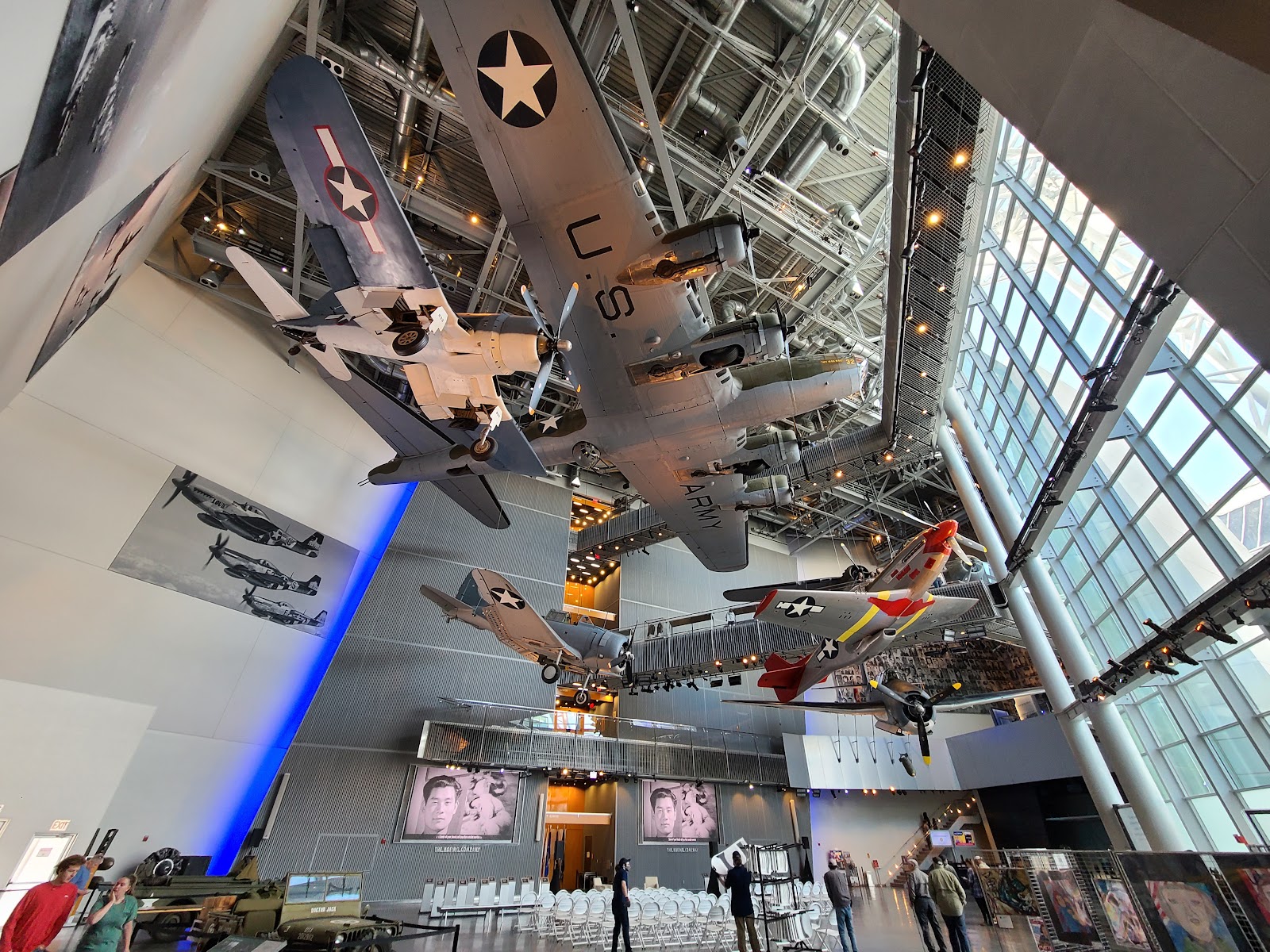
A hangar with aircraft hanging in it is spectacular, and spectacular is not the same as flattering.
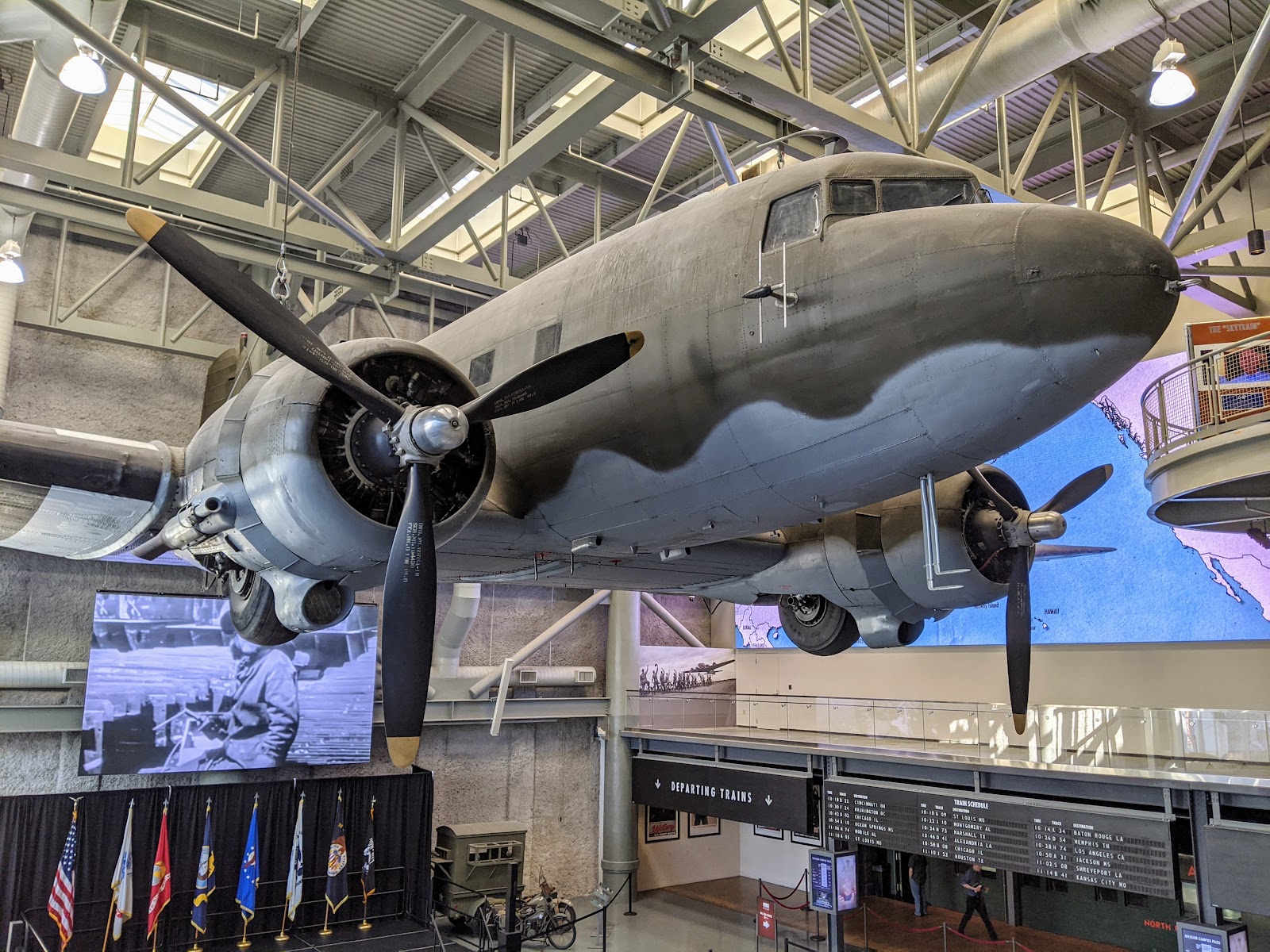
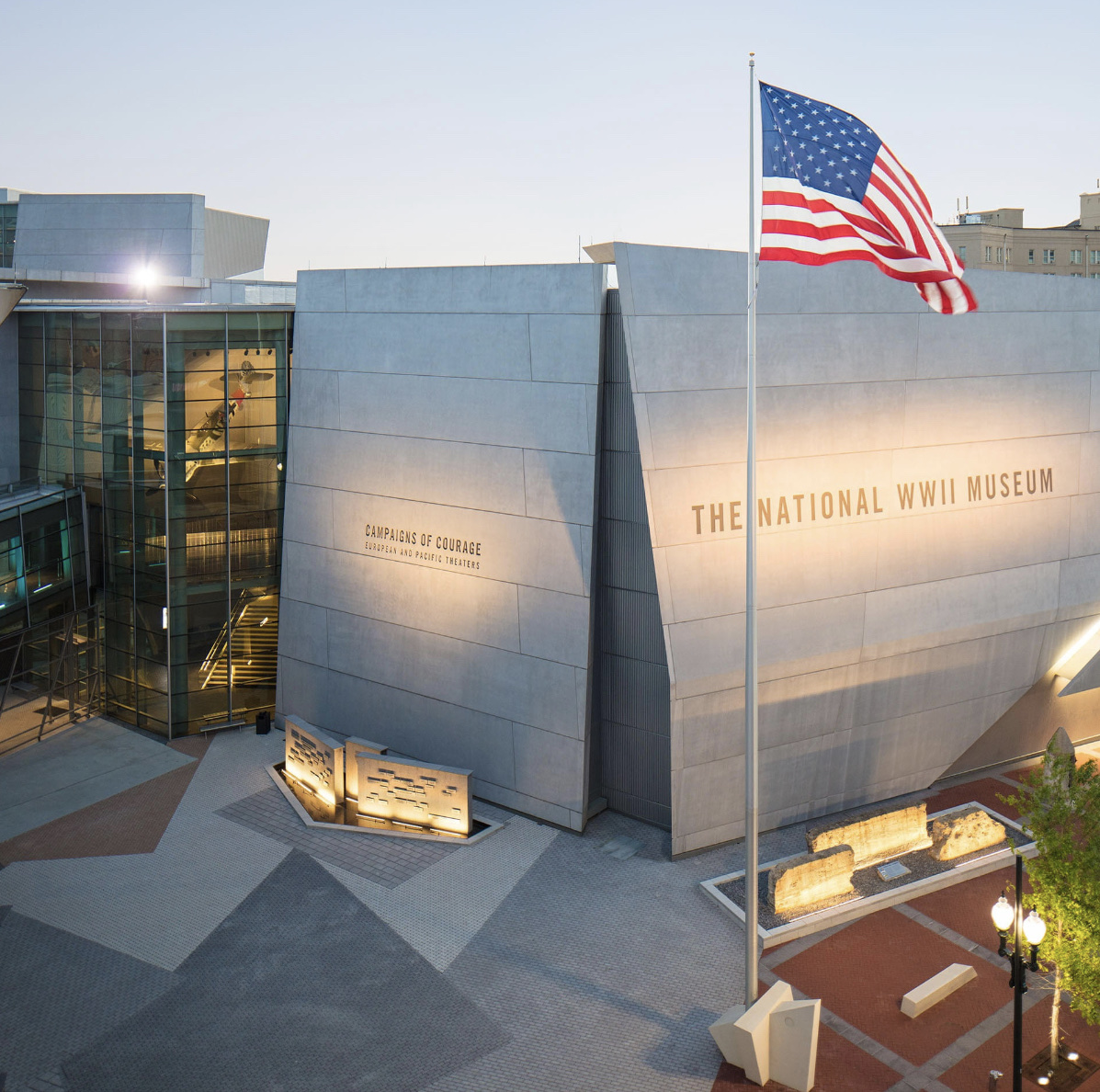
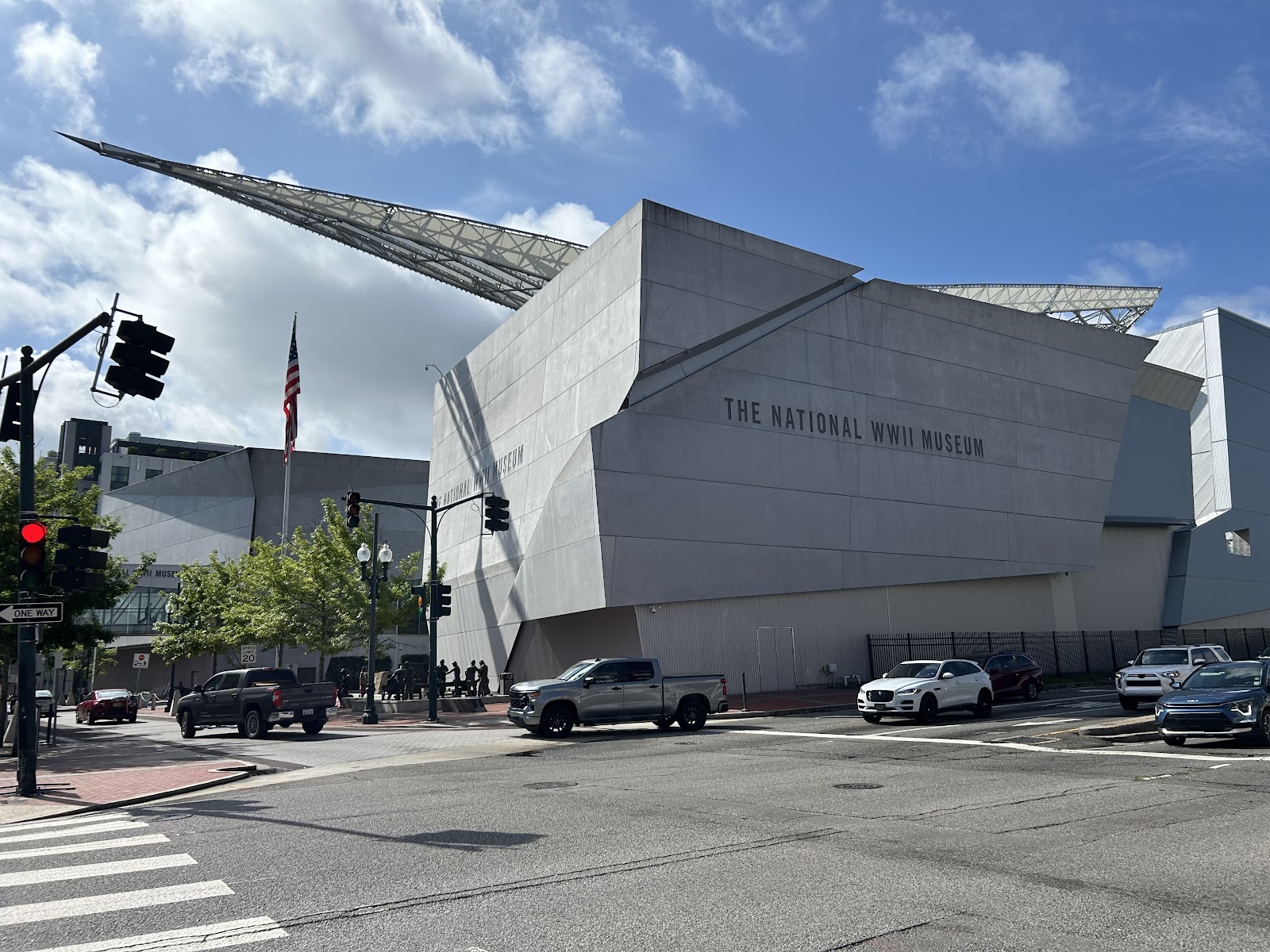
The National WWII Museum in New Orleans offers event spaces within exhibition halls of genuine scale — settings which, as its own material notes, both captivate guests and produce spectacular photographs.
Both halves of that are true, and it is worth separating them. The scale is real: a hangar-type hall with aircraft suspended overhead is one of the most dramatic interiors available for an event anywhere, and a frame made in it does not resemble any other wedding photograph. But the same qualities that make it dramatic — enormous volume, dark surfaces, hard directional display lighting, and objects that dominate any frame they appear in — are the opposite of what makes a portrait flattering.
So this is written as suits and does not suit. We have not photographed a wedding at the museum; hangar-scale museums behave consistently. Which halls a wedding includes, whether display lighting can be adjusted, and what may be approached or touched are the questions for their team — the middle one changes the evening most.
The National WWII Museum at a glance
| Where | New Orleans, Louisiana |
| Character | A large museum with hangar-scale halls, suspended aircraft and event space |
| Suits | Scale, drama, large counts, weatherproofing, a gallery unlike others |
| Does not suit | Soft light, neutral backgrounds, intimacy, small groups |
| Ask first | Halls included, whether display lighting is adjustable, access rules |
The two conditions: enormous volume and hard display light
Volume is the first condition and it removes several tools at once. A hall tall enough to suspend aircraft in has a ceiling far beyond the reach of any bounce, which means the reflex indoor move is unavailable; the surfaces are usually dark, so nothing else returns light either; and the distances are real, so a small flash intended for a hotel ballroom will simply be lost. Power and modifier choices here need to assume distance rather than convenience.
The compensation is steep fall-off, which is genuinely useful. In a large dark hall, a subject three metres in front of anything else sits against natural darkness with no equipment at all — the free separation that every pale modern venue refuses to provide.
Display lighting is the second condition and it is designed to make objects legible and dramatic, not faces. It is typically hard, narrow-beam, aimed from above or from a distance, and often strongly coloured for effect. That produces the classic overhead problem in an intensified form: dark eye sockets, a hard line from the nose, and a colour cast that white balance can only partly address because the sources are narrow-spectrum.
The answer is the same as in any museum but with more power behind it. One source, off the camera axis at face height, modified so it does not announce itself, gelled to sit near the hall’s colour, at about a stop under a correct reading for the room. Expose for the hall first so the space still reads as the enormous dark volume it is, then add just enough for a catchlight and a shoulder edge. A hangar lit to an even brightness is a shed.
Objects are the third condition and they behave as content rather than background. A large aircraft, vehicle or artefact in a frame will dominate it, because scale and mechanical detail take the eye the way a face does. That is either the point — in which case commit, place the couple small and let the object be a co-subject — or it is competition, in which case go long and tight and exclude it. Half-in fails.
And there is a subject-matter consideration worth naming, as at any museum of conflict. Some material concerns death and loss, and a celebration frame in front of it serves nobody. The judgement is straightforward: work in the architectural and hardware spaces, ask the museum’s staff what is appropriate where, and take their answer as settled. One email before the day removes the question from the day.
Who it suits
Where a couple actively wants scale and drama, there is very little competition for this venue, and that is worth being clear about.
These briefs are well served here:
- Couples who want frames that look like nothing else — scale is the product
- Larger guest counts, which hangar-scale space absorbs without strain
- Anyone who wants the weather to be entirely irrelevant to the day
- Couples comfortable with dramatic, dark, high-contrast imagery
- Guests with an interest in the collection, for whom the setting is the point
Who should look elsewhere
The opposite list is not a criticism of the museum. It is built to present very large objects dramatically to a public, and every constraint here follows from doing that well.
Several reasonable briefs run against those constraints:
- Couples wanting light, airy, soft imagery, which the halls cannot produce
- Anyone needing a neutral background, since the objects dominate every frame
- Small intimate weddings, which read as sparse in a hangar-scale volume
- Briefs where the venue must not carry historical or emotional weight
- Photographers working with one small flash, which the distances defeat
Working it, and New Orleans weather
The practical approach is to divide the building into a scale set and a people set and shoot them differently. The scale set is wide, level and deliberate — the hall, the suspended aircraft, the structure overhead, with the couple small and the geometry dominant. The people set is long and tight, lit with one source, made anywhere with a clean dark tone behind, and indifferent to which hall it happened in.
Mixing the intentions produces neither, and the wide frames are the ones worth the most preparation: symmetrical, levelled with the electronic level, and taken from a position that shows the volume rather than a corner of it.
The most valuable single question is whether display lighting can be adjusted in the spaces a wedding uses. Where it can, a hall with most lighting down and two or three objects still lit is dramatically better than a hall lit throughout, because it converts many competing sources into a few deliberate ones. That is a request to the events team rather than an equipment problem.
Modern museum public architecture is the counterweight and it is where the flattering frames live. Lobbies, atria and circulation in a building of this kind hold nothing light-sensitive and are usually generously glazed, which gives a very large soft source close to the subject. Find which elevation the glazing is on in the first five minutes; the shaded side gives soft directional light all day, and a sunlit side gives hard patches and a grid of structural shadow that is unusable on a face.
Outdoors, New Orleans supplies what a modern museum interior cannot. The French Quarter’s cast-iron galleries create continuous covered shade along whole streets — an architectural softbox at street scale, soft and directional, available all day and working in rain, which is the most useful architectural fact in the city. Pastel stucco bounces its own colour onto nearby skin, so either use it deliberately with a custom white balance or step two metres away.
New Orleans weather is the most demanding in this series and it is a strong argument for a large museum. Heat and humidity make long outdoor blocks genuinely difficult in formal clothes; afternoon thunderstorms are near-daily in a Gulf Coast summer rather than occasional — and a building of this scale means the day continues indoors with no decision needed.
Humidity produces the region’s specific equipment problem in its most severe form: a camera chilled by a strongly air-conditioned museum fogs comprehensively and immediately outside and can take a long time to clear. Warm the kit twenty or thirty minutes before the outdoor block and plan one excursion rather than several, because each in-and-out cycle costs frames.
More frames from The National WWII Museum
The National WWII Museum wedding photography: common questions
What does hangar-scale volume remove?
Bounce, because the ceiling is unreachable and the surfaces are dark; and the assumption that a small flash will do, because the distances are real. Power and modifiers have to assume distance.
What does it give back?
Steep fall-off, which is free separation. A subject three metres in front of anything else sits against natural darkness with no equipment at all.
Why does display lighting fail a face?
It is hard, narrow-beam, aimed from above or from distance and often strongly coloured — which gives dark eye sockets, a hard line from the nose, and a cast that white balance can only partly address.
How do you handle a large aircraft or vehicle in frame?
Commit or exclude. Place the couple small and let the object be a co-subject, or go long and tight and leave it out. Half-in fails, because scale and mechanical detail take the eye like a face does.
What is the most valuable request?
Whether display lighting can be adjusted in the spaces you use. Most lighting down with two or three objects still lit is dramatically better than a hall lit throughout.
What about the subject matter?
Some material concerns death and loss, and a celebration frame in front of it serves nobody. Ask the museum’s staff what is appropriate where and treat the answer as settled.
More Louisiana venue guides
We are writing a photographer’s guide to every venue we would happily shoot in Louisiana. Here are three more, plus the full index:
- The New Orleans Museum of Art: How the Light Moves
- The Ogden Museum, New Orleans: A Walk Up Through the Building
- The Omni Royal Orleans, New Orleans: The One Decision That Governs Everything
Planning a wedding at The National WWII Museum?
Ask whether the display lighting can come down. Tell us your date and we will ask.