 The Hilton Garden Inn Fargo: Field Notes on a Standardised Hotel
Lindenwood Park: Four Ways Out of the No-Building Problem
A park with no building has no fallback, and on the northern plains the weather makes that a real problem.
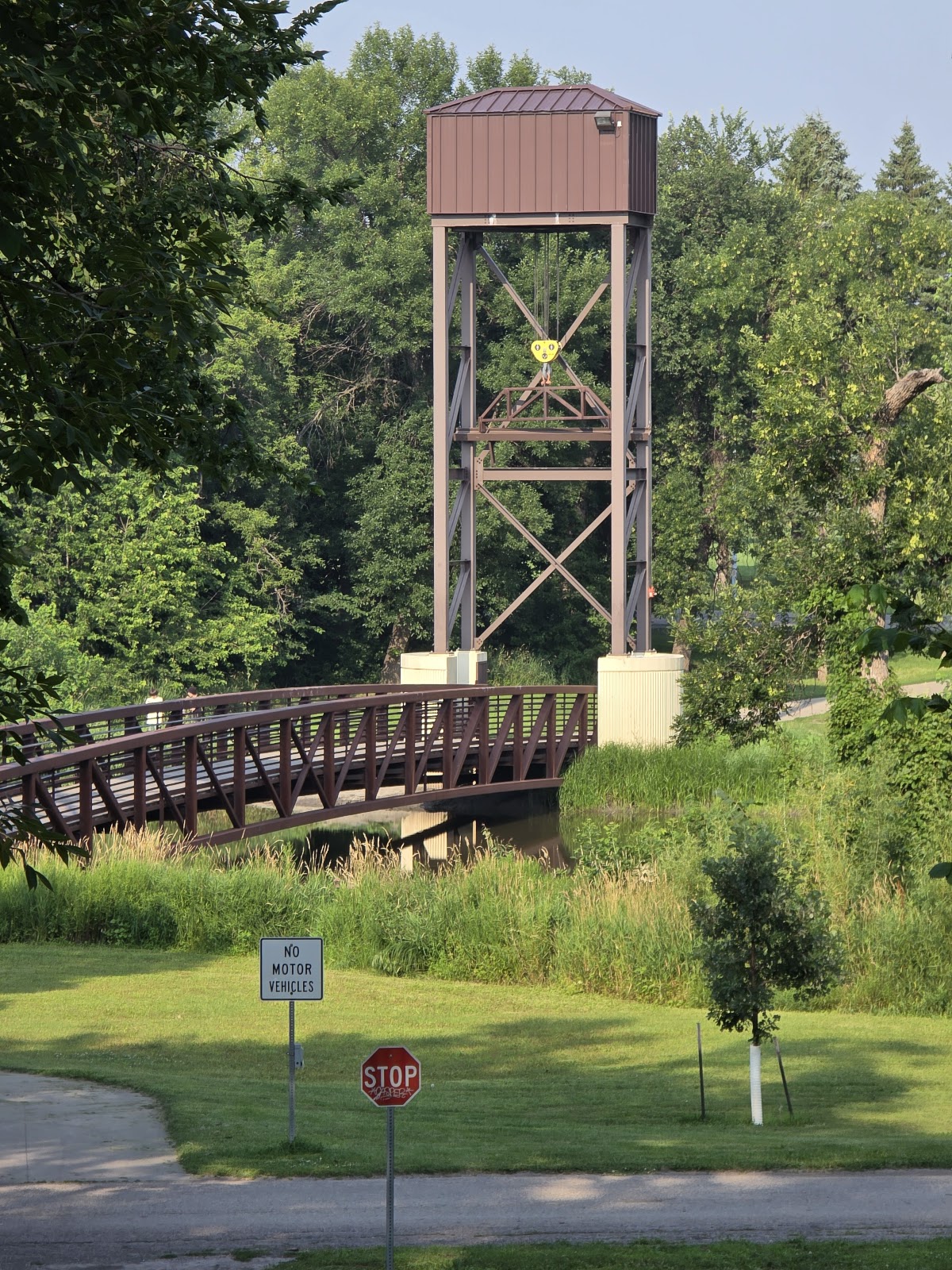
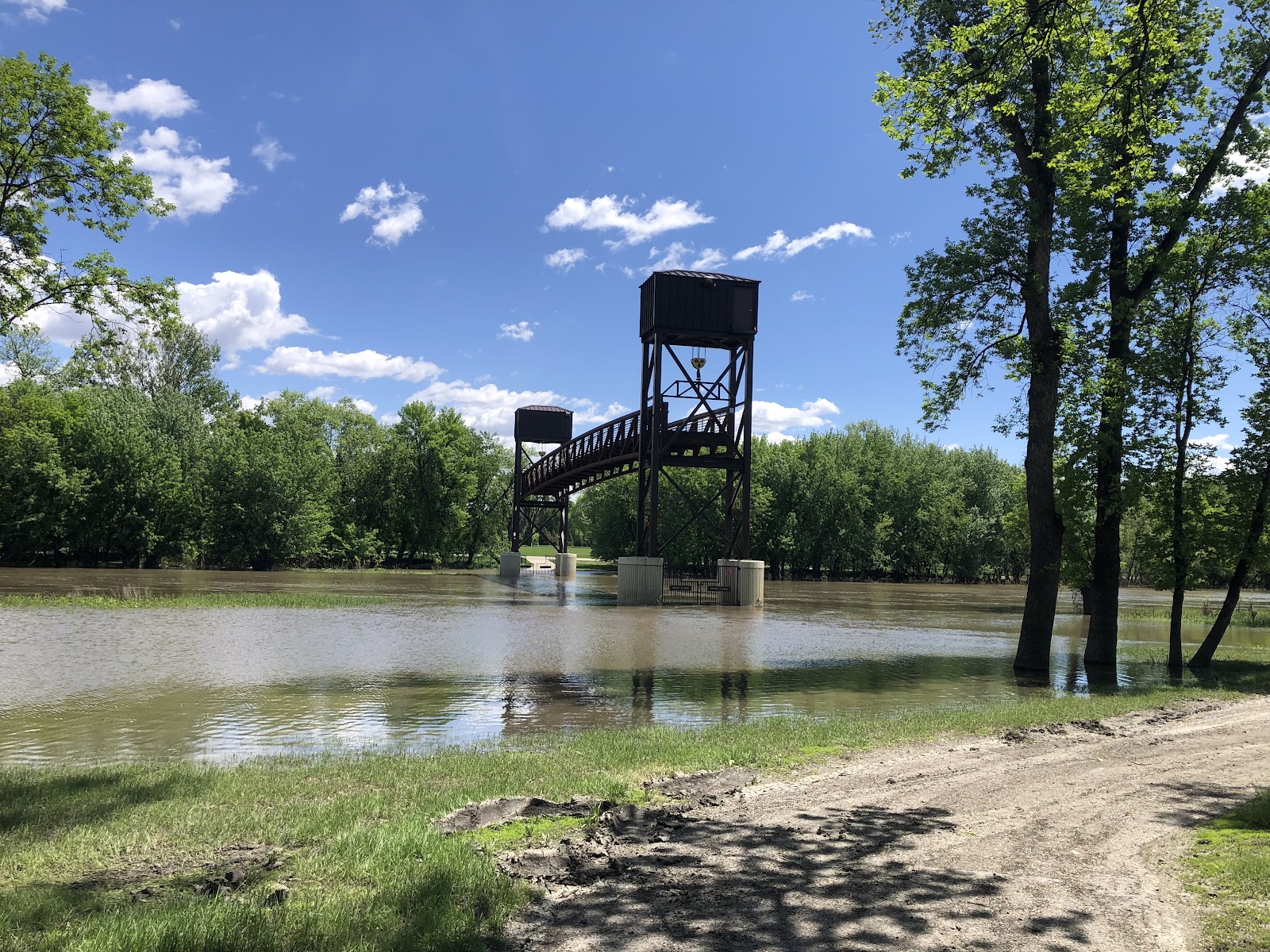
Lindenwood Park runs along the Red River in Fargo, North Dakota, a large park with mature trees, open lawns and river frontage.
The park’s assets are genuine: closed canopy in places, which is scarce on the plains; open ground for groups; and water. What it does not have is a building, and on the northern plains that absence carries more weight than it would further south. Summer brings fast-building severe convective storms. Wind is a constant rather than an occasional event. And for a substantial part of the year the cold makes standing outdoors in formal clothes a matter of minutes.
There are four ways to work with that, and all of them are about planning rather than technique. We have not photographed a wedding at Lindenwood; riverside parks and plains weather behave the same wherever they meet. What shelters exist, whether an area can be reserved and where the nearest indoor space is are questions for the parks authority — and the last one is the most useful.
Lindenwood Park at a glance
| Where | Along the Red River, Fargo, North Dakota |
| Character | A large riverside park with mature trees, lawns and water |
| The absence | No building — no shelter, no power, no preparation room |
| Why it matters here | Severe summer storms, constant wind, and a short season |
| Ask first | Where the nearest indoor space is, and how far |
Why no building matters more on the plains
Three conditions compound each other. Severe convective storms build quickly over the northern plains in summer — not merely rain but genuine weather, with wind and lightning, which ends an outdoor event immediately and non-negotiably. Wind is present most days regardless, strong enough to make a veil unmanageable and an unweighted light stand a hazard. And the workable outdoor season is short, bounded by cold at both ends.
A park has no answer to any of those. There is no roof, no walls, no power and nowhere for forty guests in formal clothes to go. That is not an argument against the venue, but it is an argument for treating the shelter question as the first question rather than an afterthought — and for being honest with a couple that a park wedding here carries a risk a barn or a hotel does not.
For the photographer the equipment implications are straightforward: rain protection that works in a downpour rather than a drizzle, everything weighted or hand-held because there is nothing to shelter a stand behind, and battery capacity planned for cold if the date is at the edges of the season.
The four approaches below are all about building a day that does not depend on cover existing.
Ways one and two: use the canopy, and use the edges
The first approach uses what a mature park has that plains venues generally do not: closed canopy. Under continuous canopy the light is even, soft and flattering, and it is available at the hour when every open venue in the region is unworkable — so a mature park inverts the usual schedule and makes the middle of the day the usable part.
Canopy also gives partial shelter from a passing shower, which is not a substitute for a roof but is better than open lawn. And it cuts the wind noticeably, which matters more here than the rain does.
The caveat is continuity: where the canopy breaks, sun punches through in patches several stops brighter than their surroundings and moving with any breeze, and dappled light cannot be corrected. Look for the dense areas rather than the pretty ones — the most attractive-looking spot in a park is usually the one with sun flecking through it.
The second approach is the canopy edge, which is the single most useful position on any wooded site. At the margin of a stand, light arrives sideways from the open sky rather than filtering down through leaves, so it is directional, much brighter and far less green. Standing a couple just inside that edge facing out gives a large soft key with a dark surround — the outdoor equivalent of a porch, available all day, and it costs nothing.
- Settle the shelter question first; a park has no answer to weather
- Use continuous canopy for midday, and treat dapple as a no-go
- Work the canopy edge facing out — the porch equivalent
- Move the ceremony late; timing is the main tool a park offers
- River reflections need calm air, so early or not at all
Ways three and four: move the time, and use the water
The third approach is free and the most effective: move the time. A ceremony ninety minutes before sunset sits in warm low raking light with faces lit from the side and nothing to correct — and on the plains that window is genuinely long, because nothing intercepts the sun near the horizon. In a venue with no shelter, timing is not a preference but the main tool available, and it is a conversation to have before invitations go out.
Late also reduces two risks at once. Convective storms are most likely in the afternoon heat, so an evening ceremony is statistically safer as well as better lit. And the wind usually drops as the ground cools, which makes a veil manageable and a reflection possible.
The fourth approach uses the river, with the conditions it requires. Still water mirrors the canopy and the sky and bounces a soft fill upward into faces, filling exactly the shadows a low sun carves. But it needs calm air, which on the plains means early morning or the last hour, and it needs a low sun, because high sun turns the surface into clipping specular highlights. Shoot low so the reflection fills the lower frame.
The Red River is a working northern river with a variable level and muddy banks, so the state of the bank is worth checking rather than assuming — high water gives a clean waterline and reflections, low water gives exposed mud, and they are different photographs.
The seasonal summary is worth stating plainly. Late September is the strongest stretch of the year here: the mature trees turn, the light is long and low, the air is cool rather than cold and the wind is usually calmer than in spring. January is not an outdoor venue at all. And anything in between is a trade between planting, temperature and storm risk that is better decided deliberately than discovered.
More frames from Lindenwood Park
Lindenwood Park wedding photography: common questions
Why does the absence of a building matter here?
Because three plains conditions compound: severe convective storms that build fast in summer, wind on most days strong enough to make a veil unmanageable, and a short season bounded by cold. A park has no answer to any of them.
What is the first question to ask?
Where the nearest indoor space is and how far. A shower that passes in fifteen minutes is trivial with cover thirty seconds away and serious if the nearest roof is a five-minute walk with guests in formal clothes.
What does mature canopy give?
Even soft light at the hour every open plains venue is unworkable, which inverts the usual schedule and makes midday the usable part. It also cuts the wind noticeably and gives partial cover from a passing shower.
Where is the best light?
The canopy edge, facing out. Light arrives sideways from open sky rather than filtering through leaves, so it is directional, brighter and far less green — the outdoor equivalent of a porch, and it works all day.
What is the most effective single fix?
Moving the ceremony late. Ninety minutes before sunset gives warm raking light with nothing to correct, and it reduces two risks at once — afternoon heat drives the storms, and the wind usually drops as the ground cools.
Which date is strongest?
Late September. The mature trees turn, the light is long and low, the air is cool rather than cold, and the wind is usually calmer than in spring. January is not an outdoor venue at all.
More Fargo, ND venue guides
We are writing a photographer’s guide to every venue we would happily shoot in Fargo, ND. Here are three more, plus the full index:
- The Plains Art Museum: A Warehouse Converted Into Galleries
- The Radisson Blu Fargo: How the High Window Frame Is Made
- Rheault Farm: Field Notes on a Preserved Prairie Farmstead
All Fargo, ND Wedding Venues →
Planning a wedding at Lindenwood Park?
No building makes timing the main tool. Tell us your date and we will count back from sunset and find the nearest roof.