 Indianapolis Zoo: Reading a Day From Open Grounds to Underwater Glass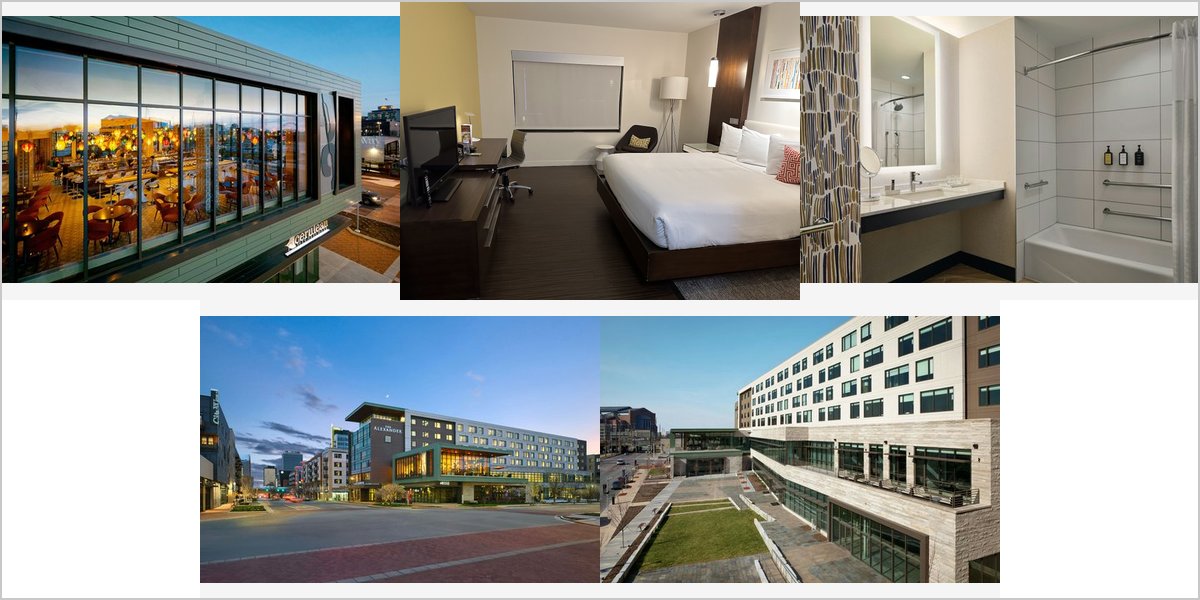
The Alexander: Photographing a Hotel That Is Also a Gallery
Art on every wall gives a frame something to say. It also gives it something to argue with.
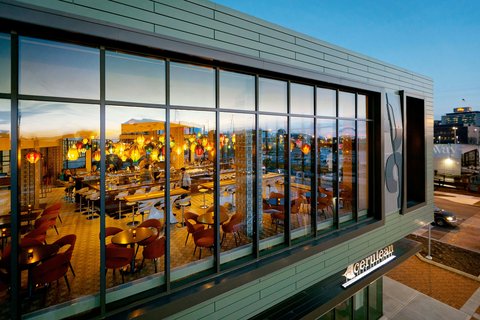
The Alexander is a contemporary hotel in downtown Indianapolis, in the area east of the centre, distinguished by commissioned artworks installed through its lobby, public spaces and event rooms rather than the generic decoration a hotel of its class would normally carry.
For a photographer that is a genuine difference and it cuts both ways. A modern hotel usually has the opposite problem: restrained, pale, evenly lit interiors where nothing competes with the subject and nothing supplies any interest either, so the photographer has to manufacture all of it with light and gesture. A hotel hung with substantial contemporary art has the reverse condition — the walls are doing something, and what they are doing is assertive.
So this is an honest account of who that suits and who it works against. We have not photographed a wedding at The Alexander; contemporary interiors hung with large artworks behave the same wherever they occur. Which rooms are allocated, and whether specific works may appear in published photographs, are questions for their events team — and the second is worth asking, because commissioned art carries its own permissions.
The Alexander at a glance
| Where | Downtown Indianapolis, Indiana |
| Character | Contemporary hotel with commissioned art through its public spaces |
| The difference | The walls are assertive rather than neutral |
| The catch | Large artworks compete with faces and carry their own permissions |
| The gift | Backgrounds with real content, in a category that usually has none |
What large artworks do to a frame
A substantial contemporary artwork is visually loud by design: strong colour, strong shapes, and often scale. Put a couple in front of one at medium distance and the eye goes to the work first — it is bigger, more complex and more saturated than two people in formal clothes, and it wins. The photograph ends up being of the artwork with some people in it.
The decision, as with any assertive background, has to be made per frame. Subordinate it: a long lens at a wide aperture from further back, so the work becomes a soft field of colour and the couple are the only sharp thing. Or commit to it: go wider, place the couple deliberately within the composition rather than centrally in front of it, and let the work be a co-subject. The failure is the ambiguous middle where both are sharp and similar in weight.
Colour is the technical complication. Large saturated works throw their colour into the room and onto faces — a red canvas two metres from a subject warms them noticeably, a blue one cools them. It is the same phenomenon as bounce off brick or foliage and it needs the same answer: let your own light own the faces, so skin has a dependable base, and let the work’s colour read as deliberate ambient rather than as a cast you failed to correct.
There is also a permissions question that does not arise in a plain hotel. Commissioned artworks have makers, and reproducing a work prominently in published photographs can engage the artist’s rights as well as the hotel’s preferences. It costs one email to ask which works may appear in a portfolio and which should be background only, and it is the kind of thing that is much easier to ask before than after.
Who this venue suits
The register fits a particular set of intentions and fits them well:
- Couples who want a contemporary, design-led, urban gallery rather than a period one
- Anyone whose taste runs to bold colour and graphic composition instead of soft neutrals
- Weddings where the couple actively like the art and want it visible in the pictures
- Briefs needing a weatherproof downtown venue with real interiors and reliable power
- Photographers comfortable working with strong backgrounds rather than avoiding them
Who should look elsewhere
And it fights other briefs from the first frame:
- Couples wanting a soft, pale, neutral aesthetic, which the art actively disrupts
- Anyone drawn to period architecture, plasterwork or historic texture — none of it is here
- Briefs where the couple must be the only thing of interest in every frame
- Weddings needing extensive outdoor grounds, which a downtown hotel does not have
- Anyone unwilling to bring light, since letting the art light the faces gives unreliable colour
Guest rooms, the evening and the city outside
The guest floors are where the reliable light is, as in any hotel, and the rule is the same: ask for the largest window on the shaded side of the building for the preparation block. A large window with no direct sun is a big soft directional key with a natural fall-off, which is better light than anywhere in the public spaces and it is free. Then switch off the overheads and move the lamps out — mixed tungsten and daylight in one room is the commonest cause of inconsistent skin tone across a preparation gallery.
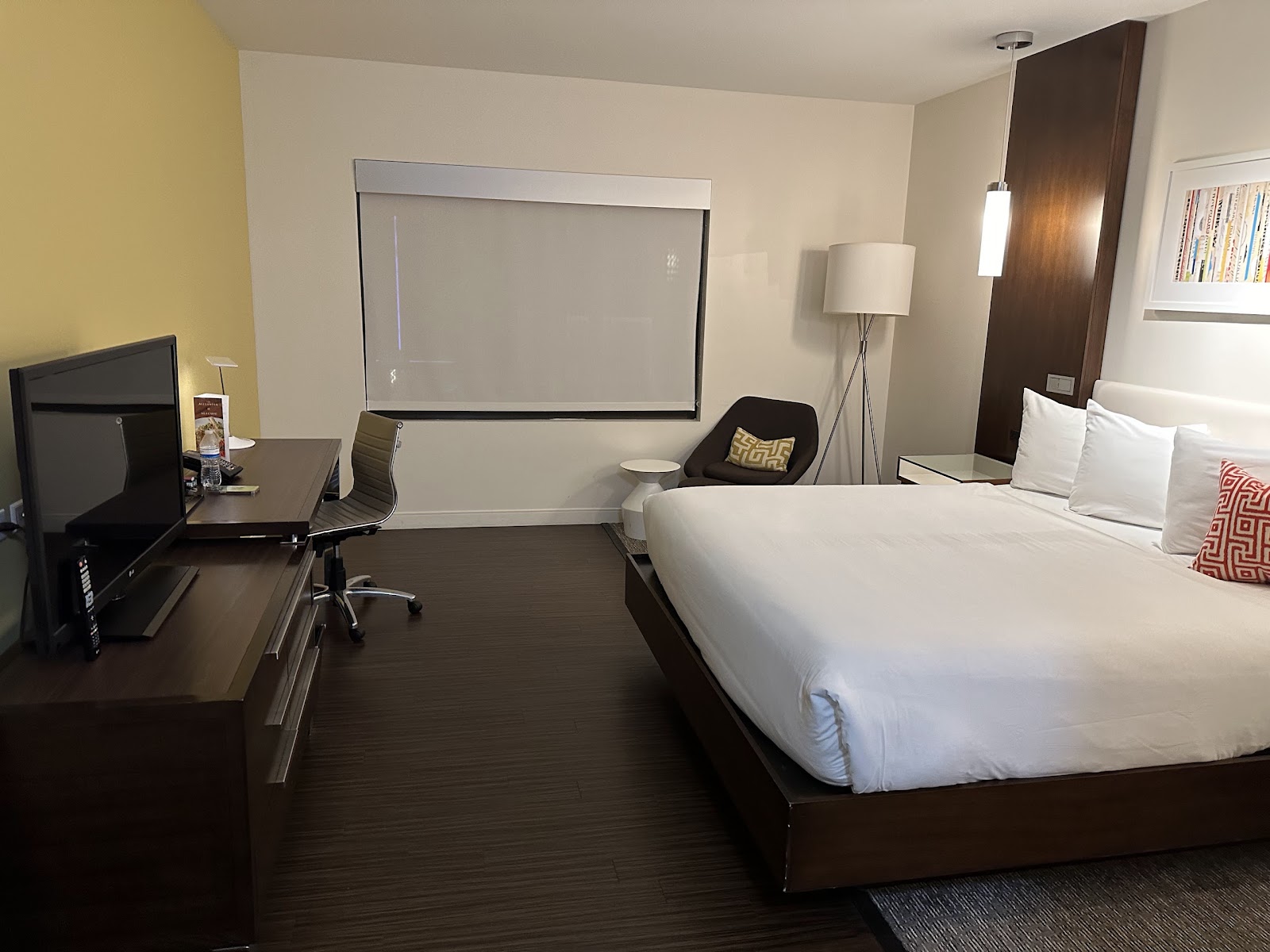
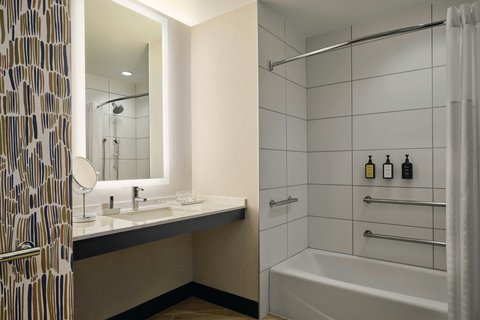
Contemporary guest rooms also give the quiet frames that a boldly decorated public space cannot. Restrained walls, clean lines and a single soft source suit a dress, the rings and the details, and those images sit as a deliberate contrast within a gallery whose public frames are loud. Loud and quiet in the same set is range; loud throughout is fatigue.
Evening in the public rooms is a mixed-source problem with an extra element. Alongside the usual warm decorative fixtures and cooler downlights, gallery lighting aimed at artworks is directional and often a different temperature again, and it is aimed at walls rather than at people. The reliable answer is unchanged: bring a key, gel it to sit in the room, let it own the faces, and let every house source become atmosphere.
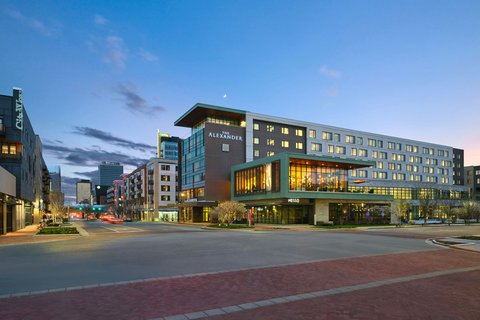
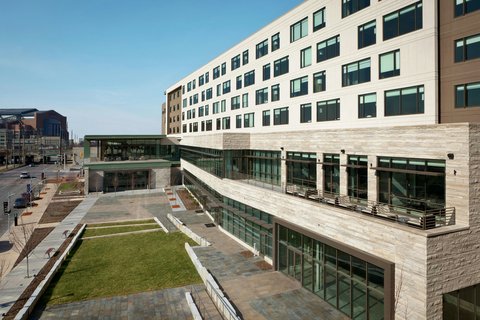
Outside, a downtown Indianapolis address puts Monument Circle, the canal walk, the war memorial plaza and the low-rise streets east of the centre within a short walk, which gives architecture, water and open sky with no transfer. Because much of downtown here is genuinely low-rise, low evening sun reaches street level and runs along the streets, which is a frame a city of taller towers cannot produce. The streets are public and busiest on weekdays rather than weekends, so a Saturday morning is one of the quieter windows available.
What works in your favour
- Backgrounds with real content in a category that usually has none
- Bold contemporary register that is genuinely distinct from period venues
- Guest-floor windows give the best and simplest light in the building
- Restrained guest rooms provide the quiet frames a loud set needs
- Low-rise downtown, so evening sun reaches street level
What to plan around
- Large artworks compete with faces and win at medium distance
- Saturated works throw colour onto skin from across a room
- Commissioned art may carry publication restrictions
- No period architecture or texture anywhere in the building
- No outdoor grounds; every daylight frame is a walk away
More frames from The Alexander
The Alexander wedding photography: common questions
What is the problem with art on the walls?
It is assertive by design — bigger, more saturated and more complex than two people in formal clothes, so at medium distance it wins and the photograph becomes one of the artwork. The decision has to be made per frame: subordinate it or commit to it.
How do you subordinate a large artwork?
A long lens at a wide aperture from further back, so the work becomes a soft field of colour and the couple are the only sharp thing in the frame. Going wider and placing them deliberately within the composition is the other valid choice.
Does the art affect skin tone?
Yes. A large saturated work two metres away throws its colour onto a subject — red warms, blue cools — exactly as bounce off brick or foliage does. Let your own light own the faces so skin has a dependable base, and the work’s colour reads as deliberate.
Is there a permissions issue?
Potentially. Commissioned artworks have makers, and reproducing one prominently in published photographs can engage the artist’s rights as well as the hotel’s preferences. One email beforehand asking which works may appear in a portfolio settles it.
Where is the best light?
A guest-floor window on the shaded side — a big soft directional key with natural fall-off, better than anywhere in the public spaces and free. Then switch off the overheads and move the lamps out to keep skin tone consistent.
What balances a gallery shot here?
The quiet frames. Restrained guest rooms suit the dress, rings and details, and they sit as deliberate contrast against loud public spaces. Loud and quiet together is range; loud throughout is fatigue.
More Indianapolis, IN venue guides
We are writing a photographer’s guide to every venue we would happily shoot in Indianapolis, IN. Here are three more, plus the full index:
- White River Gardens: A Conservatory and a Garden, Used Properly
- The Columbia Club: Field Notes on Photographing a Private Club
- The Eiteljorg Museum: One Decision About Which Way You Face
All Indianapolis, IN Wedding Venues →
Planning a wedding at The Alexander?
Bold walls need a decision in every frame. Tell us your date and which rooms you have, and we will make them in advance.