 The Alexander: Photographing a Hotel That Is Also a Gallery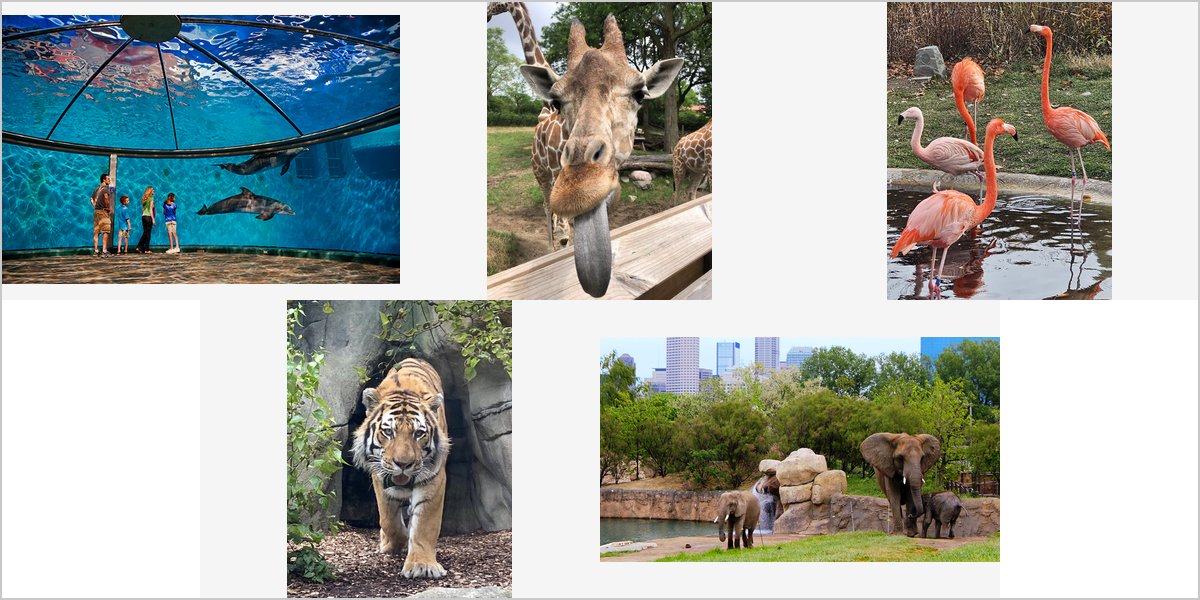
Indianapolis Zoo: Reading a Day From Open Grounds to Underwater Glass
Open lawns in the afternoon and a blue underwater gallery after dark are opposite problems at the same address.
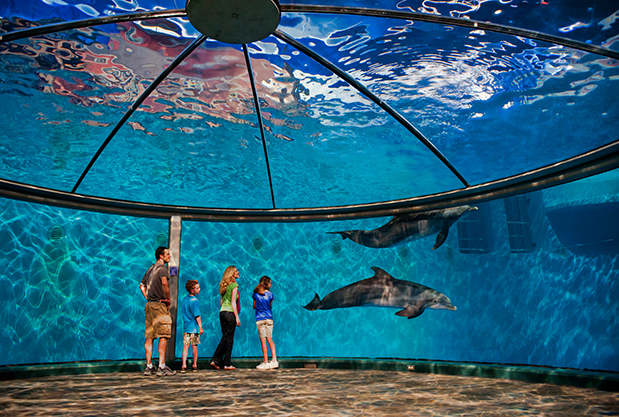
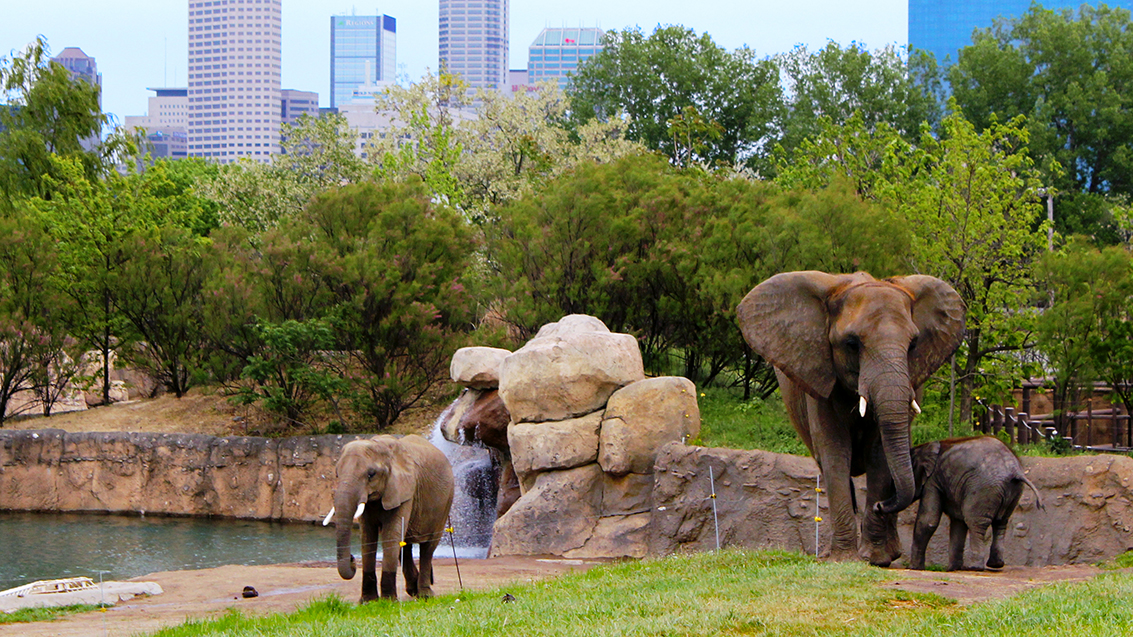
The Indianapolis Zoo occupies part of White River State Park on the western edge of downtown Indianapolis, with open grounds, planted areas, animal habitats and an underwater viewing gallery where the water is seen from below through large glazed panels.
Those last two are photographically opposite and the day is best understood as a movement between them. The grounds are open, bright, exposed and governed entirely by the sun’s position. The underwater gallery is dark, strongly blue, reflective and governed entirely by what you bring. One is a scheduling problem, the other is a lighting problem, and a timeline that treats them as interchangeable gets the worst of each.
So this follows the light through the day. We have not photographed a wedding at the Indianapolis Zoo; open park grounds and underwater viewing galleries behave the same wherever they occur. Which areas host events, and whether the grounds are private during them, are questions for their events team — and privacy shapes the day more than anything else here.
The Indianapolis Zoo at a glance
| Where | White River State Park, downtown Indianapolis, Indiana |
| Character | Zoo with open grounds, planted areas and an underwater viewing gallery |
| Open grounds | Bright and exposed, with little continuous shade |
| Underwater gallery | Dark, strongly blue, and every panel reflects |
| Ask first | Whether the grounds are private during the event |
Morning and midday: open grounds, and the shade problem
Zoo grounds are generally open rather than wooded, because habitats need light and visitors need sight lines. That makes the site bright and the light simple, and it makes shade scarce — which is fine early and a real problem in the middle of the day.
Early morning is the best outdoor light on the site for the usual reasons: low sun arrives at a raking angle, so faces are lit from the side rather than from above, and any water on the grounds is still enough to reflect and to bounce a soft fill upward. It is also the quietest hour by a wide margin, which at a public attraction matters as much as the light does.
By the middle of the day the problem is the familiar one: overhead sun, squinting, shadowed eye sockets, and a bright sky that will clip if you expose for skin. With little continuous canopy, the reliable shade comes from buildings and structures rather than trees — and a large solid building throws a hard-edged, even, dependable shadow that is better than anything a broken canopy gives. Two metres inside that shade line, facing out towards the bright grounds, gives a large soft key and a dark surround.
Where trees do exist, they are usually scattered rather than closed, which means dappled light — patches several stops apart, shifting with any breeze, and impossible to correct. It has to be avoided by position: full open shade, full sun, or dense enough canopy that the patches merge. Scattered trees are the worst case and a building’s shadow is the better bet.
The enclosure problem, and the one tool that solves it
Every zoo carries the same photographic liability: mesh, bars, safety railings, glass panels, signage and service infrastructure, all of which read badly and none of which can be moved. It is the price of the venue type and it is entirely manageable with one tool.
That tool is a long lens at a wide aperture. With the couple several metres in front of any barrier, a long focal length and a shallow depth of field turn mesh or railings into an unreadable soft band — present in the frame but not legible as fencing. It works consistently, and it is why a zoo wedding is a long-lens assignment.
The corollary is that a wide lens near an enclosure is a mistake. Wide angles hold background detail sharp and include much more of it, so a wide frame near a barrier will contain a visible fence, a sign, a bin and a service door. If a frame seems to require a wide lens near an enclosure, it needs a different location instead.
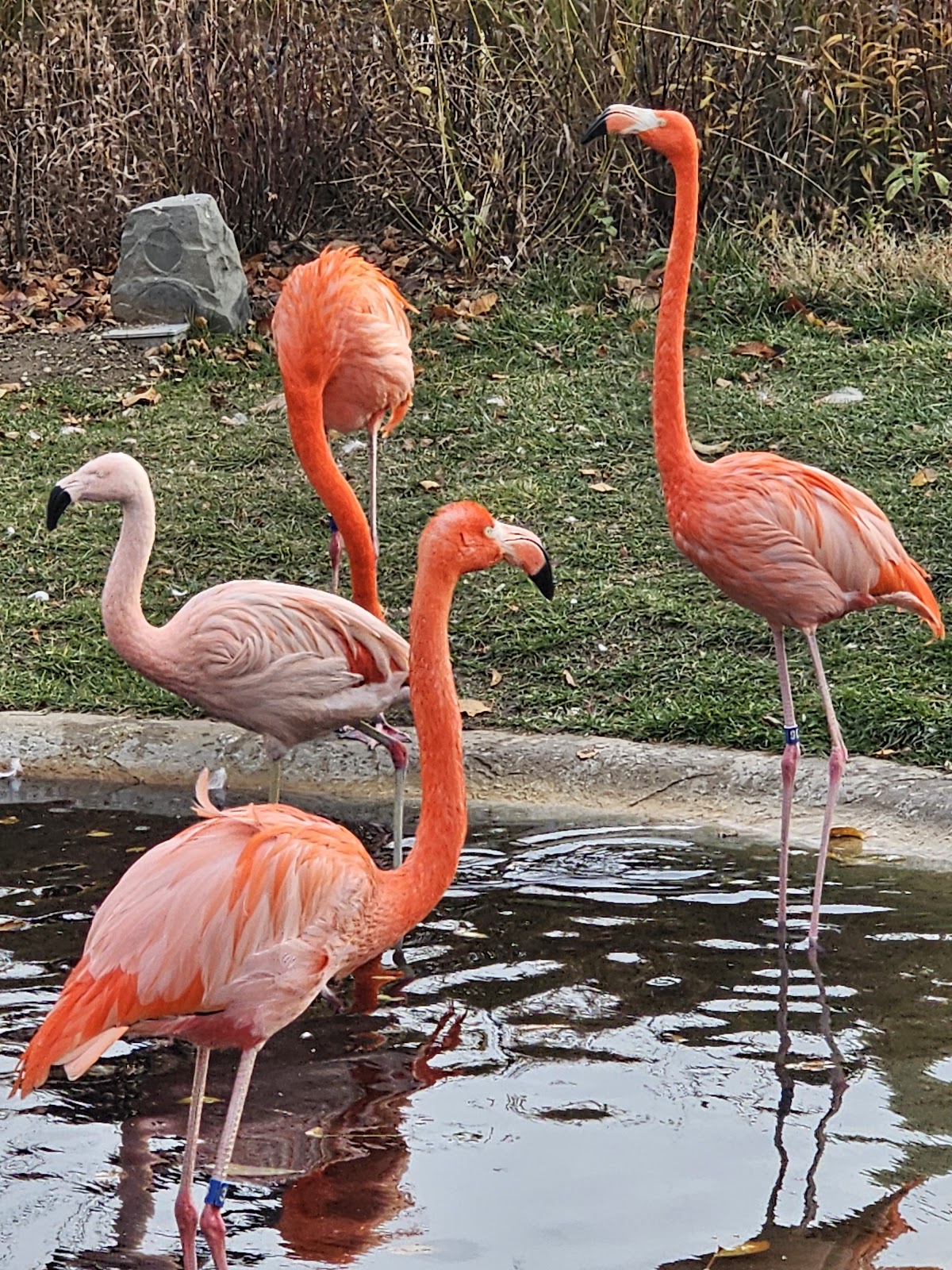
Habitats are also backgrounds with content, which means they compete. An animal visible behind a couple will draw the eye every time, because movement and faces are what human vision prioritises. That is either the point of the frame — in which case commit and let the animal be a co-subject — or it is a distraction, in which case move. Half-committed is the failure mode.
What works in your favour
- Early morning gives raking light and the quietest hour on the site
- Buildings throw hard-edged dependable shade where trees do not
- An underwater gallery gives blue light no other venue type has
- Very low ambient in the gallery means a small light has large effect
- White River State Park and the canal walk immediately outside
What to plan around
- Open grounds with little continuous shade at midday
- Scattered trees give dappled light that only position can fix
- Mesh, railings, signage and service infrastructure throughout
- Glazed panels reflect your lights, your crew and exit signs
- A busy public attraction unless the grounds are private
Evening and after dark: the underwater gallery
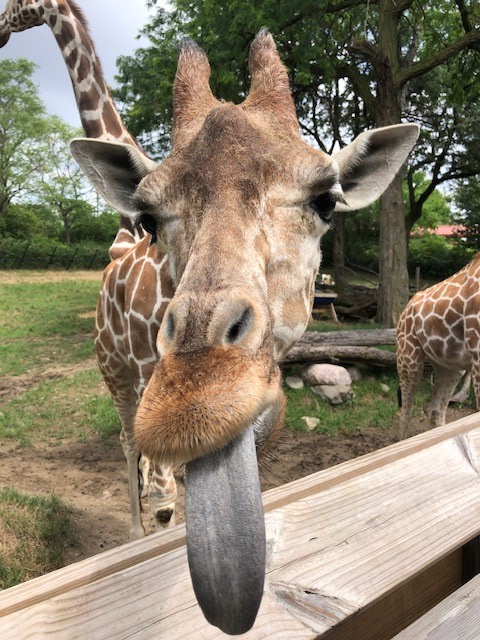
The underwater viewing gallery is the frame this venue has that others do not, and it works on a completely different set of rules from the grounds. Water absorbs the warm end of the spectrum, so light that has travelled through a large volume of it arrives strongly blue-cyan. The gallery is dim because the tanks are lit for the animals rather than the room. And every panel is thick glazing, which means every panel is a mirror.
The colour needs a decision rather than a correction. Commit to the blue — set white balance so it reads as blue, accept cool skin, and shoot deliberately cinematic frames where the colour is the subject. Or override it — put a warm-gelled source on the couple bright enough to dominate the tank light, balance to that, and get natural skin against a blue background. Both work; auto white balance and no added light produces neither, and because tank colour varies between habitats a set shot that way will not match itself.
Reflections are the technical trap. A thick glazed panel shows everything bright behind the camera — your flash, your assistant, an exit sign, the couple themselves. Shoot obliquely rather than square on so the reflected cone misses the lens, keep any source well off the camera axis and ideally behind the plane of the subject, and check the frame rather than trusting the small screen. Used deliberately, a couple and their reflection in a dark panel with animals moving behind is a frame that exists nowhere else.
One genuine advantage of a very dark space: because the ambient is so low, a small amount of added light has enormous relative effect. You do not need much power to place a couple three stops above a dim gallery, so a modest kit goes a long way — the opposite of the open grounds, where competing with sunlight needs real strobe power.
The practical sequencing is therefore clean. Open grounds early, buildings’ shade at midday, grounds again in the last ninety minutes when low sun returns, and the underwater gallery whenever it suits — because it has no daylight in it at all and is entirely time-independent. That last point is worth using: the gallery frame can absorb any delay in the running order without cost, which makes it the right thing to move when the day slips.
More frames from The Indianapolis Zoo
The Indianapolis Zoo wedding photography: common questions
Where is the shade at a zoo?
Behind buildings, not trees. Zoo grounds are open because habitats need light, and the scattered trees that exist give dappled light — the worst case. A large building throws a hard-edged, even, dependable shadow that beats any broken canopy.
How do you keep fencing out of frame?
A long lens at a wide aperture, with the couple several metres in front of the barrier, which turns mesh into an unreadable soft band. A wide lens near an enclosure holds background detail sharp and will include a fence, a sign and a service door.
Why is everything blue in the underwater gallery?
Because water absorbs the warm end of the spectrum, so light arriving through a large volume of it is strongly blue-cyan. That is the ambient in the room, and it lands on faces from every direction.
How do you handle that blue?
Decide rather than correct. Either commit — set white balance so the blue reads as blue and shoot cinematic frames where the colour is the subject — or override with a warm-gelled key bright enough to dominate. Auto white balance and no light gives neither.
How do you avoid reflections in the viewing panels?
Shoot obliquely rather than square on, keep any light well off the camera axis and ideally behind the plane of the couple, and check the frame properly. Used deliberately, a couple reflected in a dark panel with animals behind is unique to the venue.
Which block should move if the day runs late?
The underwater gallery. It has no daylight in it, so it looks identical at any hour and absorbs delay at no cost — whereas every outdoor block is tied to the sun’s position.
More Indianapolis, IN venue guides
We are writing a photographer’s guide to every venue we would happily shoot in Indianapolis, IN. Here are three more, plus the full index:
- The NCAA Hall of Champions: Four Ways Out of the Screen Problem
- The Alexander: Photographing a Hotel That Is Also a Gallery
- White River Gardens: A Conservatory and a Garden, Used Properly
All Indianapolis, IN Wedding Venues →
Planning a wedding at The Indianapolis Zoo?
Open grounds follow the sun and the blue gallery ignores it. Tell us your date and we will use that to absorb any delay.