 The Audubon Aquarium: Field Notes on Photographing Through Glass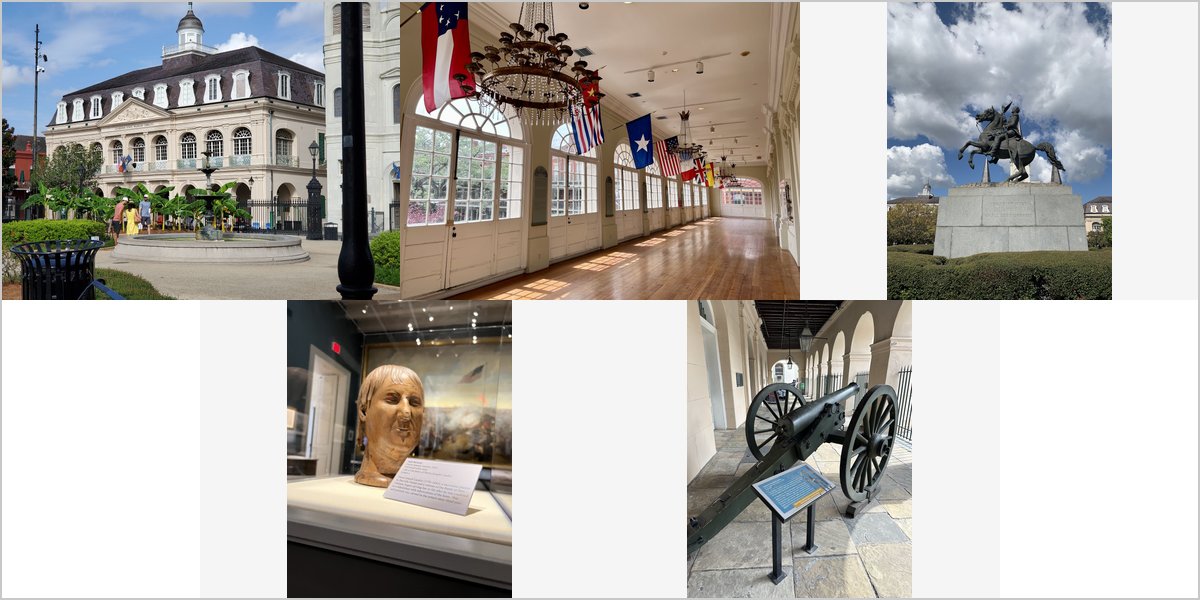
May 17, 2026
The Cabildo: Building the Shot List on Jackson Square
A 1799 Spanish colonial building on Jackson Square where the Louisiana Purchase was signed. Historically extraordinary, and governed by state museum rules.
The Cabildo was completed in 1799 on Jackson Square in New Orleans as the seat of the Spanish colonial government, and the transfer ceremonies for the Louisiana Purchase took place in it in 1803. It is now part of the Louisiana State Museum, with arcaded galleries facing the square and interiors including the Sala Capitular where the transfer was signed.
Photographically the combination is unusual: a building of genuine national historical importance, on one of the most recognisable squares in America, with arcaded galleries that happen to be excellent light. The arcade is the practical asset — a covered walkway open on one side is a natural softbox with a top gobo, which in New Orleans’s punishing sun is worth a great deal.
This guide is a shot list, because at a state museum with firm rules the useful plan is knowing exactly which frames you want. We have not photographed a wedding at the Cabildo; arcaded galleries and colonial interiors behave predictably. Which spaces are available, access times and photography policy are for the Louisiana State Museum, and a state institution’s answers will be specific and firm.
The Cabildo at a glance
| Where | Jackson Square, French Quarter, New Orleans, Louisiana |
| Completed | 1799, Spanish colonial; the Louisiana Purchase transfer signed here in 1803 |
| Now | Part of the Louisiana State Museum |
| Light | Arcaded galleries give excellent covered light; interiors dark and historic |
| Assume | State museum rules on access, flash and numbers; ask early and in writing |
Establish what a state museum will permit
A state museum operates differently from a commercial venue and differently again from a private house museum. Expect defined access windows tied to public hours, specified locations rather than free run of the building, restrictions on flash near collection items, limits on numbers in particular rooms, and a requirement to arrange everything well in advance.
None of that is obstructive — it is how public institutions holding nationally significant material operate. But it means arriving with a short specific list rather than a general request. Asking for fifteen minutes in a named room with hand-held cameras is straightforward; asking to photograph throughout with lighting stands is not.
Plan a day whose photographs do not depend on interior access. The arcade and Jackson Square are the reliable elements; the Sala Capitular and the galleries are a bonus you may or may not receive, and building the plan the other way round is how couples end up disappointed.
The shot list, in priority order
Six frames, weighted toward the arcade and the square.
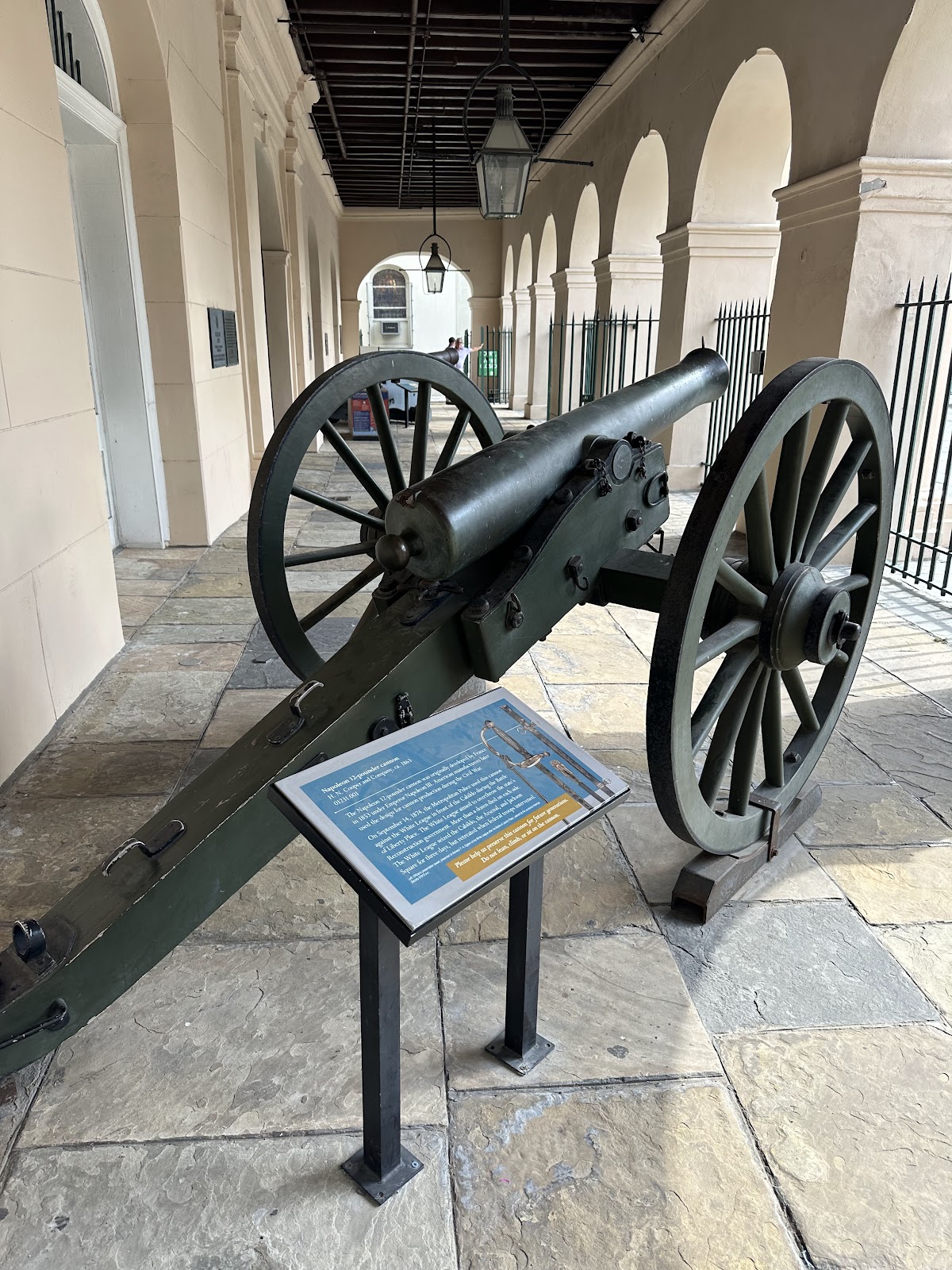
- Under the arcade. A covered gallery open on one side is a natural softbox with a top gobo — the roof blocks the overhead component while the open side admits light at head height. Usable even at midday, when the square is not.
- The arcade along its length. Repeating arches receding with a longer lens gives rhythm and depth that an open space cannot. One of the best compositions in the French Quarter.
- The facade from the square. Spanish colonial massing with the arcade and cupola, best in low raking light. The establishing frame.
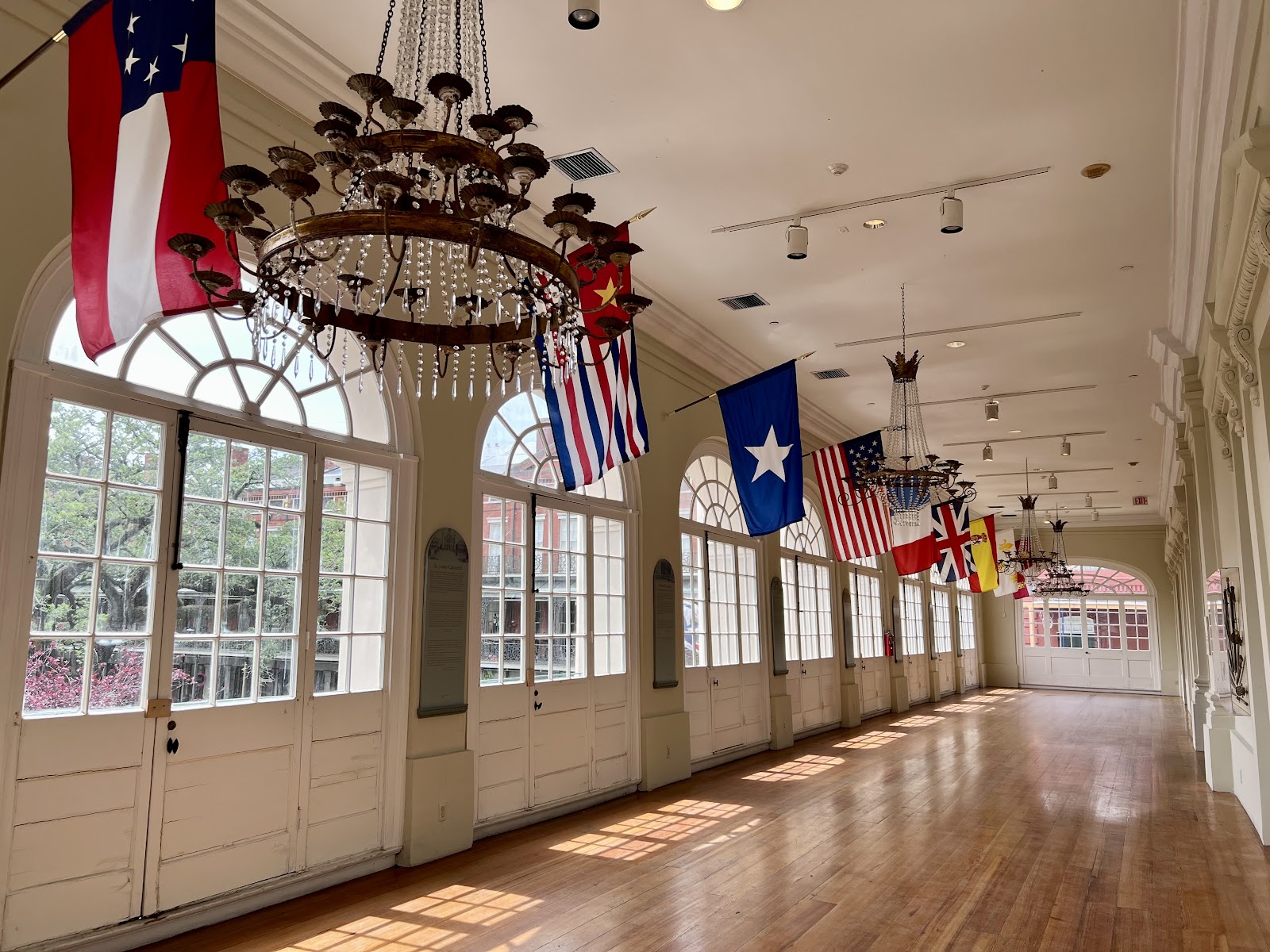
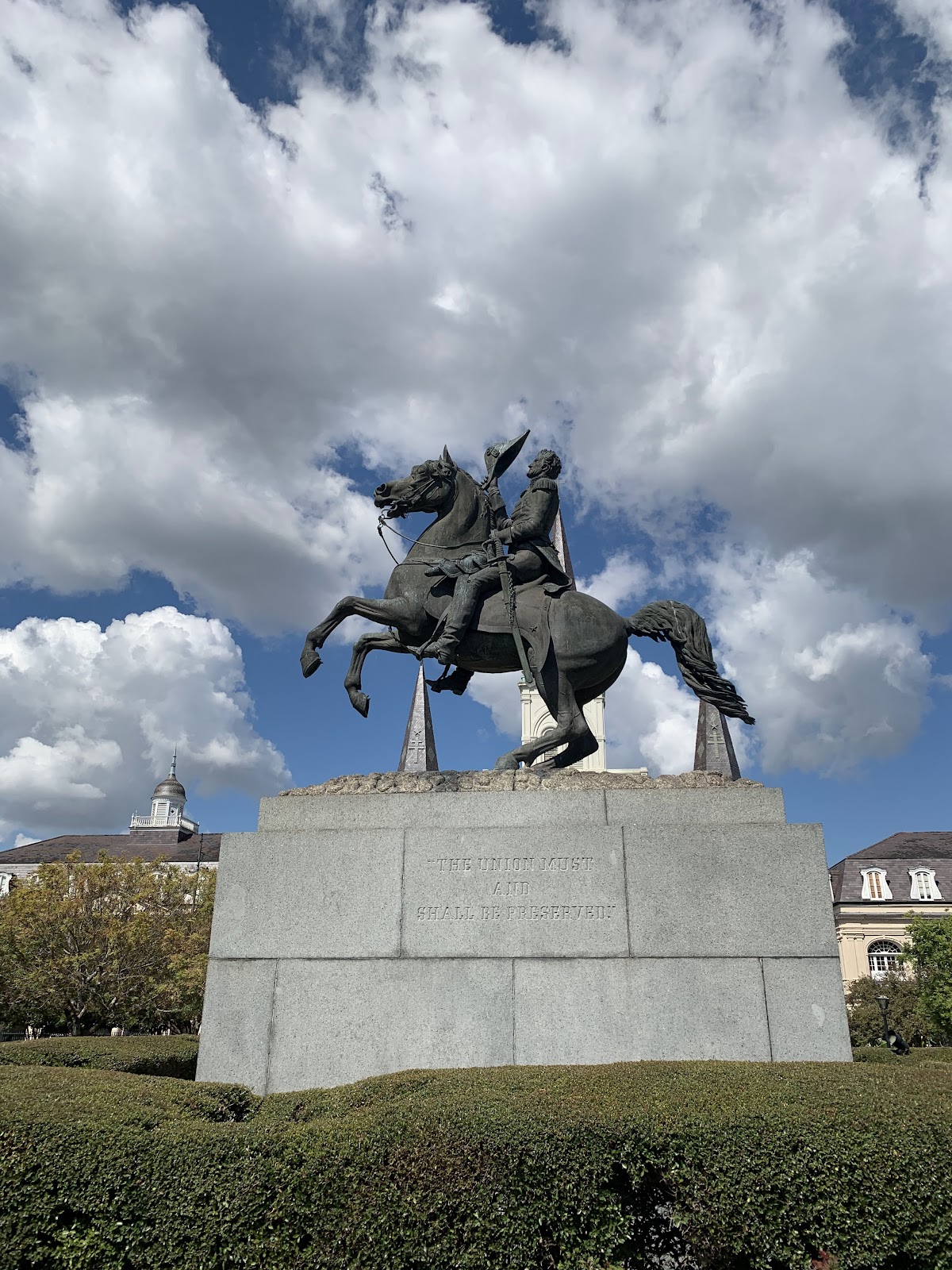
- Jackson Square itself. Mature planting, formal layout, the cathedral adjacent and one of the most recognisable settings in America.
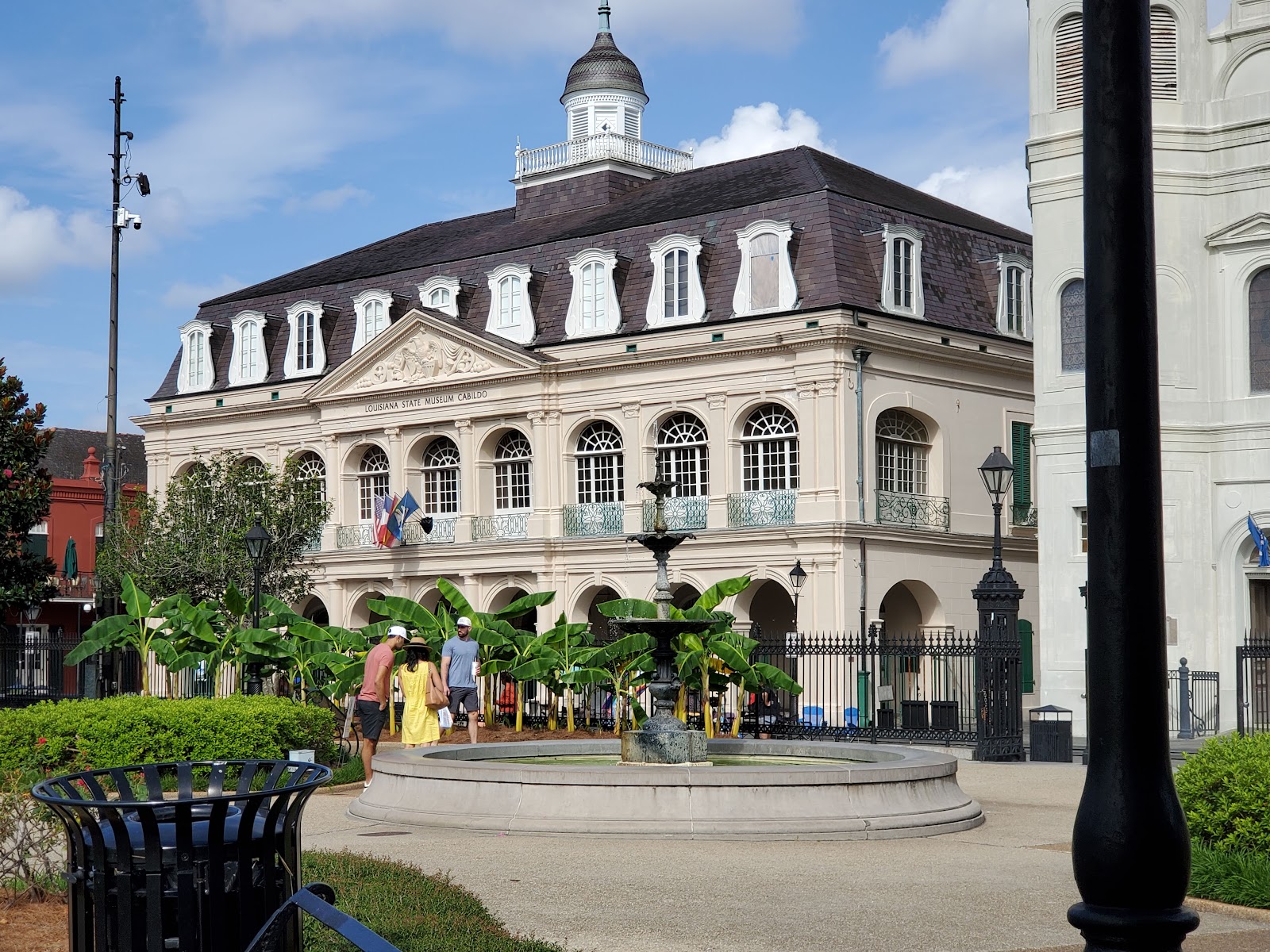
- One interior frame, if permitted. The Sala Capitular or a gallery, natural light only, at the edge of whatever light exists.
- The Quarter streets at dusk. Ironwork, stucco and gas-style lamps within a minute, and the twenty minutes after sunset.
Why the arcade is the venue's real asset
New Orleans sun is strong and the humidity compounds it, which makes open ground in the middle of the day genuinely unusable for faces — hard shadows, squinting, blown highlights and uncomfortable guests. A covered arcade solves all of it while keeping the daylight.
The optics are the same as any covered-but-open structure: the roof removes the overhead component that shadows eye sockets, and the open side supplies broad light at head height. That is the arrangement a studio photographer builds deliberately, and here the architecture provides it.
Stone and stucco also bounce a little warmth into the shade, which is flattering. Place people a metre inside the arcade’s edge facing outward toward the square, and the light does the work with no equipment at all. That is the single most useful frame at this venue and it is available through the middle of the day.
The repeating arches are a second, separate asset. Shot along the gallery with a longer lens they compress into layers of frame, which gives a photograph rhythm and depth. Very few venues anywhere offer that.
Jackson Square, the crowds and the climate
Jackson Square is one of the most photographed public spaces in America and it is busy accordingly — artists, performers, tourists and carriage traffic. Wide frames will contain strangers, and there is no arrangement that changes that. Early morning is the only genuinely quiet time, and it happens to have the best light on the facade.
Longer lenses at wide apertures handle much of the crowd, and the arcade itself is a partial escape — a covered gallery is less trafficked than the open square.
New Orleans humidity is the practical hazard. A lens carried from an air-conditioned interior into that air fogs completely and takes fifteen to twenty minutes to clear, so acclimatise before you need it. Afternoon thunderstorms are routine in summer and often heavy, and a covered arcade is genuinely useful shelter — one of the few venues here where a downpour can be photographed rather than waited out.
For the order of the day: arcade frames at any hour including midday; the facade and the square in the last hour or at dawn; the interior in whatever window is granted; and the Quarter streets in the twenty minutes after sunset.
What works in your favour
- A building of genuine national historical importance, on Jackson Square
- Arcaded galleries give excellent covered light usable even at midday
- Repeating arches shot along their length give rhythm and depth few venues offer
- Stone and stucco bounce a little warmth into the shade
- A covered arcade makes a Louisiana downpour photographable rather than something to wait out
What to plan around
- State museum rules on access, flash and numbers; plan without depending on interiors
- Jackson Square is one of the busiest public spaces in America — strangers in wide frames
- Interiors are dark and historic, with natural light only
- Severe humidity fogs lenses for fifteen to twenty minutes
- Access windows tied to public hours, not to your timeline
More frames from The Cabildo
The Cabildo wedding photography: common questions
What will a state museum allow?
Expect defined access windows tied to public hours, specified locations rather than free run, restrictions on flash near collection items, and limits on numbers per room. Arrive with a short specific list — fifteen minutes in a named room with hand-held cameras is straightforward; photographing throughout with stands is not.
What is the best light at the Cabildo?
Under the arcade, about a metre inside its edge facing out toward the square. A covered gallery open on one side is a natural softbox with a top gobo — the roof removes the overhead light that shadows eyes while the open side supplies it at head height. It works even at midday.
What is the composition worth planning for?
Along the arcade, shot with a longer lens so the repeating arches compress into layers of frame. It gives rhythm and depth that an open space cannot, and very few venues anywhere offer it. It is also less crowded than the open square.
How crowded is Jackson Square?
It is one of the most photographed public spaces in America, with artists, performers, tourists and carriages. Wide frames will contain strangers and nothing changes that. Early morning is the only genuinely quiet time, and it also happens to have the best light on the facade.
Is the arcade useful in rain?
Genuinely, and it is one of the few venues here where a Louisiana downpour becomes photographable rather than something to wait out. A covered gallery open to the square lets you shoot the rain while staying dry, which in a city of routine summer thunderstorms is a real asset.
More New Orleans venue guides
We are writing a photographer’s guide to every venue we would happily shoot in New Orleans. Here are three more, plus the full index:
- The Presbytère: A Photographer Answers Your Questions
- The Windsor Court: Lighting a Hotel Full of Art and Antiques
- The Audubon Aquarium: Field Notes on Photographing Through Glass
All New Orleans Wedding Venues →
Planning a wedding at The Cabildo?
A state museum rewards arriving with a short specific list. Tell us your date and we will help you ask for the right rooms — and plan the arcade, which is the frame that works regardless.