 The Bierstube: What Changes When the Reception Is in a Bar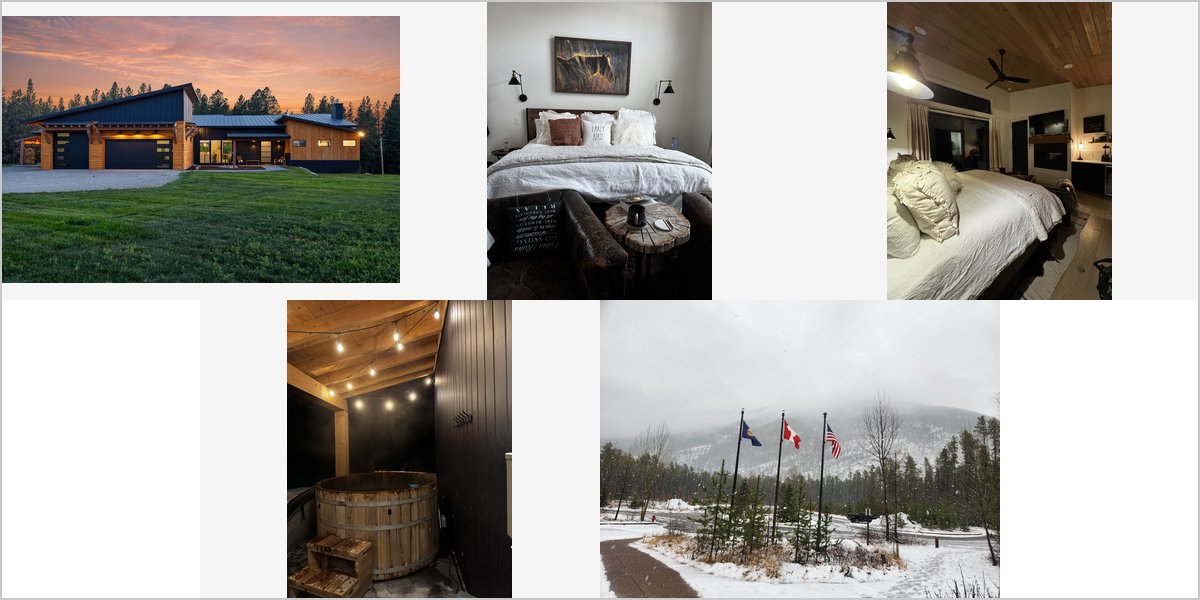
July 3, 2026
The Stillwater River Lodge: One Variable Changes the Whole Venue
The same venue in June and in September is two different places, and the river is why.
The Stillwater River Lodge sits on the Stillwater River outside Whitefish in northwest Montana, in the wooded corridor that a river cuts through conifer country — trees close on both banks, water in the middle, mountains beyond.
One variable governs this venue more than any other, and unlike most venue variables it is not architectural: the state of the river. A Montana river in mid-June is running high and fast on snowmelt, loud, opaque with sediment and spread wide across its banks. The same river in September is low, clear, slow, narrow and quiet, with gravel bars exposed that were three feet under in spring. Those are not the same place to photograph, and they are not the same place to hold a ceremony beside.
This piece is about that variable and what follows from it in each state. We have not photographed a wedding at this lodge; snowmelt hydrology and riparian light behave the same on every river in the northern Rockies. Ceremony sites, river access and what the bank looks like in a given month are questions for the lodge’s team, and worth asking with a specific date in hand.
The Stillwater River Lodge at a glance
| Where | On the Stillwater River outside Whitefish, Montana |
| Character | Wooded river corridor — close trees, open water, mountains beyond |
| The variable | June snowmelt versus September low water: two different venues |
| Light | Dappled and green-cast under the canopy; open and bright over the water |
| Ask first | Where the bank sits in your month, and whether gravel bars are exposed |
June: high water, loud and wide
Snowmelt peaks in the northern Rockies in late spring and early summer, and a river at peak flow is a different animal. It is wide, so the bank you saw in a site visit photograph may be under water. It is fast, so long exposures turn it into a smooth white ribbon and short ones freeze it into spray. It is opaque with suspended sediment, so it reads grey-green and holds no reflections at all. And it is loud enough to compete with vows, which is a real ceremony problem and not a photographic one — though it becomes yours if the couple are asked to repeat themselves.
Photographically high water is the more dramatic option. Motion is the subject: a slow shutter on moving water against a still couple is a frame that only works when there is enough flow to smear, and June has it. Spray in low sun catches light and reads as texture. The corridor feels alive rather than pretty.
The costs are access and footing. Wet rock near fast water is genuinely dangerous and not worth a photograph — this is a place to be conservative about where you put people, and to say no to the frame that requires standing on a slick boulder above a snowmelt current. Mosquitoes are also at their worst in the weeks after peak flow, which affects how long anyone will stand still in a riparian corridor at dusk.
September: low water, clear and still
By late summer the river has dropped, cleared and slowed. It reflects — which is the single biggest photographic difference, because still clear water gives you the sky, the trees and the couple twice. Gravel bars are exposed, which means you can stand in the middle of the river bed and shoot back at the bank, an angle that does not exist in June. And it is quiet, so a ceremony beside it works without amplification.
September in northwest Montana also brings the cottonwoods and aspens along the corridor into yellow, which against conifer green and blue water is the strongest natural colour palette the venue offers all year. If a couple asks which month photographs best here, that is the honest answer.
The trade-off is that low water is undramatic. A slow shutter on a lazy river gives you nothing — the water does not move enough to smear, and you get a slightly soft ordinary river. The frames in September are about stillness, reflection and colour rather than energy, and if a couple’s reference images are all crashing water, they are looking at a spring river and should be told so.
What works in your favour
- September low water reflects, doubling sky, trees and the couple
- Exposed gravel bars give mid-river angles unavailable at high flow
- June snowmelt gives real motion for slow-shutter frames and lit spray
- Cottonwood and aspen yellow against conifer green in late September
- A wooded corridor means shade is always available somewhere
What to plan around
- The bank in your photographs may be underwater in June
- High water is loud enough to compete with spoken vows
- Wet rock beside fast water is a genuine safety limit on where you shoot
- Canopy shade carries a strong green cast that is hard to correct
- Riparian mosquitoes at dusk in early summer limit outdoor time
The canopy problem, which is the same in both seasons
A river corridor in conifer country has trees close on both banks, and that creates the one light condition that persists regardless of flow: dappled light. Sun coming through a canopy arrives in patches, so a face can have a bright spot on one cheek and deep shade on the other, several stops apart, moving as the branches move. It is the least manageable natural light there is, because it is neither soft nor directional — it is random.
There is no technique that fixes dappled light. There is only position. Move people out of the dapple into full open shade, or out into full sun on the gravel bar, or under a dense enough canopy that the patches merge into even shade. Any of those three is workable; the transition zone between them is not. Learning to see dapple and step out of it is most of the skill in a wooded venue.
Green cast is the second half. Conifer needles reflect green onto anything beneath them, and green on skin looks like illness in a way that a warm or cool cast does not. Set a custom white balance under the canopy rather than trusting auto, and if the ceremony is under trees, expect to correct the whole block to the same reference rather than frame by frame.
The corridor’s compensation is the frame looking downstream. A river receding between converging banks is a natural leading line — the strongest compositional device the venue has, and it works at any flow. Put the couple in the middle distance, let the banks funnel the eye to them, and the composition builds itself.
More frames from The Stillwater River Lodge
The Stillwater River Lodge wedding photography: common questions
Does it matter what month we book?
More than at most venues. A June river is high, fast, opaque and loud; a September river is low, clear, slow and reflective. Those are two different places to photograph and two different ceremony experiences. Late September also brings cottonwood and aspen yellow, which is the venue’s strongest colour.
Will the river be loud during the ceremony?
At high snowmelt flow, loud enough to compete with unamplified vows. That is a planning question worth raising early, because the usual fix — moving the ceremony back from the bank — changes the photographs too. By late summer it is quiet enough not to matter.
What is dappled light and why is it a problem?
Sun coming through a canopy in patches, so one cheek is bright and the other is several stops down, shifting as the branches move. No technique corrects it. The only answer is position: move into full open shade, into full sun, or under dense enough canopy that the patches merge.
Why do my forest photographs look green?
Conifer needles reflect green onto everything beneath them, and green on skin reads as illness. Set a custom white balance under the canopy instead of trusting auto, and correct a whole under-tree block to one reference rather than frame by frame.
Can we stand in the river?
Only at low water, and only where the lodge permits it. In September exposed gravel bars let you shoot from mid-river back toward the bank, which is a genuinely different angle. At snowmelt flow, wet rock beside fast water is a real hazard and not worth any photograph.
What is the most reliable frame here?
Looking downstream. A river receding between converging banks is a natural leading line, and it works at every flow level and in every season. Place the couple in the middle distance and the banks funnel the eye to them.
More Whitefish venue guides
We are writing a photographer’s guide to every venue we would happily shoot in Whitefish. Here are three more, plus the full index:
- The Bierstube: What Changes When the Reception Is in a Bar
- The Garden Wall: How to Work a Genuinely Small Venue
- Whitefish Mountain Resort: One Decision Governs the Whole Day
All Whitefish Wedding Venues →
Planning a wedding at The Stillwater River Lodge?
Tell us your month and we will tell you which river you are getting — and which frames come with it.