 Springs at the 191, Clanton: Field Notes
Venue at Willow Creek, Huntsville: The Problem, and Four Ways Out
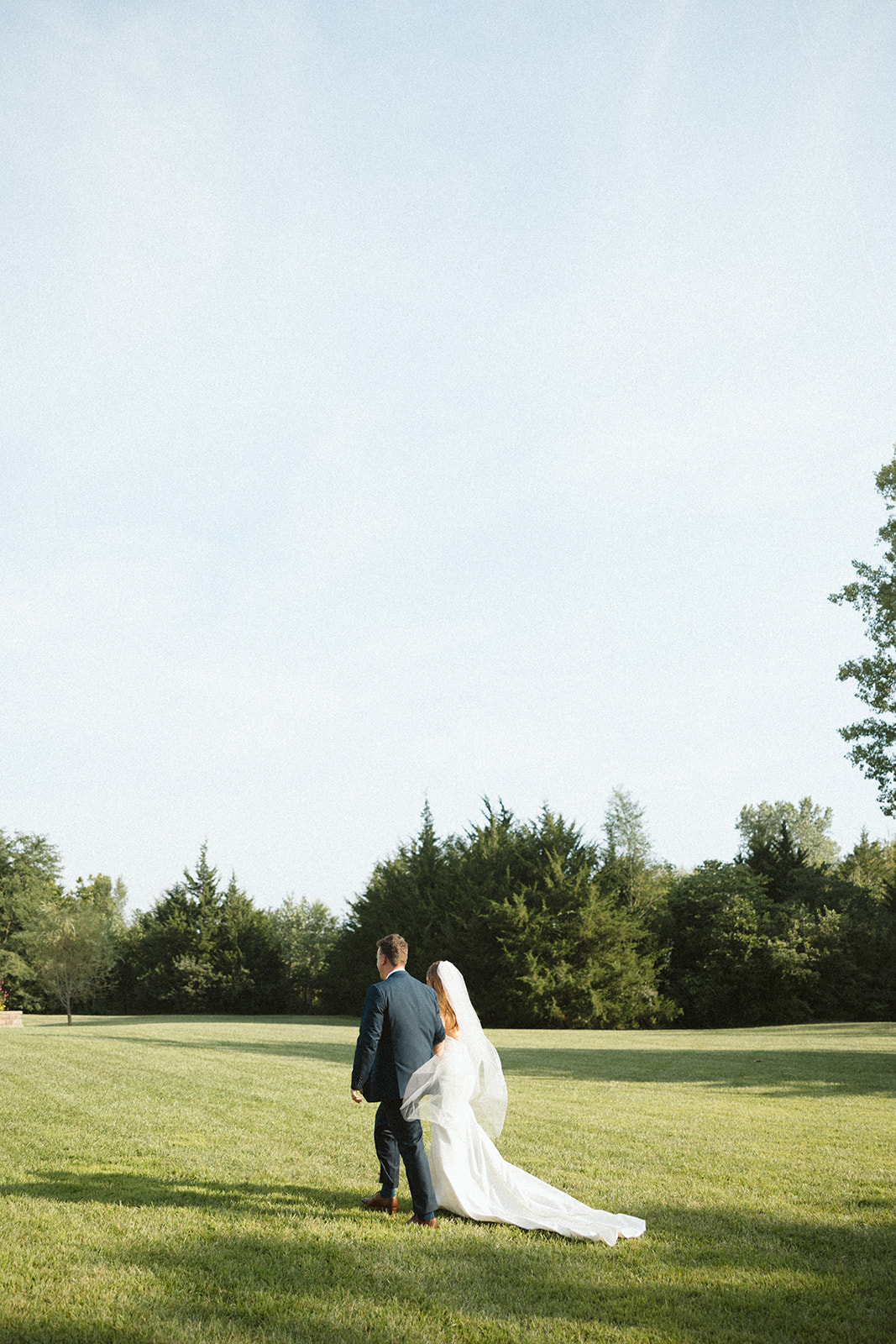
The property is rural. What lies just beyond it is not, and the camera can see both.
The problem at a venue on the edge of a growing city is that the property is rural and its boundary is not, and it is worth naming precisely because every solution is positional.
Huntsville is one of the fastest-growing cities in the South, which means rural land at its edge is being built on — and a venue that was surrounded by farmland ten years ago may now have subdivisions, arterial roads, retail or light industry within sight of its boundary.
None of that is unattractive in itself. It is simply what a city edge looks like, and it is the thing that stops a wide frame from being a country photograph — because a wide lens includes it and the eye goes to the nearest recognisable modern thing rather than to the field, the trees or the sky.
Three related difficulties follow. The wide frames are compromised in a way that is hard to see on a small screen and obvious at full size. The ceremony position, if it faces the boundary, has the same problem behind the couple. And overhead wires and lighting columns in particular are almost invisible to the eye and unmissable in a photograph, because they cross an otherwise clean sky as hard dark lines.
The fourth element is the compensation, which is real: the property itself is good. North Alabama at the edge of the Tennessee valley gives mixed hardwood, red clay, open ground and a genuine late autumn, and the light at this latitude is workable for far more of the day than it is further south.
There are four ways out. We have not photographed a wedding at the Venue at Willow Creek; city-edge venues behave consistently. Which areas are included, what direction the ceremony faces, the covered alternative, and what power is available outdoors are questions for their team.
Venue at Willow Creek at a glance
| Where | A venue at the edge of Huntsville, north Alabama |
| The problem | Rural property with suburban development at the boundary |
| Way one | Compress: a long lens excludes the boundary entirely |
| Way two | Get low. Way three: watch the sky for wires and columns |
| Way four | Use the seasons — snow and colour both simplify what is beyond |
Ways one and two: compression, and camera height
The first way out is compression and it solves most of the problem in one decision.
A longer lens has a narrow angle of view, which means a frame from anywhere on the property that would include a road or a rooftop on a wide lens simply does not contain it on a long one. It also magnifies whatever is behind the couple — trees, a field, a hedge — so the background fills the frame rather than being a thin band between them and the boundary.
That is the single most useful move here and it is worth stating plainly: the wide lens is the problem at this kind of venue and the long lens is the answer. At a wider aperture the effect compounds, because whatever remains in the background dissolves into tone rather than detail.
The practical form of it is to stand further back from the couple than feels natural. A frame at eighty-five or a hundred and thirty-five millimetres from ten metres away contains a fraction of what the same frame at thirty-five millimetres from three metres away does, and the difference is entirely in what is excluded.
The second way out is camera height, and the low version is the more useful.
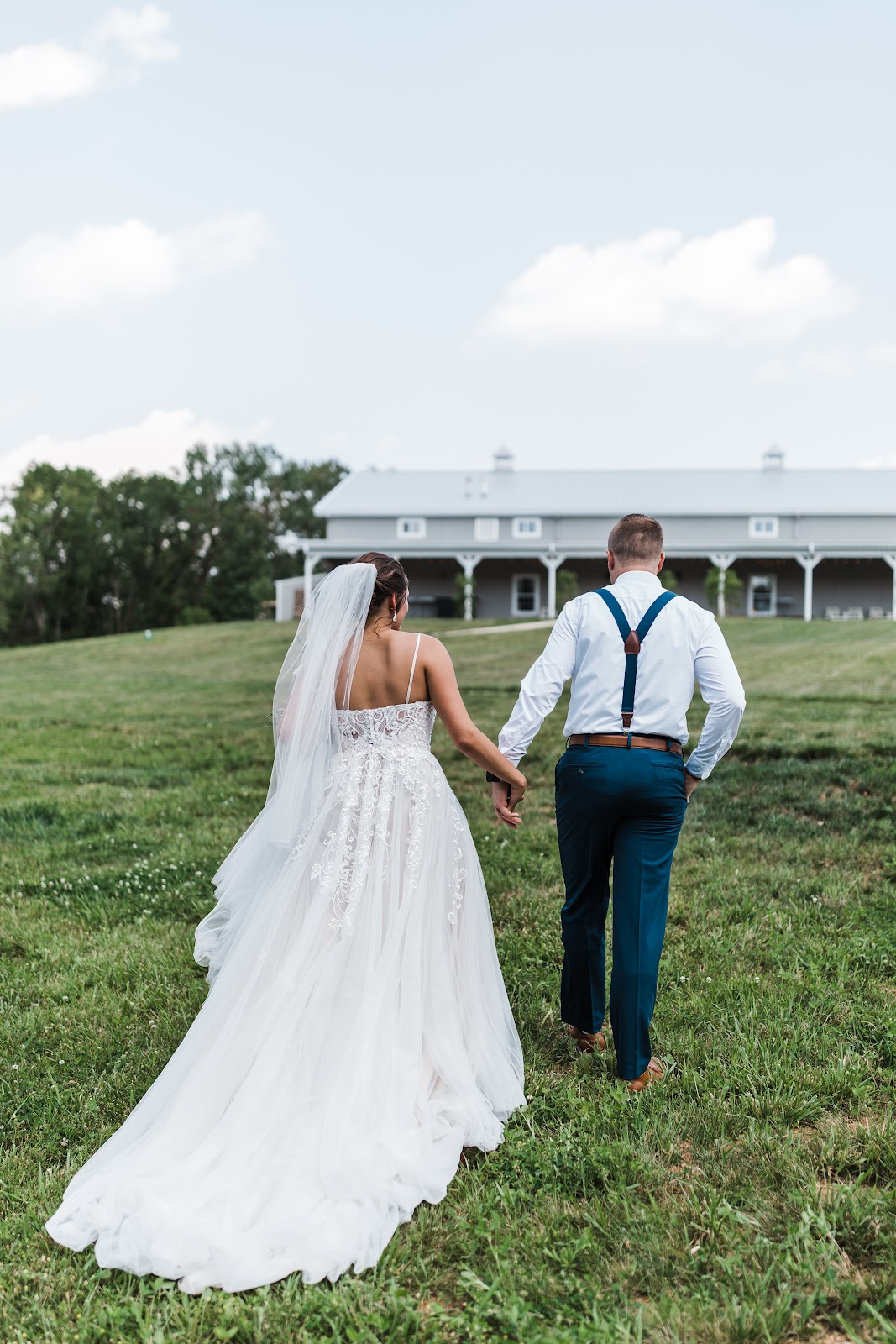
A low camera puts foreground across the bottom of the frame — grass, a border, a fence line, a crop, a slope — which hides everything immediately behind it. On rising ground it does more: a camera at knee height with the land sloping up behind the subject can eliminate the entire boundary and leave only foreground, couple and sky.
That is the most effective single fix available at any site with an untidy middle distance, and it costs nothing but kneeling. The combination of low camera and long lens produces a frame with three clean layers — foreground, couple, background — and nothing else in it.
Going higher works in the opposite direction and it is occasionally useful. A raised position — a deck, a first-floor window, a rise — lifts the horizon relative to the boundary, which means more of the frame is ground and less is skyline. Where the development is low-rise and the property has any elevation, that removes it.
The exposure for these frames is the ordinary one: meter on skin, in manual, and reset at every transition — because a day here moves between bright open ground, which makes a meter underexpose, and dark canopy, which makes it overexpose.
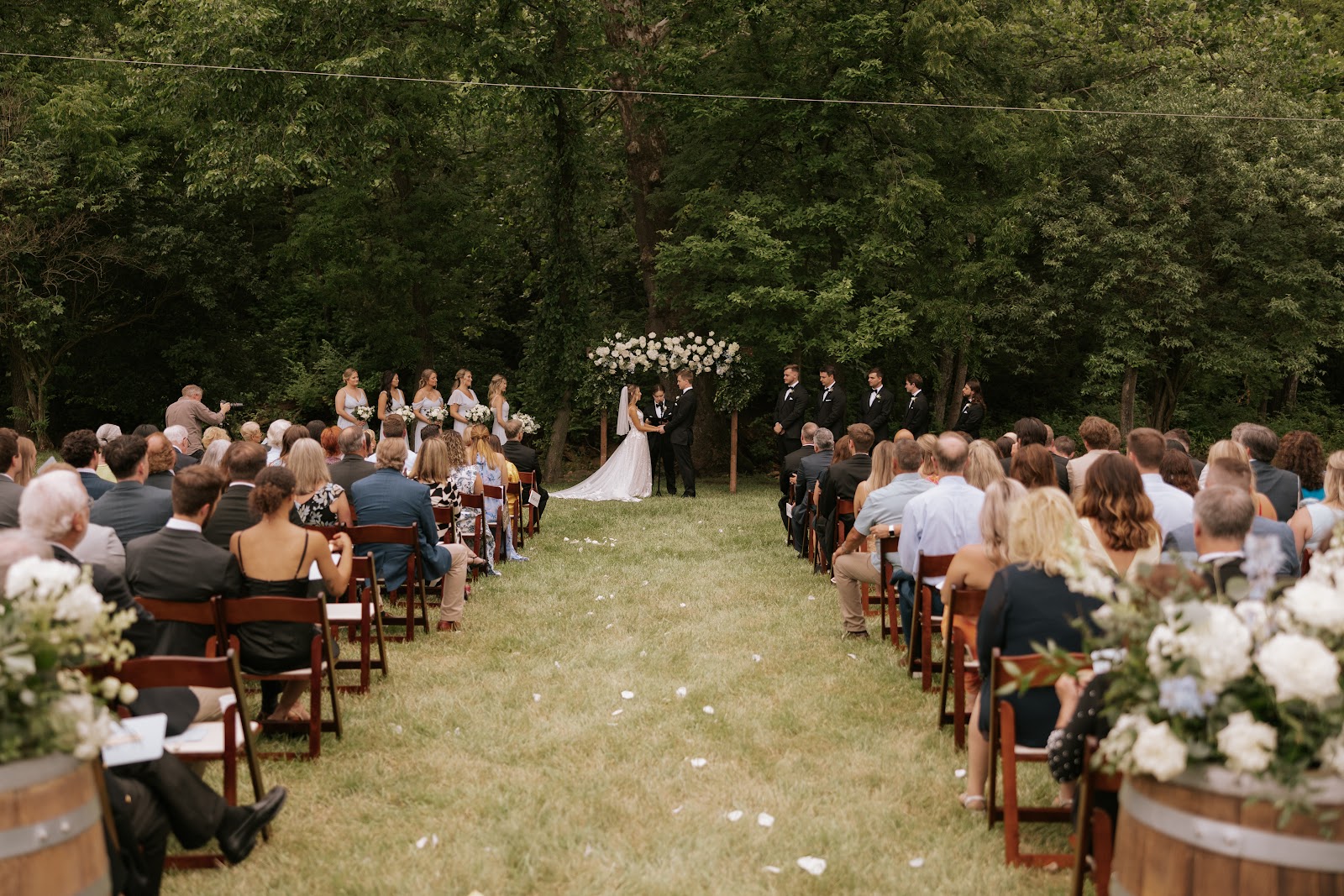
And the ceremony position deserves the same thought in advance rather than on the day. If the seating faces the boundary, then the background of every ceremony frame is whatever is behind the couple — and walking the position beforehand, looking through the lens the ceremony will actually be shot on, is ten minutes that decides the coverage.
Where the ceremony must face a compromised direction, the answer is to work from angles rather than straight on: a frame from the front quarter with a longer lens sees a different background from one down the aisle, and one of those is usually clean.
Ways three and four: the sky, and the seasons
The third way out is to look at the things the eye skips, and overhead lines are the first of them.
Power and telephone lines, lighting columns, poles and masts are almost invisible when looking at a landscape, because the brain edits them out — and they are unmissable in a photograph, because they cross an otherwise clean sky as hard dark diagonals. At a city-edge venue they are everywhere, and they are the commonest way a good frame is spoiled.
The fix is entirely positional and it takes a second: before the first frame in any position, look at the sky in the viewfinder rather than at the subject. A step to one side, a lower camera, or a slightly different angle usually removes the line — and where it does not, a tighter frame will.
The same discipline handles rooftops, vehicles, signage and fencing in the middle distance. Checking the background rather than the subject in the first frame of every position is the whole of the technique, and it is the difference between a set of pictures that read as country and a set that read as a field beside a road.
Sound is the related problem and it is worth naming even though it is not photographic. A property at a city edge may have road noise, which affects an unamplified ceremony — and whether amplification is available is a question with a definite answer.
The fourth way out is seasonal and it is the most powerful, because both of the region’s strongest conditions simplify what lies beyond the property.
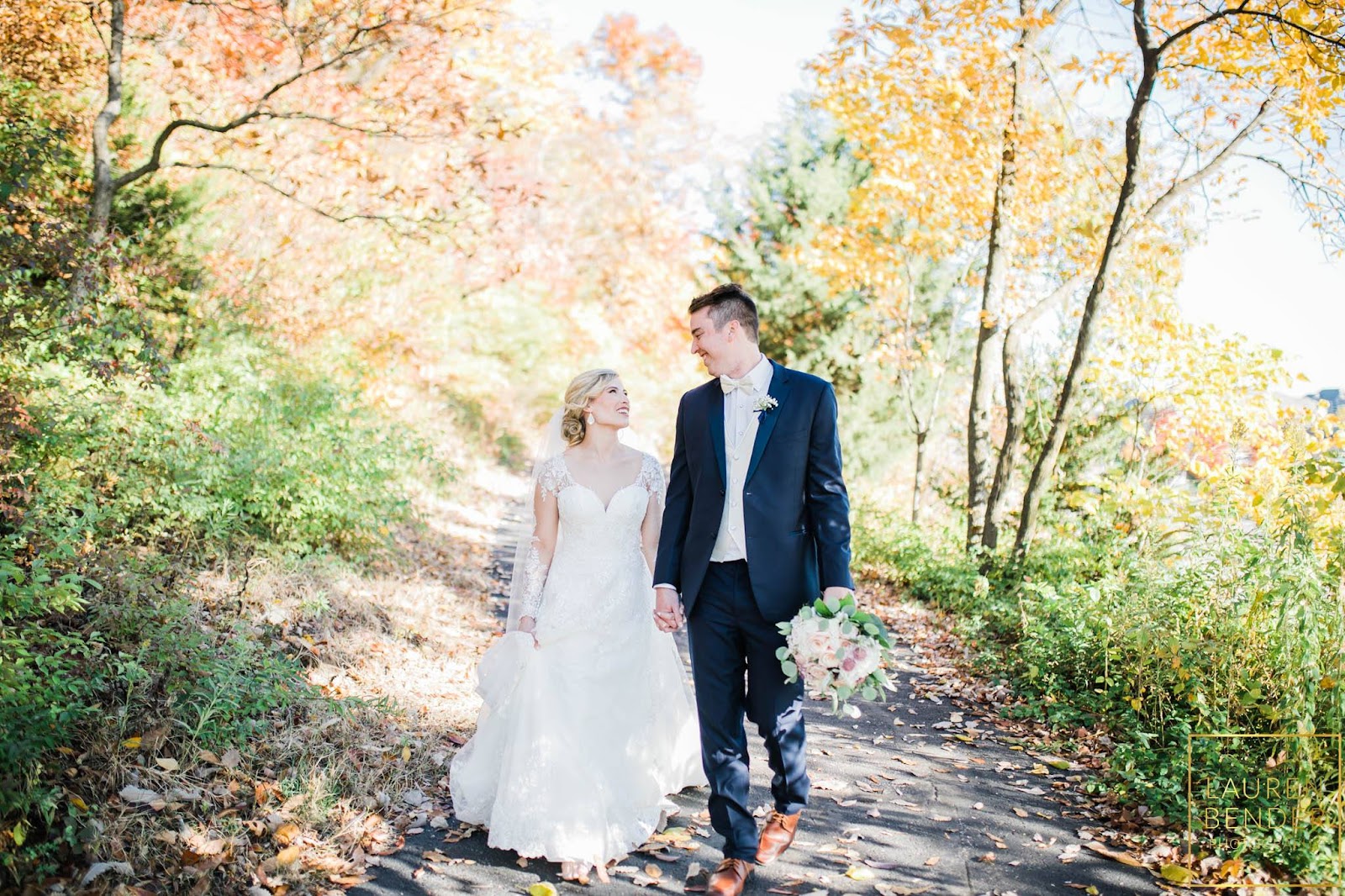
Autumn colour is the first and it works by redistribution. When the hardwoods turn — typically from the last week of October into mid-November in north Alabama, weeks later than New England — the brightest and most saturated parts of the frame are the trees on and around the property, while the development beyond stays neutral grey. The eye goes to the colour, which is exactly where it should go, and the boundary recedes.
That is the strongest argument for a late October or early November date at a venue like this, and it is worth making to a couple explicitly.
Snow is the second and it is less reliable in north Alabama but transformative when it comes. A snow-covered landscape is a simplified landscape: ground becomes a single pale plane, roads become lines under snow, and structures become shapes. Snow is also the best natural fill available outdoors, lifting every shadow — and against dark bare hardwood it gives the widest brightness range available, so expose for the snow and let the trees go black, overexposing deliberately relative to the meter, which snow fools by about two stops.
Between those two, the property’s own vegetation is the resource that removes the boundary entirely. Hardwood canopy — oak, hickory, maple, sweetgum, tulip poplar — is the shade and the dark background, and the canopy edge is the reliable position: a metre or two inside at the margin of an opening gives soft directional light in front and darkness behind, three or four stops of free separation.
Where there is a hedge, a dense border or a treeline, that is the best background available: a dark even mass two or three stops below a subject with nothing in it to distract. Used as a background rather than as scenery, it removes the development from the frame completely.
Pine, where the property has it, is a colonnade rather than a canopy — it filters rather than blocks and dapples badly — but it is an excellent compressed background of dark vertical trunks, which is the same trick from a different species.
And the region’s red clay is worth handling rather than ignoring: exposed ground, tracks and banks bounce strongly warm light, and a custom white balance set on a face turns that from an orange cast into warm skin in warm light.
The practical Alabama notes apply throughout. Summer heat and humidity make an outdoor ceremony between June and September a welfare matter first; afternoon thunderstorms are near-daily in July and August; spring is the state’s severe-weather peak and north Alabama is among the most tornado-prone areas in the country, which makes a named covered alternative with real capacity a requirement.
- Long lens, and stand further back. A wide lens includes the boundary
- Get low: foreground across the bottom of the frame hides what is behind it
- Look at the sky in the viewfinder first — wires are invisible to the eye
- Hedges, treelines and canopy edges remove the boundary completely
- Late October colour redistributes the eye’s attention onto the property
The north Alabama year
North Alabama has a humid subtropical climate with a genuine four-season feel — cooler winters than the Gulf coast, hot humid summers, and a real autumn.
Winter is mild but not warm: hard freezes occur, snow is occasional and rarely lies, and the hardwood canopy is down. That last point is the season’s honest weakness at a city-edge site, because leafless trees hide less — the boundary that a full summer canopy screens is visible in January.
What winter gives instead is the light. The December sun at this latitude reaches about thirty-four degrees above the horizon, which is low enough that the whole short day rakes rather than floods — removing any dappling problem, putting texture into open ground, and meaning the good light is available whenever the schedule allows rather than only at the ends of the day.
The evergreen element — pine, magnolia, cedar, holly — is unchanged, which means the property’s densest screens and darkest backgrounds are available in January exactly as in July. At a site whose problem is screening, that matters: the evergreen positions are the winter answer.
Snow, when it comes, simplifies everything as described above and is worth being ready for rather than planned around.
Frost on red clay and morning fog in the Tennessee valley are the more common winter conditions — and fog is the one condition that solves this site’s problem completely, because it removes the middle distance entirely. A frame with a couple, a foreground and nothing beyond but soft grey is the cleanest picture the property can produce, and it is available on cold still mornings through the winter.
Late winter into spring brings the flowering: redbud and dogwood through March and April, azaleas in planted ground, and wisteria on anything it can reach. Against dark evergreen that saturated colour reads at full strength.
The honest spring caveat is severe weather, and in north Alabama it is as pronounced as anywhere in the country. The region sits in one of the most tornado-prone areas in the United States with a peak from March through May, which makes a named covered alternative with real capacity a requirement rather than a courtesy.
Spring proper is the most comfortable season and the one in which the screening works best: the canopy leafs out through April, which hides the boundary again, and the ground is green and growing.
Summer is hot and humid and it is the hardest season for comfort and the best for screening. Full canopy hides the most, the greens are at their deepest, and kudzu — which blankets roadside and fence line through the summer in this region — is a genuine visual feature that covers a great deal of untidiness.
The costs are real though: low nineties Fahrenheit with high humidity pushes the heat index considerably higher, and an outdoor ceremony at three in the afternoon is uncomfortable in a way that shows. Afternoon thunderstorms are near-daily in July and August.
Autumn is the best season overall and it is the one that solves this site’s central problem. The heat breaks in October, the humidity drops, the air clears, and the hardwood colour arrives late — typically from the last week of October into mid-November, weeks later than New England.
Oak russet, maple scarlet, hickory and tulip poplar yellow and sweetgum’s mixed red and purple arrive over two or three weeks, and the redistribution of attention that colour produces is worth more here than any technique. It is the only answer worth giving a couple with a movable date, with the caveat that November is the state’s second severe-weather peak.
More frames from Venue at Willow Creek
Venue at Willow Creek wedding photography: common questions
What is the central problem?
The property is rural and the land beyond its boundary is developed — and a wide lens includes it, with the eye going to the nearest modern thing.
What is the main fix?
A longer lens from further back. Its narrow angle of view simply does not contain what a wide lens does, and it magnifies the good background.
What else works?
A low camera with foreground across the bottom of the frame, which hides everything immediately behind it. It costs nothing but kneeling.
What is easiest to miss?
Overhead wires and lighting columns. The eye edits them out and a photograph does not — look at the sky in the viewfinder before the first frame.
Which season screens best?
Summer, when full canopy hides the most. But autumn is better overall, because the colour redistributes the eye’s attention onto the property.
Is there a condition that solves it entirely?
Fog. A cold still winter morning removes the middle distance completely and gives the cleanest frames the property can produce.
More Alabama venue guides
We are writing a photographer’s guide to every venue we would happily shoot in Alabama. Here are three more, plus the full index:
- Westin Huntsville: The Light Through the Day
- The Preserve, Verbena: The One Decision That Governs Everything
- The Warehouse, Prattville: The Problem, and Four Ways Out of It
Planning a wedding at Venue at Willow Creek?
A rural property, framed properly. Tell us your date and we will plan the lenses.