 Woodwinds, Branford: The Problem, and Four Ways Out
Whaler’s Inn, Mystic: The Light Through the Day
In a town, the buildings decide where the light is. Learn the streets and you know the day.
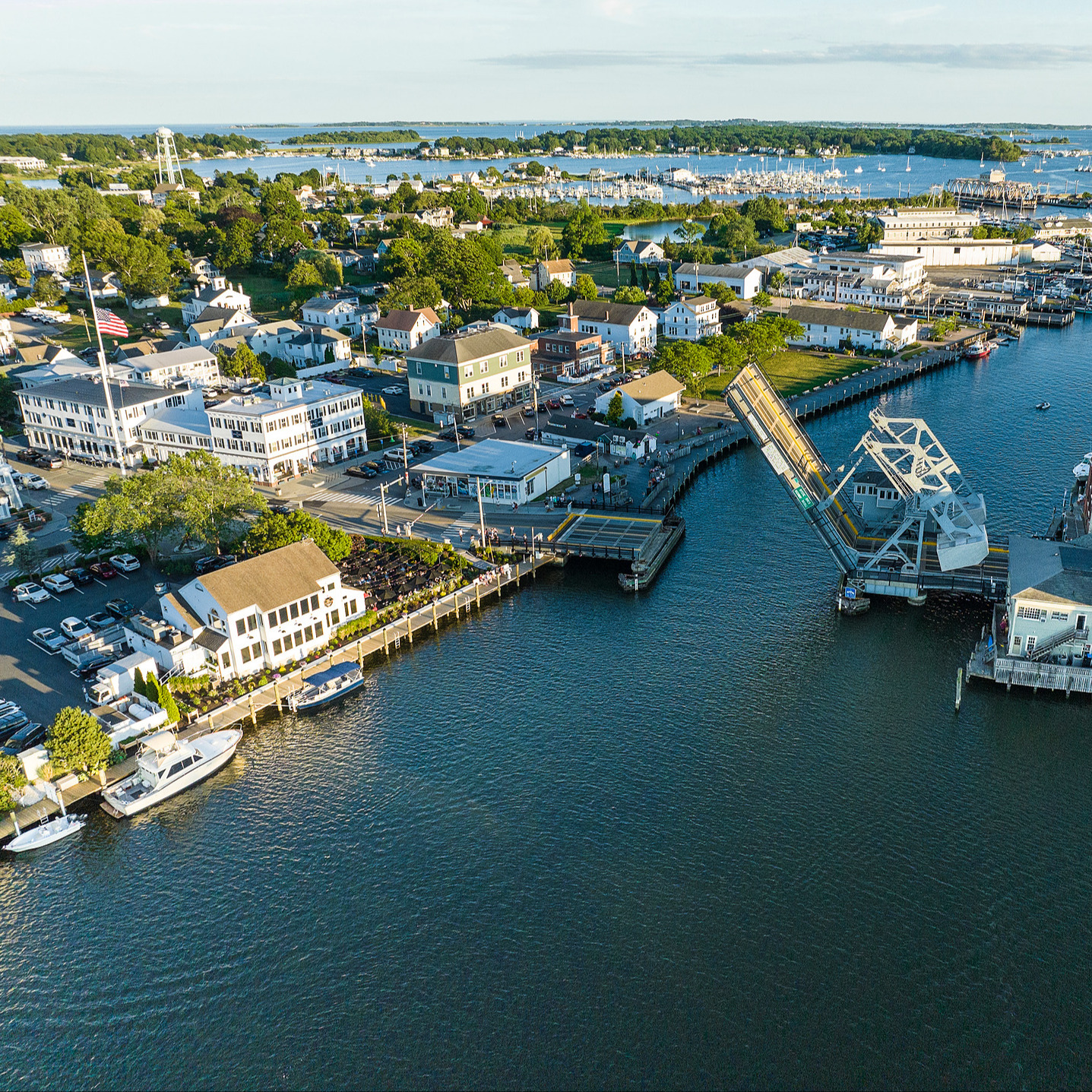
An inn in the centre of a historic shore town has a day shaped by the street pattern rather than by the landscape, and once that pattern is understood the whole schedule follows from it.
The mechanism is straightforward. A street lined with two- and three-storey buildings is a canyon, which means the sun reaches the pavement only when it is high enough to clear the rooftops or aligned with the street’s direction. A street running east to west is lit along its length at the ends of the day; one running north to south is lit only around the middle of it.
So in a town the question is never whether the sun is out. It is which streets are lit right now, and that is knowable from a map in two minutes.
The second fact is the material. A New England shore town of this period is built in clapboard, painted white or in pale colours, with sash windows and shutters — and white painted timber is highly reflective, which means a lit façade acts as a very large soft source for anything standing opposite it in shade. In a town, that is the most useful light available.
The third is the water. A tidal river runs through a town like this, with a working bridge, boats, docks and marsh margins — which is a block away rather than out of the window, and which means the waterfront is a short walk rather than a view.
We have not photographed a wedding at the Whaler’s Inn; inns in historic shore towns behave consistently. Which rooms are included, what the covered alternative is, whether the ceremony happens on the premises or elsewhere in the town, what permits apply to photography in public spaces and on the waterfront, and what the bridge and boat traffic do on a given date are questions for their team.
Whaler's Inn at a glance
| Where | The centre of a historic shore town at Mystic, eastern Connecticut |
| The logic | The street grid decides where the light is at any hour |
| The material | White clapboard: a lit façade is a very large soft source |
| The water | A tidal river and a working bridge, a short walk away |
| Ask first | Rooms included, covered alternative, public-space permits, ceremony location |
Morning to midday: the streets, and the façades
The morning in a shore town is soft, because there is usually moisture over the water and because the low sun is blocked by buildings on most streets — which means the pavement is in even shade while the upper floors and rooflines are lit.
That is a genuinely useful condition and it produces the town’s characteristic morning frame: a couple in soft shade at street level with a brilliantly lit white façade or roofline above and behind them. The exposure goes on the lit façade with the faces lifted by a close warm-gelled source, not on the average — which gives grey clapboard and slightly dark faces and fails at both.
The lit-façade-as-source technique is the other morning resource and it is the single most useful thing to know about photographing in a town like this. A white clapboard building in direct sun is an enormous soft reflector, so a subject standing in shade on the opposite side of the street, facing it, is lit softly and directionally by a source several storeys high.
Finding those positions is a matter of walking one block and looking for a lit white wall with shade opposite. It takes five minutes and it gives better light than any equipment.
The exposure correction goes with it and it catches people out. White clapboard is highly reflective, so a meter looking at it underexposes — which means metering on skin and exposing deliberately brighter than the camera suggests, often by a stop or more. The check is the highlights: white boards should read white with the board texture visible, not grey and not blank.
Indoors in the morning, a historic inn has sash windows with small panes in relatively low rooms, which means the light enters at a lower angle than in a grand building and reaches less far in. A metre from the glass is the working distance, turned about forty-five degrees to it, and drifting to two loses more here than elsewhere.
The glazing bars cut direct sun into small hard patches, which is charming on a wall and unusable on a face — so a sheer curtain, or a window that is not in direct sun, is the answer. And the two free rules: turn the room lights off, and set a custom white balance on a face in position, because a window looking at a white wall opposite delivers bright neutral light while one looking at a tree delivers green.
By the middle of the day the streets are lit and the shade has moved. That inverts the morning situation: now the pavement is bright and the alleys, doorways and north sides are the shade — and in a town those are everywhere, which makes midday considerably easier here than at an open venue.
Doorways are the town’s best midday positions and they are its equivalent of a porch. A recessed doorway in a clapboard or masonry building restricts daylight to a horizontal band that models a face properly, gives a dark surround, and cannot dapple. Two or three metres in — or as far as the recess allows — is the working position.
Awnings, shopfronts and covered walkways do the same job, and a town of this kind has them along its main street. The distinction that matters is solid versus slatted: a canvas awning is shade, a pergola or a gapped structure is a striped dappling machine.
The other midday resource is the alleys and side passages between buildings. Those are in shade for most of the day, they are narrow enough that the light arrives from one direction only, and the walls either side give a frame — which makes them the most reliable positions in the whole town centre and the ones a visitor never notices.
Afternoon to night: the waterfront, the bridge, and the streets again
The afternoon is when the waterfront becomes worth the walk, and it is a short walk rather than an excursion.
A tidal river through a town gives structure rather than a horizon: masts, rigging, hulls, docks, a bridge and marsh margins. A longer lens compresses those into a dense background behind a couple, which is a picture with real depth in it; a wide lens spreads them out and empties the frame, which is the standard mistake.
The tide changes what is there, and on this coast it runs a couple of feet on a six-hour cycle. High water covers the margins and lifts the boats; low water exposes mud and marsh grass and drops the moorings. Both are pictures and it is knowable in advance, which makes it a planning matter rather than a surprise.
The water’s colour is worth knowing: a tidal river carries sediment, so it is brown-green rather than blue, which means it does not brighten a frame the way an ocean does and it fills nearby faces with a muddy-coloured light. A custom white balance set on a face at the water’s edge fixes it.
The compensation is that dark water holds a warm reflection without competing with it — which is why October colour reflected in a tidal river is stronger than it would be on blue water.
A working bridge is the waterfront’s distinctive structure and it is worth using deliberately. It is a strong horizontal with a repeating rhythm, it gives scale because everyone knows roughly how big a bridge is, and from a distance along the channel on a longer lens it closes the frame off and gives it an edge.
If the bridge opens for marine traffic, that is a scheduled event rather than a random one, and worth asking about — because a raised bridge is a dramatic and unusual frame and because it stops road traffic, which changes how long a walk takes.
Marine traffic otherwise is a matter of timing rather than control: a boat moving through a background changes a composition and a wake removes a reflection for several minutes, which argues for making a frame several times rather than once.
Back in the streets, the end of the day is when the grid pays off. An east-west street is lit along its whole length in the last hour, which puts low sun down a corridor of white clapboard — and that is the strongest frame the town gives. Knowing which street does it is a two-minute look at a map, and standing in the wrong one is the difference between a flat frame and a good one.
The exposure at that hour goes on the lit façades with the faces lifted by a close warm-gelled source, because metering on skin gives blown-out clapboard and throws away the light.
Wind funnels along streets and comes off the water, which means a lightstand is a liability in either place — so handheld or bracketed is the configuration, and a doorway or alley is real shelter.
After dark the town gives something no rural venue does. Shopfronts, street lights and lit windows on white clapboard produce a warm, layered, urban frame, and wet pavement after rain doubles all of it in reflection. A tripod, a few seconds and a close gelled source on the faces is the whole recipe — and the same applies at the waterfront, where lights on moving water become long soft vertical streaks.
The practical note for working in a town is that public space is public: there will be other people, traffic and parked cars, and what permits apply to a group on a public street or dock is a question worth resolving in advance rather than on the day. A longer lens and closer framing handles most of it.
- Learn which streets run east-west; those are the ones lit at the ends of the day
- A lit white façade opposite a shaded position is the best light in a town
- Meter on skin and expose brighter — white clapboard fools every meter
- Alleys, doorways and awnings are the midday shade, and nobody uses them
- Longer lens at the waterfront: compress the masts, don’t spread them out
The shore town year
This coast keeps a maritime New England calendar, with the Sound moderating the extremes — so summers are cooler and winters milder than inland, and both spring and autumn arrive later here than up the valley.
Winter is cold with snow in most years, and a town in winter is an excellent subject: snow on white clapboard, dark bare street trees, wet pavement, lit windows early in the afternoon, and a quiet waterfront with the boats hauled out.
Snow is the best natural fill available outdoors and in a street it does something specific — it turns the pavement into a reflector, which lifts the shadowed side of every façade and fills faces from below. Snow fools a meter by about two stops toward underexposure, so deliberate overexposure is the rule, and with white clapboard in the frame the highlight check matters doubly.
The December sun at this latitude reaches only about twenty-five degrees above the horizon, which in a town is decisive: the sun barely clears the rooftops at all, so most streets are in even shade all day while the upper floors catch raking light. That is the easiest and most consistent light the town gets, and the raking light on a white façade is the most beautiful.
Indoors, the same low sun enters small sash windows almost horizontally and reaches further into the rooms than a summer sun does, which widens the narrow usable band beside the glass. A historic inn is better lit in December than in June.
Winter is also the clearest air of the year, which matters for the compressed waterfront frames. The honest caveat is that most boats are out of the water between roughly November and April, which removes the element that makes the waterfront frame — a question for the marina rather than a guess.
Spring is late on the shore because the water keeps the land cool: raw wet weather into May is possible and the boats return progressively. Late spring is the first reliably good season, and the town’s street trees and gardens fill in through May.
Summer is the town’s busiest season and it is comfortable rather than hot — the Sound keeps the shore several degrees below inland and an afternoon sea breeze is reliable. Low eighties Fahrenheit with high humidity is typical, and afternoon thunderstorms are a real feature from June into August.
The honest summer note for a town venue is crowds. A historic shore town in July is full of visitors, which means the streets, the waterfront and the bridge all have people in them — workable with a longer lens and closer framing, and worth knowing rather than discovering. Early morning is the quiet hour and it is also the best light.
Tropical storm season runs from roughly August into October. Direct hits are uncommon; the effects of a passing system are not, and wind-driven rain in a street funnel is worse than open rain. It cannot be planned for, only acknowledged.
Autumn is the best season and by a clear margin. The crowds thin, the heat and humidity break, the air reaches its clearest, the water is at its calmest, the boats are still in, and foliage on the shore turns from the middle of October into early November.
Against white clapboard that colour is exceptional, because white is the most neutral background there is — scarlet and gold read at full saturation against it without competing. And reflected in a calm tidal river with masts in front of it, that is the strongest frame anywhere in the town. The window runs two or three weeks because the species turn at different rates.
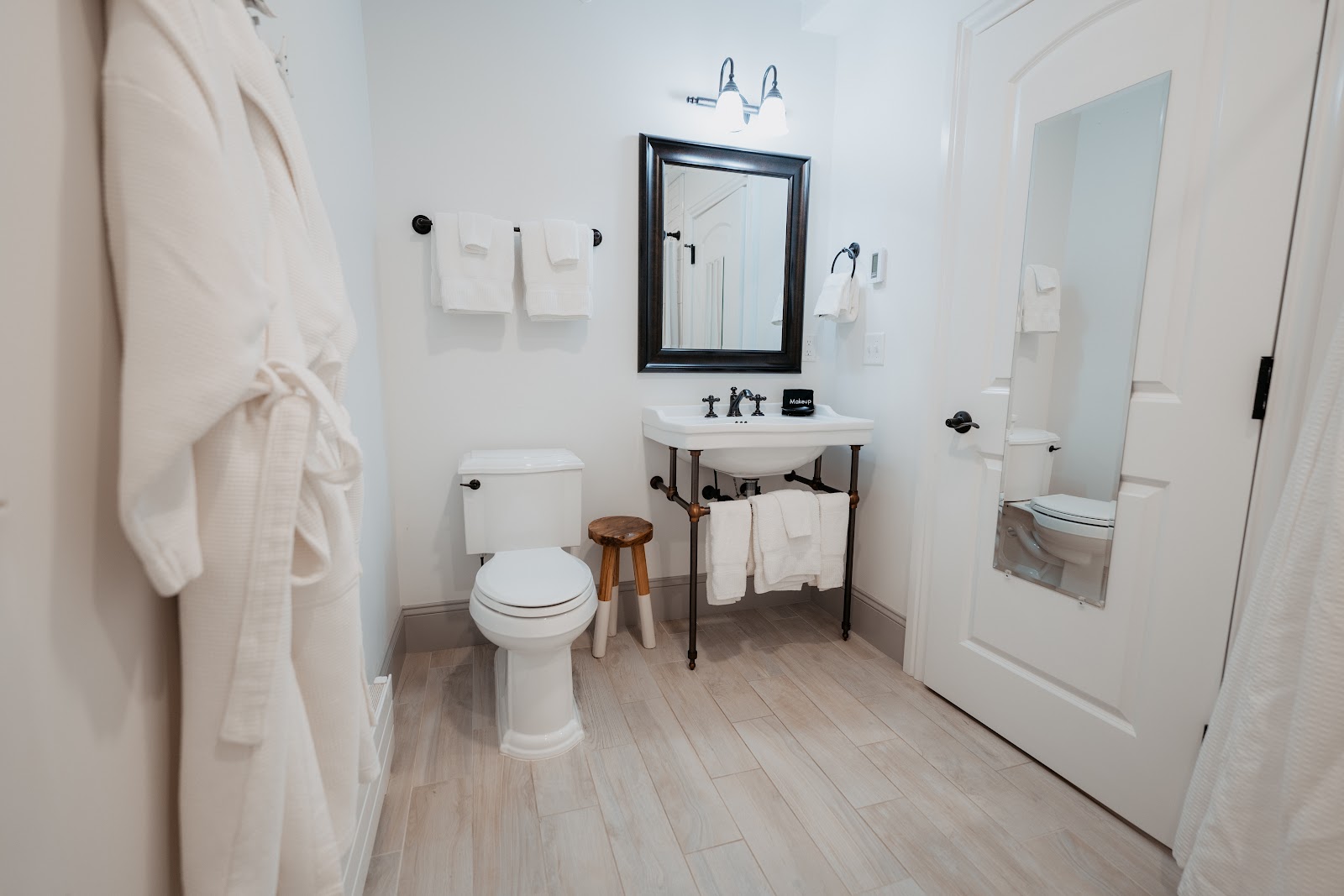
More frames from Whaler's Inn
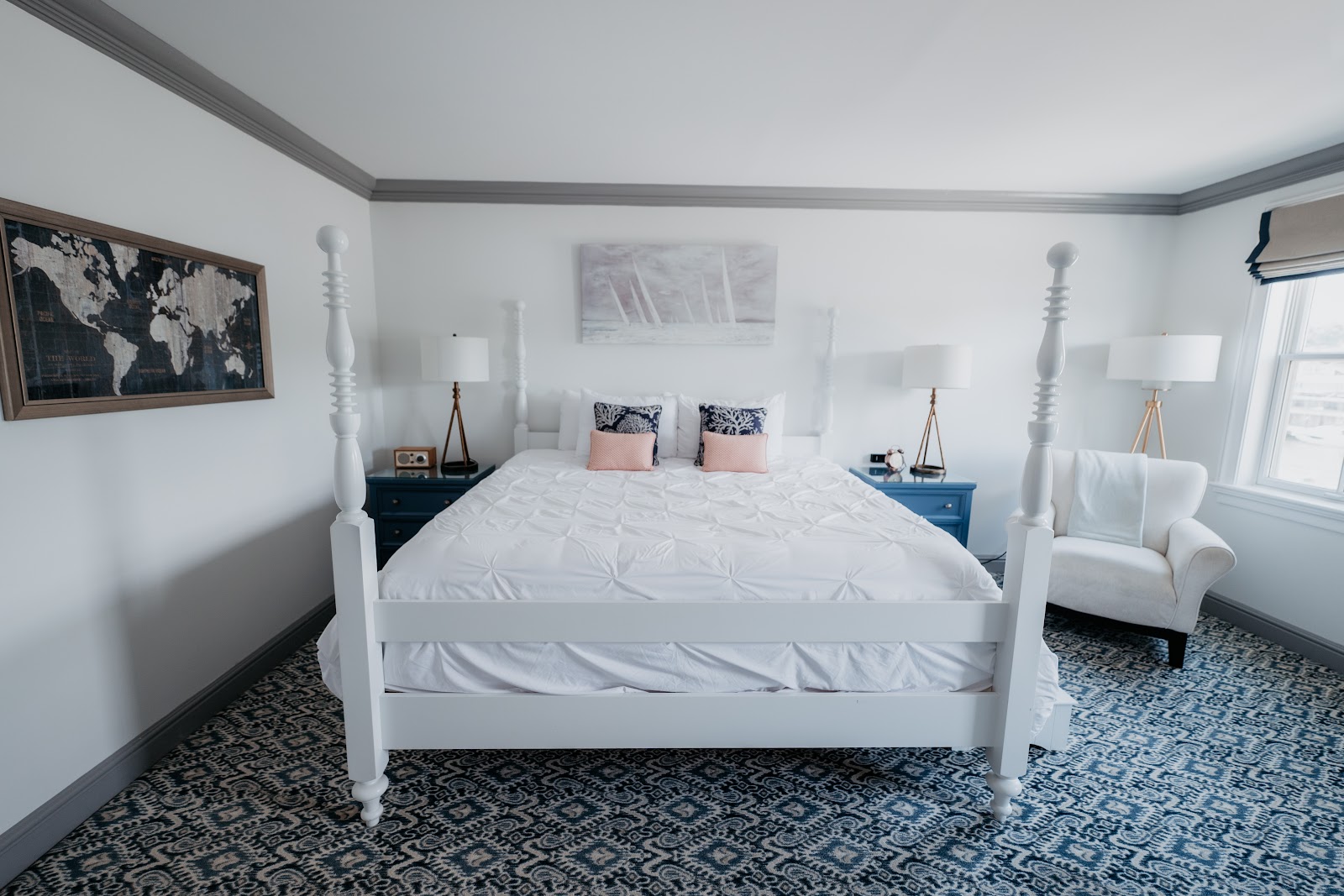
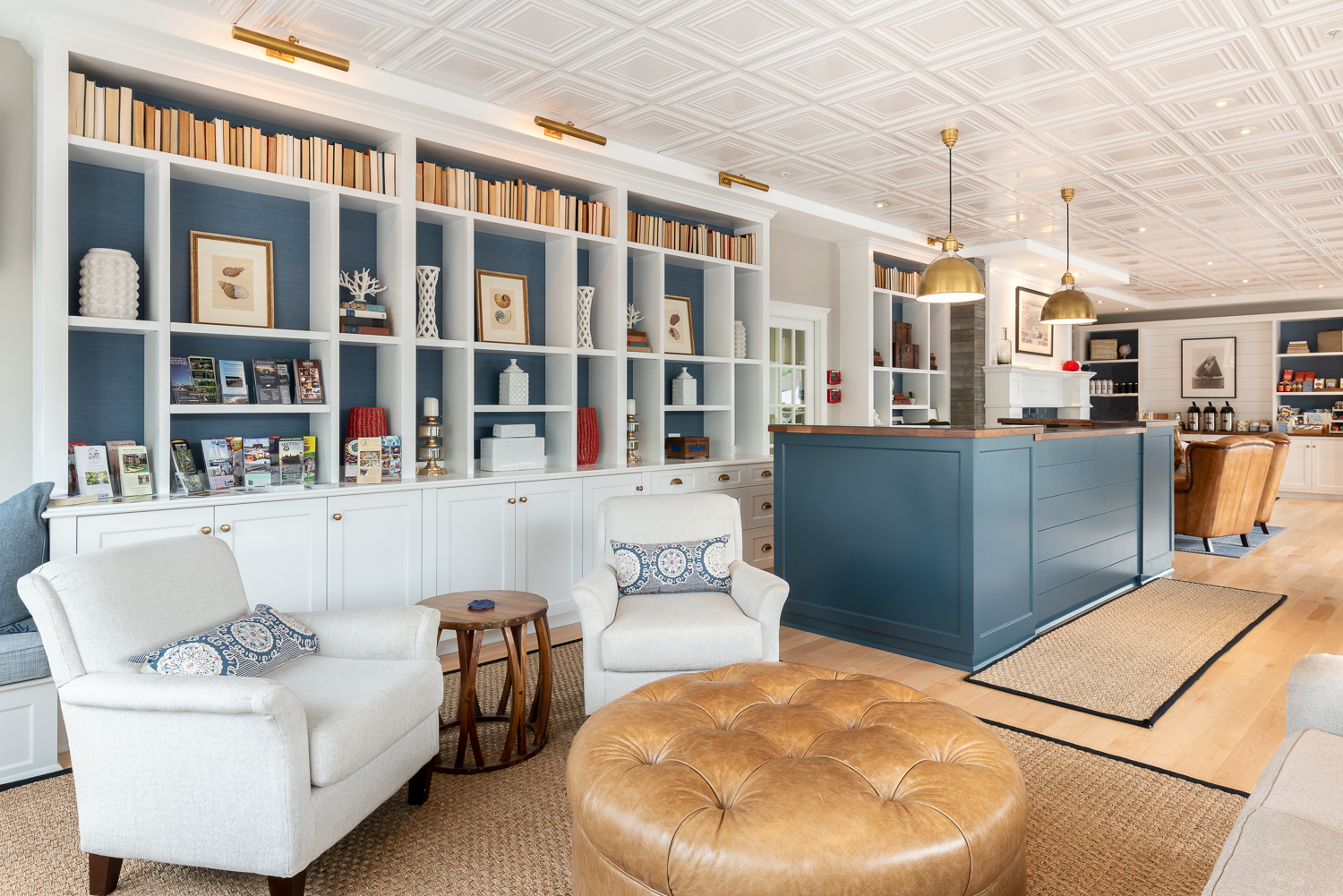
Whaler's Inn wedding photography: common questions
What decides the light in a town?
The street grid. An east-west street is lit along its length at the ends of the day; a north-south one only near the middle of it.
What is the best light available?
A sunlit white clapboard façade, used as a source for someone standing in shade opposite it. It is a soft reflector several storeys high.
Why expose brighter than the meter says?
White clapboard is highly reflective, so a meter pulls it toward mid-grey and gives grey boards and dark faces.
Where is the midday shade?
Doorways, alleys, side passages and solid awnings — all of which a town has in quantity and which visitors never notice.
How should the waterfront be photographed?
On a longer lens from further back, which compresses the masts and closes the frame with the bridge. And check the tide first.
When is the town at its best?
Mid-October into early November: thinner crowds, clear air, calm water, and autumn colour at full saturation against white clapboard.
More Connecticut venue guides
We are writing a photographer’s guide to every venue we would happily shoot in Connecticut. Here are three more, plus the full index:
- Whitney Center, Hamden: The Problem, and Four Ways Out
- Woodwinds, Branford: The Problem, and Four Ways Out
- The Bond Ballroom, Hartford: One Frame, and How It Is Made
Planning a wedding at Whaler's Inn?
A town with a grid and a river. Tell us your date and we will read the streets.