 The Owyhee Hotel, Boise: A Building Converted Twice
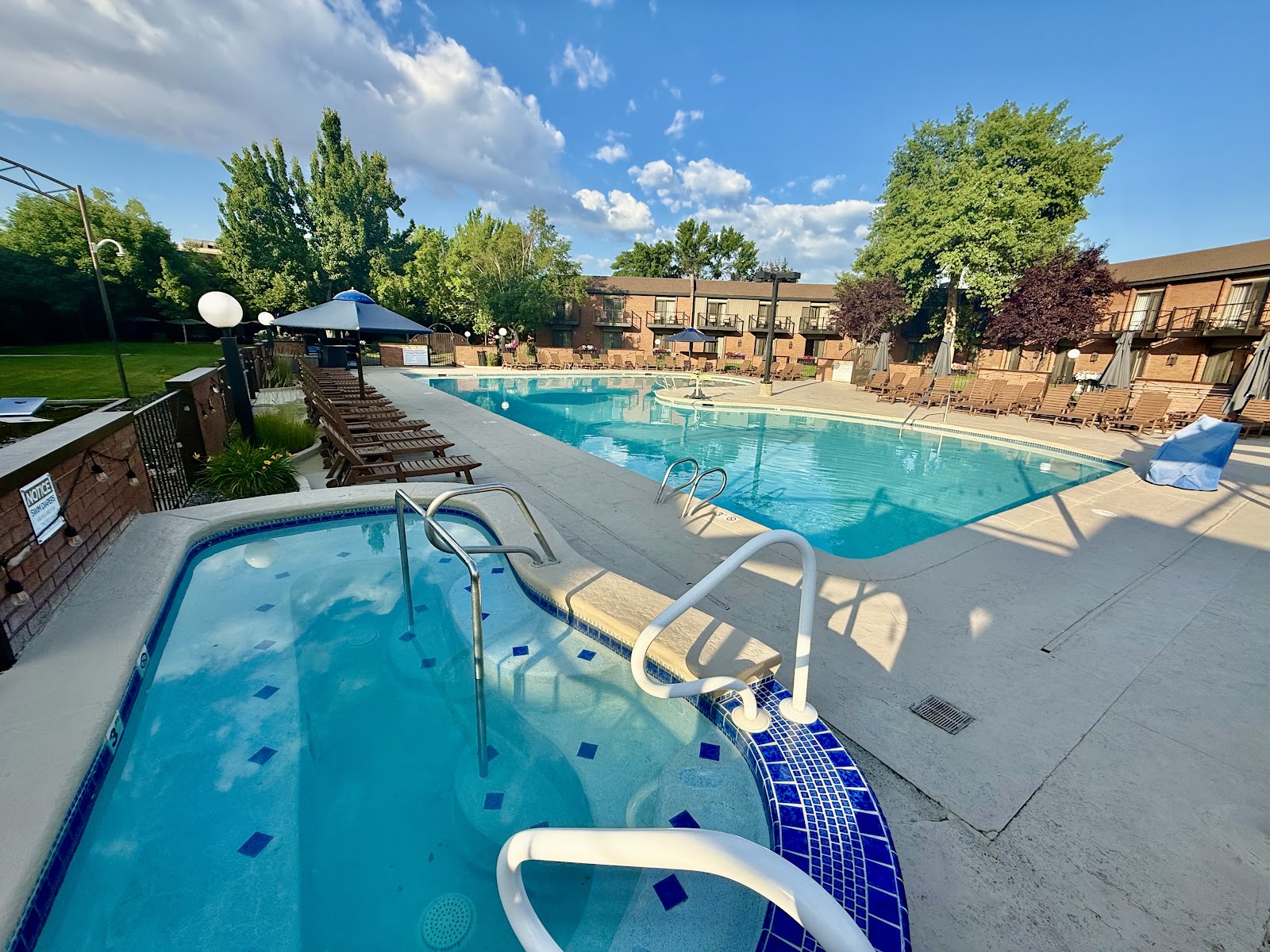
The Riverside Hotel, Boise: The Light Through a Day
In a semi-arid valley the river is where the trees are. That makes it where the middle of the day happens.
Boise sits in a semi-arid valley, which produces a shade situation unlike anywhere wetter and which decides the shape of a wedding day at a riverside hotel.
The valley’s natural vegetation is sagebrush steppe — low, grey-green and treeless — and the foothills above the city have no trees at all. So the only substantial natural shade for miles is the riparian corridor along the river, where cottonwoods and willows are sustained by the water and grow large enough to give genuinely full shade.
That makes a riverside position not merely pleasant but structurally important: it is where the middle of a summer day has to happen, because at this latitude with a June midday sun around seventy degrees above the horizon and dry clear air softening nothing, open ground is unusable and there is nowhere else to go.
The compensations are real. The air here is exceptionally clear, which makes low sun harder and cleaner than in a humid climate; the river reflects; and the treeless foothills give a plain tonal background that a wooded skyline cannot.
This is the day in order. We have not photographed a wedding at the Riverside Hotel; riverside hotels and high desert valleys behave consistently. Which spaces are included, whether river-corridor access is part of the offer and whether the lighting is adjustable are questions for their team.
The Riverside Hotel at a glance
| Where | Beside the Boise River, Idaho |
| Morning | Guest-room windows, and the river frontlit under the cottonwoods |
| Midday | The river corridor — the only real shade in the valley |
| Evening | Low sun on open ground, hard and clean in dry air |
| Ask first | Spaces included, river access, lighting control, room orientation |
Morning and midday
The morning belongs to the guest rooms and to the river before the sun is high.
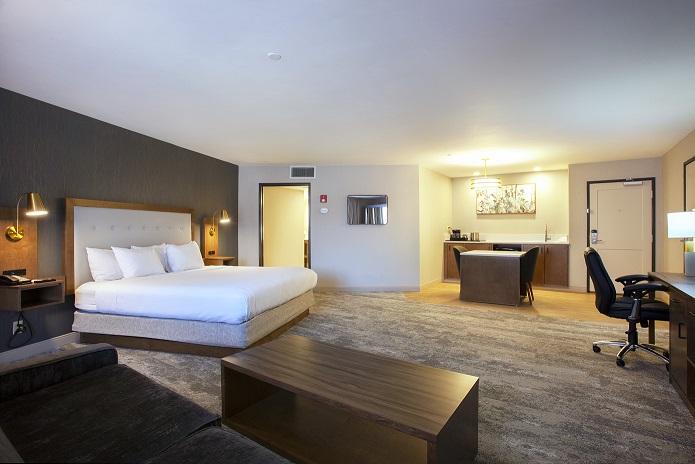
The guest rooms are the interior daylight and the requests are the familiar ones: largest window on the shaded side, every overhead fitting switched off so the room has one colour of light, lamps out of frame, and two to three metres back from the glass so the fall-off is even across two faces.
At Boise’s latitude, about forty-three and a half degrees north, the midday sun reaches roughly seventy degrees above the horizon in June and about twenty-three in December. A north-facing room is shaded all year and is the most reliable, while a south-facing one is a high source in summer and a low directional one through most of a winter afternoon — which makes orientation the question worth asking rather than floor height.
In this climate the shaded side matters more than in a humid one, because dry clear air means direct sun through glass is a harder source here than at sea level in the east — a sunlit window is a hard edge rather than a soft field.
A room facing the river has a specific advantage worth asking for: the water and the cottonwood canopy together give a soft, tonal, green-and-silver background rather than a busy one, and the water bounces a little light upward into the room.
Early at the river the light comes through the cottonwood canopy at a low angle rather than from above, which means the corridor is lit rather than merely shaded — dappling is at its mildest because the light is raking through the canopy rather than falling through it, and the water surface is frontlit and textured.
Through the middle of the day the river corridor is the venue, and this is the structural point about the location. Cottonwoods are large deciduous trees with dense crowns, which means genuinely full shade over a substantial area — and full shade is the absolute rule here, because dappled light puts bright patches and deep shadow on the same face at a ratio nothing holds, and in dry clear air that ratio is worse than in humid air at the same sun angle.
Ten minutes on arrival identifying which parts of the corridor give genuinely full shade — as opposed to looking leafy — is the most valuable ten minutes of the day, and the test is to look at a face rather than the ground: any bright spot means move a metre.
The canopy throws green onto skin from whichever side it is thickest, localised so global white balance cannot remove it. A custom white balance set on a face in the position being used is the fix, and a metre further from the foliage roughly halves it — which in a river corridor means standing on a path rather than in the understorey.
And the water does three things: it reflects, doubling the canopy and any lit ground beyond; it bounces light upward, filling exactly the shadows a high sun carves; and it moves, which makes shutter speed a choice. Camera height decides between a mirror and a stony bed, and low is the answer on a shallow river.
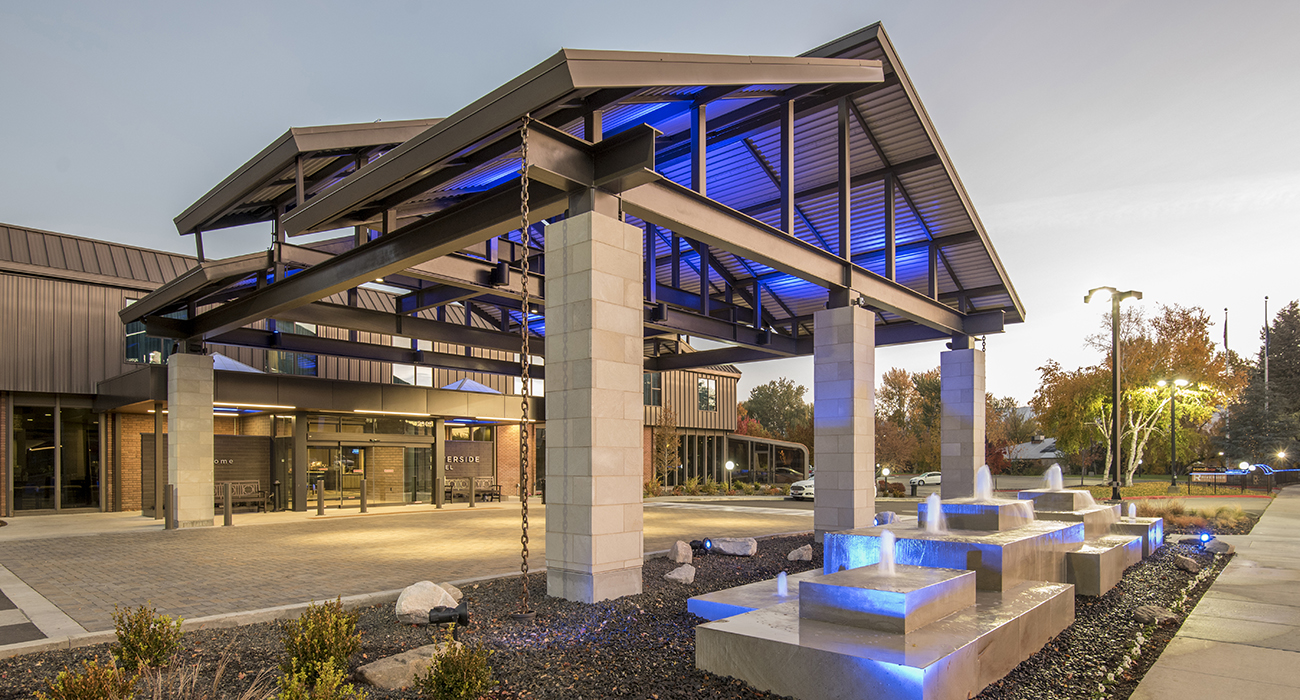
Evening, and the open ground
The last hour is when the open ground becomes usable again and when the valley’s clear air pays off. Dry semi-arid air scatters very little, which means a low sun here is harder and cleaner than the same angle in a humid place — edges are crisper, colours are more saturated, and texture reads more strongly.
That suits three things. Mown ground and hard landscaping, which take raking light and turn from flat surfaces at midday into textured directional ones at seven in the evening. Masonry, which reads as material only when light runs along it. And the foothills, which are treeless and therefore a clean tonal mass rather than a busy one — a long lens compressing them into a textured wall behind a couple is a frame this climate gives and a humid one does not.
The cottonwoods are also at their best backlit rather than front, because a large deciduous canopy with low sun behind it becomes translucent: the leaves glow rather than reading as a dark mass, which is the corridor’s best evening frame and completely different from the shaded midday one.
The crossing is the one unmovable frame: twenty-five to forty minutes after sunset, when the sky still holds colour at about the brightness of the building’s own lighting, so one exposure holds couple, building and sky — with the river doubling it if the position allows. In dry air that window is shorter than in a humid climate, because clear air holds less afterglow, so it is a scheduled ten minutes rather than a leisurely wander.
Inside, the hotel’s public spaces follow whatever their era is. Where they are modern, the problem is separation: pale, evenly lit, hard-surfaced rooms give a subject nothing to stand against, fixed geometrically by distance, the darker end of the room, depth behind, and a source brighter on the face than the room is on the wall. Where they are older, the problem is low ambient and warm bounce, fixed by measuring the ambient and using one warm-gelled source at about a stop above it.
Either way, ceiling heights decide the bounce and it varies by space — one test frame each, because function rooms and guest rooms answer differently.
And mixed colour is the standing condition after dark: warm decorative fittings, cooler recessed downlights, and any coloured uplighting installed for the event. Pick the one that should be correct, set white balance to it, and switch off or overpower whatever else lands on skin.
One practical note about the river: a riparian corridor has soft ground, uneven banks and changing water levels, and a position that exists in September may be different in spring when snowmelt is coming down from the mountains above. Worth asking rather than assuming, and worth walking in advance with formal shoes in mind.
- Ask the guest room’s orientation, not its floor — north is shaded all year
- Ten minutes finds the corridor’s genuinely full shade; look at the face
- Custom white balance on a face; the canopy throws green from one side
- Backlight the cottonwoods in the evening — the leaves go translucent
- Use the treeless foothills as a plain tonal background with a long lens
The Idaho year
The seasons here are sharper than an eastern year and the river corridor changes completely across them, which matters because it is the venue’s main outdoor asset.
Spring is short and vivid: the valley greens after the winter and spring rains, the foothills turn briefly green rather than gold, and the cottonwoods come into new leaf — thin, translucent and the best green of the year, with the canopy not yet closed so the dappling is at its mildest. The river is also at its highest and fastest as snowmelt comes down from the mountains, which makes it louder and more dramatic and the banks less approachable.
Late April into May is the best combination of green, comfortable temperatures and forgiving light, and it is the one time the foothills behind are green.
Summer is hot and very dry. The middle of the day is unusable in the open — which is precisely why the corridor matters — and the ends of it are exceptional, with dry clear air at low sun giving the hardest and cleanest raking light a photographer will meet. The valley browns off through the season, so the foothills go gold, which is a warm distinctive background.
Late summer brings wildfire smoke, which deserves naming honestly because it has become a reliable part of the western calendar: smoke from fires elsewhere in the region can sit in a valley for days at a time, flattening the foothills to grey or removing them entirely, turning the sun orange, and taking away the deep blue sky. It is good warm diffusion and no distance, and it makes the middle of the day usable for once — but a couple booking August or early September should know the clear version is not guaranteed.
Autumn is the best window of the year, and for a riverside venue it is emphatic: the smoke usually clears, the air returns to its exceptional clarity, and the cottonwoods turn a strong yellow. Yellow riparian canopy against gold foothills and a blue sky is the valley’s own palette and it exists nowhere else in quite that combination. Late September into October is the strongest period.
Winter brings the valley’s distinctive condition, which is the inversion: cold air settling under warmer air above, trapping haze or fog at low level for days at a time. In a valley-floor location that means flat, soft, grey light with no shadows at all — genuinely good for faces, and the one time the middle of a winter day is as usable as the ends of it, at the cost of the foothills disappearing.
Snow is regular at this elevation. Outdoors it is the best natural fill available, lifting exactly the shadows a low sun carves while fooling a meter by about two stops toward underexposure; and indoors it turns the ground into a reflector, so the guest-room windows give softer, brighter light than at any other time of year.
A river running open through snow with bare cottonwoods above it is the corridor’s winter frame and a genuinely distinctive one. And the December midday sun at about twenty-three degrees above the horizon means the whole short day is raking light — so for once the valley’s lack of shade costs nothing at all.
More frames from The Riverside Hotel
The Riverside Hotel wedding photography: common questions
Why does the river corridor matter so much?
Because in a semi-arid valley it is the only substantial natural shade for miles — the sagebrush steppe and the foothills have no trees at all.
What is the rule in the corridor?
Full shade only. Dappled light puts bright patches and deep shadow on the same face, and in dry clear air that ratio is worse than in humid air.
Which guest room should be requested?
A north-facing one for reliable soft light; a river-facing one for a tonal green-and-silver background. Orientation matters more than floor height.
Why is low sun better here than in the east?
Because dry semi-arid air scatters very little, so a low sun is harder and cleaner — edges crisper, colours more saturated, texture reading more strongly.
How should the cottonwoods be used in the evening?
Backlit. A large deciduous canopy with low sun behind it goes translucent, which is completely different from the shaded midday frame.
When is the valley at its best?
Late September into October — smoke cleared, air at its clearest, and yellow riparian canopy against gold foothills and a blue sky.
More Boise, ID venue guides
We are writing a photographer’s guide to every venue we would happily shoot in Boise, ID. Here are three more, plus the full index:
- The Boise Depot, Idaho: The One Decision That Governs Everything
- The Idaho Botanical Garden, Boise: A Walk Through the Site
- The Owyhee Hotel, Boise: A Building Converted Twice
Planning a wedding at The Riverside Hotel?
The river is where the shade is. Tell us your date and we will build the day round it.