 Indianapolis Zoo: Reading a Day From Open Grounds to Underwater Glass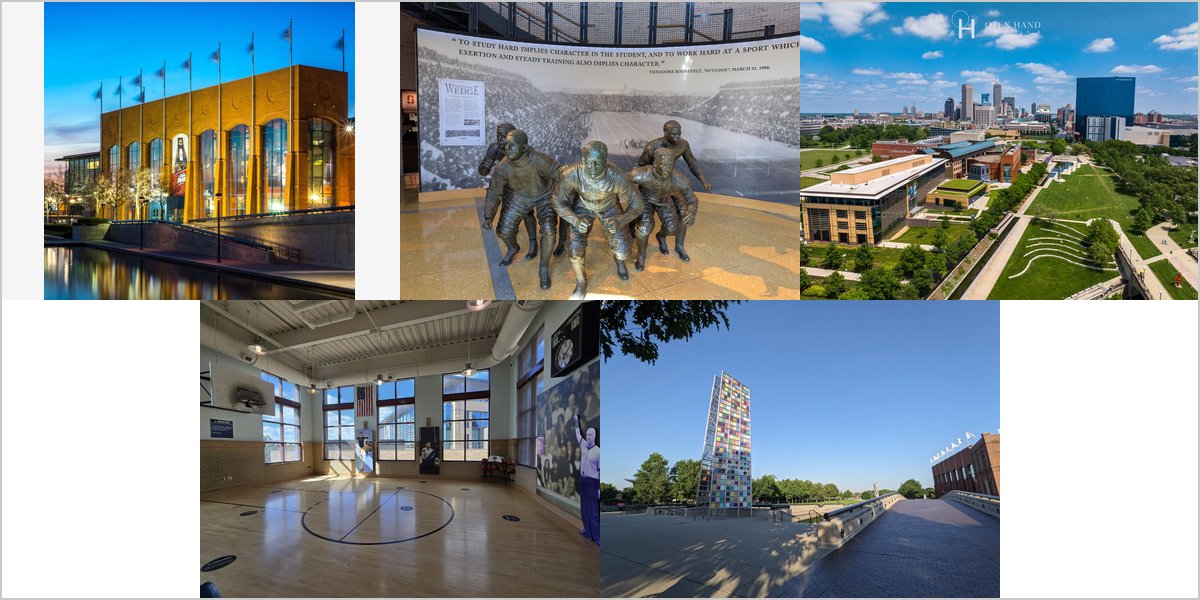
The NCAA Hall of Champions: Four Ways Out of the Screen Problem
A modern museum is full of lit screens, and screens are the most difficult light source in any interior.
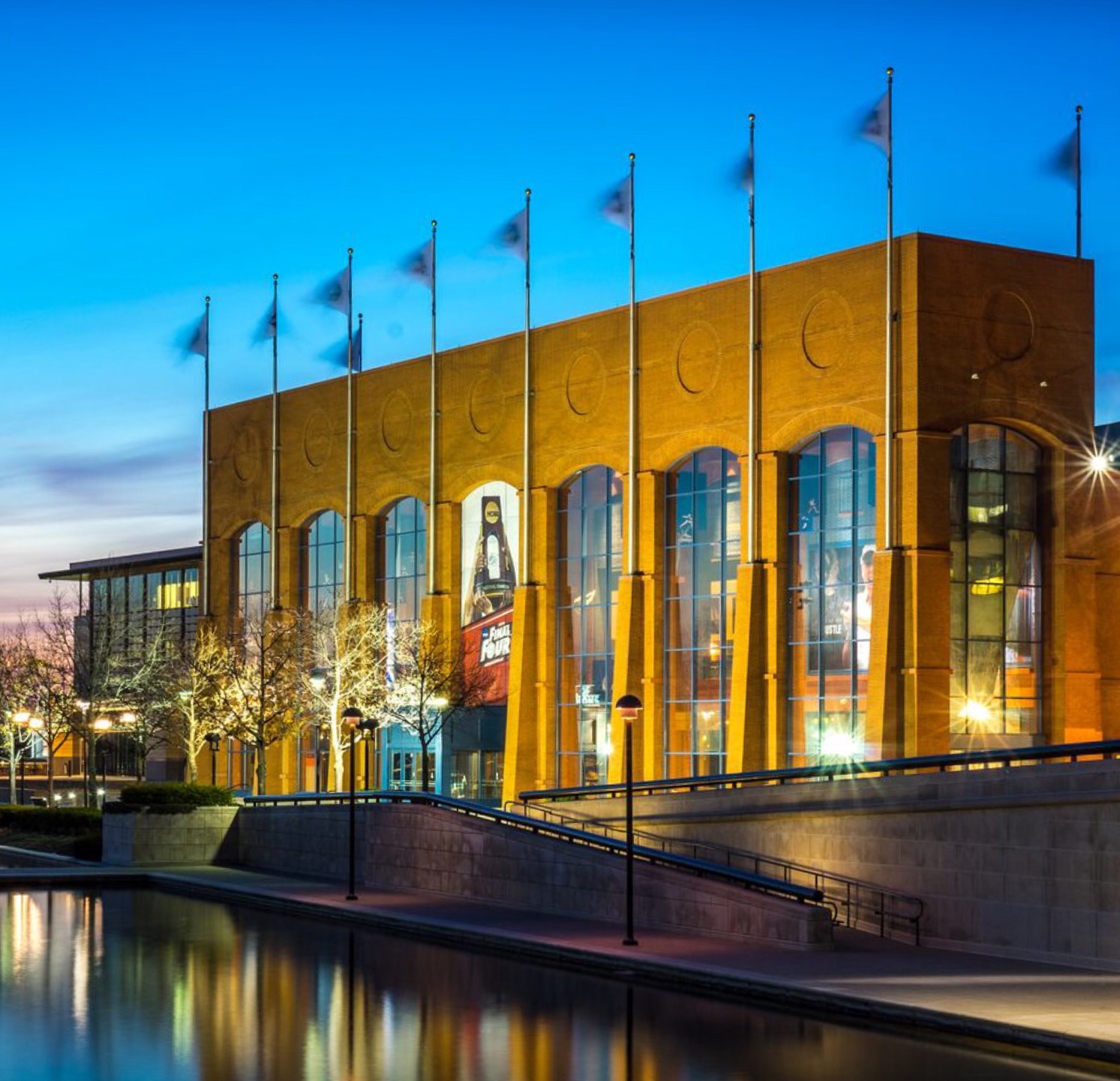
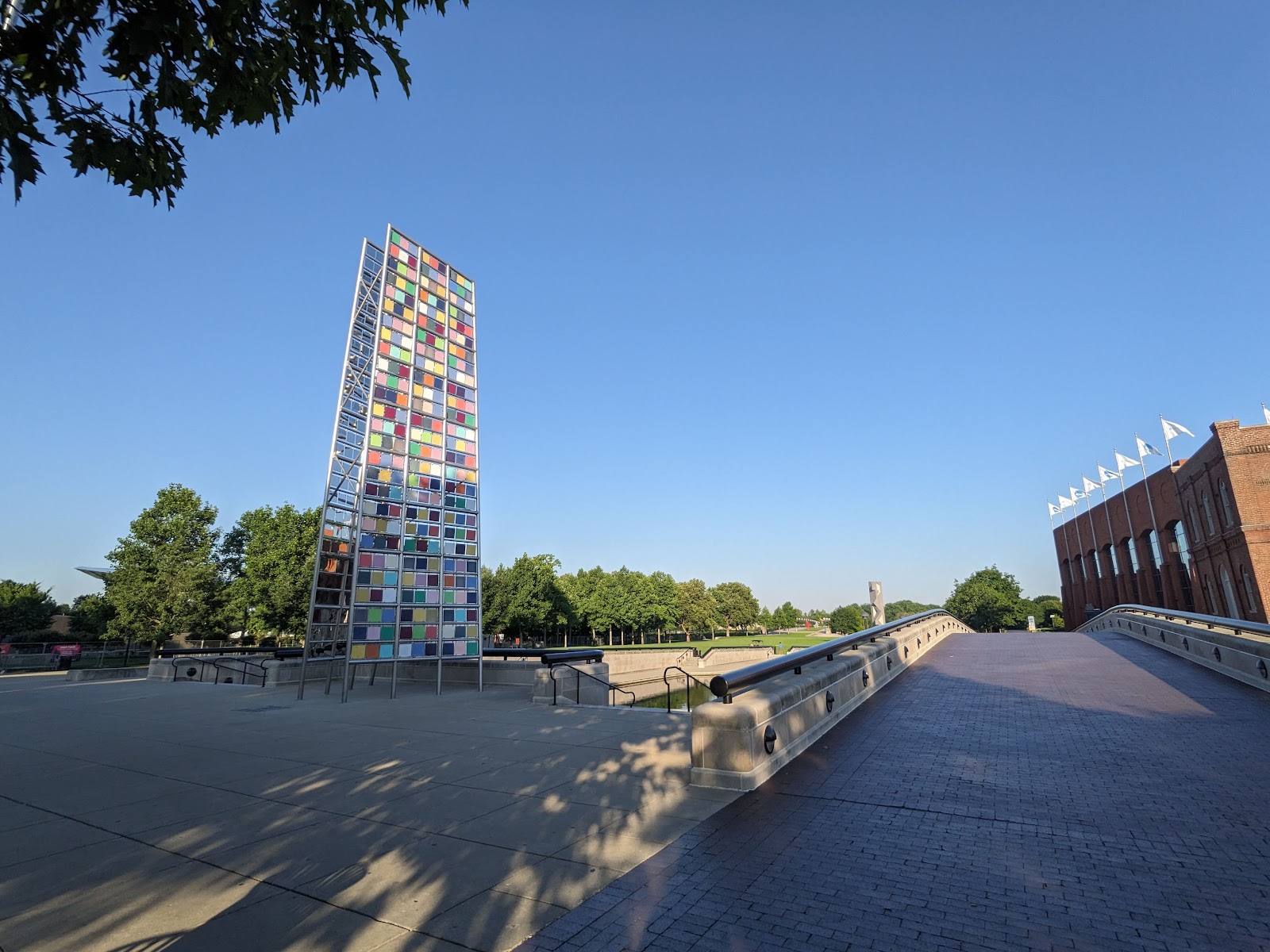
The NCAA Hall of Champions occupies a building in White River State Park in downtown Indianapolis, a museum of college athletics with open interiors, interactive exhibits and glazing that brings in views towards the city.
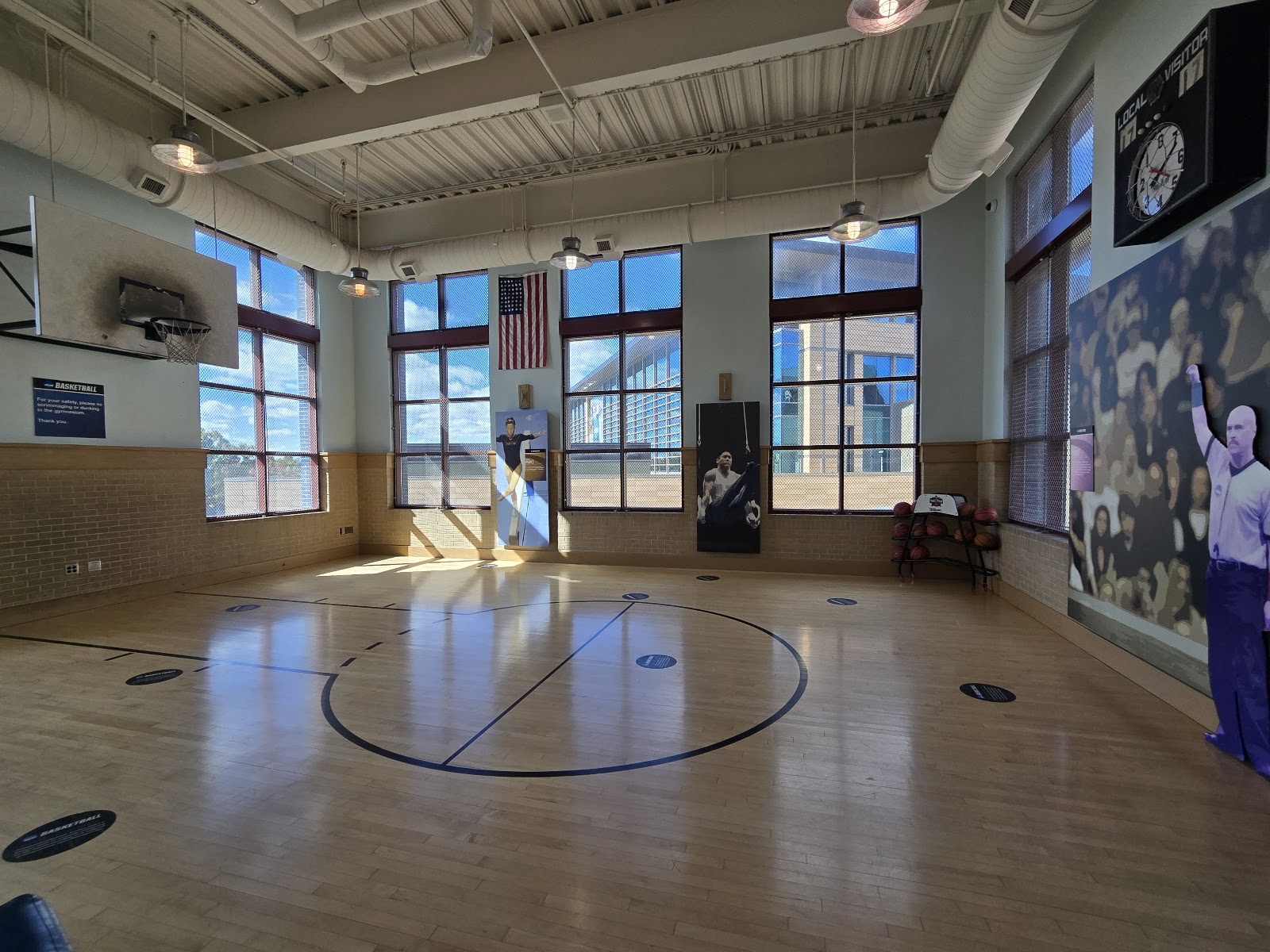
A contemporary interactive museum presents a lighting problem that older museums do not, and it is a genuinely difficult one: the room is substantially lit by screens. Display panels, video walls, backlit graphics and interactive kiosks are emissive sources rather than reflective surfaces, they are spectrally narrow, they are individually bright against a dim room, and they change colour and brightness continuously as their content plays.
That combination defeats the usual approaches. There are four ways to handle it and the right one depends on the frame. We have not photographed a wedding at the Hall of Champions; screen-lit contemporary interiors behave the same wherever they occur. Which spaces host events, and whether display content can be paused or set to a fixed state, are questions for their events team — and that second question is more useful than it sounds.
The NCAA Hall of Champions at a glance
| Where | White River State Park, downtown Indianapolis, Indiana |
| Character | Contemporary museum of college athletics with interactive displays |
| The problem | Screens are emissive, narrow-spectrum, bright and constantly changing |
| Why it matters | No white balance fixes them and no exposure holds them still |
| Ask first | Whether display content can be paused or fixed for the event |
Why screens are harder than any other light source
A tungsten lamp or a window is a broad-spectrum source: it emits across the visible range, so a camera can be balanced to it and skin renders naturally. A screen is not. It produces colour by mixing three narrow primaries, which means its spectrum has spikes and gaps, and skin lit by it renders oddly even when the white balance is technically correct — because the wavelengths that make skin look like skin are partly missing.
Screens are also bright relative to the room. A museum lit largely by its own displays is dim overall with small very bright rectangles in it, which is a dynamic range problem: expose for the room and the screens clip to white, losing the content that makes them interesting; expose for the screens and everything else is black.
And they move. Display content plays, so the colour and brightness of the light in the room change continuously. Two frames taken ten seconds apart can have different colour casts and different exposure requirements, which is why a sequence shot in a screen-lit room often refuses to match itself no matter how carefully each frame was made.
None of that is fatal, but it does mean the usual instinct — balance to the ambient and shoot — produces poor results consistently. The four approaches below all involve taking control away from the screens.
Ways one and two: own the faces, or use screens as background only
The first and most reliable approach is to make your own light the only thing illuminating skin. A gelled source at face height, bright enough locally to dominate whatever the nearest screen is doing, with white balance set to that source: now skin is consistent from frame to frame regardless of what the displays are playing, and the screens become coloured background rather than a light source. This single decision solves most of the room.
The gel matters. Screens tend to push the ambient cool and blue, so an ungelled flash reads as another cold source and the frame has no warmth anywhere. A warm gel with balance set to match gives natural skin against a cool screen-lit surround, which is a strong and deliberate-looking combination.
The second approach is compositional: keep screens out of the frame where they are not wanted, and put them fully in it where they are. A screen partially visible at the edge of a frame is a bright coloured distraction with no purpose; the same screen filling a third of the frame behind a couple is a graphic background that says exactly where you are. Half-in is the failure mode, as it is with any assertive background object.
Shooting at a moderately fast shutter also helps more than it seems. It reduces the ambient contribution overall, which shrinks the screens’ influence on skin, and it freezes the display content rather than letting it blur between refresh states.
- Gel your key warm, let it own every face, balance to it
- Screens fully in frame or fully out — never half in
- A faster shutter reduces ambient influence and freezes content
- Ask whether displays can be paused on a fixed image
- Use the glazing for any frame that needs clean neutral light

Ways three and four: pause the content, or go to the glass
The third approach is the one nobody thinks to request: ask whether display content can be paused or set to a static image for the duration of the photography. Many installations can be, and a fixed screen is a completely different proposition from a playing one — the colour stops changing, the exposure stops moving, and a sequence can be shot that matches itself. It costs a conversation and it removes the hardest part of the problem outright.
Even a partial version helps. If a single large video wall can be held on one frame for five minutes, that becomes a usable and rather striking background — a couple against a static field of colour and imagery, lit by a warm key, is a strong contemporary frame.
The fourth approach is to leave the screens behind and work the glazing. Extensive glass is the one part of a building like this with clean, broad-spectrum, well-behaved light: a large window facing away from the sun is a big soft neutral source, and a couple placed a metre back and turned into it has the best portrait light in the building with nothing carried and no colour problems.
The glazing also brings the skyline in, which matters because a museum interior could be anywhere while a frame with the downtown towers beyond the glass is unmistakably Indianapolis. That frame needs a long lens for the usual reason — compression brings the buildings close, a wide lens reduces them to a distant strip — and after dark it needs a warm source on the couple balanced against the city lights.
White River State Park outside is the counterweight and it is a short walk: lawns, mature trees, the canal walk and water, all giving daylight, greenery and neutral colour, which is the exact opposite of a screen-lit interior. A gallery that holds both has genuine range, and the park is at its best in the last ninety minutes while the interior is entirely time-independent.
What works in your favour
- Screens used deliberately give a strong contemporary graphic background
- Displays can often be paused on a fixed image if asked
- Extensive glazing provides clean broad-spectrum window light
- The skyline through glass locates the gallery immediately
- White River State Park outside for daylight and greenery
What to plan around
- Screens are narrow-spectrum, so skin renders oddly even at correct balance
- Bright rectangles in a dim room create a real dynamic range problem
- Playing content changes colour and exposure between consecutive frames
- Contemporary interiors supply no character of their own
- Nothing in the interior indicates the time of day or the season

More frames from The NCAA Hall of Champions
The NCAA Hall of Champions wedding photography: common questions
Why does skin look wrong under museum screens?
Because a screen makes colour from three narrow primaries, so its spectrum has spikes and gaps. The wavelengths that make skin look like skin are partly missing, and that cannot be corrected by white balance — the information is not in the light.
What is the most reliable fix?
Make your own light the only thing illuminating skin. A warm-gelled source at face height, bright enough to dominate the nearest screen, with white balance set to it. Skin stays consistent whatever the displays are playing, and the screens become background.
Should screens be in the frame at all?
Fully in or fully out. A screen half-visible at the frame edge is a bright coloured distraction with no purpose; the same screen filling a third of the frame behind a couple is a graphic background that says where you are.
Is there something worth requesting?
Yes, and almost nobody asks: whether display content can be paused or held on a static image. A fixed screen stops the colour and exposure moving, so a sequence can match itself. It costs a conversation and removes the hardest part of the problem.
Where is the cleanest light in the building?
At the glazing. A large window facing away from the sun is a broad-spectrum soft neutral source — the best portrait light in the building, with nothing carried and none of the colour problems the interior has.
Does a faster shutter help?
More than it seems. It reduces the ambient contribution overall, which shrinks the screens’ influence on skin tone, and it freezes display content rather than catching it blurred between refresh states.
More Indianapolis, IN venue guides
We are writing a photographer’s guide to every venue we would happily shoot in Indianapolis, IN. Here are three more, plus the full index:
- The Alexander: Photographing a Hotel That Is Also a Gallery
- White River Gardens: A Conservatory and a Garden, Used Properly
- The Columbia Club: Field Notes on Photographing a Private Club
All Indianapolis, IN Wedding Venues →
Planning a wedding at The NCAA Hall of Champions?
Screens are the hardest light in any modern museum, and one request removes most of it. Tell us your date and we will make it.