 The Venue, Asheville: A Season-by-Season Guide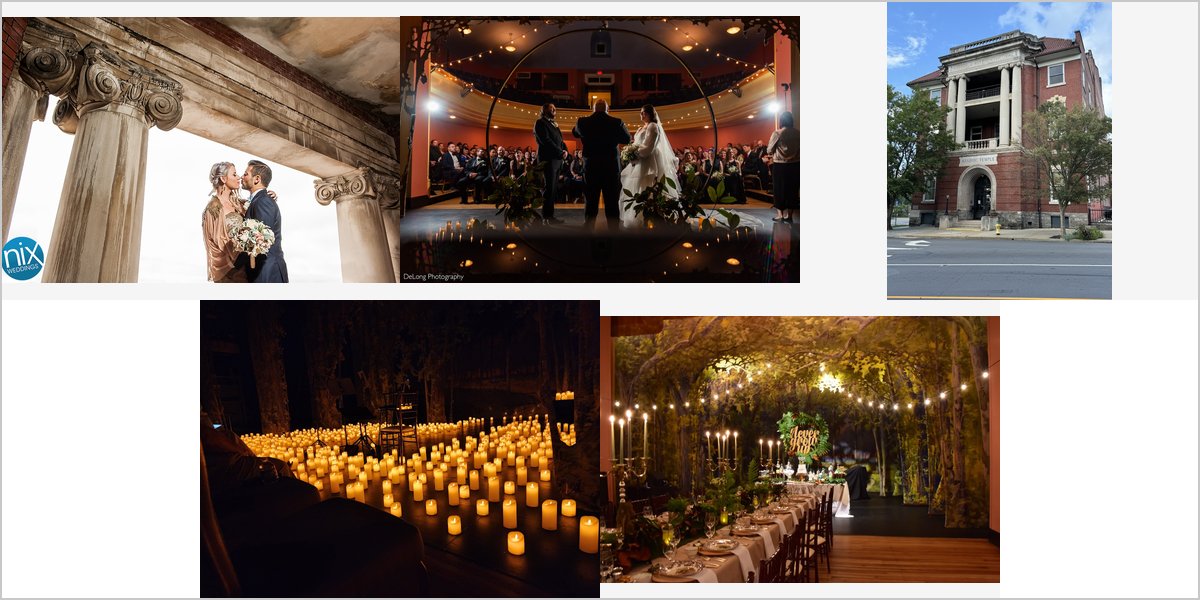
June 15, 2026
The Asheville Masonic Temple: A Photographer’s Walk-Through
Lodge buildings were built to impress their own members. Ornate ceilings, deep colour and no windows where it counts — and the light has to come from the side.
The Asheville Masonic Temple was built in 1913 in downtown Asheville, a lodge building of the type fraternal organisations constructed across America in that era. These buildings share a consistent character: the money went into ceremonial rooms, decorative plasterwork, symbolic detail and a ballroom, rather than into daylight, circulation or flexibility.
Photographically that means ornate relief surfaces that depend entirely on light direction, deeply coloured ceremonial interiors with no neutral reference anywhere, high decorated ceilings that defeat bounce flash, and essentially no usable daylight in the event spaces. It also means visual character that no purpose-built venue can reproduce — lodge rooms look like nothing else.
This is a walk-through in shooting order. We have not photographed a wedding here; ornate plaster, saturated colour and windowless ceremonial rooms behave identically wherever they occur. Which rooms your booking includes and what the venue permits are for their team.
Asheville Masonic Temple at a glance
| Where | Downtown Asheville, North Carolina |
| Built | 1913, as a Masonic lodge |
| Character | Ceremonial rooms with decorative plasterwork and symbolic detail, plus a ballroom |
| Light | Warm artificial throughout; little or no daylight in the event spaces |
| Technical headline | Ornate relief needs side light — frontal flash erases it completely |
Arrival and the staircase
Lodge buildings almost always have a substantial staircase, and in a windowless building it is usually the one place where genuine daylight reaches — a landing window, a stairwell skylight, or borrowed light from the entrance. That makes it both the best-lit and the strongest compositional location in the building.
A stair gives verticality, leading lines from the balustrade, and elevation to shoot from. Place the couple a few steps below whatever light source exists, turned into it, and you have your best natural-light frame of the day. Then shoot from below for height and from above so the dress falls away on the steps.
Do this early, while there is still daylight outside to borrow. In a building with no windows in the main rooms, the staircase’s light is the only thing on a clock, and once the sun is down it is gone like everything else.
The ceremonial rooms: side light or nothing
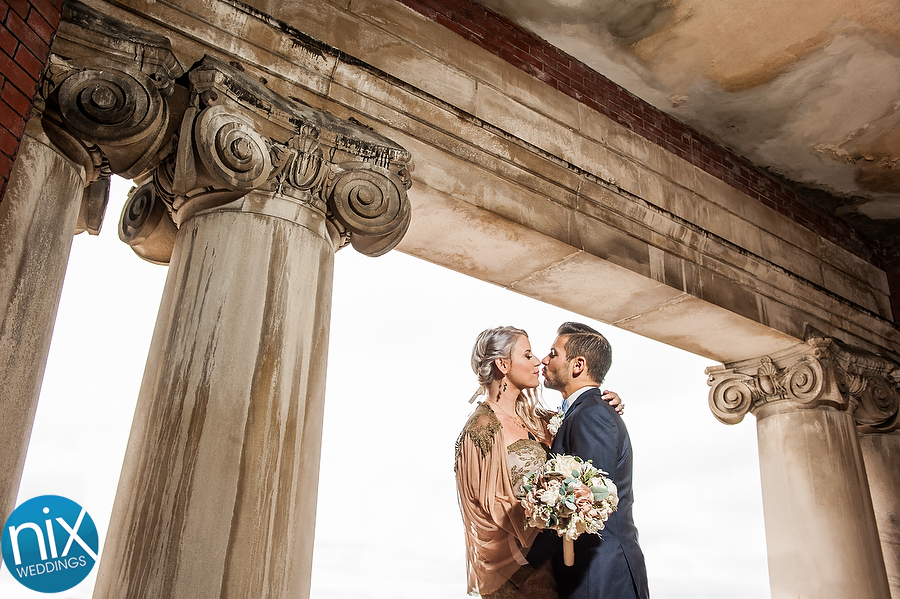
Lodge ceremonial rooms are the venue’s distinguishing feature — ornate plasterwork, painted detail, symbolic decoration, often deeply coloured walls and ceilings. All of that relief is visible only because light striking it at an angle lets the raised parts shade the recessed parts.
Light it from the camera position and every shadow disappears. A deeply modelled ceiling flattens into a painted surface, the symbolic detail loses its depth, and the single most impressive thing about the room vanishes from the photograph. This is the most common mistake made in buildings of this type and it costs nothing to avoid.
So: one flash on a stand, well off the camera axis, feathered so the edge of the beam skims the surface. The relief stands up, the room reads as three-dimensional, and the frame looks like the space actually feels. Same equipment, entirely different result.
Colour in a saturated windowless room
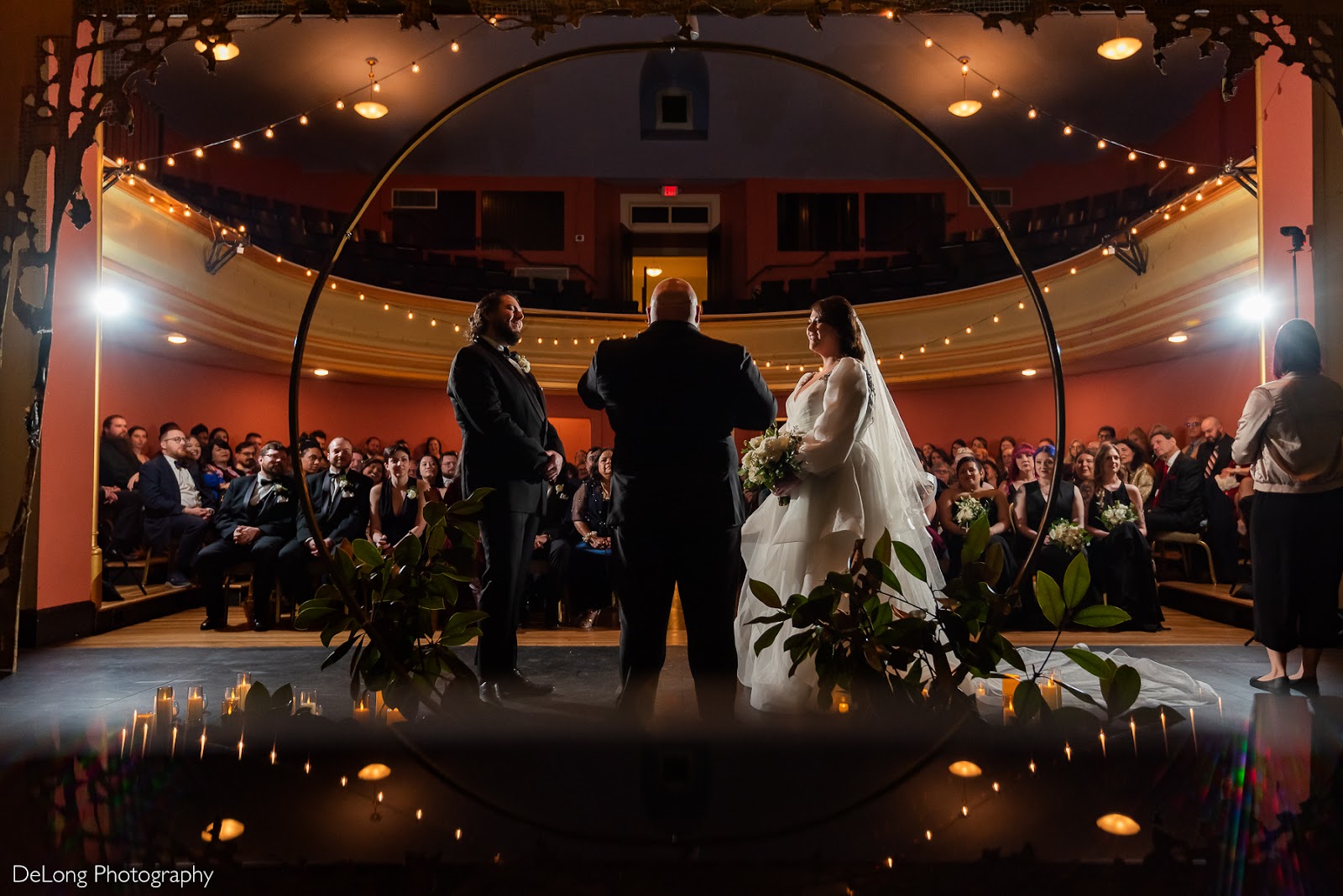
Deeply coloured walls and ceilings — the blues, reds and golds common in lodge interiors — bounce their own colour onto everyone standing near them. Combined with warm tungsten fixtures and no pale surface anywhere to give skin a neutral reference, the result is faces that pick up whatever the nearest wall is.
The management is the same as everywhere: separation and differential white balance. Keep a metre or two between people and strongly coloured surfaces, set white balance manually in each room, and light faces with something closer to neutral than the ambient so skin retains a cool component.
Then use the colour deliberately rather than fighting it. Saturated ceremonial rooms are dramatic, and a photograph that leans into deep blue or deep red as a background while keeping skin clean looks intentional. A photograph where the colour is on the faces looks like a mistake. The difference is entirely about where people stand.
The ballroom, and downtown outside
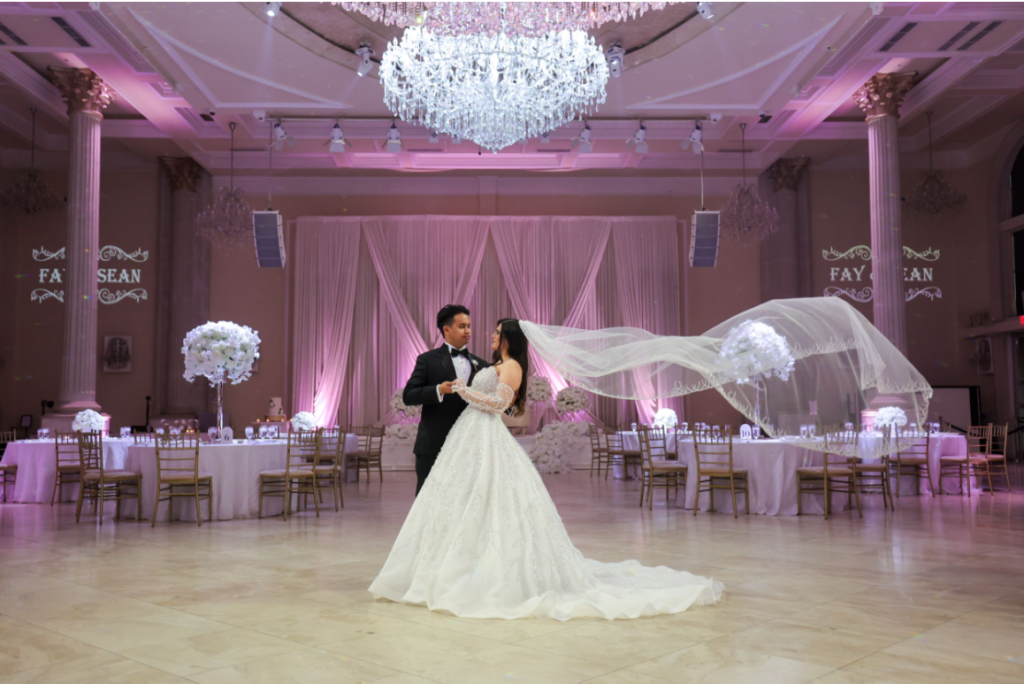
The ballroom follows the pattern of every period lodge ballroom: high decorated ceiling, warm fixtures, no daylight, and surfaces that absorb rather than return light. Bounce flash is ineffective. Light comes from stands — one feathered key from the side, one behind the dancefloor as a rim light to separate people from a dark background.
Expose so the fixtures read as glowing points rather than blown holes, which means the ambient sits darker than instinct suggests. A 1913 ballroom is meant to be warm and pooled; correcting it to an evenly lit room removes exactly what distinguishes it.
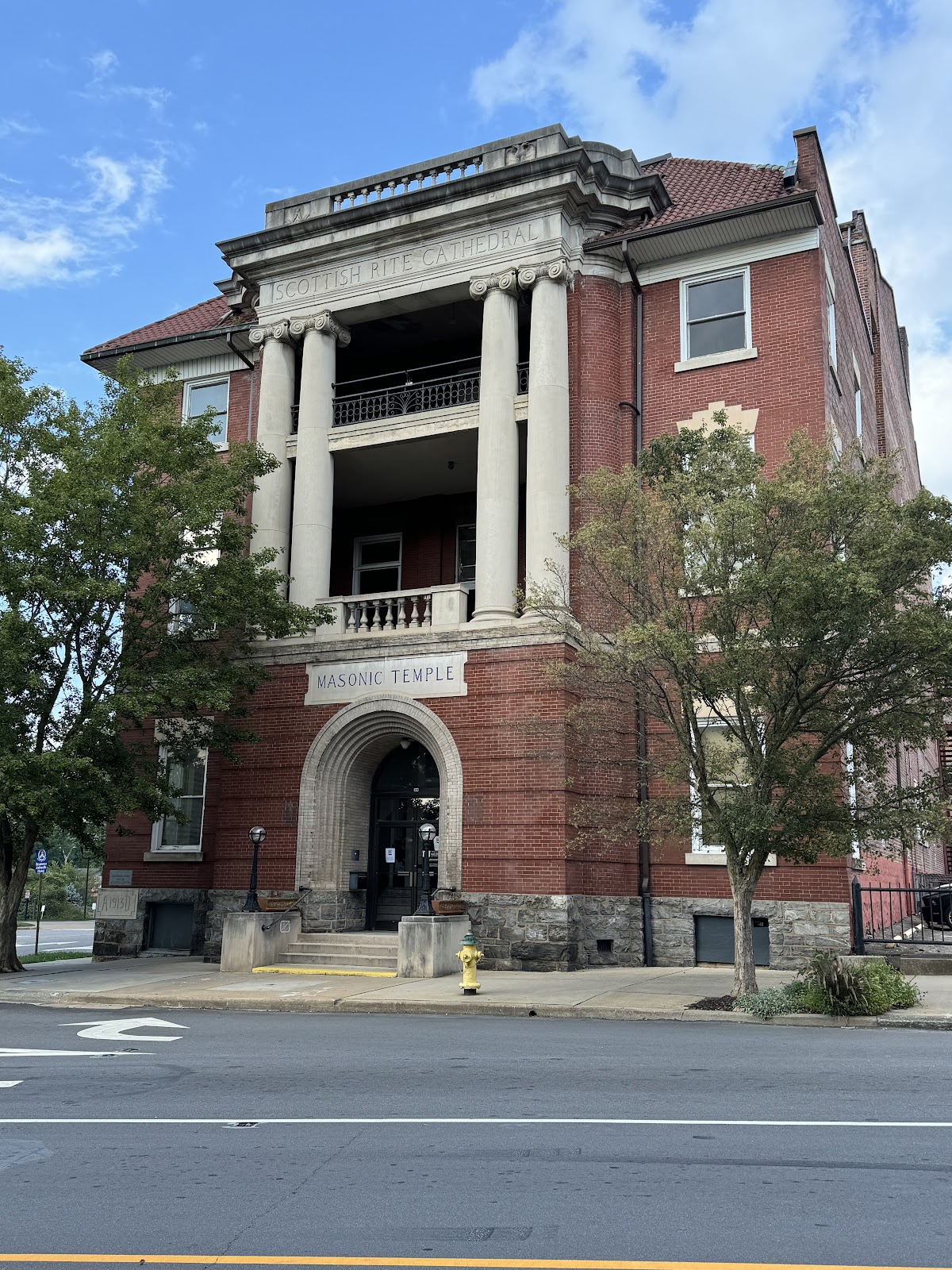
Outside, downtown Asheville is genuinely good: a dense concentration of early twentieth-century and Art Deco commercial architecture, walkable, with mountains visible at the ends of some streets. The twenty minutes after sunset is when it photographs best, and in a building with no daylight at all that excursion is the only unartificially lit frame in the entire gallery. Schedule ten minutes for it as a fixed item rather than an aspiration.
A Blue Ridge note that applies downtown as much as anywhere: ridgelines take the direct sun early, so the warm light on the building fronts arrives and goes sooner than a sunset app suggests.
What works in your favour
- Ceremonial lodge rooms look like nothing else — character no purpose-built venue can reproduce
- Ornate plasterwork is spectacular under side lighting and gives abundant detail frames
- A substantial staircase, usually the one place daylight reaches
- Entirely weather-independent and identical at any hour
- Downtown Asheville’s Art Deco architecture within a short walk
What to plan around
- Frontal flash erases the plaster relief completely — side light is not optional
- Saturated coloured rooms cast strong colour onto skin at close range
- High decorated ceilings make bounce flash ineffective
- No daylight in the event spaces; the staircase light is the only thing on a clock
- Different rooms need different white balance settings; auto will fail in all of them
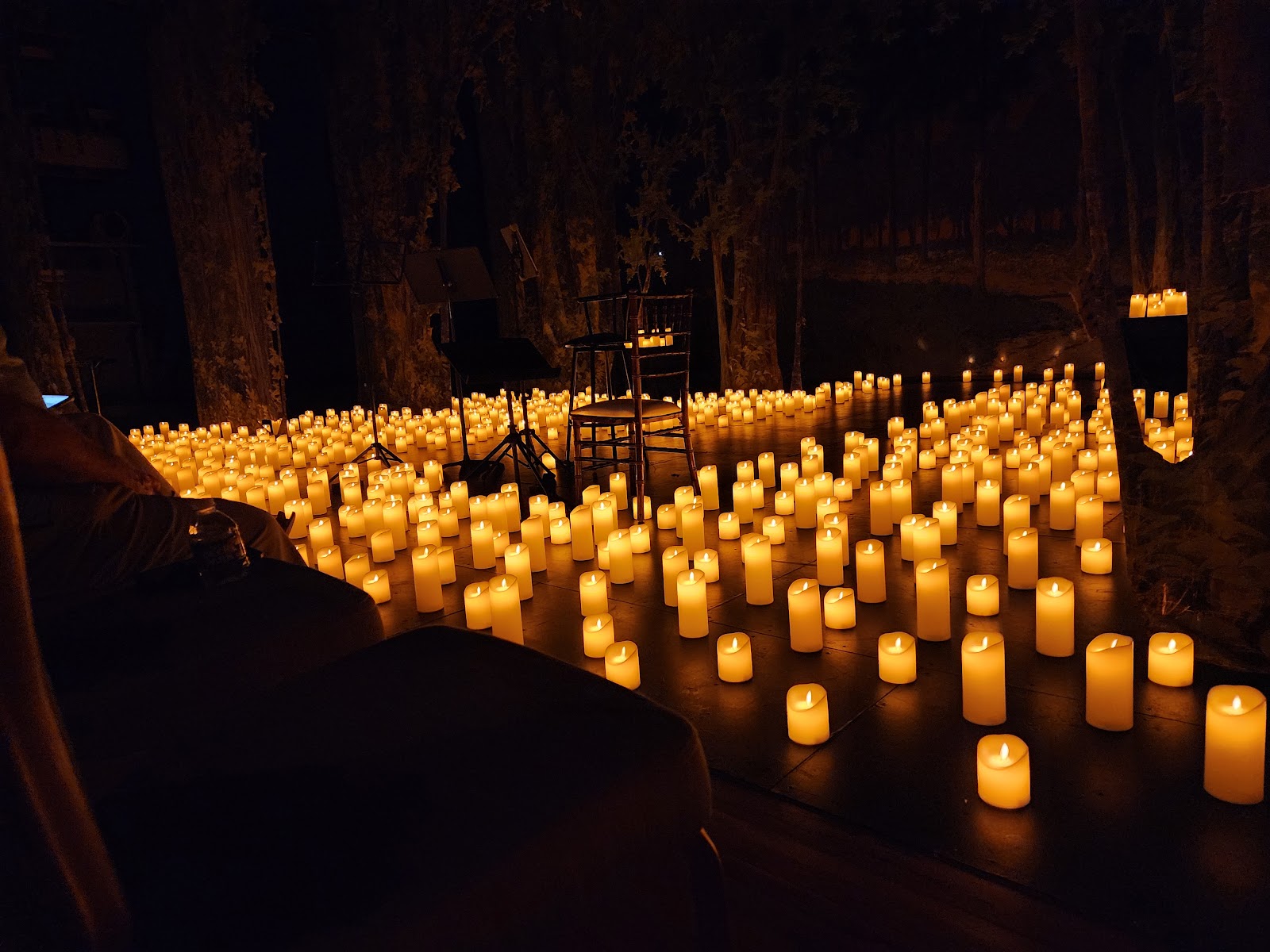
More frames from Asheville Masonic Temple
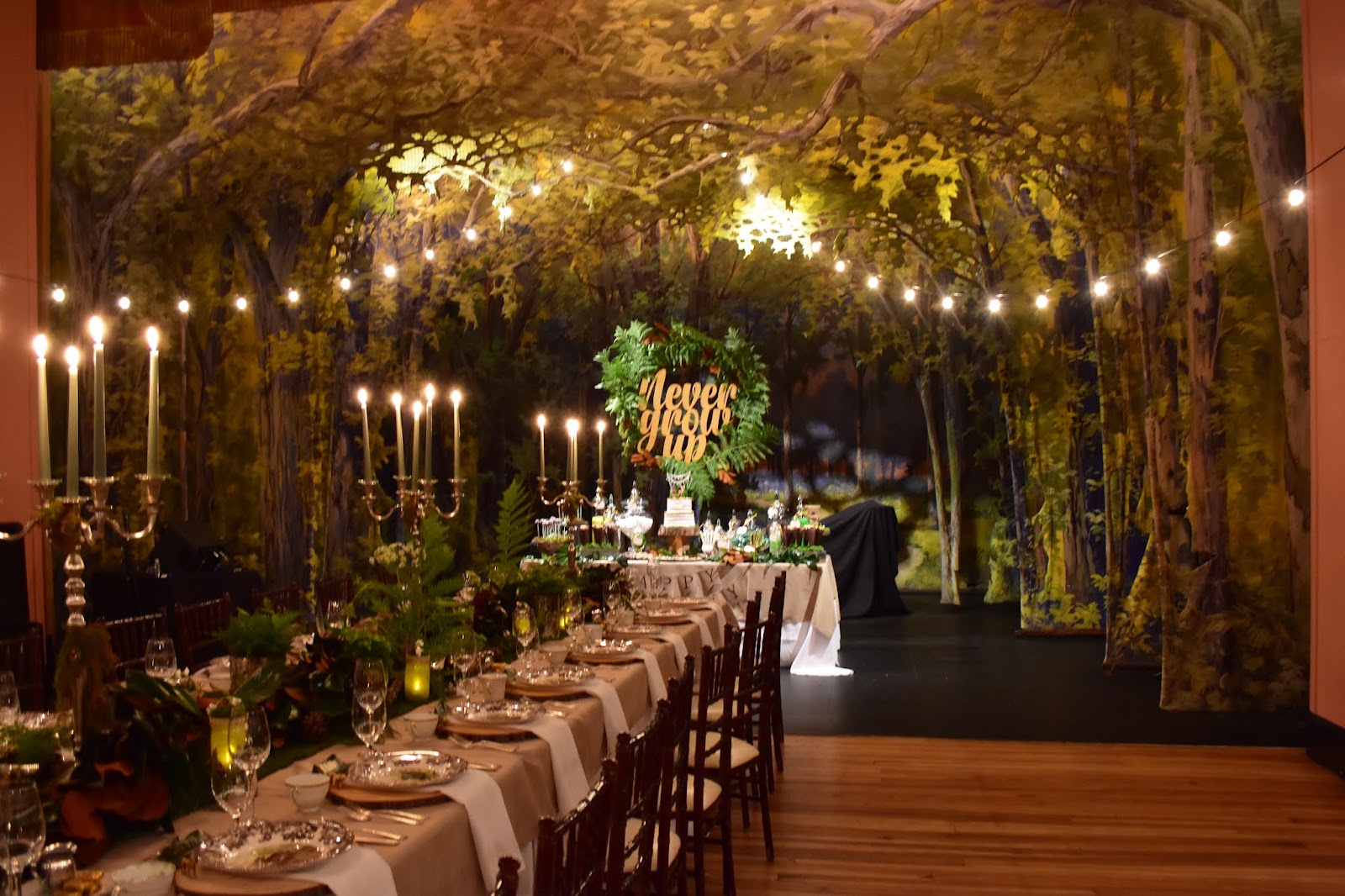
Asheville Masonic Temple wedding photography: common questions
What is the single most important lighting decision here?
Put the light to the side rather than at the camera. Ornate plaster relief is visible only because angled light lets raised parts shade recessed parts, so frontal flash flattens a deeply modelled ceiling into a painted surface and the room’s best feature disappears from the photograph.
Where does daylight reach in the building?
The staircase, usually — a landing window, a stairwell skylight or borrowed light from the entrance. In a building whose main rooms have no windows, that makes the stair both the best-lit and the strongest compositional location. Shoot it early, while there is still daylight outside to borrow.
How do you handle the saturated wall colours?
Separation and a manual white balance per room. Keep a metre or two between people and strongly coloured surfaces, and light faces with something closer to neutral than the ambient. Then use the colour as background deliberately — colour on a wall is dramatic, colour on a face is a mistake.
Can you bounce flash in the ballroom?
No. High decorated ceilings absorb light and return very little, warmed on the way. Use a feathered key from the side plus a rim light behind the dancefloor, and expose so the fixtures glow as points rather than blowing out — the ambient should sit darker than instinct wants.
Do we need to go outside?
Yes, and it is the frame most likely to be skipped. In a building with no daylight anywhere, the ten minutes you spend on the downtown blocks after sunset is the only unartificially lit image in the whole gallery. Schedule it. Note that Blue Ridge ridgelines close that window earlier than a sunset app suggests.
More Asheville venue guides
We are writing a photographer’s guide to every venue we would happily shoot in Asheville. Here are three more, plus the full index:
- Biltmore Estate: Reading the Light on 8,000 Acres
- The Botanical Gardens at Asheville: A Photographer Answers Your Questions
- Claxton Farm: A Season-by-Season Photography Guide
All Asheville Wedding Venues →
Planning a wedding at Asheville Masonic Temple?
Lodge interiors are a lighting problem with one right answer: side light. Tell us your date and which rooms you have, and we will send a plan for each — plus the real ridgeline time for the downtown block.